
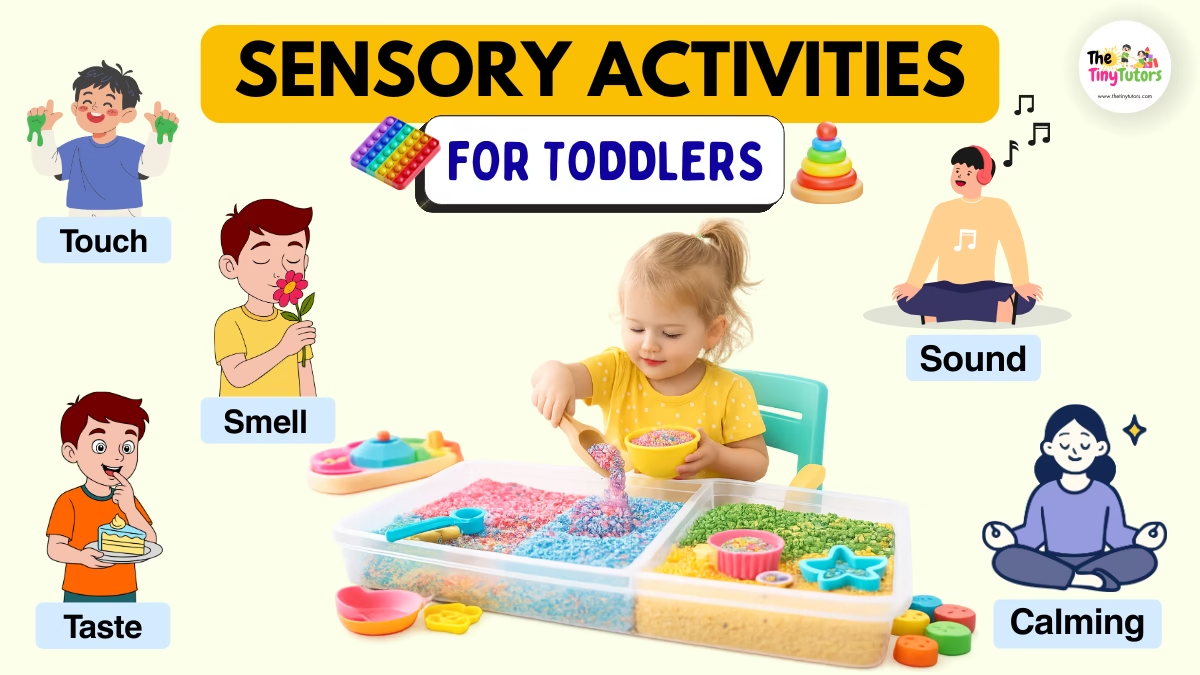
Sensory activities for toddlers are hands-on, playful ways young children use their senses—touch, sight, sound, smell, and taste—to explore the world around them. 🌟 These activities are much more than just fun; they spark early learning, creativity, and confidence.
- What Are Sensory Activities? 🤔
- Why Sensory Play Matters for Toddlers’ Development 🧠
- How Sensory Play Helps Toddlers Learn 📚
- Age-Wise Sensory Activities for Toddlers 👶👦
- DIY Sensory Activities for Toddlers at Home 🏠
- Materials, Safety & Age-Appropriateness ⚠️
- How to Make Sensory Play Educational 🎓
- FAQs About Sensory Activities for Toddlers ❓
- Conclusion & Next Steps ✅
Have you ever seen your toddler happily scooping rice, pouring water, or squishing playdough for several minutes? 🥄🍚 Those simple moments are powerful learning opportunities. Sensory play helps toddlers build motor skills, expand their vocabulary, regulate emotions, and develop problem-solving abilities naturally.
💡 Pro tip: Try adding easy sensory activities for toddlers into your daily routine—fill a tray with rice, add small cups, and let your child explore different textures safely.
What Are Sensory Activities? 🤔
Sensory activities for toddlers are experiential games and play sessions that let children explore and learn through their five senses. ✅
👉 For more fun ways to teach your child about their senses and how they work, check out our guide on “Five Senses for Kids“.
Here are some everyday examples you can easily try at home:
Texture exploration: rice, beans, pasta, sand, cotton balls 🟤
Water play: cups, small pitchers, spoons, splash trays 💧
Sound & rhythm: wooden spoons, pots, water bottles filled with beads 🥁
Taste & smell (edible): yogurt, mashed potatoes, fruit puree 🍌
💡 Tip: Encourage toddlers to scoop, pour, or squish these materials. These simple actions improve hand-eye coordination, focus, and curiosity, turning learning into a joyful experience. ✨
Why Sensory Play Matters for Toddlers’ Development 🧠
Sensory activities for toddlers are not just play—they are brain-building exercises. They help children explore, learn, and grow in multiple areas:
Research on early childhood development also highlights how sensory experiences support emotional, social, and cognitive growth during the early years.
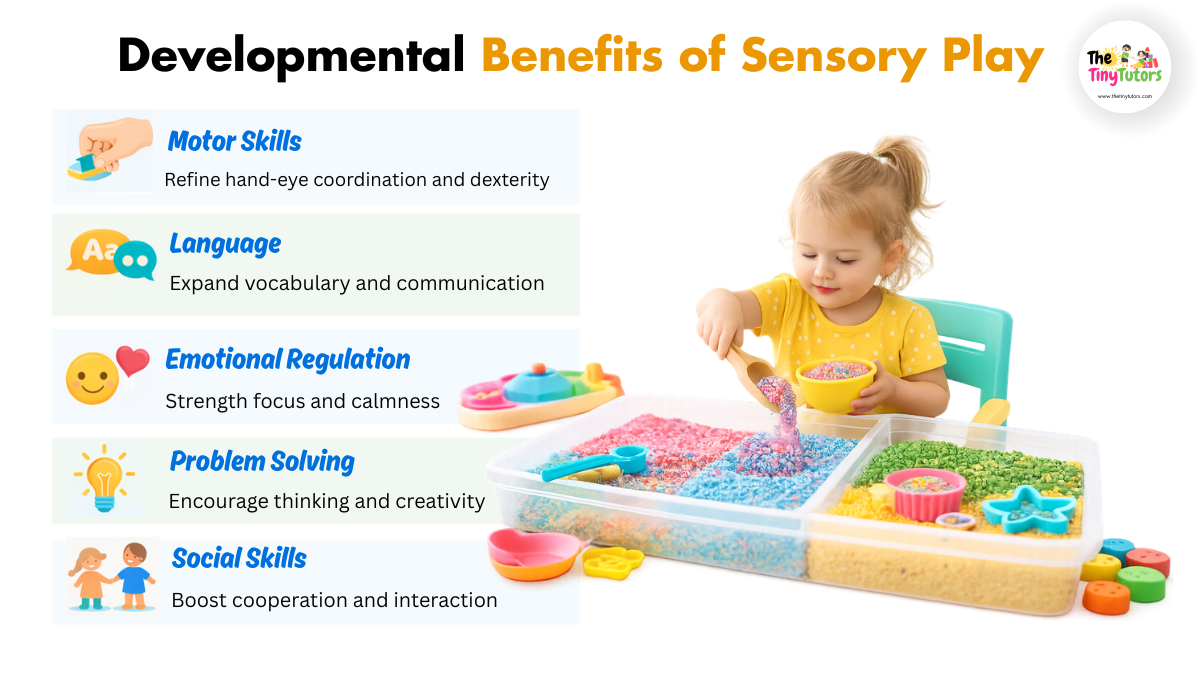
Motor Skills: Grasping, rolling, pouring, and squeezing improve fine and gross motor skills. ✋
Language Development: Describing textures, colors, and actions expands vocabulary naturally. 🗣️
Emotional Regulation: Repetitive tactile activities like squishing playdough or sand play help toddlers calm themselves. 💖
Problem-Solving & Creativity: Sorting, stacking, and experimenting build logic and critical thinking. 🧩
Social Skills & Confidence: Group sensory activities teach sharing, cooperation, and patience. 🤝
Real-life example: A parent filled a sensory bin with shredded paper and small toys. Their 2-year-old spent 20 minutes finding hidden items while narrating each action—practicing speech, focus, and coordination simultaneously. 📦
How Sensory Play Helps Toddlers Learn 📚
Sensory activities for toddlers aren’t just play—they are learning disguised as fun. Here’s how:
Key Developmental Benefits of Sensory Activities
Sensory play supports several areas of early childhood development at the same time. Here are the main benefits parents often notice:
• Fine Motor Development – Activities like scooping, pouring, and squeezing help strengthen small hand muscles needed for everyday tasks. ✋
• Language Growth – When toddlers talk about textures, colors, and actions, their vocabulary and communication skills grow naturally. 🗣️
• Emotional Regulation – Repetitive sensory play, such as sand or playdough, can help toddlers feel calm and focused. 💖
• Thinking & Problem-Solving Skills – Exploring materials, sorting objects, and testing cause and effect encourages curiosity and early reasoning. 🧩
| Development Area | Example Sensory Activities | What Toddlers Learn |
|---|---|---|
| Motor Skills ✅ | Pouring water, squishing playdough | Better hand control and coordination |
| Language 🗣️ | Naming textures or colors | New words and clearer expression |
| Emotional Regulation 💖 | Sand play, soft clay | Calmness and focus |
| Problem-Solving 🧩 | Sorting beans or shapes | Logical thinking and creativity |
💡 Tip: Encourage toddlers to describe textures like “soft,” “squishy,” or “slippery” to improve language naturally.
Age-Wise Sensory Activities for Toddlers 👶👦
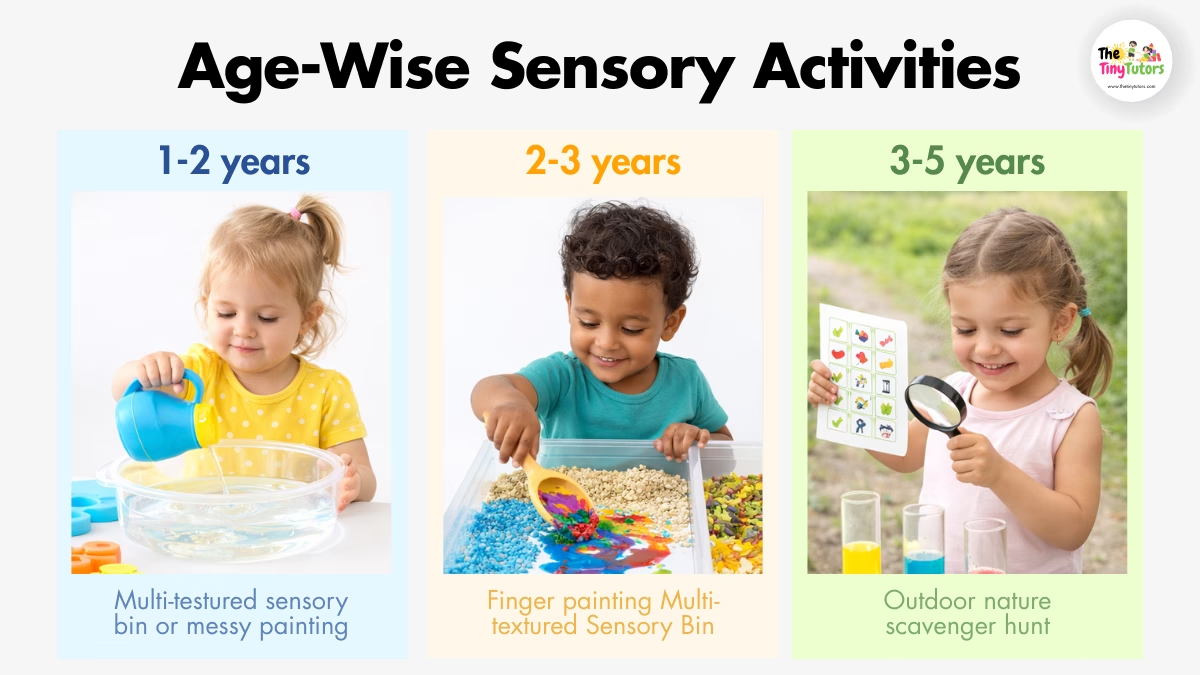
1–2 Years Old: Early Toddlers
Texture play: Use rice, beans, or cotton balls for scooping and feeling. 🟤
Water pouring & splash play: Small pitchers and cups in a shallow tray are perfect. 💧
Playdough squish & roll: Encourage rolling, squeezing, and gentle shaping. 🟠
⏱️ Keep play sessions around 10–15 minutes and use mats for easy cleanup.
2–3 Years Old: Active Explorers
Multi-textured sensory bins: Combine sand, pasta, and small toys for tactile exploration.
Messy art play: Finger painting or shaving foam activities are excellent. 🎨
Sound & rhythm play: Tap spoons on pots or shake containers filled with beads. 🥁
Real-life example: A 3-year-old made music by shaking a bead-filled container while naming colors—developing sound awareness, color recognition, and fine motor skills.
3–5 Years Old: Preschool Sensory Play
Mix play with learning: Measure water, sort objects by color or size. 💧🔵
Outdoor scavenger hunts: Touch leaves, collect stones, and observe flowers. 🍂🌸
Light & water experiments: Use colored water, prisms, or floating objects to explore basic science. 🔬
💡 Tip: Ask simple questions like, “Which cup holds more water?” to boost early STEM skills.
DIY Sensory Activities for Toddlers at Home 🏠
Sensory bins & bags: Fill zip-lock bags with rice, water beads, or pasta. Add small toys, spoons, or cups. Let toddlers explore safely for 15–20 minutes.
Edible sensory play: Use mashed potatoes, yogurt, or gelatin. Toddlers can squish, pour, or mold safely. 🥔🍧
Nature-based sensory activities: Collect leaves, flowers, sand, or water outdoors. Let toddlers explore textures and smells naturally. 🍃
💡 Rotate materials weekly to keep toddlers curious and engaged.
Materials, Safety & Age-Appropriateness ⚠️
Safety is key in all sensory activities for toddlers:
Use non-toxic, BPA-free materials. ✅
Avoid small items for children under 3 to prevent choking. 🚫
Always supervise play, especially wet or edible sensory activities. 👀
Use trays, mats, or aprons to minimize mess. 🧹
Keep a cleanup station ready with towels, wet wipes, and a trash bin. 🗑️
💡 Tip: Label bins by activity type to make play setup easier and reduce stress for busy parents.
How to Make Sensory Play Educational 🎓
Sensory activities can teach counting, colors, shapes, and vocabulary naturally:
Counting & sorting: Count beans, buttons, or pasta as toddlers transfer them into cups. 🔢
Vocabulary building: Ask toddlers to describe textures: “slimy,” “rough,” “fluffy.” 🗣️
Colors & shapes: Sort objects by color or shape in bins for visual learning. 🔵🟢
Real-life tip: During water play, ask: “Can you pour 3 cups into the tray?”—teaches math, hand-eye coordination, and focus.
FAQs About Sensory Activities for Toddlers ❓
Q1: How long should a sensory play session be?
A1: 10–30 minutes is ideal. Longer sessions may tire toddlers or reduce focus.
Q2: What if my child doesn’t like messy play?
A2: Start with dry textures like rice, pasta, or cotton balls. Introduce wet materials gradually.
Q3: Can toddlers do sensory play independently?
A3: Yes, with age-appropriate materials and nearby supervision, toddlers can explore safely.
Q4: How do I manage the mess from sensory play?
A4: Use trays, aprons, and mats. Keep a cleanup station ready.
Q5: Are there travel-friendly sensory activities?
A5: Yes! Zip-lock bags with rice, beans, or colored pasta are portable and mess-free.
Q6: Can sensory activities help with emotional regulation?
A6: Absolutely! Repetitive tactile play like squishing playdough or pouring water can calm toddlers and reduce tantrums.
Conclusion & Next Steps ✅
Sensory activities for toddlers are simple yet powerful tools for early learning. ✅
Key Benefits:
Boost motor skills, language, and problem-solving 🧠
Encourage emotional regulation and creativity 💖
Build confidence and curiosity 🌟
💡 Make Sensory Play Part of Your Routine
Sensory play doesn’t need to be elaborate or time-consuming. Even short sessions a few times a week can support a toddler’s learning and emotional development. Rotating simple activities—such as water play one day and texture bins another—helps keep playtime fresh and engaging.
🎯 Actionable step: Create a sensory bin today using household items and see how your toddler responds. What’s your child’s favorite sensory activity? Share your experiences in the comments below!
Good work