
Natural resources are things we get from nature and use in our daily lives. Water, air, sunlight, soil, plants, and animals are all examples of natural resources. We need these resources for food, water, clothing, shelter, and energy.
- What Are Natural Resources? 🌎
- Types of Natural Resources 🌱
- 1. Renewable Natural Resources ☀️
- 2. Non-Renewable Natural Resources 🪨
- 15 Examples of Natural Resources 🌍
- Uses of Natural Resources in Our Daily Lives 🏡
- Importance of Natural Resources 🌎
- How Can Kids Conserve Natural Resources? 🌳
- Fun Facts About Natural Resources for Kids 🤩
- Frequently Asked Questions About Natural Resources for Kids
- Let's Take Care of Our Natural Resources! 💚
- Related Learning Resources
- Author Information
Natural resources make life possible for people, plants, and animals. In this article, we will learn about the types of natural resources, their examples, uses, and simple ways to protect them.
What Are Natural Resources? 🌎
Natural resources are things that we get directly from nature and use to meet our needs.
They are not made by people. Instead, they are found in the environment around us.
For example:
💧 Water comes from rivers, lakes, and underground sources.
🌳 Trees grow naturally in forests.
☀️ Sunlight comes from the Sun.
🌬️ Wind is moving air.
🪨 Rocks and minerals are found in the ground.
🐟 Fish live in rivers, lakes, and oceans.
All these things are natural resources because they come from nature.
Easy Definition: Natural resources are useful things that we get from the Earth and nature.
Natural Resources Around Us
Look around your home, school, or garden. You will find many things that come from nature.
| Everyday Item | Natural Resource |
|---|---|
| Drinking water | Water |
| Wooden table | Trees |
| Cotton shirt | Cotton plant |
| Fruits | Fruit trees and plants |
| Paper | Trees |
| Electricity from solar panels | Sunlight |
| Metal spoon | Minerals |
Think About It! 🤔
Can you find five things in your home that come from natural resources?
Types of Natural Resources 🌱
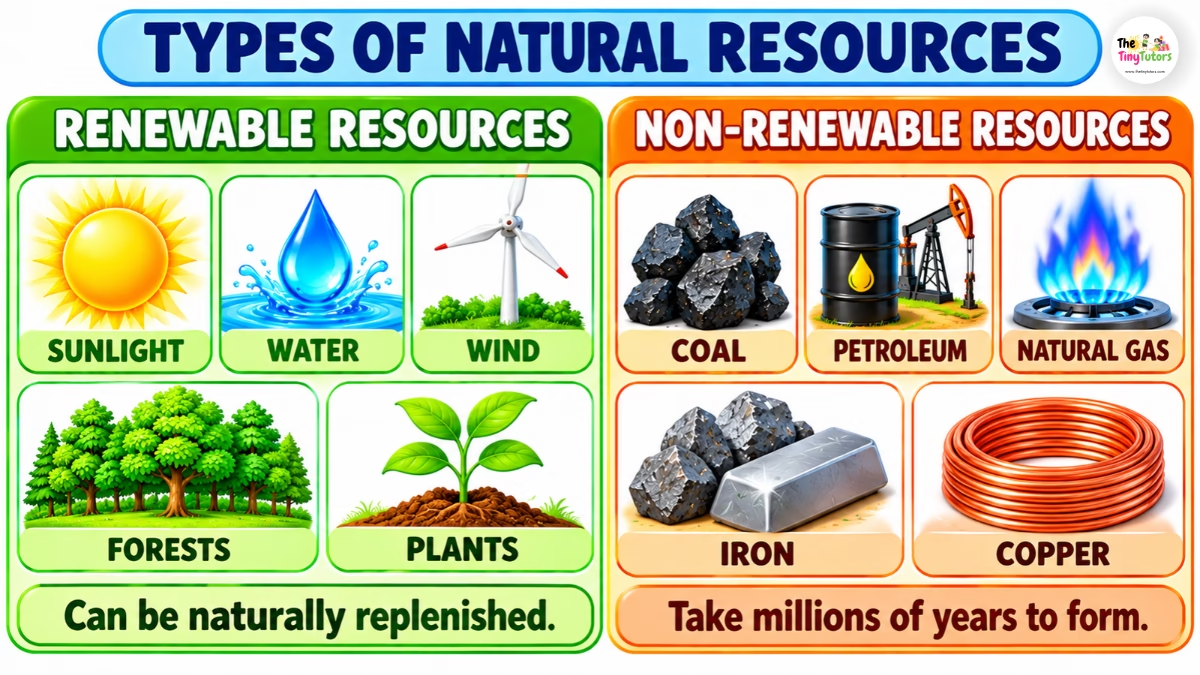
Natural resources are mainly divided into two types:
Renewable Natural Resources
Non-Renewable Natural Resources
The main difference is how quickly nature can replace them.
| Renewable Resources | Non-Renewable Resources |
|---|---|
| Nature can replace them in a relatively short time. | They take a very long time to form. |
| Some can be used again and again when managed carefully. | They can run out because we use them faster than nature replaces them. |
| Examples: sunlight, wind, and trees. | Examples: coal, petroleum, and natural gas. |
1. Renewable Natural Resources ☀️
Renewable natural resources are resources that nature can replace or renew.
Some are available again and again, while others need time and care to grow back.
For example, sunlight comes every day, wind keeps moving, and new trees can grow when forests are protected and replanted.
Examples of Renewable Resources
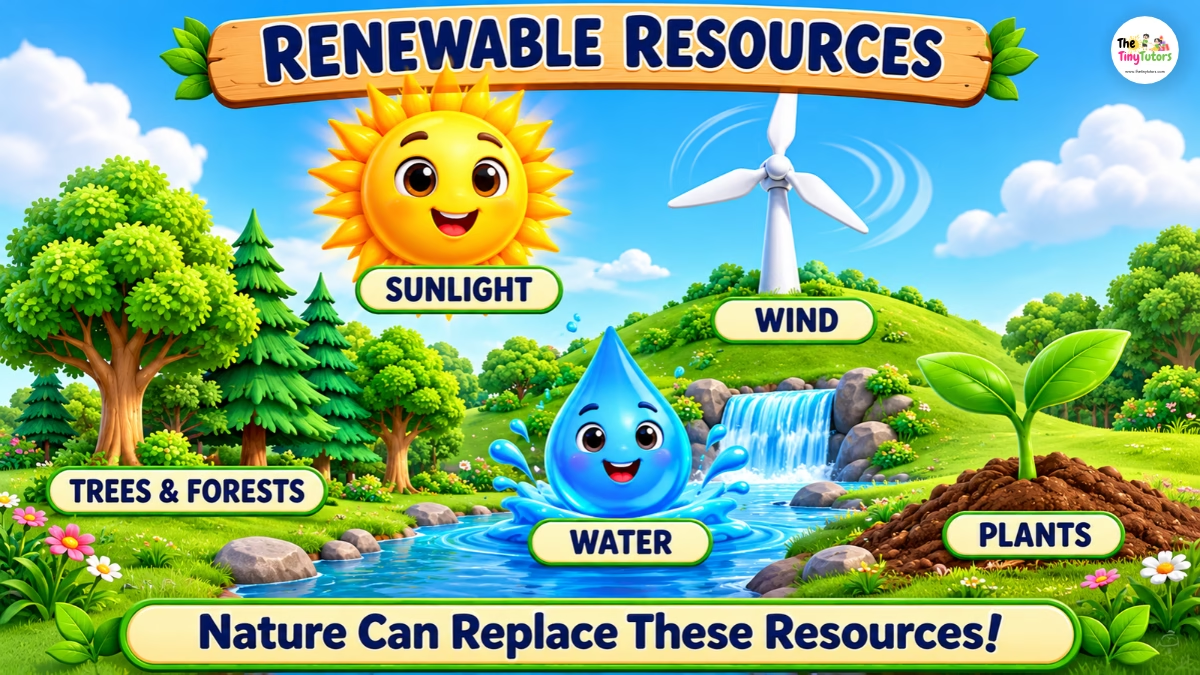
1. Sunlight ☀️
The Sun gives us light and heat. Plants use sunlight to make their food, and solar panels use it to produce electricity.
2. Wind 🌬️
Wind is moving air. It can turn wind turbines to produce electricity.
3. Water 💧
Water moves through nature in a cycle. Rain fills rivers, lakes, and other water sources. We must still use clean freshwater carefully because not all water is safe to drink.
4. Trees and Forests 🌳
Trees can grow again when new ones are planted and forests are cared for. They give us fruits, wood, shade, and homes for animals.
5. Plants 🌱
Plants provide food, fibres, medicines, and other useful materials. New plants can grow from seeds.
Remember: Renewable does not mean unlimited. We should not waste water, cut too many trees, or harm plants and animals.
2. Non-Renewable Natural Resources 🪨
Non-renewable natural resources are resources that take millions of years to form.
Once we use them, nature cannot replace them quickly. That is why we need to use them carefully.
Many non-renewable resources are found deep inside the Earth.
Examples of Non-Renewable Resources
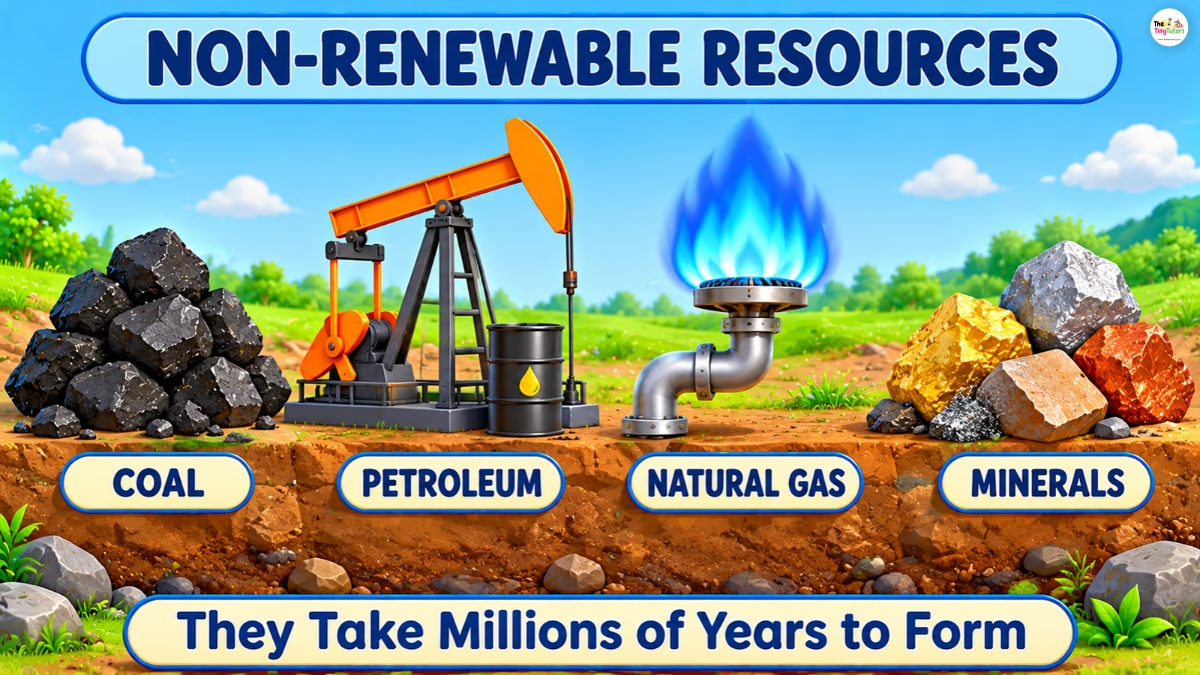
1. Coal 🪨
Coal is a black rock found underground. It is burned to produce heat and electricity.
2. Petroleum (Oil) 🛢️
Petroleum is a liquid found deep underground. It is used to make petrol, diesel, and many other products.
3. Natural Gas 🔥
Natural gas is found underground. It is used for cooking, heating, and producing electricity.
4. Minerals ⛏️
Minerals are natural materials found in rocks and inside the Earth. Iron and copper are examples. They are used to make tools, machines, wires, and many everyday objects.
5. Rocks 🪨
Rocks are naturally found on the Earth’s surface and underground. People use different kinds of rocks for buildings, roads, and decoration.
Remember: Coal, petroleum, and natural gas are called fossil fuels. They formed from the remains of ancient living things over millions of years.
15 Examples of Natural Resources 🌍
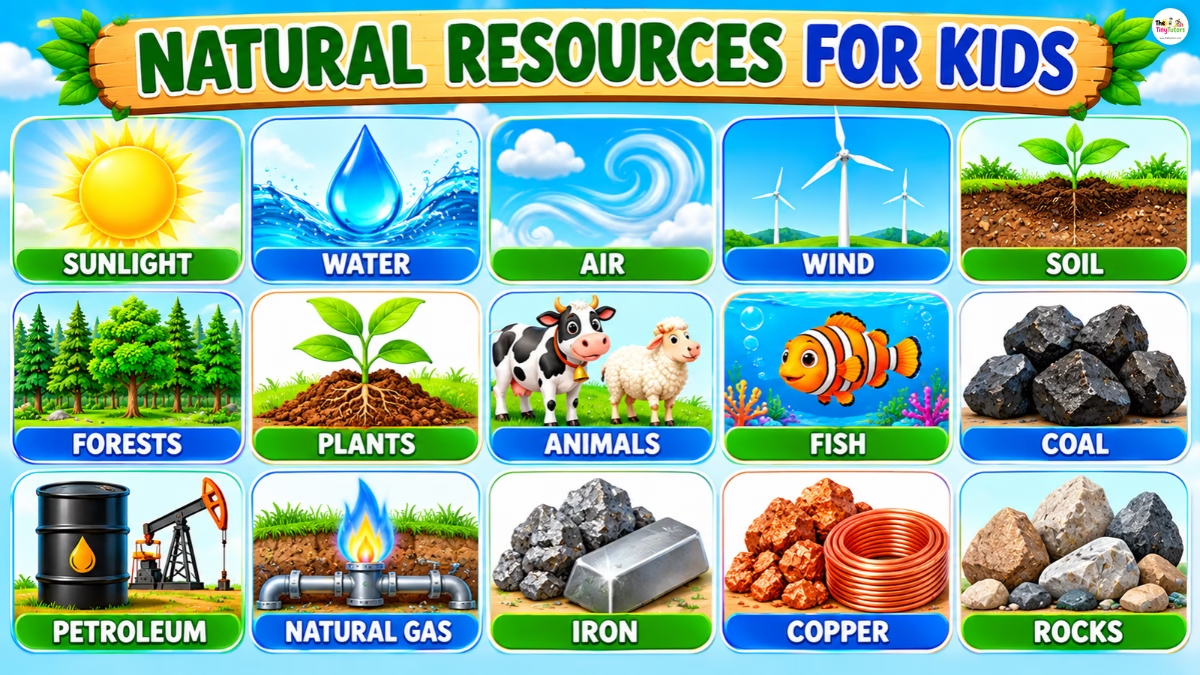
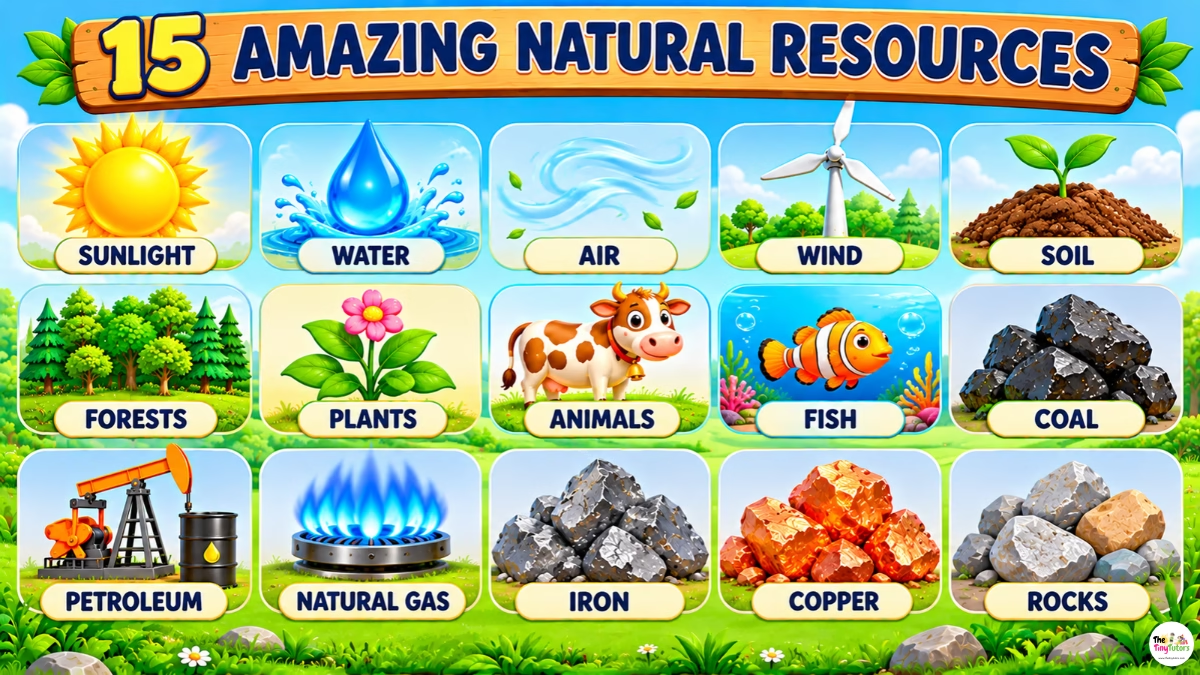
Here are 15 common natural resources with simple examples.
| No. | Natural Resource | Simple Description |
|---|---|---|
| 1 | Sunlight | Gives us light and heat. |
| 2 | Water | Needed by people, plants, and animals. |
| 3 | Air | Needed for breathing. |
| 4 | Wind | Helps produce wind energy. |
| 5 | Soil | Helps plants and crops grow. |
| 6 | Forests | Provide wood, fruits, and animal homes. |
| 7 | Plants | Give us food, fibres, and medicines. |
| 8 | Animals | Provide milk, wool, and other useful products. |
| 9 | Fish | Provide food for people and other animals. |
| 10 | Coal | Used to produce electricity and heat. |
| 11 | Petroleum | Used to make fuels such as petrol and diesel. |
| 12 | Natural Gas | Used for cooking and heating. |
| 13 | Iron | Used to make tools and buildings. |
| 14 | Copper | Used in electrical wires and other products. |
| 15 | Rocks | Used in roads, buildings, and construction. |
Uses of Natural Resources in Our Daily Lives 🏡
Natural resources help us in many ways, from the food on our plates to the clothes we wear.
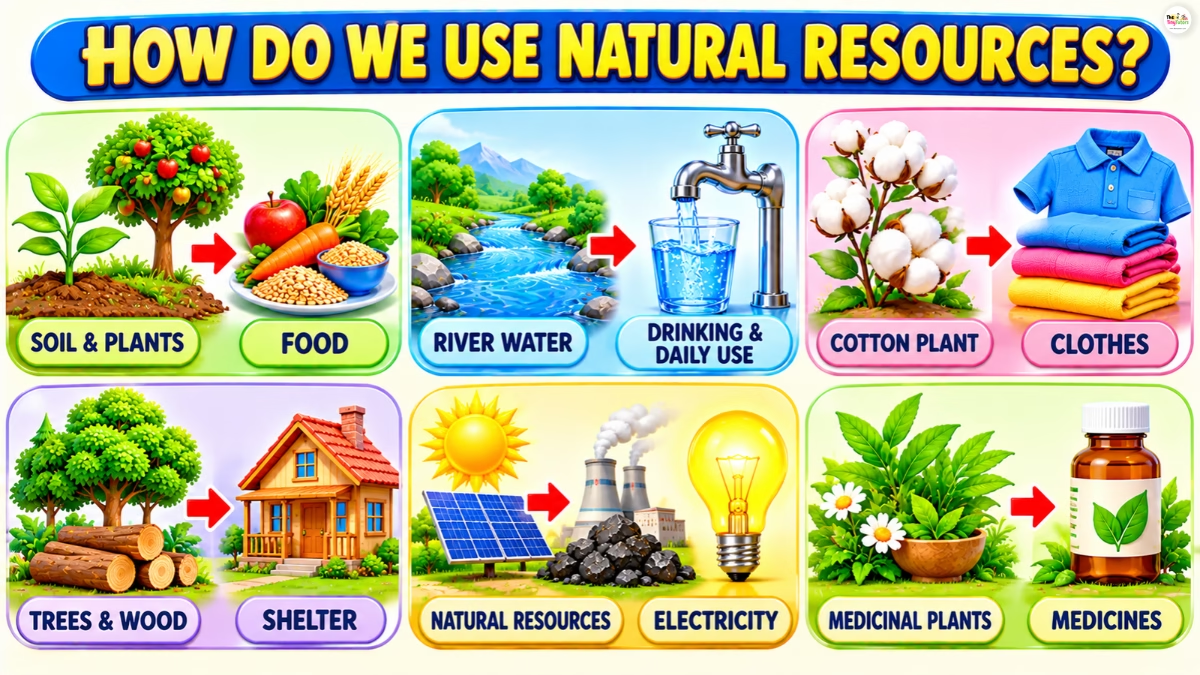
1. Food 🍎
Plants and animals provide us with food.
Fruits and vegetables come from plants.
Rice and wheat grow in fields.
Milk comes from animals such as cows and buffaloes.
Fish and eggs are also food sources.
2. Water 💧
We use water for drinking, cooking, bathing, washing clothes, and watering plants.
3. Clothes 👕
Many clothes are made from materials that come from plants and animals.
Cotton comes from cotton plants.
Wool comes from sheep.
Silk comes from silkworms.
4. Shelter 🏠
Natural materials help people build homes and other buildings.
Wood comes from trees.
Sand is used to make glass and concrete.
Rocks are used in buildings and roads.
Clay is used to make bricks.
5. Energy ⚡
Natural resources help us produce energy for homes, schools, and vehicles.
Sunlight helps produce solar electricity.
Wind helps generate electricity.
Water can produce hydropower.
Coal and natural gas are also used to produce electricity.
6. Medicines 🌿
Some medicines come from plants and other natural materials.
For example, aloe vera is used in some skin-care products, and certain plants are used to make medicines.
Importance of Natural Resources 🌎
Natural resources are important because they help people, plants, and animals live.
1. They Help Us Stay Alive
We need air to breathe, water to drink, and food to eat.
2. They Help Plants Grow 🌱
Plants need sunlight, water, air, and healthy soil to grow.
3. They Provide Homes for Animals 🐦
Forests, rivers, oceans, and grasslands provide natural homes for different animals.
4. They Help Farmers Grow Food 🚜
Farmers need soil, water, and sunlight to grow crops such as rice, wheat, fruits, and vegetables.
5. They Help Us Make Useful Things
Many everyday products are made from natural materials, including paper, clothes, furniture, tools, and buildings.
6. They Provide Energy
Sunlight, wind, water, coal, and natural gas are used to produce energy for different purposes.
How Can Kids Conserve Natural Resources? 🌳
Conservation means protecting natural resources and using them carefully so they are available for the future.
Here are 10 easy ways children can help.
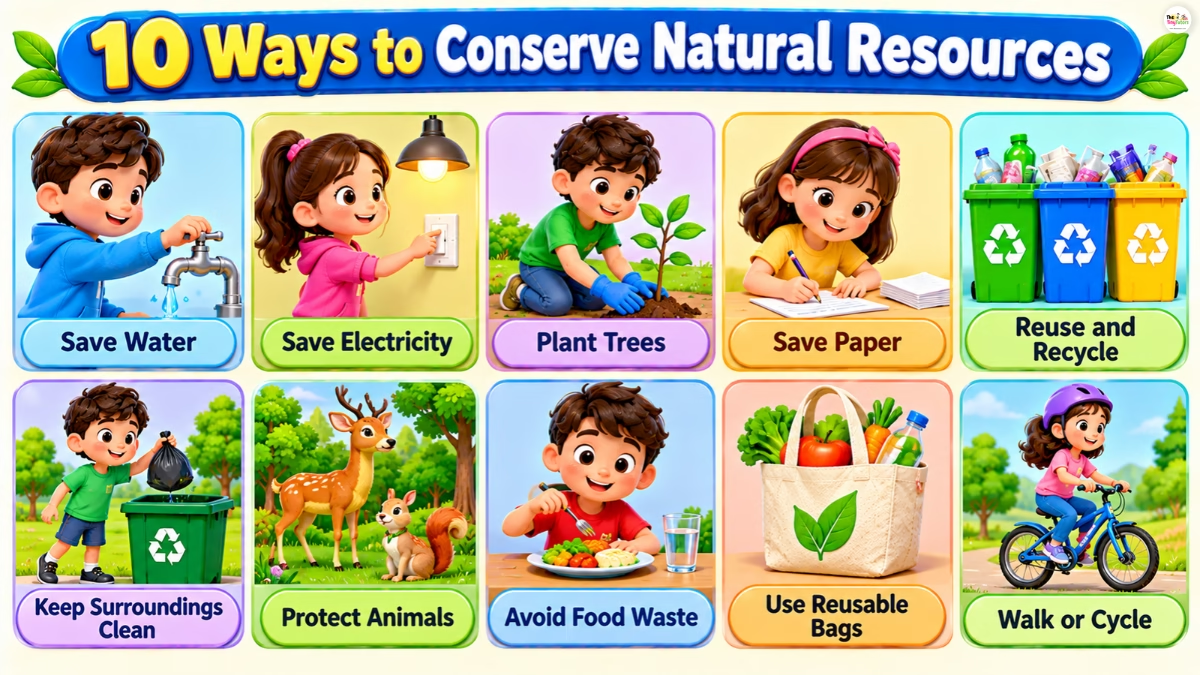
10 Easy Ways to Save Natural Resources
Save Water 💧: Turn off the tap while brushing your teeth.
Save Electricity 💡: Switch off unnecessary lights and fans.
Plant More Trees 🌳: Plant and care for young trees.
Reduce Paper Waste 📄: Use both sides of paper.
Reuse and Recycle ♻️: Reuse suitable containers and recycle materials.
Keep Your Surroundings Clean 🧹: Always use dustbins.
Protect Animals 🐘: Never hurt wild animals or disturb their homes.
Avoid Wasting Food 🍎: Take only as much food as you can eat.
Use Reusable Bags 🛍️: Carry cloth bags when shopping with your family.
Walk or Cycle 🚲: Choose walking or cycling for short trips when safe.
The 3 Rs: Reduce, Reuse and Recycle ♻️
The 3 Rs are simple rules that help us save resources and create less waste.
| Rule | Meaning | Example |
|---|---|---|
| Reduce | Use less. | Save water and paper. |
| Reuse | Use something again. | Reuse a school bag. |
| Recycle | Turn used materials into new products. | Recycle paper and metal cans. |
Explore our guide on Recycling for Kids to discover easy ways children can recycle at home and school.
You can also read Water Conservation for Kids to learn more about saving water.
Fun Facts About Natural Resources for Kids 🤩
Here are 10 interesting facts that children will enjoy.
☀️ The Sun gives Earth light and heat and helps plants grow.
🌳 Trees provide fruits, wood, shade, and homes for animals.
💧 Water travels through the water cycle again and again.
🌬️ Wind turbines use moving air to generate electricity.
🪨 Some rocks contain minerals such as iron and copper.
🐝 Many animals depend on plants for food and shelter.
🌱 Soil contains tiny living things that help plants grow.
🛢️ Petroleum takes millions of years to form.
🌊 Most of Earth’s water is salty, and only a small part is freshwater.
♻️ Recycling suitable materials can reduce the need for new raw materials.
Amazing Fact! 🌍
The Earth has many different natural resources, but they are not all available in unlimited amounts. That is why protecting nature is everyone’s responsibility!
Frequently Asked Questions About Natural Resources for Kids
1. What are natural resources in simple words?
Natural resources are things that we get from nature and use in our daily lives. Examples include air, water, sunlight, soil, trees, animals, and minerals.
2. What are the two main types of natural resources?
The two main types are renewable and non-renewable resources. Renewable resources can be replaced naturally, while non-renewable resources take millions of years to form.
3. What are 5 examples of natural resources?
Five common examples are water, air, sunlight, trees, and soil. These resources are important for people, plants, and animals.
4. Why are natural resources important?
Natural resources provide us with food, water, air, energy, clothing, and shelter. They also help plants grow and provide homes for animals.
5. How can children save natural resources?
Children can protect natural resources by saving water, switching off unnecessary lights, planting trees, recycling paper, avoiding food waste, and keeping their surroundings clean.
6. What is the difference between renewable and non-renewable resources?
Renewable resources can be replaced naturally within a relatively short time. Non-renewable resources take millions of years to form and can run out when we use them.
Let’s Take Care of Our Natural Resources! 💚
Natural resources make life possible on Earth. We get food, water, air, energy, and many useful materials from nature.
Now you know about renewable and non-renewable resources, their examples, and how we use them every day.
But remember, nature needs our care too!
Every child can help protect the Earth by saving water, planting trees, reducing waste, and keeping the environment clean.
Small actions can make a big difference. Let’s become little Earth protectors and take care of our beautiful planet! 🌍🌱
Related Learning Resources
Continue exploring science and nature with these lessons from The Tiny Tutors:
Author Information
Written by: Shivam, Kids Educator & Founder of The Tiny Tutors – Creates simple, picture-based lessons for preschool to Grade 2 learners.
Reviewed by: Priya Sharma, Primary School Teacher (B.Ed, 8+ Years Experience).