
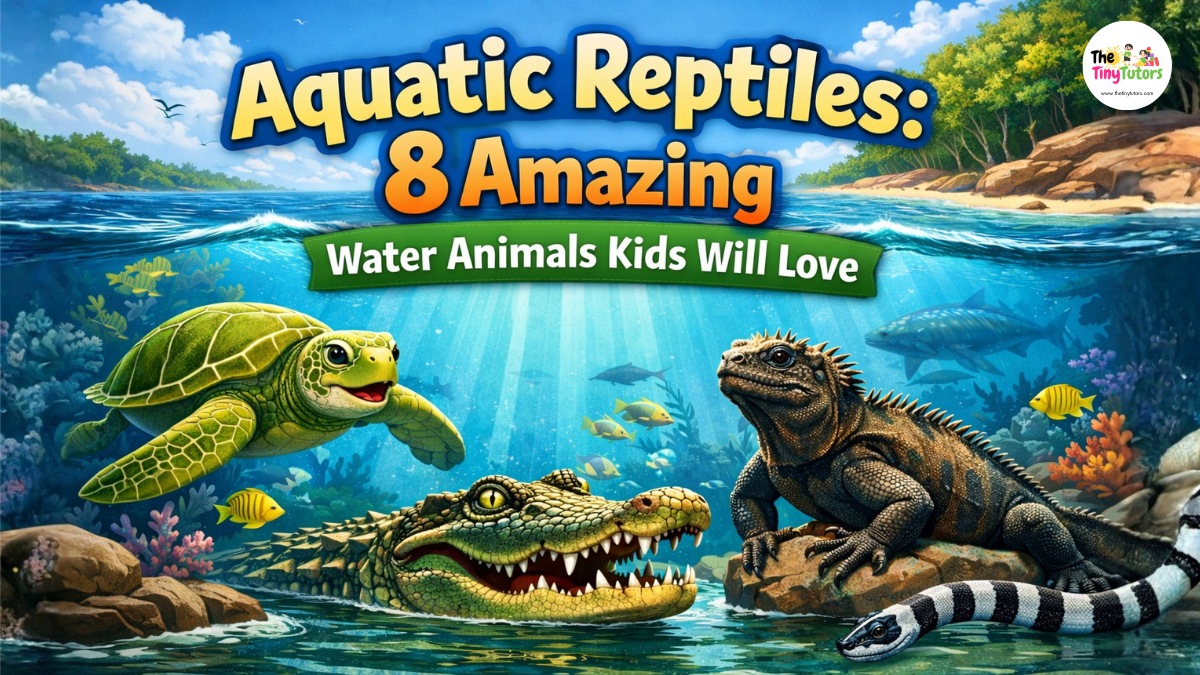
Aquatic reptiles are amazing animals that live in or around water and have special skills to survive. 🌊
- 🐢 What Are Aquatic Reptiles?
- Why Are Aquatic Reptiles So Interesting?
- 🌊 Types of Aquatic Reptiles Kids Should Know
- 🐊Amazing Aquatic Reptiles Examples
- 🧠 Amazing Adaptations of Aquatic Reptiles (Cool Survival Tricks!)
- 🌍 Where Do Aquatic Reptiles Live? Amazing Habitats Explained!
- 🍽️ What Do Aquatic Reptiles Eat? (Surprising Diet Facts!)
- 🌍 Why Are Aquatic Reptiles Important?
- ⚠️ Threats & Conservation
- 🐾 Aquatic Reptiles vs Land Reptiles
- 🐣 Life Cycle of Aquatic Reptiles
- 🏡 Aquatic Reptiles as Pets
- 🦕 Ancient Aquatic Reptiles
- 🎉 Fun Facts About These Reptiles
- 🎯 Quiz Time
- ❓ FAQs
- 🏁 Conclusion
👉 But did you know? Some water reptiles can stay underwater for a very long time and travel across huge oceans!
In this fun guide, kids will learn about these reptiles, their types, habitats, food, and cool facts in a simple and exciting way.
🐢 What Are Aquatic Reptiles?
These reptiles are cold-blooded animals that spend most of their time in water but still breathe air.
👉 For example, reptiles like turtles and crocodiles show how these reptiles can live in both water and on land.
These reptiles have special features that help them swim, hunt, and survive in watery environments.
Why Are Aquatic Reptiles So Interesting?
- They can swim fast 🐊
- Some can stay underwater for a long time ⏳
- They have unique survival tricks
🌊 Types of Aquatic Reptiles Kids Should Know
These reptiles can be divided into different types based on how they live and where they spend most of their time.
Fully Sea Reptiles
- Live mostly in water
- Example: Sea snakes
Semi Aquatic Reptiles
- Dual habitat reptiles live both on land and in water.
- Examples include crocodiles and some turtles.
Freshwater vs Saltwater Reptiles
- Freshwater: rivers and lakes
- Saltwater: oceans
🐊Amazing Aquatic Reptiles Examples
🐊 Crocodile – The Powerful Water Hunter
Crocodiles are one of the most powerful sea reptiles in the world.
- They live in rivers, lakes, and wetlands
- They eat fish, birds, and mammals
- They can stay underwater for a long time without breathing
👉 Fun Fact: Crocodiles can wait quietly for hours before attacking their prey!
🐊 Alligator – A Strong and Silent Predator
- Habitat: Freshwater rivers and swamps
- Food: Fish, turtles, and small animals
- Fun Fact: 😲 Alligators can regrow lost teeth!
🐢 Sea Turtle – The Gentle Ocean Traveler
- Habitat: Oceans and coastal areas
- Food: Sea plants, jellyfish, and small fish
- Fun Fact: 🌍 Sea turtles travel thousands of kilometers!
🦎 Marine Iguana – The Ocean-Loving Lizard
- Habitat: Rocky ocean shores
- Food: Algae and sea plants
- Fun Fact: 🦎 It is the only lizard that swims in the ocean!
🐍 Water Snake – A Fast Swimming Reptile
- Habitat: Rivers, ponds, and lakes
- Food: Fish and frogs
- Fun Fact: ⚡ Water snakes are excellent swimmers and hunters!
🐢 Softshell Turtle – The Speedy Swimmer
- Habitat: Freshwater rivers and lakes
- Food: Fish, insects, and small animals
- Fun Fact: 🏃 Its flat shell helps it swim faster than other turtles!
🐍 Sea Snake – One of the Most Venomous Reptiles
- Habitat: Oceans and coral reefs
- Food: Fish and eels
- Fun Fact: 🐍 Some sea snakes can breathe through their skin!
🐢 Terrapin – The Small but Smart Reptile
- Habitat: Coastal waters and marshes
- Food: Plants, insects, and small fish
- Fun Fact: 🧠 Terrapins can live in both salty and fresh water!
🧠 Amazing Adaptations of Aquatic Reptiles (Cool Survival Tricks!)
These reptiles have special adaptations that help them live successfully in water environments. 🌊 You can explore more in our Reptile Adaptations guide.
🫁 How Their Lungs Work
They breathe air using lungs, just like humans.
They come to the surface to take a deep breath and can hold it for a long time underwater.
👉 This helps them stay hidden from predators and catch prey easily.
🏊 Body Design for Swimming
Their bodies are specially designed for water movement:
- Streamlined shape helps reduce water resistance
- Strong tails help in fast swimming
- Some have webbed feet for better control
👉 These features make Water reptiles excellent swimmers.
🛡️ Survival Tricks and Protection
These reptiles use smart tricks to stay safe:
- Camouflage helps them hide in water
- Hard scales protect their bodies
- Some species use venom or strong bites for defense
👉 These survival skills make them powerful and adaptable animals.
📖 A Short Story – The Smart Turtle 🐢
Once upon a time, a small turtle lived near a river. 🌊
One day, a predator tried to catch it. The turtle quickly used its strong shell and jumped into the water.
👉 Because it was an aquatic reptile, it could swim fast and stay safe!
👉 Moral: Nature gives every animal special skills to survive.
🌍 Where Do Aquatic Reptiles Live? Amazing Habitats Explained!
These reptiles, also called water reptiles, live in many types of water environments across the world. 🌊
You can find them in:
- Oceans (sea turtles, sea snakes)
- Rivers and lakes (crocodiles, freshwater turtles)
- Wetlands and swamps
👉 These habitats provide food, shelter, and a safe place for survival.
👉 Most Water reptiles prefer warm climates because they are cold-blooded animals.
🍽️ What Do Aquatic Reptiles Eat? (Surprising Diet Facts!)
These reptiles mostly follow a carnivorous diet, which means they eat other animals to survive. 🐟
🍴 What Do They Eat?
They commonly eat:
- Fish and small aquatic animals
- Insects and frogs
- Sometimes birds or small mammals
🎯 How Do They Catch Their Food?
Most of them use a smart hunting method called ambush hunting.
- They stay very still in water
- Wait patiently for prey
- Attack quickly when the prey comes close
👉 This makes them fast and powerful hunters!
🌍 Why Are Aquatic Reptiles Important?
These reptiles play an important role in nature.
🌱 Their Role in Nature:
- They control fish and insect populations
- They keep the food chain balanced
- They help maintain healthy ecosystems
👉 Without these reptiles, water ecosystems can become unbalanced.
⚠️ Threats & Conservation
Many sea reptiles are facing dangers in today’s world. 😟
Threats:
Water pollution
Habitat loss
Illegal hunting
How we can help:
Keep water clean 🌊
Protect animals
Spread awareness
🐾 Aquatic Reptiles vs Land Reptiles
Water reptiles (aquatic creatures) are different from land reptiles
| Feature | Aquatic Creatures | Land Reptiles |
|---|---|---|
| Habitat | Water + Land | Mostly Land |
| Movement | Swim + Crawl | Walk/Crawl |
| Body Design | Streamlined | Normal |
| Breathing | Lungs (surface) | Lungs |
| Examples | Turtle, Crocodile | Lizard, Snake |
🐣 Life Cycle of Aquatic Reptiles
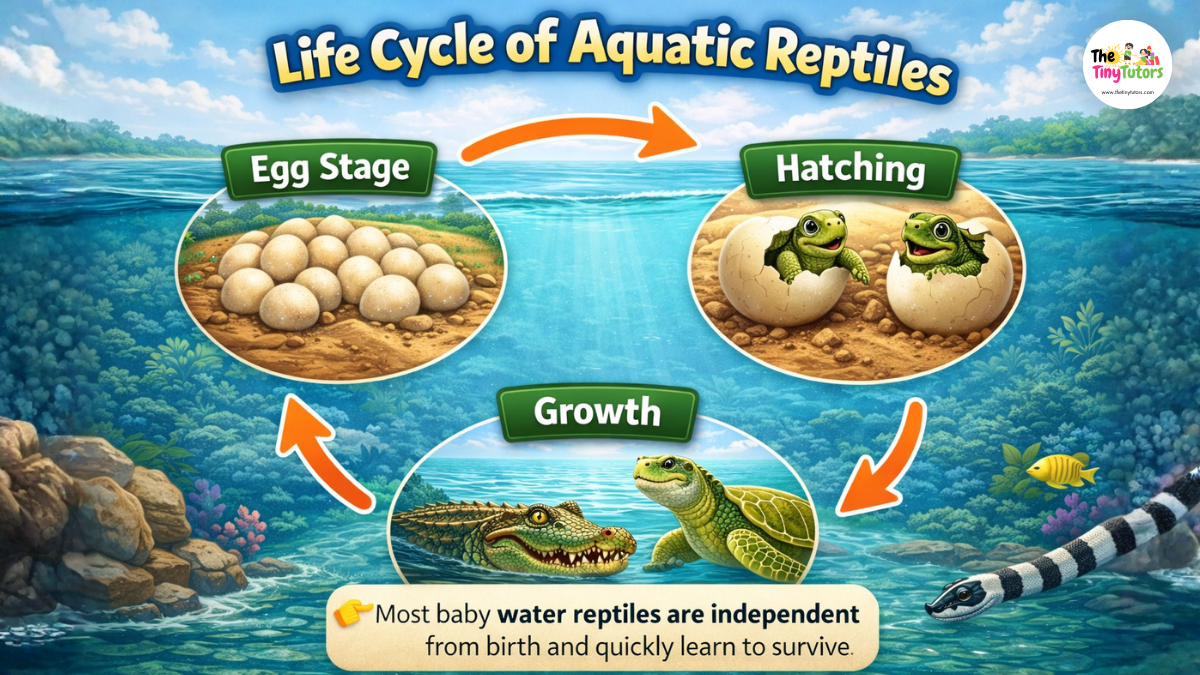
These reptiles follow a simple but interesting life cycle.
- Egg Stage: They lay eggs on land in safe places
- Hatching: Baby reptiles hatch from eggs
- Growth: They grow into adults over time
👉 Most baby water reptiles are independent from birth and quickly learn to survive.
👉 To learn more, check our guide on Reptile Life Cycle.
🏡 Aquatic Reptiles as Pets
Can They Be Pets?
Some turtles can be pets
Safety Tips
- Always take adult help
- Keep habitat clean
🦕 Ancient Aquatic Reptiles
Ancient aquatic creatures were amazing creatures that lived millions of years ago and ruled the oceans long before modern animals existed. 🌊
These aquatic creatures were different from today’s reptiles, but they had special features that helped them swim and survive in water.
🦖 What Were Ancient Aquatic Reptiles?
Ancient aquatic creatures were prehistoric reptiles that lived in seas and oceans.
- They were large and powerful swimmers
- Many looked like a mix of fish and reptiles
- They were among the top predators in ancient oceans
👉 These early aquatic creatures show how animals adapted to life in water over time.
🌊 How Did They Live?
These aquatic creatures lived their entire lives in water environments.
- They swam using strong tails and fins
- They hunted fish and other sea animals
- Some came to the surface to breathe air
👉 Their bodies were specially designed for fast swimming and hunting.
🐟 Examples of Ancient Reptiles
Here are some famous ancient aquatic creatures kids should know:
- Ichthyosaurus 🐬
👉 Looked like a dolphin and was a very fast swimmer - Mosasaurus 🦈
👉 A giant sea reptile with sharp teeth that hunted large prey
👉 These reptiles were some of the strongest animals in prehistoric oceans!
⏳ Why Did They Disappear?
Ancient aquatic creatures became extinct millions of years ago.
- Big changes in climate affected their survival
- Food sources became limited
- Major extinction events wiped out many species
👉 Even though they are gone, scientists study fossils to learn about these amazing reptiles.
👉 Did you know?
Some ancient aquatic creatures were longer than a school bus! 😲
🎉 Fun Facts About These Reptiles
👉 Did you know? 🐢
Some turtles can live for more than 100 years!
👉 Did you know? 🐊
Crocodiles can close their nostrils while underwater!
👉 Did you know? 🐍
Sea snakes are among the most venomous reptiles in the world!
👉 Did you know? 🦎
Marine iguanas are the only lizards that swim in the ocean!
🎯 Quiz Time
Q1: Which reptile swims in oceans?
A) Dog
B) Sea turtle ✅
❓ FAQs
What are aquatic reptiles?
Aquatic creatures are reptiles that live in water habitats like rivers, lakes, and oceans. They breathe air but spend most of their time swimming and hunting.
Name 5 aquatic reptiles for kids
Some common reptiles include crocodiles, sea turtles, sea snakes, water snakes, and terrapins. These animals are great swimmers and live near water.
Do aquatic reptiles live only in water?
No, many aquatic creatures also come onto land for resting, laying eggs, or basking in the sun. They need both land and water to survive.
Are sea reptiles dangerous?
These reptiles like crocodiles can be dangerous, but many others like turtles are harmless. It is always best to observe them from a safe distance.
What is the difference between aquatic reptiles and amphibians?
Aquatic creatures have dry, scaly skin and breathe air using lungs. Amphibians have moist skin and can live both in water and on land in different ways.
👉 Want to compare reptiles with amphibians? Read our detailed guide on Amphibians vs Reptiles.
🏁 Conclusion
Aquatic reptiles are truly amazing animals that show us how life can adapt to water and land in smart ways. 🌊🐢
In this guide, we learned:
- What aquatic reptiles are
- Where they live
- What they eat
- How they survive in water
These creatures are not just interesting but also very important for nature. They help keep rivers, lakes, and oceans balanced.
👉 Learning about these creatures helps kids understand animals, nature, and science in a fun and simple way.
These reptiles are true survivors of nature, and learning about them makes science fun and exciting for kids!
So next time you see a turtle or crocodile, remember — you are looking at a smart survivor of the animal world! 😄