
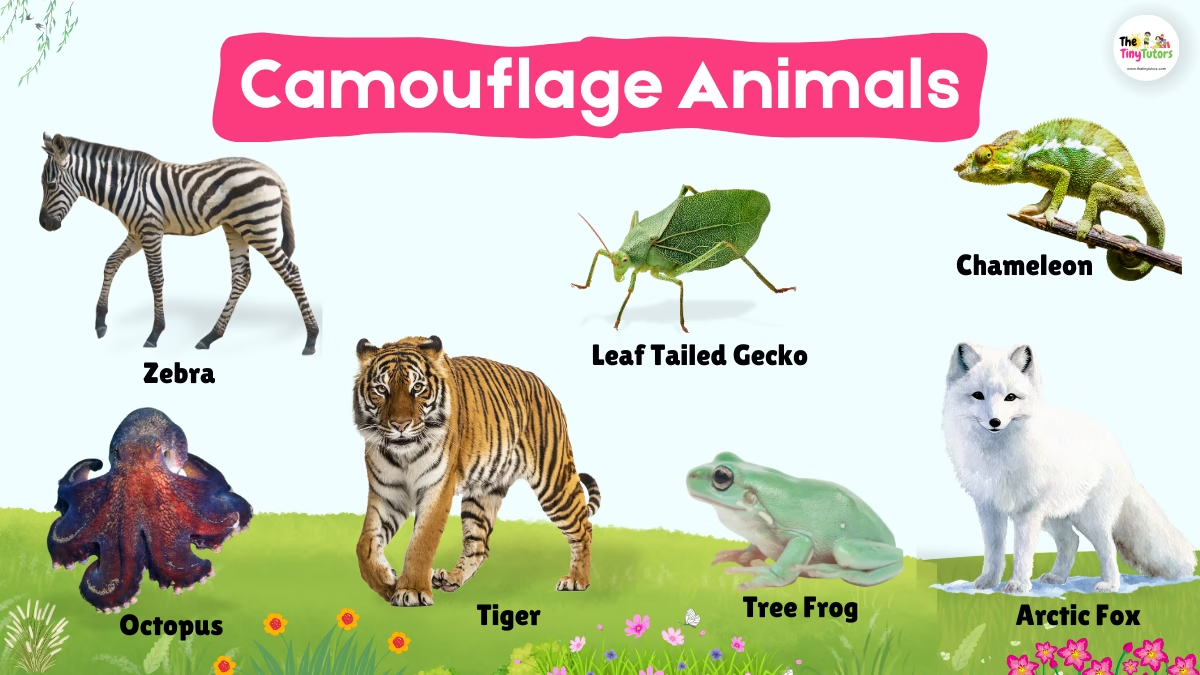
Camouflage Animals are nature’s clever hiders. They use colors, shapes, and patterns to mix with their surroundings so predators cannot find them easily. Many wild animals use special survival skills like camouflage to stay safe in nature.
- 🌿 What Are Camouflage Animals?
- 🌿 Why Do Animals Use Camouflage?
- 🌿 Types of Camouflage Animals
- ⭐ Shape Camouflage Animals
- 🐅 Pattern Camouflage Animals
- ❄️ Seasonal Camouflage Animals
- 🌿 12 More Amazing Animal Hiders 🐾
- 🌿 How Camouflage Helps Animals Survive
- 🌿 Fun Facts About Camouflage Animals 🧠✨
- 🌿 Camouflage Animals vs Non-Camouflage Animals
- 🌿 Can Humans Use Camouflage Like Animals?
- 🌿 Questions Kids Ask
- 🌿 Summary:
According to the scientific definition of camouflage from National Geographic, animals use camouflage to disguise their location and movement so they can avoid predators or sneak up on prey.
This fun guide is specially written for learning kids, parents, and teachers.
Let’s explore this amazing natural superpower together! 😊
🌿 What Are Camouflage Animals?
Some animals are nature’s masters of hide-and-seek! They have a special skill that helps them blend into their surroundings so predators cannot easily spot them.
Camouflage meaning is simple:
👉 To hide by looking like your surroundings.
🌍 Fun Example for Kids:
Imagine wearing a green t-shirt in a garden. 🌱
Your friends may not notice you while playing hide-and-seek. That’s exactly how these clever animals hide in nature!
🧠 Tip:
Animals don’t become invisible—they just make it really hard for others to see them.
🌿 Why Do Animals Use Camouflage?
Animals don’t use camouflage for fun—they use it to stay safe, find food, and survive longer. Think of it as nature’s safety jacket!
🐾 Main Reasons Animals Hide:
Protection from predators: Staying hidden is often safer than running or fighting.
Hunting food: Predators like tigers or owls sneak up on prey without being seen.
Living longer in the wild: Blending with the environment gives animals a better chance to survive.
🌟 Story for Kids:
A little mouse hides under leaves so the owl cannot see it. Using its natural hiding skill, the mouse stays safe and grows up to explore the forest!
🌿 Types of Camouflage Animals
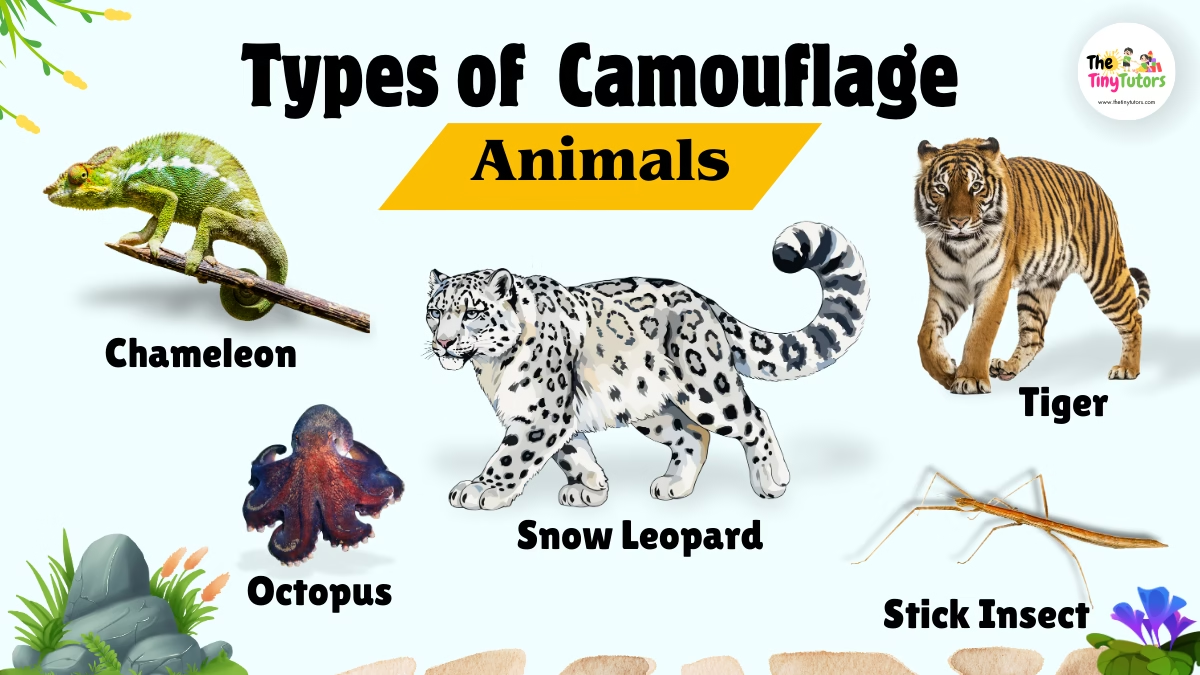
Animals survive using four clever methods:
- 🎨 Color blending helps bodies match surroundings.
- 🍃 Shape copying makes animals resemble leaves, sticks, or stones.
- 🐅 Broken patterns confuse body outlines.
- ❄️ Seasonal colors change with weather.
🧠 Each species depends on unique survival techniques to avoid danger safely.
Many animals also use protective coloration — special colors or patterns that help them blend into their environment — which is explained in detail on Britannica Kids
🎨 Color Camouflage Animals
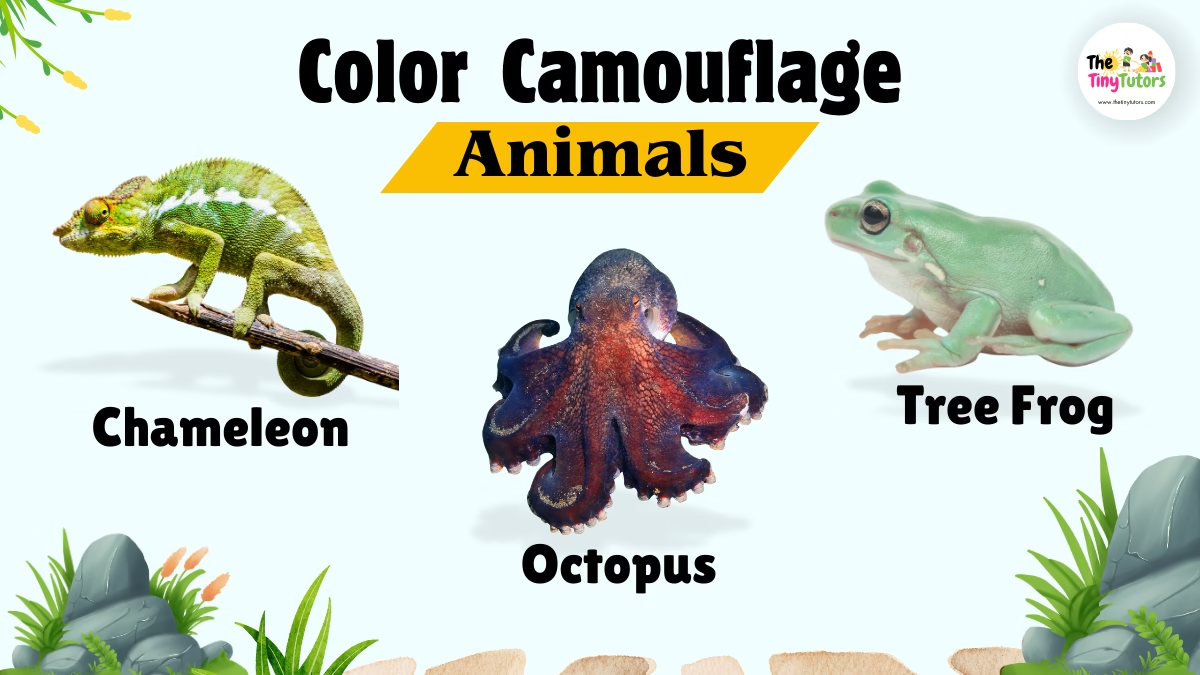
(Animals that change or match colors)
1️⃣ Chameleon 🦎
The chameleon is one of the smartest hiders in nature. Chameleons are colorful reptiles, and many rainforest reptiles use similar hiding skills to survive.
- 🎨 It can change its skin color to match leaves, branches, or rocks
- 😮 Color change also shows mood (happy, angry, or scared)
- 🌿 Helps it avoid danger and surprise insects
🧠 Fun Tip for Kids:
Chameleon doesn’t change color only to hide—it also does it to talk without words!
2️⃣ Octopus 🐙
The octopus is the underwater camouflage champion.
- 🌊 Changes color and texture of its skin
- 🪨 Can look like rocks, sand, or coral
- ⚡ Changes color in less than one second
🧠 Did You Know?
An octopus can even make its skin look bumpy like real stones!
3️⃣ Tree Frog 🐸
Tree frogs are small but super smart.
- 🍃 Green skin helps them blend with leaves
- 🌧️ Some frogs change shade based on light and temperature
- 🦟 Camouflage helps them catch insects easily
🧠 Kid Fact:
If a leaf moves, you notice it. But if a frog looks like a leaf—you won’t! 😄
⭐ Shape Camouflage Animals
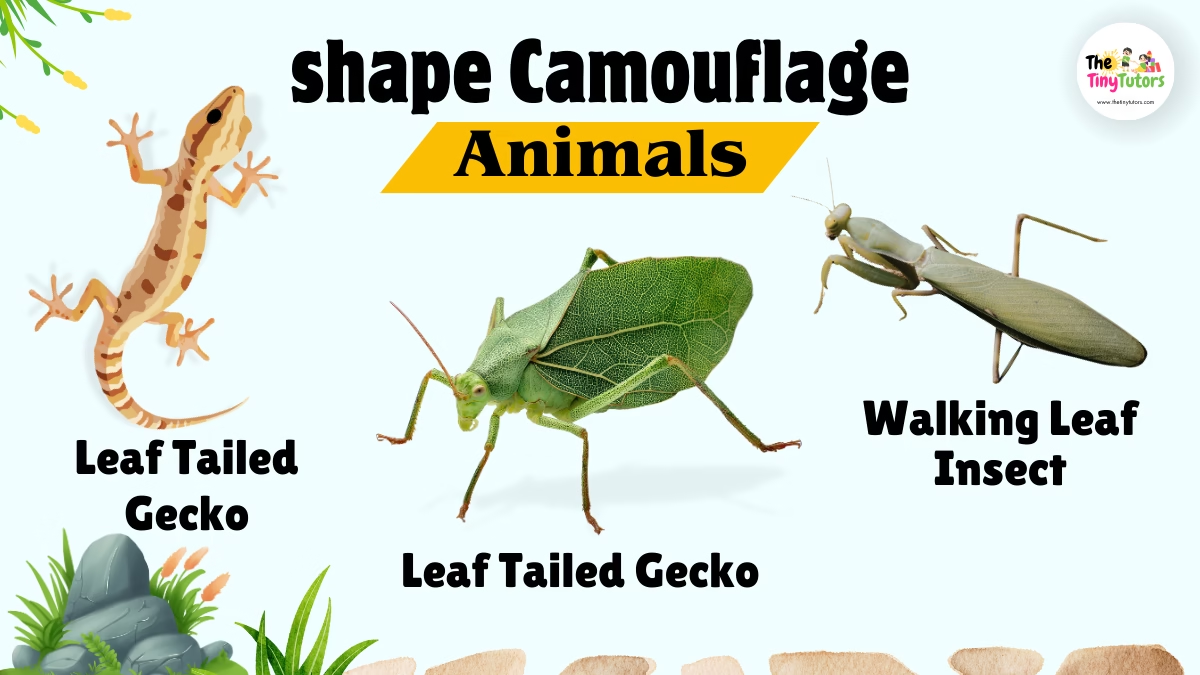
(Animals that copy shapes)
4️⃣ Stick Insect 🪵
This insect is a living stick!
- 🌳 Body looks exactly like a thin branch
- 🧍♂️ Stays still for long time to avoid danger
- 🍃 Even moves like branches in the wind
🧠 Imagine:
You see a tree… but one stick suddenly walks away! 😲
5️⃣ Leaf-Tailed Gecko 🦎🍂
This gecko is a leaf copy expert.
- 🍂 Tail looks like a dry leaf
- 🌿 Skin has leaf-like lines and colors
- 🌙 Active at night for extra safety
🧠 Cool Fact:
Its tail even has fake bite marks like old leaves!
6️⃣ Walking Leaf Insect 🍃
This insect looks like a moving leaf.
- 🍀 Green or brown body matches real leaves
- 🐌 Walks slowly like leaves falling
- 🌬️ Rocks back and forth like leaves in wind
🧠 Funny Thought:
It’s a leaf… but it has legs! 😂
🐅 Pattern Camouflage Animals
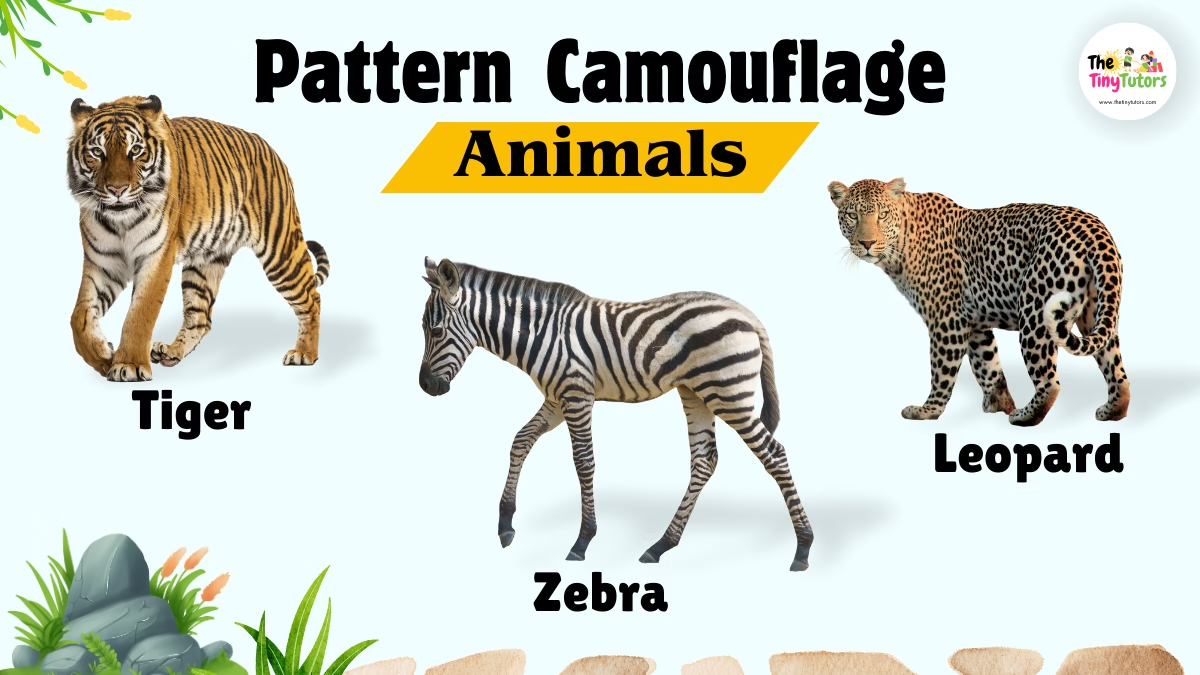
(Animals that use stripes and spots)
7️⃣ Tiger 🐅
Tiger stripes are not just beautiful—they are useful.
- 🌾 Stripes match jungle grass and shadows
- 👀 Breaks body shape so prey can’t see clearly
- 🌳 Helps tiger move quietly
🧠 Surprise Fact:
Every tiger has different stripes, just like fingerprints!
8️⃣ Zebra 🦓
Zebra stripes confuse predators.
- 👥 When zebras stand together, stripes mix
- 🌀 Predators find it hard to choose one zebra
- 🏃 Helps protect the group
🧠 Easy Example:
Too many stripes = confused lion 😵💫
9️⃣ Leopard 🐆
Leopard spots are perfect jungle patterns.
- 🌤️ Spots look like sunlight through trees
- 🌳 Helps hide on branches and grass
- 🐾 Makes leopard a silent hunter
🧠 Did You Know?
Leopards can disappear even in open areas!
❄️ Seasonal Camouflage Animals
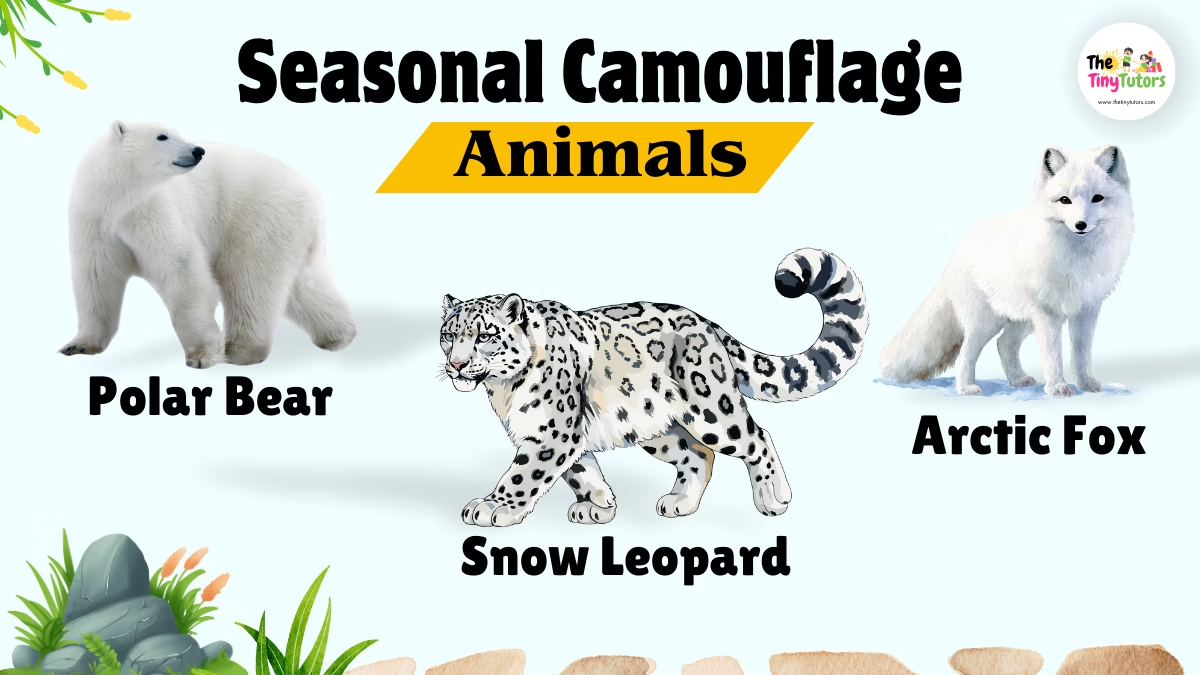
(Animals that change with weather)
🔟 Snow Leopard 🐆❄️
Snow leopard is the ghost of mountains.
- 🏔️ Grey-white fur blends with rocks and snow
- 🌨️ Thick fur keeps it warm
- 👣 Hard to spot even in daylight
🧠 Nicknamed:
“The Invisible Cat of the Mountains” 👻
1️⃣1️⃣ Arctic Fox 🦊
This fox changes color with seasons.
- ❄️ Winter: White fur for snow
- 🌾 Summer: Brown/grey fur for land
- 🐾 Thick fur keeps it warm
🧠 Smart Trick:
Same animal, two different jackets! 👕
1️⃣2️⃣ Polar Bear 🐻❄️
The biggest snow hider!
- ❄️ White fur blends with ice
- 🧊 Black skin under fur keeps it warm
- 🐟 Helps sneak up on seals
🧠 Cool Fact:
Polar bears are not truly white—their fur is transparent!
🌿 12 More Amazing Animal Hiders 🐾
Below is a learning list of Animals That Are Experts at Hiding that kids love:
Many of these animal hiders are insects, and kids can learn more insect names in a fun way.
| No. | Animal Name | How It Uses Camouflage |
|---|---|---|
| 1️⃣ | Moth | Matches tree bark 🍂 |
| 2️⃣ | Stonefish | Looks like a rock |
| 3️⃣ | Crab Spider | Flower colors |
| 4️⃣ | Snowy Owl | White feathers hide in snow ❄️ |
| 5️⃣ | Praying Mantis | Matches flowers and plants 🌸 |
| 6️⃣ | Katydid | Leaf-like wings confuse enemies 🍀 |
| 7️⃣ | Flounder Fish | Hides flat in sand at sea bottom 🐟 |
| 8️⃣ | Desert Lizard | Sandy color blends with desert 🏜️ |
| 9️⃣ | Pygmy Seahorse | Matches coral color perfectly 🪸 |
| 🔟 | Dead Leaf Butterfly | Looks like a dry leaf when wings close 🍁 |
| 1️⃣1️⃣ | Ptarmigan Bird | Changes color with seasons 🌦️ |
| 1️⃣2️⃣ | Leafy Sea Dragon | Looks like floating seaweed 🌊 |
🌿 How Camouflage Helps Animals Survive
🎯 Nature’s Hide & Seek Game: Camouflage helps animals hide from predators like lions, birds, and snakes.
🍽️ Food Chain Support: Hunters like tigers Escape notice until the right moment.
🛡️ Defense for Weak Animals: Small animals like insects survive without claws or teeth.
Without camouflage, many Camouflage Animals would disappear from nature.
🌿 Fun Facts About Camouflage Animals 🧠✨
Kids love these facts!
🤯 Some animals change color in seconds
👀 Some animals can hide without moving
🌈 Octopus can copy sand, rocks, and corals
🌿 Nature teaches animals secret tricks
These facts make learning about hidden animals exciting and memorable.
🌿 Camouflage Animals vs Non-Camouflage Animals
| Feature | Camouflage Animals | Non-Camouflage Animals |
|---|---|---|
| Hiding ability | Very strong | Very weak |
| Survival rate | Higher | Lower |
| Defense style | Smart hiding | Speed or strength |
| Energy use | Less | More |
This comparison helps kids understand why camouflage matters.
🌿 Can Humans Use Camouflage Like Animals?
Yes! Humans learn from nature 🌍
👕 Where Humans Use Camouflage:
🪖 Army uniforms
📸 Wildlife photographers
🎨 Cartoons & movies
🌿 Questions Kids Ask
Q1: Do animals stay hidden forever ❓
A1: No, camouflage works best when animals stay still.
Q2: Can camouflage fail ❓
A2: Yes, movement or wrong background can expose them.
Q3: Do baby animals use camouflage ❓
A3: Yes! Many babies are born with natural hiding colors.
🌿 Summary:
Why Camouflage Animals Are Nature’s Smartest Creatures.
🌟 They survive without fighting
🌟 They use colors wisely
🌟 They teach us nature’s intelligence
Learning about Camouflage Animals builds curiosity, creativity, and respect for wildlife in young minds 🧒💚.
📌 Learning Tip for Kids
Try spotting animals in pictures — can you find who is hiding? 👀
Nature learning becomes fun with camouflage!