
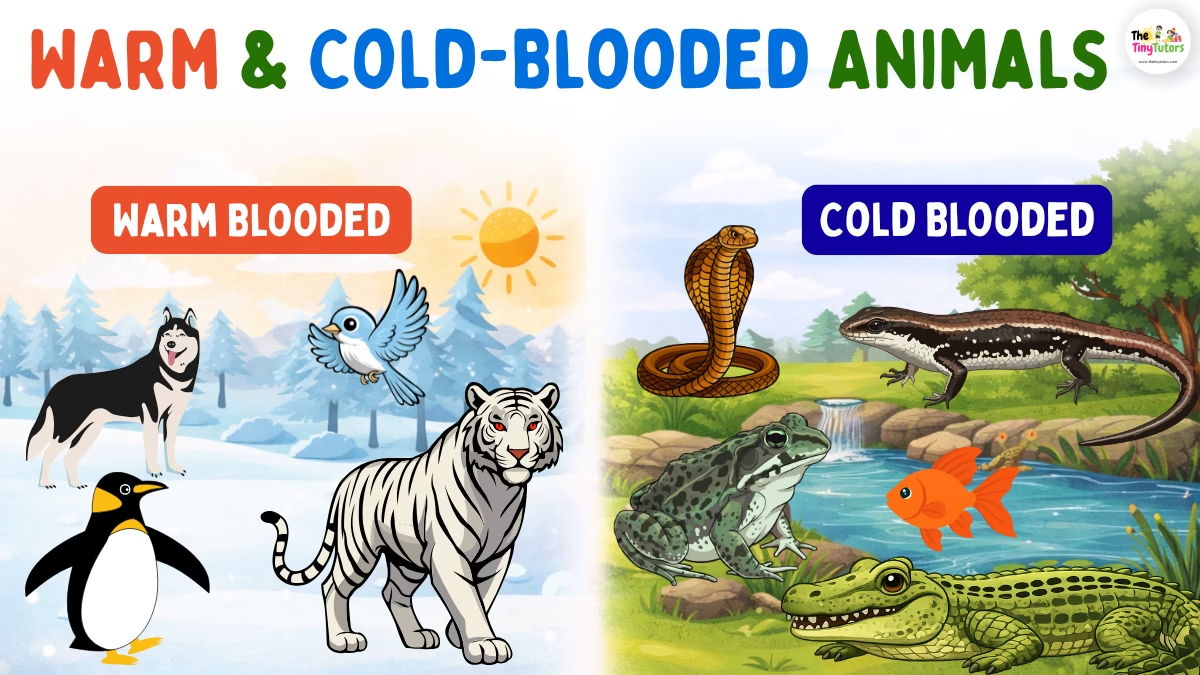
Learning about Warm and Cold-Blooded Animals for Kids is exciting because it helps children understand how animals live in different weather 🌞❄️
- What Are Warm and Cold-Blooded Animals? 🤔
- Warm-Blooded Animals Definition for Kids 🐻❄️
- Cold-Blooded Animals Definition for Kids 🦎☀️
- Warm vs Cold-Blooded Animals (With Picture) 📊
- Are Humans Warm-Blooded? 👨👩👧
- Why Cold-Blooded Animals Slow Down in Winter ❄️
- Warm and Cold-Blooded Animals Facts for Kids 🐾
- Why Should Kids Learn About Warm and Cold-Blooded Animals? 📚
- Quick Revision Summary 📝
- Common Questions Kids Ask ❓
- Conclusion 🌱
Some animals stay warm all by themselves, while others need sunlight to feel warm. Let’s explore this topic in a fun, easy, and school-friendly way!
What Are Warm and Cold-Blooded Animals? 🤔
When we talk about What Are Warm and Cold-Blooded Animals?, we are learning how animals control their body temperature.
Body temperature means how hot or cold an animal’s body is from inside.
Animals are grouped into two types:
| Type | How Body Temperature Works | Easy Meaning for Kids |
|---|---|---|
| Warm-Blooded | Make heat inside their body | “I stay warm myself!” 🔥 |
| Cold-Blooded | Get heat from outside | “I need the sun!” ☀️ |
This classification helps kids understand why:
A dog can run in snow ❄️
A lizard sits quietly on a sunny rock 🪨
That’s the basic idea of warm and cold-blooded animals for kids.
Warm-Blooded Animals Definition for Kids 🐻❄️
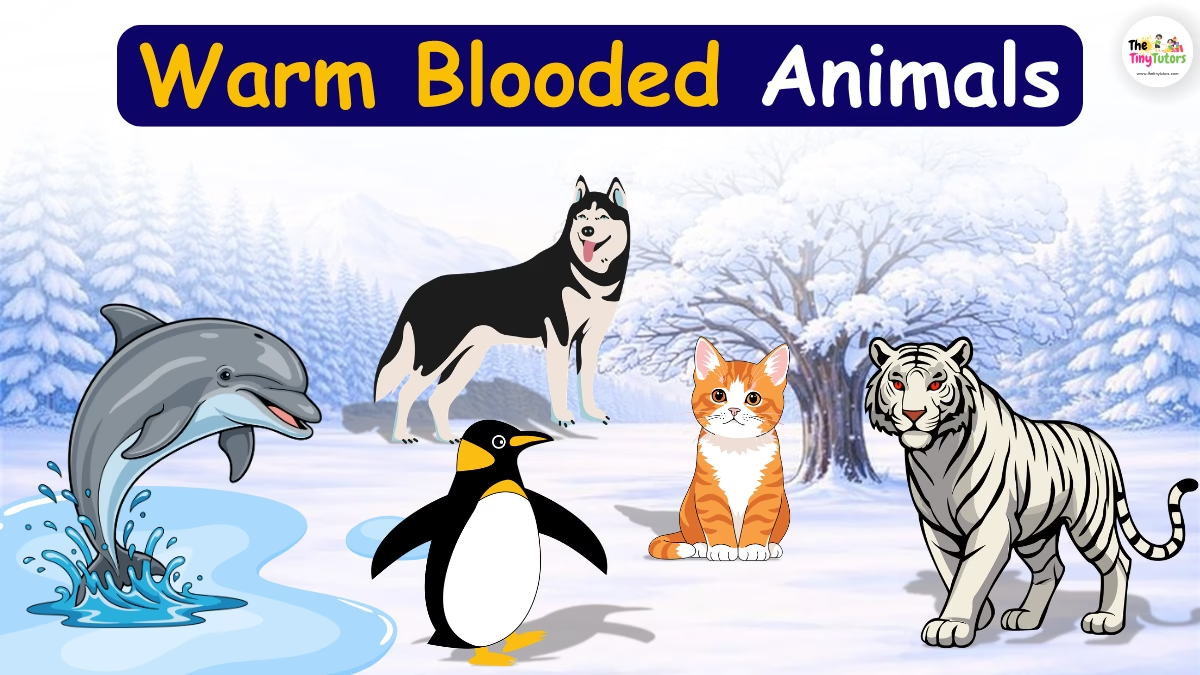
The Warm-Blooded Animals Definition for Kids is simple:
Warm-blooded animals can keep their body temperature nearly the same, even when the weather changes.
Whether it is hot or freezing cold, their body works hard to stay balanced.
How Do Warm-Blooded Animals Stay Warm?
Step-by-step:
1️⃣ They eat food
2️⃣ Their body turns food into energy
3️⃣ Energy produces heat 🔥
4️⃣ Fur, feathers, or fat trap the heat inside
Because of this system, they stay active in all seasons.
Examples of Warm-Blooded Animals (10 Warm-Blooded Animals) 🐶🐦
Here are 10 easy examples children recognize:
| Animal | Special Feature |
|---|---|
| Dog 🐕 | Plays in winter |
| Cat 🐈 | Active year-round |
| Human 👦 | Body stays warm |
| Cow 🐄 | Lives in different climates |
| Horse 🐎 | Runs in cold air |
| Bird 🐦 | Flies in chilly mornings |
| Dolphin 🐬 | Warm even in cold ocean |
| Whale 🐋 | Thick fat keeps warm |
| Tiger 🦁 | Active in hot regions |
| Penguin 🐧 | Stays warm even in icy Antarctica |
All mammals and birds belong to this group.
That’s an important part of understanding warm and cold-blooded animals for kids.
✅ Why they stay active in winter: Their bodies make heat from the inside.
Cold-Blooded Animals Definition for Kids 🦎☀️
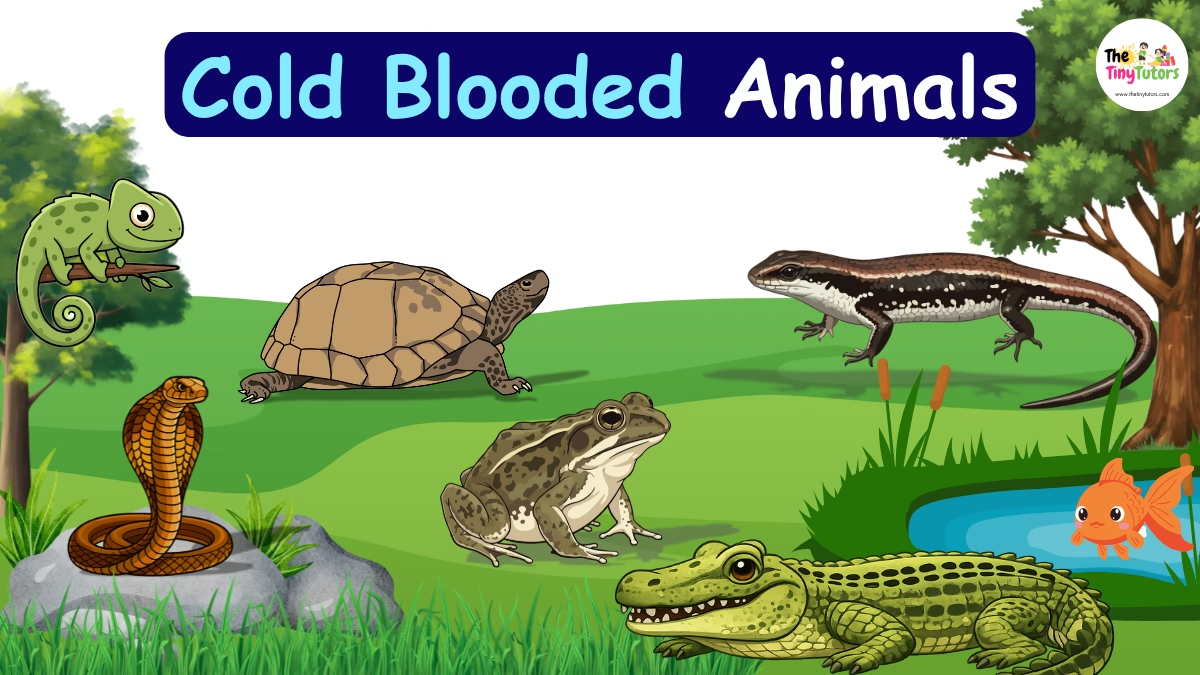
The Cold-Blooded Animals Definition for Kids is:
Cold-blooded animals cannot control their body temperature internally. Their body temperature changes with the environment.
If it’s cold → they slow down.
If it’s warm → they become active.
How Do Cold-Blooded Animals Warm Up?
They:
Sit in sunlight ☀️
Rest on warm rocks 🪨
Stay in warm water 🌊
This is why you often see reptiles basking in the sun.
Examples of Cold-Blooded Animals (10 Cold-Blooded Animals) 🐍🐟
Here are 10 common examples:
| Animal | What Kids Observe |
|---|---|
| Lizard 🦎 | Sits on sunny walls |
| Snake 🐍 | Warms up in sunlight |
| Frog 🐸 | Slow in cool mornings |
| Fish 🐟 | Slower in cold water |
| Turtle 🐢 | Basks in sun |
| Crocodile 🐊 | Rests on riverbanks |
| Alligator 🐊 | Moves slowly in cold |
| Salamander 🦎 | Active in warmth |
| Chameleon 🦎 | Changes color and warms up in sunlight |
| Shark 🦈 | Most are cold-blooded |
These examples make warm and cold-blooded animals for kids easier to understand through observation.
✅ Fun Tip: If the weather changes, their speed changes too!
Warm vs Cold-Blooded Animals (With Picture) 📊
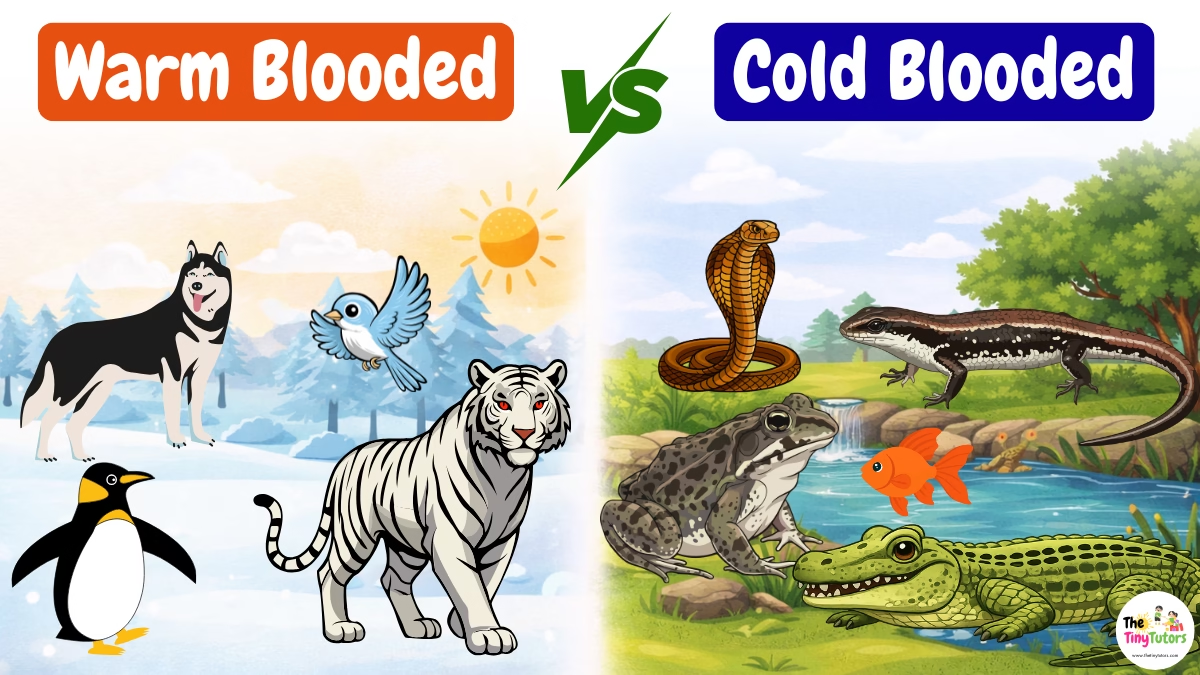
Below is a comparison table to explain the Difference Between Warm and Cold-Blooded Animals in an easy format.
| Feature | Warm-Blooded | Cold-Blooded |
|---|---|---|
| Body Heat | Produced inside 🔥 | Comes from outside ☀️ |
| Weather Effect | Little change | Big change |
| Energy Use | Eats more food | Eats less food |
| Activity in Winter | Active | Slow or resting |
| Examples | Dog, Bird, Human | Lizard, Fish |
This simple table helps kids compare and remember easily!
This clear table supports better learning of warm vs cold-blooded animals for kids.
Real-Life Examples Kids Can See 🌎
Learning becomes fun when kids observe real animals!
🐕 Dogs running in snow → Warm-blooded
🦎 Lizards sitting on sunny walls → Cold-blooded
🐟 Fish in aquariums moving slower in cool water → Cold-blooded
🐦 Birds flying in winter → Warm-blooded
Encourage kids to look around their garden, park, or home aquarium!
Are Humans Warm-Blooded? 👨👩👧
Many children ask: Are Humans Warm-Blooded?
Yes! Humans are warm-blooded.
Our body temperature stays around 37°C (98.6°F) even if it’s winter or summer.
Our body adjusts by:
Sweating in summer 💦
Shivering in winter 🥶
This shows how the human body controls heat automatically.
Why Cold-Blooded Animals Slow Down in Winter ❄️
Step-by-step explanation:
1️⃣ Cold weather lowers their body temperature
2️⃣ Muscles work more slowly
3️⃣ Movement becomes slower
4️⃣ Some animals even sleep for long periods (called hibernation)
This is an important scientific concept included in warm and cold-blooded animals for kids learning.
Warm and Cold-Blooded Animals Facts for Kids 🐾
Here are some fun and interesting facts:
All mammals are warm-blooded 🐶
All birds are warm-blooded 🐦
Most reptiles and amphibians are cold-blooded 🐍
Some fish can slightly control temperature
A turtle may sit in sunlight for hours ☀️
Polar bears survive extreme cold because of thick fat
Why Should Kids Learn About Warm and Cold-Blooded Animals? 📚
Learning about animal body temperature is not just for exams — it helps children understand how nature works in real life.
Here’s why this topic is important and meaningful:
1️⃣ Builds a Strong Science Foundation
When children learn how animals control body temperature, they understand:
- How living things survive in different climates
- How bodies use energy to stay warm
- Why weather affects some animals more than others
These ideas build a strong base for future biology and environmental science lessons.
2️⃣ Develops Observation and Thinking Skills 👀
This topic encourages children to observe the world around them.
They start noticing:
- Why lizards sit in sunlight
- Why birds fly even on cold mornings
- Why fish move differently in cool water
Instead of memorizing facts, children begin thinking like young scientists.
3️⃣ Connects Classroom Learning to Real Life 🌍
Science becomes more interesting when children see it happening around them.
Parents and teachers can make this topic practical by:
- Visiting parks or zoos
- Watching animal documentaries
- Asking simple questions like, “Why is that turtle sitting in the sun?”
This makes learning active and engaging.
4️⃣ Supports School Curriculum and Exams
Warm and cold-blooded animals are commonly included in:
- Primary science textbooks
- Environmental studies lessons
- Basic biology chapters
Clear understanding helps children answer questions confidently and accurately.
5️⃣ Encourages Respect for Nature 🌿
When children understand how animals survive:
- They appreciate wildlife more
- They become curious about ecosystems
- They develop empathy toward living creatures
This topic helps build both knowledge and responsibility toward nature.
Quick Revision Summary 📝
Warm-blooded animals make their own heat 🔥
Cold-blooded animals depend on the environment ☀️
Dogs, humans, birds → Warm-blooded
Lizards, snakes, fish → Cold-blooded
Weather affects cold-blooded animals more
Common Questions Kids Ask ❓
Q1: What is the main difference between warm and cold-blooded animals?
A1: The main difference is how they control their body temperature.
Warm-blooded animals:
- Produce their own body heat
- Stay active in both hot and cold weather
- Keep nearly the same internal temperature
Cold-blooded animals:
- Depend on sunlight or warm surroundings
- Slow down in cold weather
- Have body temperatures that change with the environment
This difference explains why their behavior changes in different seasons.
Q2: Are fish cold-blooded?
A2: Yes, most fish are cold-blooded.
Their body temperature changes according to the temperature of the water around them.
If the water becomes colder, their movements may become slower.
Some special fish species can slightly adjust their temperature, but most follow the cold-blooded pattern.
Q3: Are humans warm-blooded?
A3: Yes, humans are warm-blooded.
Our body stays close to 37°C (98.6°F).
When it is hot, we sweat to cool down.
When it is cold, we shiver to create heat.
This automatic system helps us stay healthy in different climates.
Q4: Can an animal change from cold-blooded to warm-blooded?
A4: No.
An animal is born as either warm-blooded or cold-blooded and remains that type throughout its life.
It cannot change from one group to the other.
Conclusion 🌱
Understanding warm and cold-blooded animals helps children see how amazing and well-designed nature is.
After learning this topic, children now know:
- Some animals produce their own body heat
- Others depend on sunlight or surroundings
- Weather affects different animals in different ways
- Humans belong to the warm-blooded group
- Most reptiles and fish are cold-blooded
This knowledge helps children:
✔️ Think more scientifically
✔️ Observe nature carefully
✔️ Understand animal behavior
✔️ Feel confident in school science
The next time children see a dog running in winter or a lizard resting in the sun, they will understand the reason behind it.