
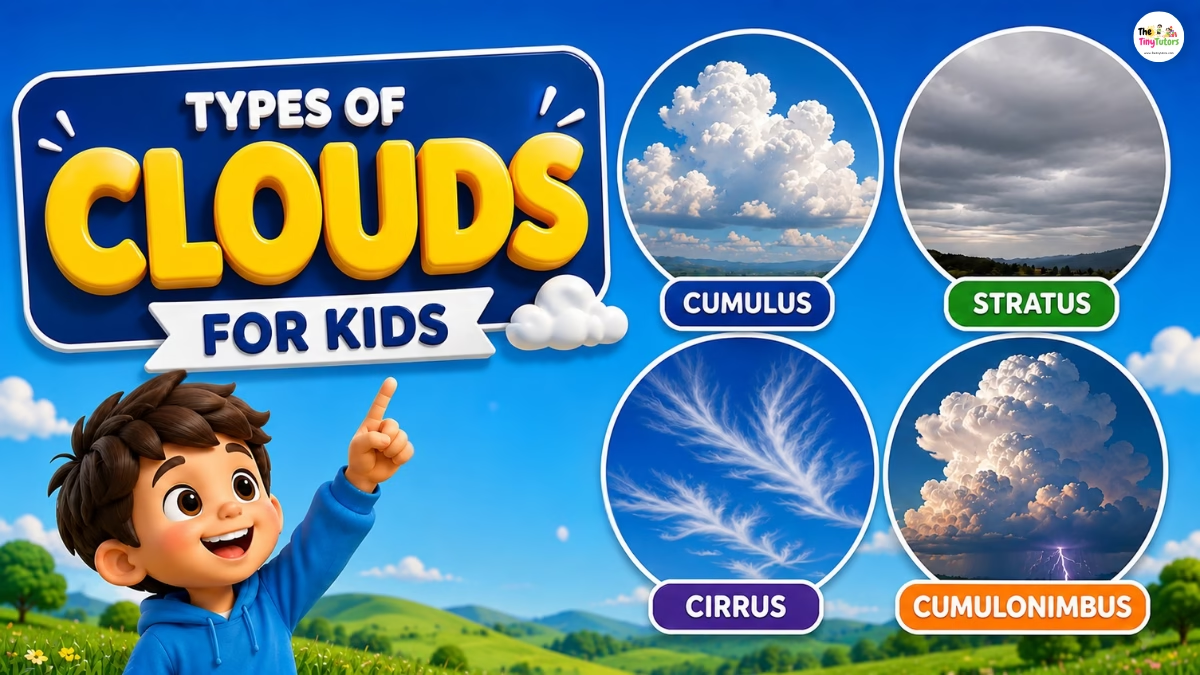
☁️ Have you ever looked up at the sky and spotted fluffy white clouds, long wispy clouds, or dark storm clouds? Every cloud has its own shape, name, and purpose. Learning about clouds helps children understand weather, nature, and the amazing water cycle.
- What Are Clouds?
- How Are Clouds Formed?
- Why Do Clouds Look Different?
- The 4 Main Types of Clouds for Kids
- Cloud Types Comparison Chart
- Why Are Clouds Important?
- Fun Cloud Facts for Kids
- Easy Cloud Activities for Kids
- Cloud Observation Activity
- Cloud Quiz for Kids
- Cloud Safety Tips
- Frequently Asked Questions
- Conclusion
In this guide, you’ll discover Types of Clouds for Kids in a fun and easy way. You’ll learn what clouds are, how clouds form, why they look different, and how to identify the four main cloud types. Along the way, you’ll enjoy fun facts, simple activities, and an exciting quiz that make learning about weather easy and enjoyable.
🌤️ Let’s explore the amazing world of clouds together!
What Are Clouds?
Clouds are groups of tiny water droplets or ice crystals floating high in the sky. They float high in the sky and are made of millions of tiny water droplets or tiny ice crystals. Even though clouds look soft like cotton, they actually contain a lot of water.
Learning about Types of Clouds for Kids helps children understand how weather changes from sunny days to rainy afternoons. Clouds are an important part of our planet because they help move water around the Earth through the water cycle.
🔭 Want to explore how scientists study clouds? NASA explains clouds in a simple way for young learners.
Children can see different clouds almost every day. Some are bright and fluffy, while others are dark and heavy before a storm. Looking at the sky is a fun way to become a young weather explorer! 🌤️
Simple Definition for Kids
A cloud is a collection of tiny water droplets or tiny ice crystals floating in the sky. Understanding this simple definition makes learning the Types of Clouds for Kids much easier.
Think of a cloud as a giant group of tiny drops of water that are so light they can stay in the air.
Imagine This! 💡
When you breathe onto a cold window, you can see tiny drops of water appear. Clouds form in a similar way, but much higher in the sky.
Why Are Clouds Important?
Clouds help bring rain, provide shade, and keep the water cycle moving. They help keep our planet healthy and full of life.
Here are some important jobs clouds do:
- 🌧️ Bring rain that helps plants and animals.
- 🌾 Help farmers grow fruits, vegetables, and grains.
- 🌍 Keep the water cycle moving.
- 🌤️ Give shade on hot sunny days.
- 🌡️ Help balance Earth’s temperature.
- 💧 Store water before it falls as rain or snow.
Without clouds, rivers, lakes, forests, and even people would not get enough fresh water.
What Are Clouds Made Of?
Many children think clouds are made of smoke or cotton, but that’s not true!
Clouds are made of:
- 💧 Tiny water droplets
- ❄️ Tiny ice crystals (especially in colder skies)
- 🌬️ Air that keeps these tiny drops floating together
Although each tiny droplet is very light, millions of them together create the beautiful clouds we see every day.
How Are Clouds Formed?
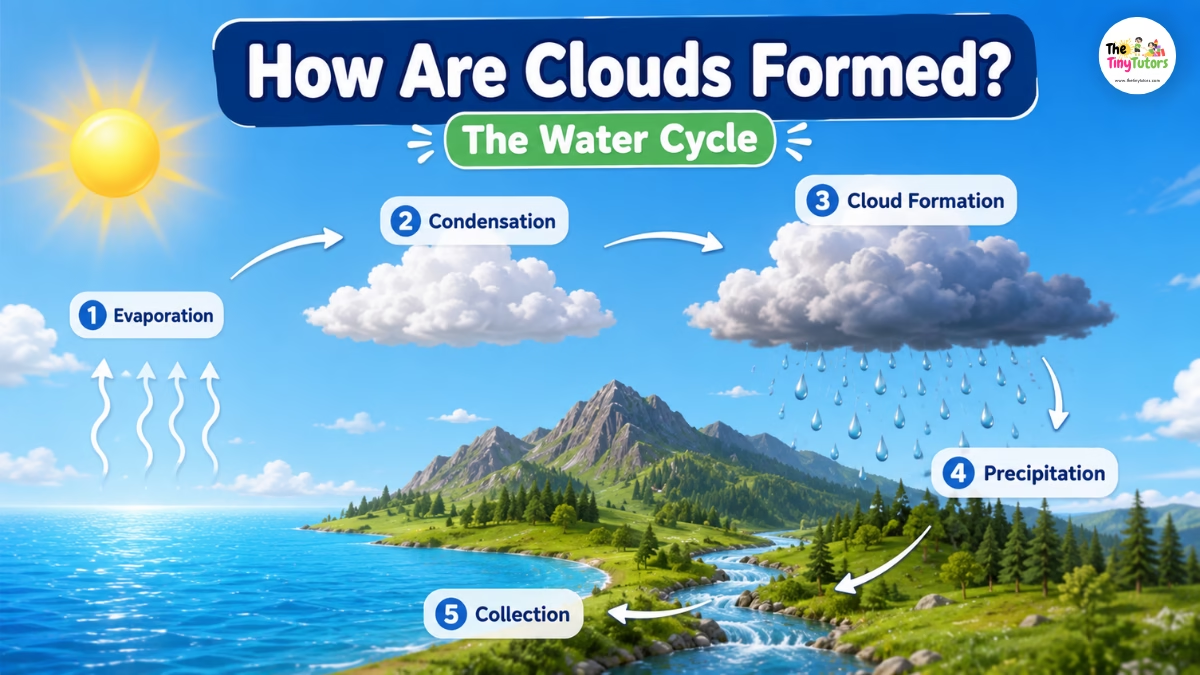
Have you ever wondered how are clouds formed for kids? The answer is easier than you might think!
Clouds form when warm water from oceans, rivers, lakes, and even puddles changes into water vapor and rises into the sky. As the vapor rises higher, the air becomes cooler. The tiny water vapor changes back into tiny droplets or ice crystals. When millions of these tiny droplets gather together, they form a cloud.
Oceans provide most of the water that helps form clouds. If you love learning about the ocean, explore our Sea Animals Names in English guide and discover the amazing creatures living there.
This amazing process is part of the water cycle, which keeps fresh water moving all around the Earth.
🔬 Curious to learn more? NASA Science explains how clouds form using simple examples and real Earth observations.
Understanding Types of Clouds for Kids becomes much easier when children first learn how clouds are created.
The Water Cycle Connection
The water cycle is nature’s way of recycling water again and again.
It works like this:
- ☀️ The Sun warms rivers, lakes, and oceans.
- 💨 Water changes into water vapor.
- ⬆️ Water vapor rises into the sky.
- 🌥️ The air cools the vapor.
- ☁️ Tiny droplets come together to form clouds.
- 🌧️ Rain or snow falls back to Earth.
- 💦 The cycle starts all over again.
Every cloud you see is an important part of this never-ending journey.
🌎 Want to learn more about how water moves around our planet? Read our Water Cycle for Kids guide to explore each step of the journey in a simple and fun way.
The Sun, Water, and Air Working Together
Clouds cannot form without teamwork!
Three things work together:
| Helper | What It Does |
|---|---|
| ☀️ Sun | Heats water and starts evaporation |
| 💧 Water | Changes into water vapor |
| 🌬️ Air | Carries water vapor high into the sky |
Together, they create the beautiful clouds we see every day and explain how different Types of Clouds for Kids begin to form.
An Easy Example Kids Can Understand
Imagine you are boiling water in a pot with an adult nearby.
As the water gets hot, steam rises into the air. When that warm steam touches something cooler, tiny water droplets appear.
Clouds form in a similar way—only much higher above the Earth and on a much bigger scale.
🌈 Remember: Steam from a pot is not exactly the same as a cloud, but it helps us understand how tiny water droplets gather together.
Why Do Clouds Look Different?
Have you noticed that some clouds look like fluffy cotton balls while others stretch across the sky like a blanket?
There are many different types of clouds, and each one looks different because of where and how it forms.
Learning Types of Clouds for Kids becomes easier when children know that clouds can change in shape, size, and color depending on the weather.
Different Heights
Some clouds float close to the ground, while others form very high in the sky.
Generally:
- ☁️ Low clouds often cover the sky.
- 🌤️ Middle clouds appear in layers or patches.
- 🪶 High clouds look thin and feathery.
The higher a cloud is, the colder the air around it becomes.
Different Temperatures
Temperature also changes how clouds look.
- 🌞 Warm air often forms fluffy white clouds.
- ❄️ Cold air can create icy, thin clouds high above the Earth.
- 🌧️ Storm clouds grow taller when warm and cool air meet.
That’s why clouds can look very different from one day to another.
Cloud patterns also change throughout the year. Explore our Seasons for Kids guide to see how weather changes during spring, summer, autumn, and winter.
Different Amounts of Water
Some clouds hold only a little water, while others carry enough to bring heavy rain.
For example:
- 💙 Small fluffy clouds usually mean fair weather.
- 🌦️ Thick gray clouds may bring light rain.
- ⛈️ Tall dark clouds often bring thunderstorms.
By watching the sky carefully, children can begin to guess what the weather might be like later in the day.
The 4 Main Types of Clouds for Kids
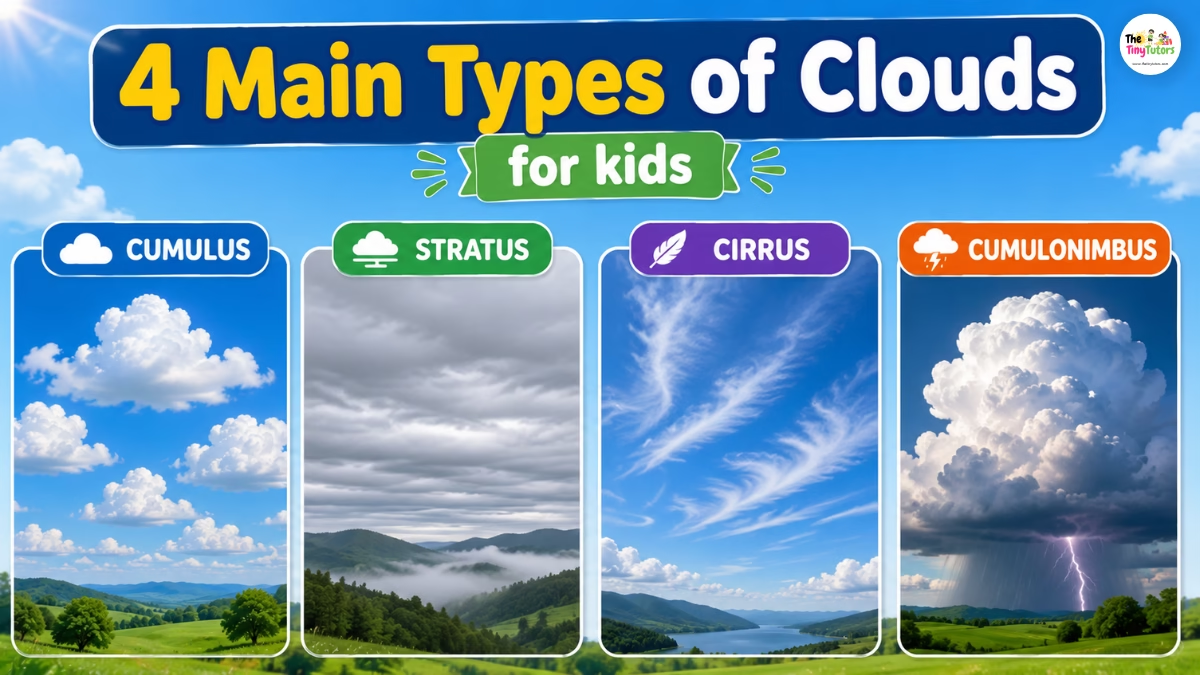
Did you know that scientists have identified many kinds of clouds? However, when children begin learning about weather, they usually start with the 4 main types of clouds. Each cloud has its own shape, height, and weather pattern.
Learning the Types of Clouds for Kids is much easier when you observe the sky and compare each cloud’s appearance. Let’s meet these amazing sky friends one by one! ☁️🌤️
1. Cumulus Clouds ☁️
Appearance
Cumulus clouds are the fluffy, white clouds that look like giant cotton balls or scoops of ice cream. They have flat bottoms and rounded tops.
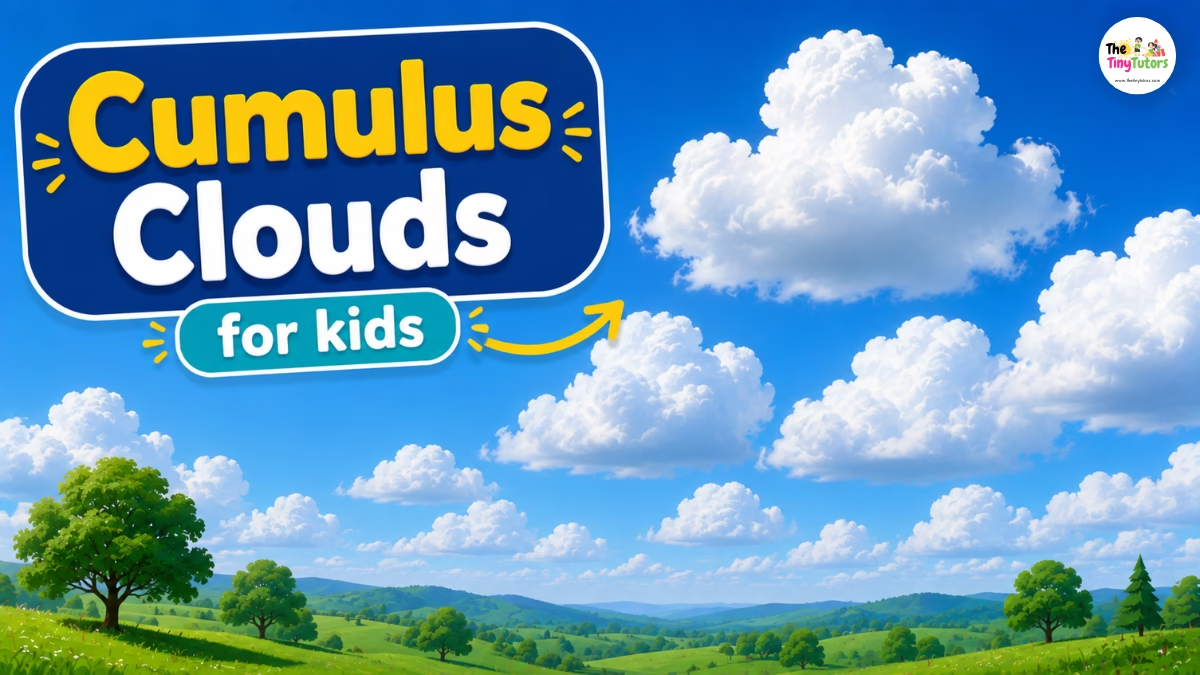
Many children enjoy spotting fun shapes in cumulus clouds. They may look like animals, castles, dinosaurs, or even smiling faces!
Weather
- 🌞 Usually appear on sunny days
- 🌤️ Often bring fair weather
- 🌦️ Can grow bigger before light rain if the air becomes very warm and moist
Fun Fact ⭐
The word “cumulus” comes from a Latin word that means “heap” or “pile,” which perfectly describes their puffy shape.
Where Are They Seen?
- Parks
- Farms
- Beaches
- Mountains
- Cities
- Almost anywhere on a pleasant day
Easy Memory Tip 🧠
Cumulus = Cotton Clouds
Think of a fluffy cotton ball floating across the sky.
2. Stratus Clouds 🌫️
Appearance
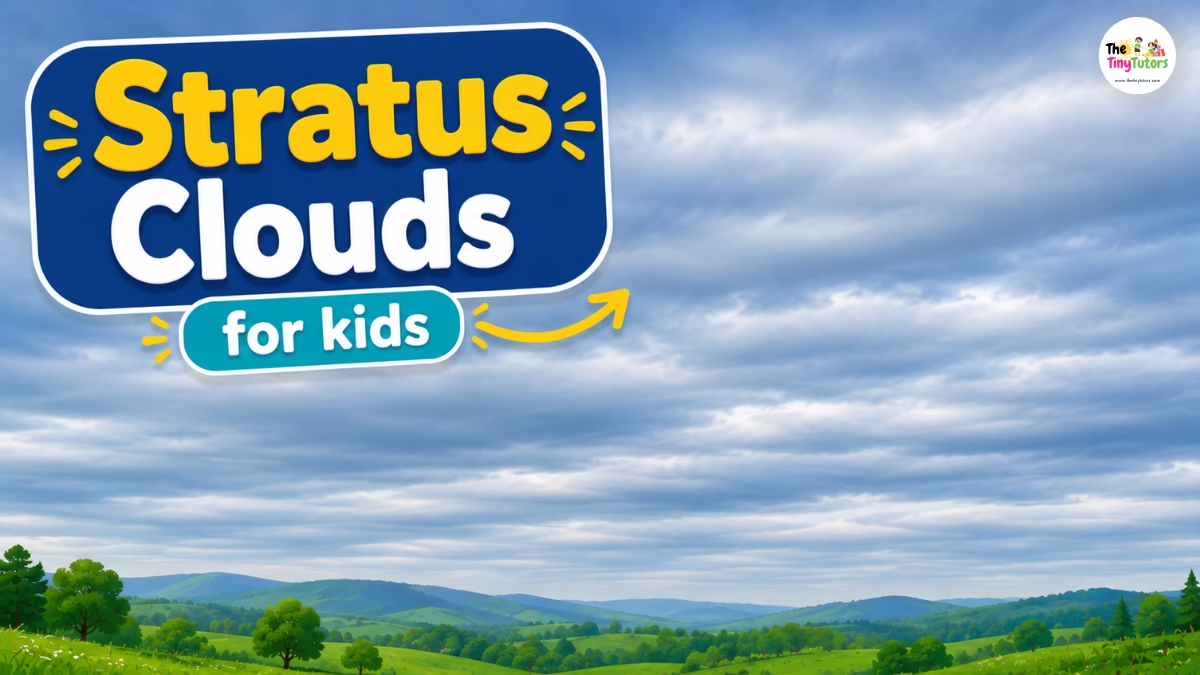
Stratus clouds spread across the sky like a soft gray blanket. Instead of looking fluffy, they form smooth layers that often cover a large area.
Sometimes they sit so low that they create fog near the ground.
Weather
- 🌥️ Cloudy weather
- 🌦️ Light rain or drizzle
- 🌫️ Foggy mornings
Fun Fact ⭐
Fog is actually a stratus cloud that forms very close to the Earth’s surface.
Where Are They Seen?
- Valleys
- Hills
- Coastal areas
- Cool mornings
- During cloudy weather
Easy Memory Tip 🧠
Stratus = Blanket Clouds
Imagine pulling a soft blanket across the entire sky.
3. Cirrus Clouds 🪶
Appearance
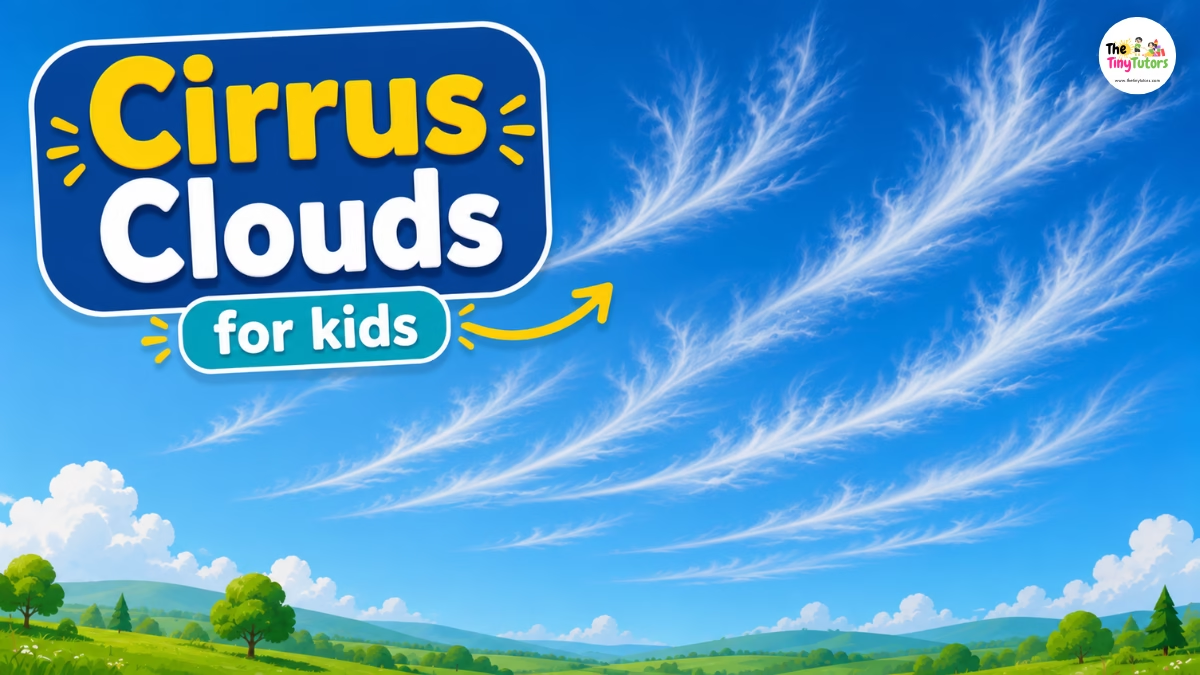
Cirrus clouds are thin, light, and feathery. They often look like white paintbrush strokes or soft bird feathers stretching across the blue sky.
They are among the highest clouds in the atmosphere.
Weather
- ☀️ Usually mean fair weather now
- 🌦️ May signal that weather could change soon
- 🌬️ Often appear before a storm arrives a day or two later
Fun Fact ⭐
Cirrus clouds are mostly made of tiny ice crystals because the air is extremely cold high above the Earth.
Where Are They Seen?
- Very high in the sky
- Above mountains
- Above oceans
- Anywhere during calm weather
Easy Memory Tip 🧠
Cirrus = Feather Clouds
Think of soft white feathers floating in the sky.
4. Cumulonimbus Clouds ⛈️
Appearance
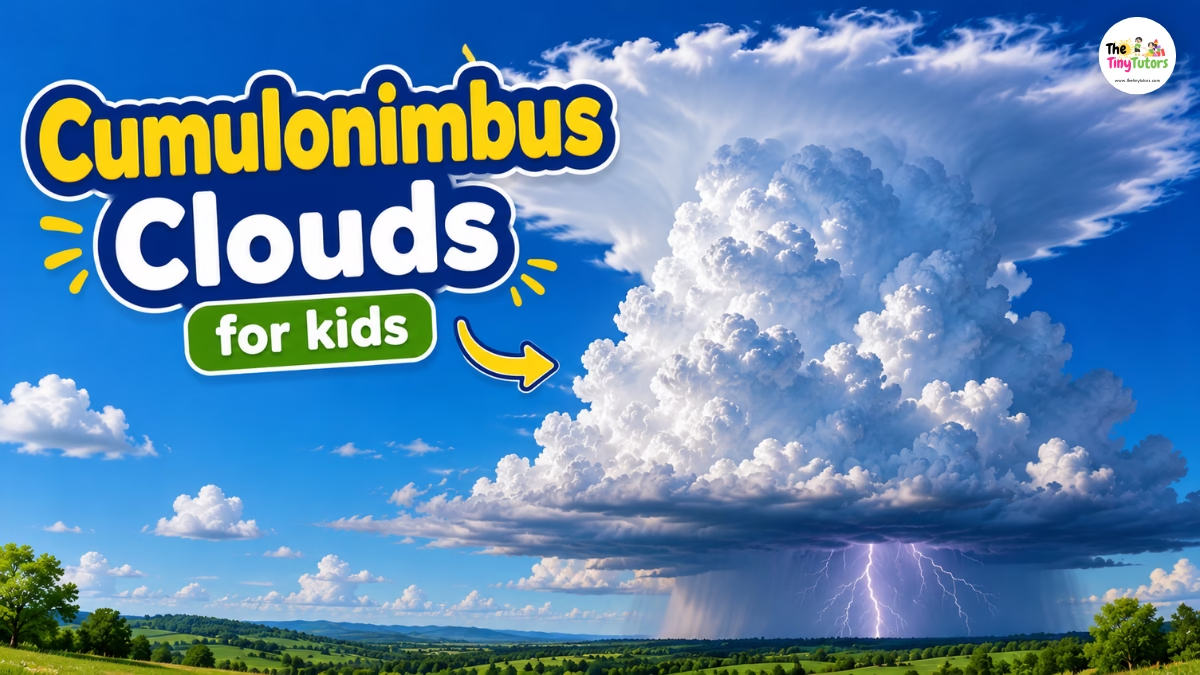
Cumulonimbus clouds are the tallest and biggest clouds. They grow high into the sky and often have dark bottoms with bright white tops.
These powerful clouds can stretch several kilometers into the atmosphere.
Weather
- ⛈️ Thunderstorms
- 🌧️ Heavy rain
- ⚡ Lightning
- 🌬️ Strong winds
- 🌨️ Sometimes hail
Fun Fact ⭐
Some cumulonimbus clouds grow so tall that their tops spread out like the shape of an anvil.
Where Are They Seen?
- Before thunderstorms
- During hot summer afternoons
- In tropical regions
- Wherever strong storms develop
Easy Memory Tip 🧠
Cumulonimbus = Storm Clouds
Whenever you hear thunder, look for these giant clouds—but always stay indoors and admire them safely.
Cloud Types Comparison Chart
The table below makes it easy to compare the 4 types of clouds for kids at a glance.
| Cloud Name | Shape | Height | Typical Weather | Easy Memory Tip |
|---|---|---|---|---|
| Cumulus | Puffy and fluffy | Low | Sunny or fair weather | ☁️ Cotton Ball |
| Stratus | Flat layers | Low | Cloudy, drizzle, fog | 🛏️ Blanket |
| Cirrus | Thin and feathery | High | Fair weather, weather changing | 🪶 Feather |
| Cumulonimbus | Tall tower | Low to very high | Thunderstorms, heavy rain | ⛈️ Storm Giant |
⭐ Teacher Tip
Ask children to compare today’s clouds with the chart above. This simple activity helps improve observation skills and makes weather lessons more interactive.
🌤️ Want to discover even more cloud types? NOAA offers an easy guide to common clouds and the weather they bring.
Why Are Clouds Important?
Clouds are much more than beautiful shapes in the sky. They play a big role in keeping our planet healthy and making life possible. When children learn about the Types of Clouds for Kids, they also begin to understand why clouds are so important in nature.
Let’s explore the amazing jobs clouds do every day! ☁️🌍
🌧️ 1. Clouds Bring Rain
Clouds carry tiny water droplets that can join together and fall as rain. Rain fills rivers, lakes, and ponds and gives plants the water they need to grow.
Healthy rainfall also helps forests, grasslands, rivers, and animals survive. Learn more in our Ecosystem for Kids guide to see how every living thing depends on nature.
🌤️ 2. Clouds Help Us Understand the Weather
Looking at different cloud shapes helps us guess the weather. Some clouds tell us it will be sunny, while others warn that rain or storms may be coming.
🌳 3. Clouds Give Shade
On warm, sunny days, clouds can provide natural shade, making the air feel more comfortable for people, animals, and plants. This helps people, animals, and plants stay comfortable.
💧 4. Clouds Keep the Water Cycle Moving
Clouds are an important part of the water cycle. They collect water from the air and return it to the Earth as rain, snow, or hail.
🌎 5. Clouds Support Life on Earth
Without clouds, there would be much less fresh water for drinking, farming, forests, and wildlife. Clouds help keep Earth’s natural balance.
Fun Cloud Facts for Kids
Learning becomes even more exciting with interesting facts! Here are some original cloud facts for kids to enjoy.
1. Every cloud is made of millions of tiny water droplets or ice crystals.
2. The Sun helps create clouds by warming water on Earth.
3. Cirrus clouds are among the highest clouds in the sky.
4. Fog is actually a cloud that forms very close to the ground.
5. Not every cloud brings rain. Many clouds simply float across the sky.
6. After rain, sunlight shining through water droplets can create a rainbow.
7. Birds often fly below very high clouds like cirrus clouds.
8. Some clouds contain tiny ice crystals instead of only water droplets.
9. Cumulonimbus clouds can produce thunder, lightning, heavy rain, and even hail.
10. Looking at clouds is a fun way to practice observation skills and learn about nature.
⭐ Did You Know? Many people enjoy finding shapes in clouds, such as animals, cars, trees, or castles. This fun activity helps children use their imagination while learning about the Types of Clouds for Kids.
Easy Cloud Activities for Kids
Learning is even more fun when children can explore with hands-on activities. These simple cloud activities for kids are perfect for home or the classroom.
☁️ 1. Cloud Watching
Go outside and look up at the sky. Try to identify the cloud type and describe its shape. Can you spot a fluffy cumulus cloud or a thin cirrus cloud?
🎨 2. Cotton Ball Cloud Craft
Glue cotton balls onto paper to create the four main cloud types. Label each cloud with its correct name.
🧩 3. Cloud Matching Game
Write cloud names on one set of cards and cloud pictures on another. Match the correct name with the correct picture.
📖 4. Weather Journal
Spend one week observing the sky. Draw the clouds you see and write one sentence about the weather each day.
Cloud Observation Activity
Take this simple observation sheet outside and become a young weather scientist! 🔍
| Today’s Weather | Cloud Name | Shape | Color | Rain? |
|---|---|---|---|---|
| __________ | __________ | __________ | __________ | ☐ Yes ☐ No |
| __________ | __________ | __________ | __________ | ☐ Yes ☐ No |
| __________ | __________ | __________ | __________ | ☐ Yes ☐ No |
Cloud Quiz for Kids
Let’s see how much you’ve learned about the Types of Clouds for Kids! Choose the best answer for each question.
1. What are clouds mostly made of?
A. Sand
B. Tiny water droplets and ice crystals ✅
C. Rocks
D. Smoke
2. Which cloud forms closest to the ground?
A. Fog (Stratus) ✅
B. Cirrus
C. Cumulonimbus
D. None of these
3. Which cloud often brings thunderstorms?
A. Cirrus
B. Stratus
C. Cumulonimbus ✅
D. Cumulus
4. Which activity helps you learn more about clouds?
A. Watching the sky ✅
B. Closing your eyes all day
C. Staying indoors all week
D. Ignoring the weather
5. What helps form clouds?
A. Fire
B. Water vapor ✅
C. Dust only
D. Sand
6. Which cloud spreads across the sky like a blanket?
A. Cumulus
B. Stratus ✅
C. Cirrus
D. Cumulonimbus
7. Which part of nature recycles water?
A. Food chain
B. Water cycle ✅
C. Rock cycle
D. Wind
8. What gives energy to start the water cycle?
A. The Moon
B. The Sun ✅
C. Stars
D. Snow
Cloud Safety Tips
Clouds are fun to watch, but some clouds can warn us about dangerous weather. Learning about the Types of Clouds for Kids also helps children stay safe outdoors.
🌩️ Watch for Dark Clouds
If the sky suddenly becomes dark with large gray or black clouds, rain or a storm may be on the way.
⚡ Stay Safe During Lightning
If you hear thunder or see lightning:
- 🏠 Go inside a house or building.
- 🚫 Stay away from trees and open fields.
- 📱 Listen to a trusted adult’s safety advice.
🌧️ During Heavy Rain
Heavy rain can make roads slippery and reduce visibility.
Remember to:
- Wear a raincoat or carry an umbrella.
- Avoid playing in flooded areas.
- Stay with an adult.
🌪️ During Stormy Weather
If strong winds or thunderstorms begin:
- Stay indoors.
- Close doors and windows.
- Wait until the weather becomes safe again.
Frequently Asked Questions
Q1: What are clouds made of?
Clouds are made of millions of tiny water droplets or tiny ice crystals floating in the air. They are not made of cotton or smoke.
Q2: How many main cloud types are there?
There are many cloud varieties, but children usually begin by learning the 4 main types of clouds for kids: Cumulus, Stratus, Cirrus, and Cumulonimbus.
Q3: Which cloud brings rain?
Stratus clouds can bring light rain or drizzle, while cumulonimbus clouds often bring heavy rain, thunder, and lightning.
Q4: Why do clouds move?
Clouds move because the wind pushes them through the sky. Strong winds make clouds move faster than gentle winds.
Q5: Can kids identify clouds at home?
Yes! Children can safely observe the sky with a parent or teacher and compare what they see with pictures of different cloud types.
Q6: Why are clouds white?
Clouds look white because tiny water droplets scatter sunlight in many directions. Thick clouds may appear gray when less sunlight passes through them.
Conclusion
The sky is full of amazing surprises, and every cloud tells a different story. By learning the Types of Clouds for Kids, children can understand weather, explore nature, and become more curious about the world around them.
From fluffy cumulus clouds to powerful cumulonimbus clouds, each cloud has its own shape, purpose, and weather pattern. The next time you look up at the sky, try to identify the clouds you see and think about what they might tell you about the weather.
Keep observing, keep asking questions, and keep learning—because every day is a great day to become a young weather scientist! ☀️☁️🌈