
What Are the Uses of Natural Resources? 🌍
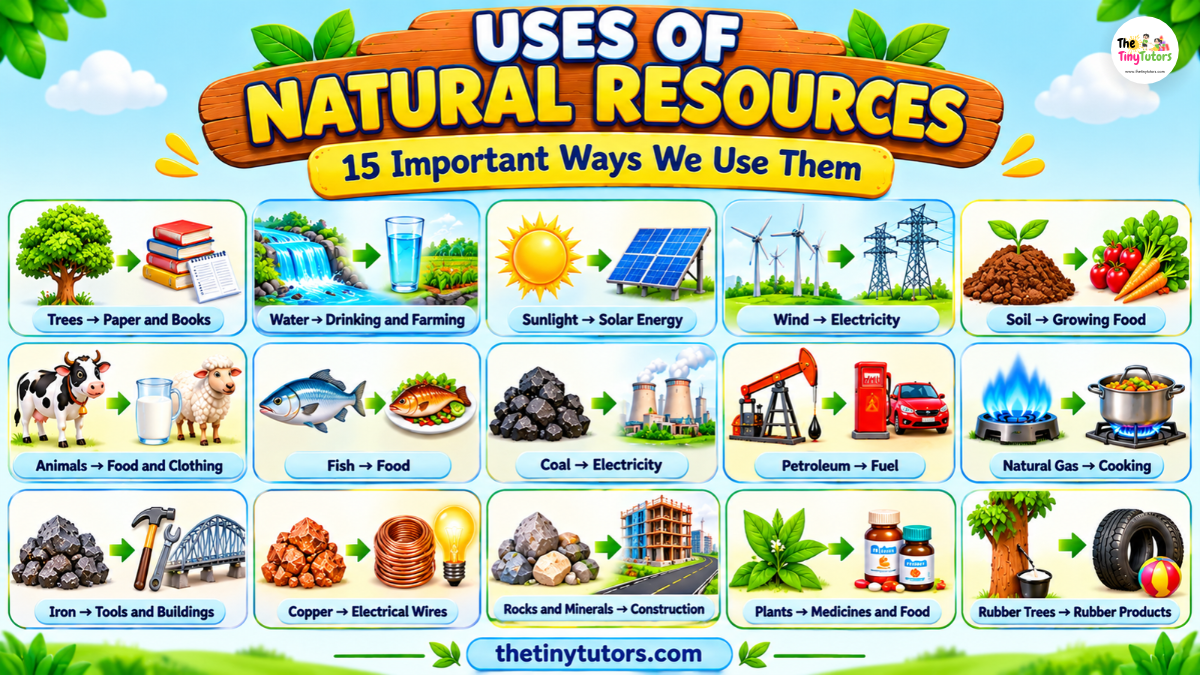
Uses of Natural Resources can be seen almost everywhere around us. From the water we drink to the books we read, many things we use every day come from nature.
- What Are the Uses of Natural Resources? 🌍
- How Do Natural Resources Become Useful Products? 🏭
- 15 Important Uses of Natural Resources in Daily Life 🌎
- Uses of Different Natural Resources ☀️💧🌳
- Interesting Facts About Natural Resources 🌟
- How Can We Use Natural Resources Wisely? ♻️
- FAQs About the Uses of Natural Resources
- Conclusion 🌍
Natural resources are materials and things that we get from the Earth and the environment. Sunlight, water, air, wind, soil, forests, plants, animals, coal, petroleum, natural gas, iron, copper, and rocks are some examples.
But have you ever wondered how these resources become the things we use?
For example:
🌳 Trees provide wood that can be used to make tables, chairs, and paper.
💧 Water helps us drink, cook, clean, and grow crops.
☀️ Sunlight gives us light and warmth and helps produce solar electricity.
🪨 Rocks and minerals provide materials for roads, buildings, and tools.
🌿 Plants provide cotton for clothes and ingredients for some medicines.
Natural resources are important because they help us meet many everyday needs.
Let’s explore 15 interesting ways we use them and discover how nature helps make our daily lives easier!
How Do Natural Resources Become Useful Products? 🏭
Natural resources do not always become finished products immediately. Many of them go through different steps before we can use them.
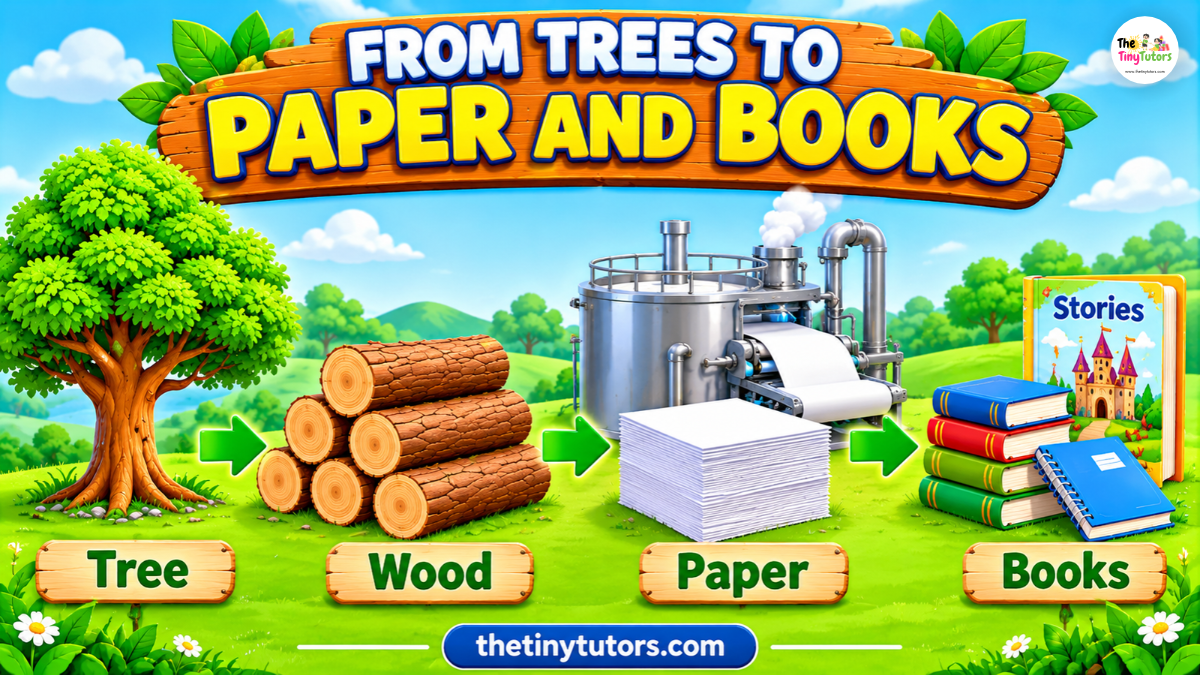
For example, a tree cannot directly become a notebook. First, wood from trees is processed to make paper. The paper is then cut, arranged, and joined to make notebooks.
Here is another simple example:
How a Tree Becomes a Book 🌳
Tree
Wood
Paper
Books and Notebooks 📚
Wood from trees can be processed into paper, which is used to make books and notebooks.
In the same way, many natural resources are changed into useful materials and products.
15 Important Uses of Natural Resources in Daily Life 🌎
We use natural resources in many ways at home, at school, on farms, and in factories.
Let’s understand 15 important uses with simple examples.
1. Making Paper and Books 📚
Have you ever wondered where your school notebooks, storybooks, and drawing sheets come from?
Many paper products are made using wood from trees. Trees are cut and processed into tiny fibres, which are used to make paper.
Paper is useful for many everyday things, such as:
Books: We read stories and learn new things from books.
Notebooks: Students write lessons and homework in notebooks.
Newspapers: People read news and information on paper.
Paper Bags: Shops use paper bags to carry different items.
Cardboard Boxes: Boxes are used to pack and carry products.
Recycled paper can also be used to make new paper products. This helps reduce the need for fresh materials from trees.
🌟 Interesting Fact: One sheet of paper may look small, but millions of sheets are used in schools, offices, and homes around the world.
2. Making Furniture and Wooden Products 🪑
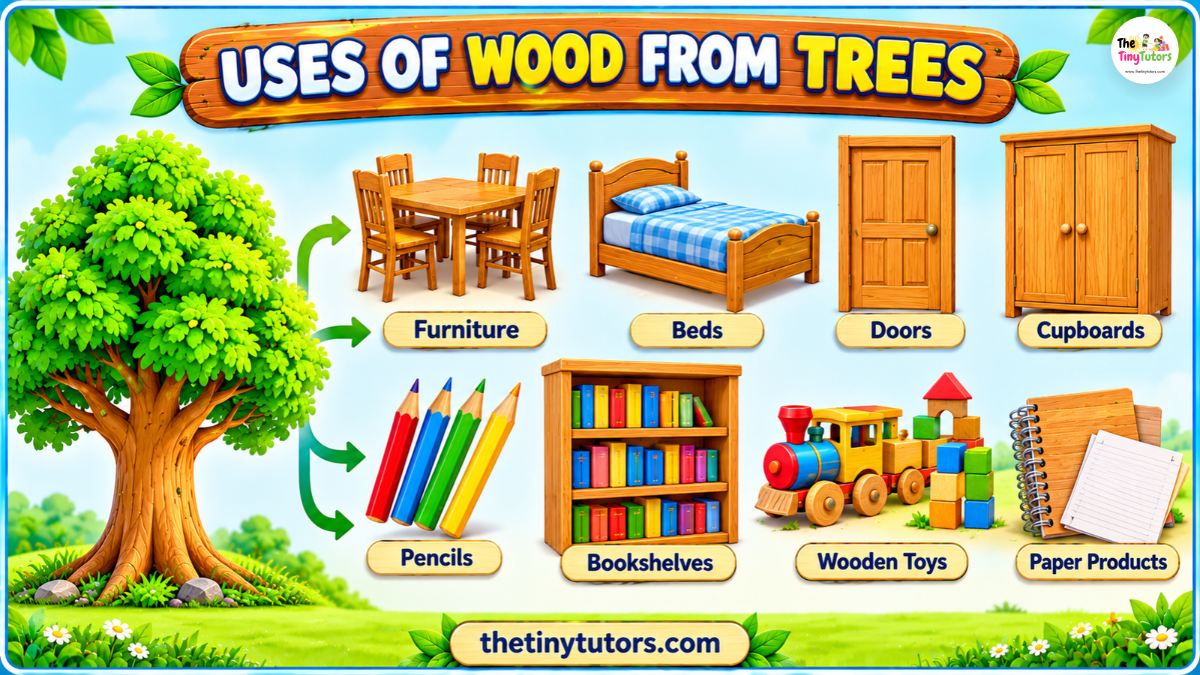
Wood is a useful material that comes from trees. People use it to make different types of furniture and household products.
Look around your home or classroom. You may find many things made from wood!
Some common wooden products include:
Tables: We use tables for studying, eating, and working.
Chairs: We sit on chairs at home and in school.
Beds: Wooden beds provide a place to sleep.
Cupboards: We keep clothes, books, and other things inside them.
Doors: Wooden doors are used in many homes and buildings.
Shelves: We use wooden shelves to keep books and other items.
Wood is also used to make pencils, wooden toys, and decorative items.
🌟 Interesting Fact: Different types of trees provide different kinds of wood. Some wood is hard and strong, while other wood is lighter and easier to shape.
3. Building Roads and Bridges 🛣️
Have you ever travelled on a road or crossed a bridge? Many natural materials help people build them.
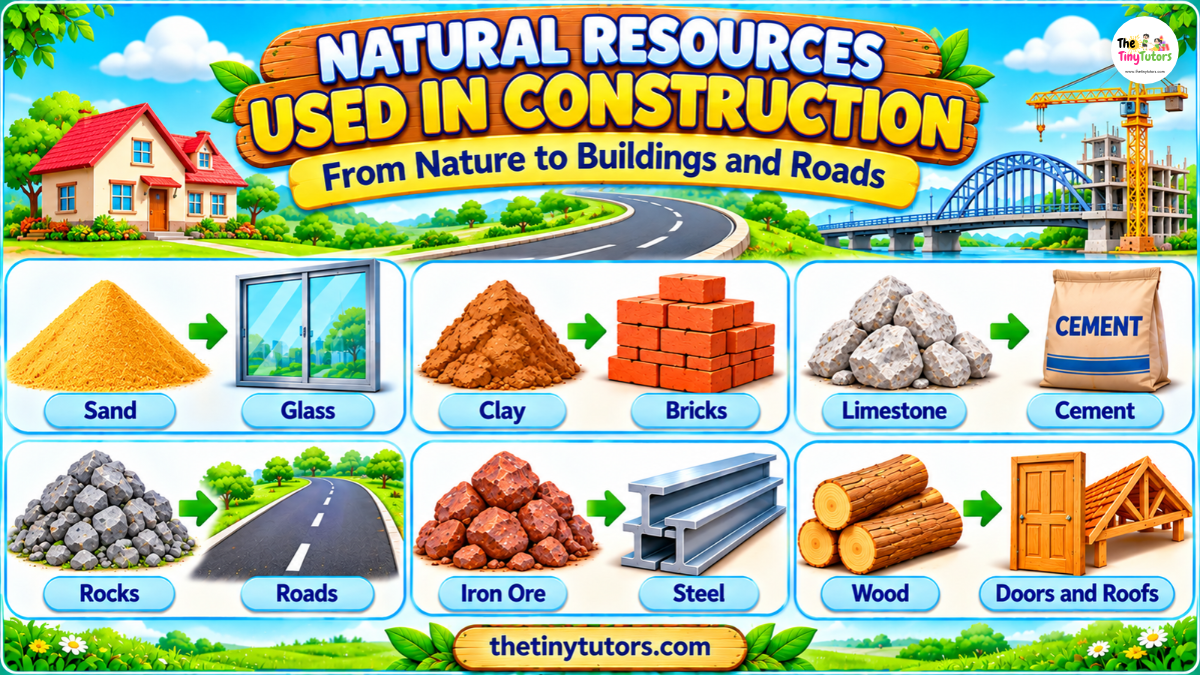
Rocks, sand, gravel, and minerals are used in road and bridge construction.
Here is how they help:
Rocks: Crushed rocks are used as building materials.
Sand: Sand is mixed with other materials to make concrete and mortar.
Gravel: Small stones help form strong road foundations.
Iron and Steel: Steel made using iron is used in many bridges because it is strong.
Roads help cars, buses, bicycles, and trucks travel from one place to another.
Bridges help people cross rivers, valleys, and other difficult places.
🌟 Interesting Fact: Some bridges are built with huge steel structures that can support very heavy vehicles.
4. Making Bricks and Cement 🧱
Bricks and cement are important materials used to build houses, schools, hospitals, and other buildings.
Different natural materials help make them.
Clay: Clay is shaped and heated to make many types of bricks.
Limestone: Limestone is an important material used to manufacture cement.
Sand: Sand is mixed with cement and water to make mortar.
Rocks: Crushed rocks are used in concrete.
Builders use these materials to make strong walls, floors, and other parts of buildings.
For example, bricks are joined together using mortar to build walls.
🌟 Interesting Fact: Clay becomes hard and strong when certain types of bricks are heated in a special oven called a kiln.
5. Making Glass 🥛
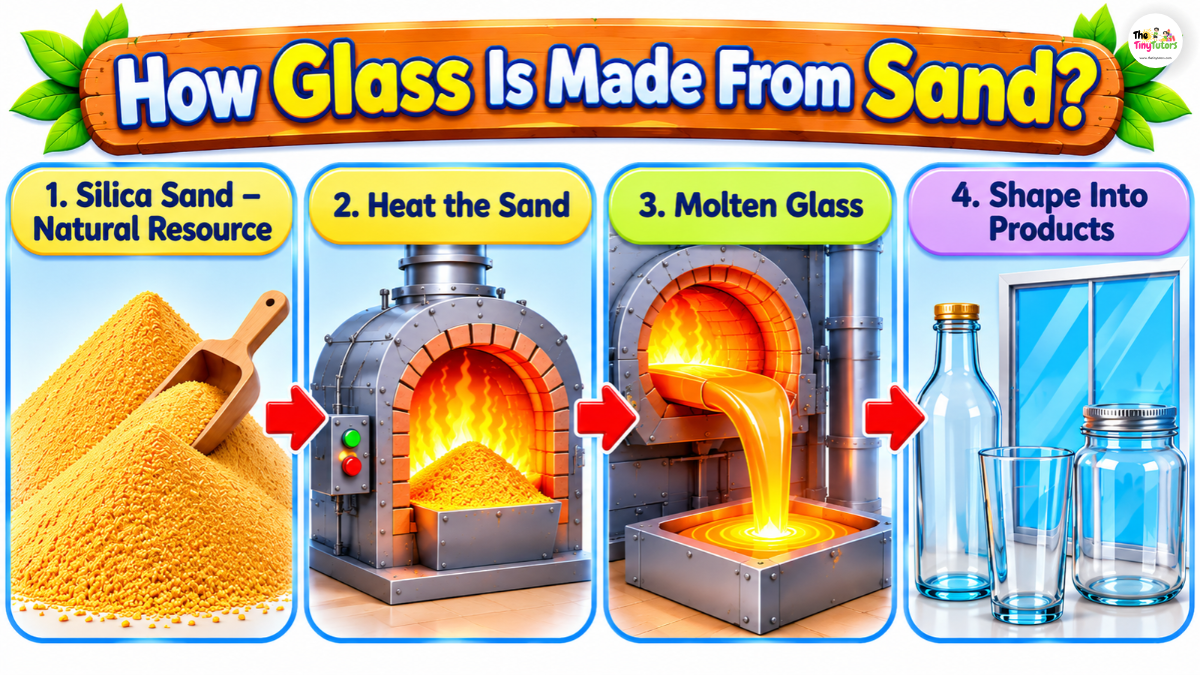
Have you ever looked through a window or drunk water from a glass?
Many everyday glass products are made using silica sand, which contains a mineral called silica.
The sand is heated to a very high temperature with other materials until it melts. It is then shaped and cooled to make glass products.
Glass is used to make:
Windows: Glass lets sunlight enter rooms.
Bottles: Glass bottles are used to store drinks and other products.
Drinking Glasses: We use them to drink water and juice.
Jars: Glass jars are used to store food.
Mirrors: Special glass is used to make mirrors.
🌟 Interesting Fact: Glass can be recycled and made into new glass products.
6. Making Tools and Utensils 🔨
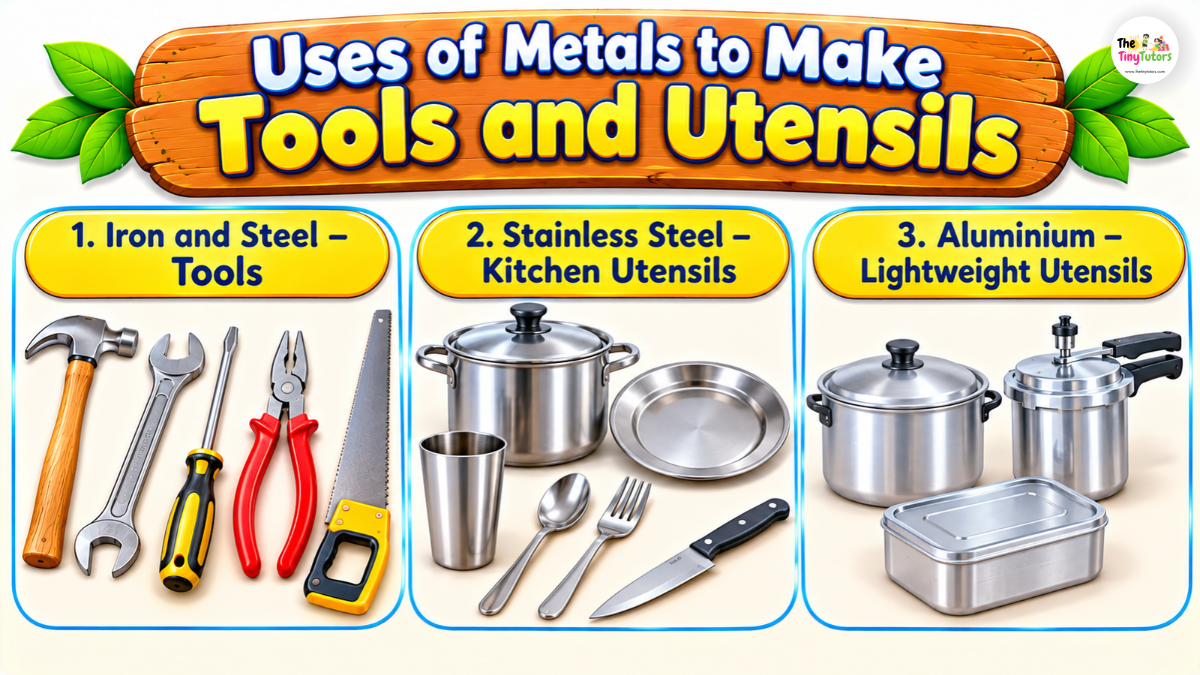
Metals found in the Earth are used to make many useful objects.
Iron, copper, aluminium, and other metals are important materials for making tools and household items.
Some examples include:
Hammers: Iron and steel are used to make strong hammers.
Scissors: Metal blades help scissors cut paper and other materials.
Spoons: Stainless steel is commonly used to make spoons.
Cooking Pots: Aluminium and stainless steel are used to make cooking pots.
Wrenches: Metal wrenches help people tighten or loosen nuts and bolts.
Nails: Iron and steel are used to make nails for construction.
These products help us cook, repair things, build objects, and complete everyday tasks.
🌟 Interesting Fact: Iron is used to make steel, which is one of the most widely used materials in construction and manufacturing.
7. Making Vehicles and Fuels 🚗
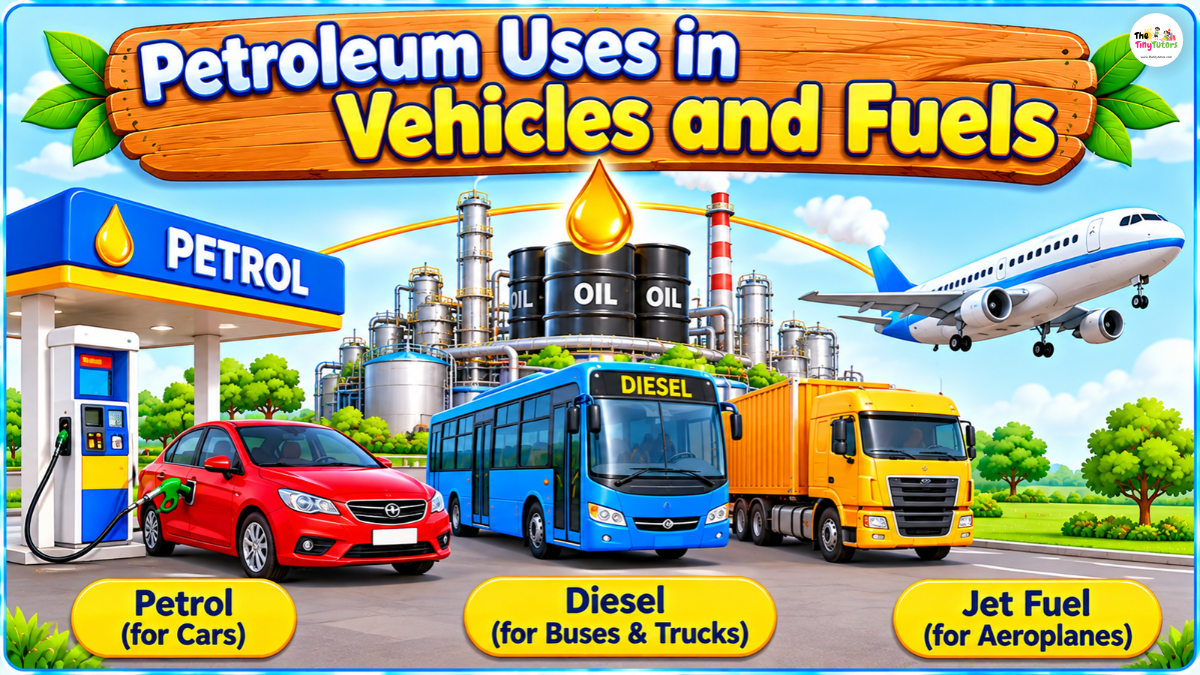
Cars, buses, trucks, motorcycles, and aeroplanes help people travel and transport goods.
Natural resources are used in two important ways to support transportation: making vehicles and providing energy to run them.
How are vehicles made?
Iron and steel are used in many vehicle bodies and parts.
Copper is used in electrical wiring.
Rubber from rubber-producing plants is used to make tyres.
Petroleum-based materials are used to make some vehicle parts.
Where does vehicle fuel come from?
Petroleum is a natural resource found underground. It is processed in refineries to make fuels such as petrol, diesel, and jet fuel.
These fuels provide energy for many vehicles.
🌟 Interesting Fact: Petrol and diesel come from petroleum, which is also called crude oil.
8. Making Electrical Wires and Devices ⚡
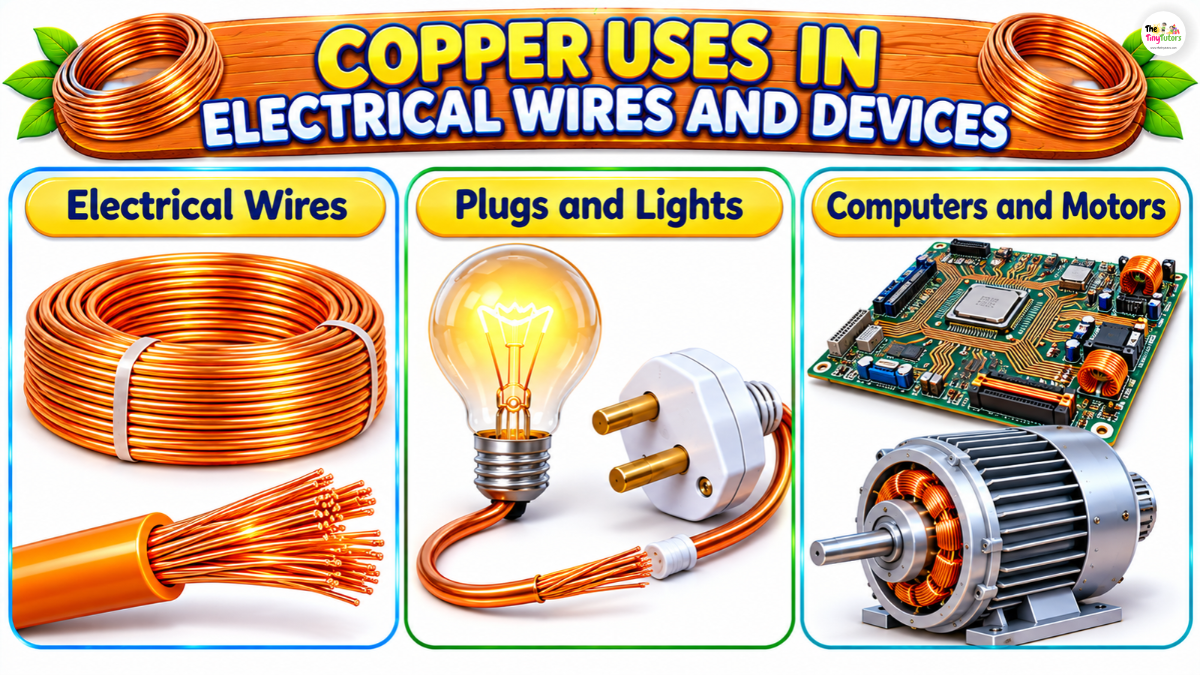
Electricity helps us light our homes, use computers, watch television, and charge mobile phones.
Copper is an important natural resource used to make electrical wires.
Why is copper useful?
Copper allows electricity to pass through it easily. This makes it a good material for electrical wiring.
Copper is used in:
Electrical Wires: Carry electricity through homes and buildings.
Fans: Used in the electrical parts of fans.
Televisions: Used in different electrical components.
Computers: Found in wires and electronic parts.
Mobile Phones: Used in small electrical components.
Other materials, such as silicon and aluminium, are also important in electronic devices and electrical systems.
🌟 Interesting Fact: Copper is used in many electrical wires because it is a very good conductor of electricity.
9. Making Clothes and Fabrics 👕
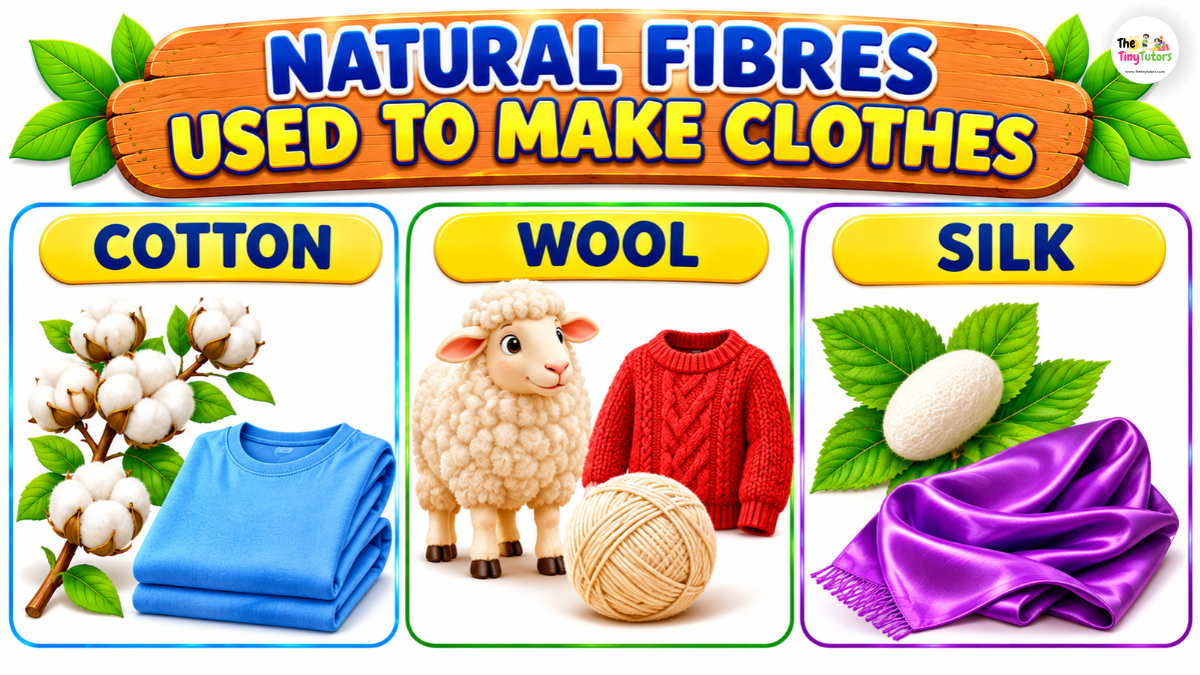
Have you ever wondered where the fabric of your clothes comes from?
Some clothes are made from natural fibres that come from plants and animals.
Plant fibres:
Cotton: Cotton plants provide soft fibres used to make T-shirts, shirts, towels, and bedsheets.
Jute: Jute plants provide strong fibres used to make bags, ropes, and mats.
Animal fibres:
Wool: Sheep provide wool, which is used to make sweaters, blankets, and warm clothes.
Silk: Silkworms produce silk fibres used to make smooth and shiny fabrics.
These natural fibres are cleaned, processed, and turned into yarn and fabric before being used to make clothes.
🌟 Interesting Fact: Cotton grows inside soft balls called cotton bolls on cotton plants.
10. Making Rubber Products
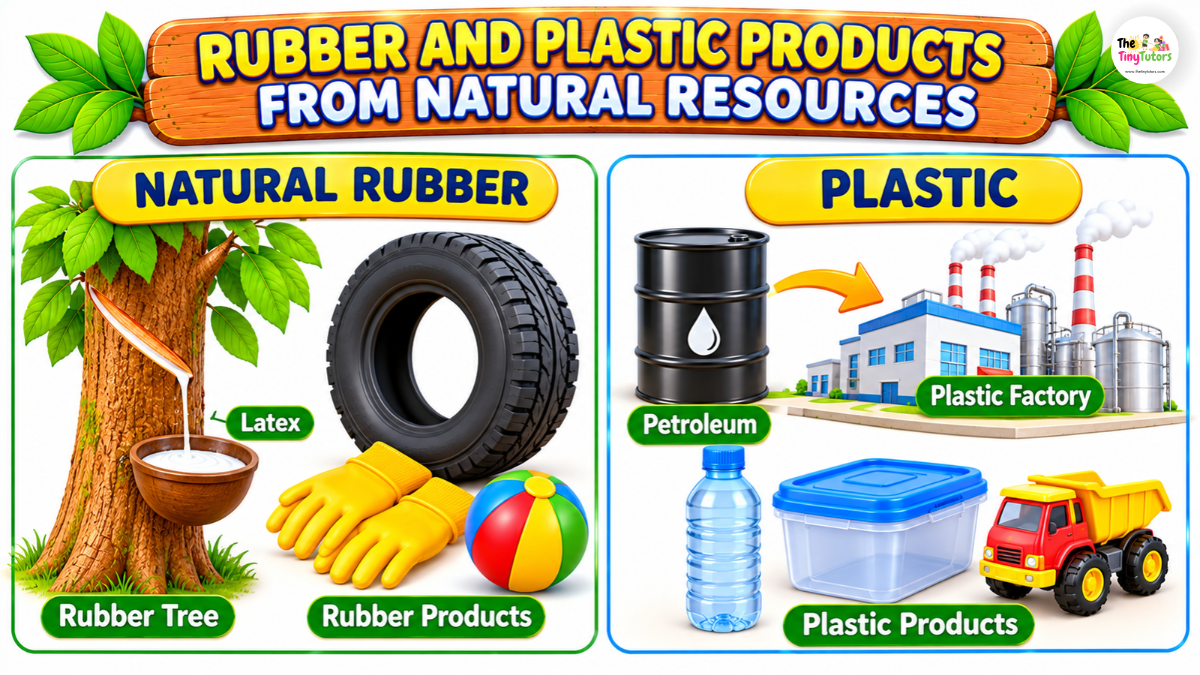
Rubber is a useful material that can stretch and return to its original shape.
Natural rubber comes from the milky liquid called latex found in certain plants, especially rubber trees.
People process this latex to make different rubber products.
Rubber is used to make:
Tyres: Cars, buses, bicycles, and other vehicles use rubber tyres.
Erasers: Students use rubber erasers to remove pencil marks.
Gloves: Rubber gloves help protect hands during certain tasks.
Rubber Bands: Used to hold things together.
Shoes: Rubber is used in many shoe soles.
Hoses: Rubber hoses carry water and other liquids.
🌟 Interesting Fact: A rubber ball can bounce because rubber can change shape and spring back.
11. Making Plastic Products 🧴
Many things around us are made from plastic. Plastic is a material used to make products in different shapes, sizes, and colours.
Many common plastics are made using chemicals obtained from petroleum and natural gas.
Plastic is used to make:
Water Bottles: Used to carry drinking water.
Buckets: Used for carrying and storing water.
Toys: Many toys are made from plastic.
Food Containers: Used to store food.
Pipes: Used to carry water in buildings.
Packaging: Used to protect and pack different products.
Plastic is useful because it can be light, strong, and easy to shape.
However, plastic waste can harm animals and pollute land and water. We should avoid unnecessary single-use plastic and reuse or recycle suitable plastic products.
🌟 Interesting Fact: Not all plastics can be recycled in the same way. Different types of plastic need different recycling processes.
12. Making Soap and Cleaning Products 🧼
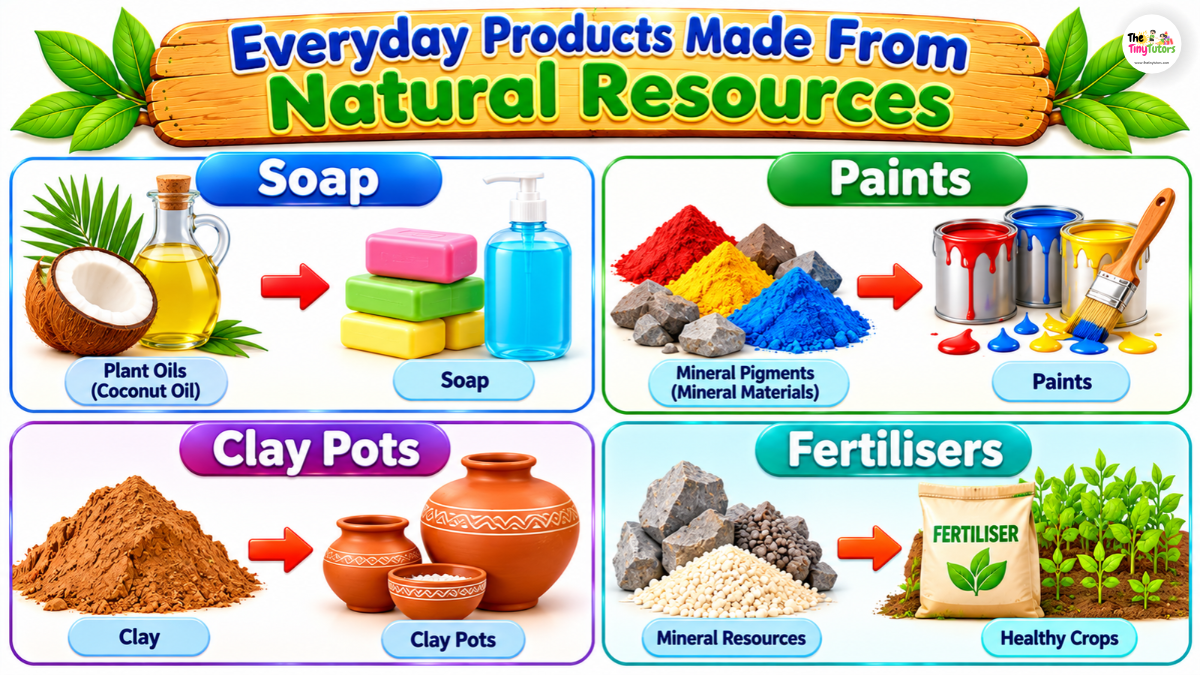
Soap and cleaning products help us keep our bodies, clothes, and homes clean.
Some ingredients used to make these products come from natural resources.
For example:
Plant Oils: Coconut oil, palm oil, and other vegetable oils can be used to make soap.
Water: Water is used in making many liquid cleaning products.
Minerals: Some minerals are used to make ingredients for cleaning products.
Natural Fragrances: Some soaps contain scents obtained from plants.
We use these products in different ways:
Bathing and washing our hands.
Cleaning clothes.
Washing dishes.
Cleaning floors and other surfaces.
🌟 Interesting Fact: Some traditional soaps are made by mixing oils or fats with a special alkaline ingredient.
13. Making Paints and Colours 🎨
Look at the colourful walls, toys, pictures, and drawings around you!
Many colours and paints are made using pigments. Pigments are materials that give colour to different products.
Some pigments come from natural minerals, while other paint ingredients can come from petroleum-based materials.
Paints and colours are used for:
House Walls: Paint makes walls colourful and protects surfaces.
Art Projects: Children use paints to make drawings and paintings.
Furniture: Paint gives furniture a fresh look.
Road Markings: Special paints help show lines and signs on roads.
Decorations: Colours make many objects look attractive.
🌟 Interesting Fact: Some natural pigments have been used by people for thousands of years to make pictures and decorate objects.
14. Making Pots and Ceramic Products 🏺
Clay is a natural material found in the ground. It becomes soft and easy to shape when mixed with water.
People use clay to make many useful objects.
Some examples include:
Earthen Pots: Used for storing water and other things.
Bowls: Used for serving food.
Plates: Used for eating meals.
Cups: Used for drinking.
Flower Pots: Used for growing plants.
Tiles: Used on floors and walls.
Clay objects are often heated in a special oven called a kiln. This makes them hard and strong.
🌟 Interesting Fact: Pottery is one of the oldest crafts practised by people. Some handmade clay pots are still made using a spinning wheel.
15. Making Fertilisers for Plants 🌱
Plants need nutrients to grow well. Farmers use fertilisers to add important nutrients to the soil and help crops grow.
Some fertilisers are made using minerals found in the Earth. Others are manufactured using chemicals made from natural gas.
For example:
Nitrogen: Helps plants grow healthy leaves and stems.
Phosphorus: Helps plants develop strong roots.
Potassium: Supports many important plant functions and healthy growth.
Farmers use suitable fertilisers to help grow crops such as wheat, rice, vegetables, and fruits.
🌟 Interesting Fact: Plants need different nutrients in different amounts. Using too much fertiliser can harm soil and pollute nearby water, so farmers must use it carefully.
Uses of Different Natural Resources ☀️💧🌳
We have learned how natural materials help us make many everyday products. Now let’s look at the 15 natural resources you listed and understand how each one is useful.
Every resource has its own special uses. Some provide energy, some help living things survive, and others provide materials for making useful products.
15 Natural Resources and Their Uses
| No. | Natural Resource | Important Uses |
|---|---|---|
| 1 | ☀️ Sunlight | Provides light and warmth, helps plants make food, dries clothes and crops, and produces solar electricity. |
| 2 | 💧 Water | Used for drinking, cooking, bathing, washing, farming, and generating hydroelectricity. |
| 3 | 🌬️ Air | Provides oxygen for breathing, supports burning, and helps plants grow. |
| 4 | 🍃 Wind | Helps produce electricity, moves sailboats, dries clothes, and spreads some seeds. |
| 5 | 🌱 Soil | Helps plants and crops grow and provides a place for many small animals and insects to live. |
| 6 | 🌳 Forests | Provide wood, fruits, nuts, and useful plant materials. They also provide homes for wildlife. |
| 7 | 🌿 Plants | Provide fruits, vegetables, grains, cotton, medicines, oils, and other useful materials. |
| 8 | 🐑 Animals | Provide milk, eggs, wool, and other useful products. Some animals also help with farm work. |
| 9 | 🐟 Fish | Provide food for people and other animals. Fish are also used to make fish oil and fishmeal. |
| 10 | ⚫ Coal | Used in some power stations to produce electricity and in certain industries to provide heat. |
| 11 | 🛢️ Petroleum | Processed to make petrol, diesel, jet fuel, plastics, and other useful products. |
| 12 | 🔥 Natural Gas | Used for cooking, heating, generating electricity, and manufacturing some fertilisers. |
| 13 | ⛏️ Iron | Used to make steel for buildings, bridges, vehicles, tools, and machines. |
| 14 | 🔌 Copper | Used in electrical wires, motors, electronic devices, pipes, and other products. |
| 15 | 🪨 Rocks | Used in roads, buildings, walls, floors, and construction materials. |
Let’s Understand Some Important Uses More Clearly
1. Sunlight ☀️
Sunlight is useful in many ways. It gives us natural light during the day and keeps our planet warm. Plants use sunlight to make their food through a process called photosynthesis.
Solar panels also use sunlight to produce electricity. People can use this electricity to power lights, fans, and other devices.
2. Water 💧
Water is needed by people, animals, and plants. We drink it, cook food with it, wash our clothes, and clean our homes.
Farmers also use water to grow crops. Moving water can turn turbines in hydroelectric power stations to produce electricity.
3. Air 🌬️
Air is all around us. People and many animals need oxygen from the air to breathe.
Plants also use carbon dioxide from the air to make food. Moving air helps dry wet clothes and can carry seeds from one place to another.
4. Wind 🍃
Wind is moving air. It can turn the blades of wind turbines, which help generate electricity.
Wind also helps sailboats move across water. It can carry some seeds and help them reach new places.
5. Soil 🌱
Soil provides a place where many plants grow. It holds water and contains nutrients that plants need.
Farmers grow crops such as rice, wheat, corn, and vegetables in soil. Many earthworms, insects, and tiny living things also live in it.
6. Forests 🌳
Forests are large areas filled with trees and other plants. They provide wood, fruits, nuts, and other useful materials.
Forests are also homes for birds, monkeys, deer, insects, and many other animals. They help keep the environment healthy.
7. Plants 🌿
Plants provide many things we use every day. We get fruits, vegetables, grains, cotton, oils, and some medicines from plants.
For example, cotton plants provide fibres for clothes, while sugarcane plants provide sugar.
8. Animals 🐄
Some animals provide useful products that people use as food or clothing materials.
Cows and buffaloes provide milk.
Hens provide eggs.
Sheep provide wool.
Silkworms produce silk.
Animals are also important parts of nature because they help keep ecosystems working.
9. Fish 🐟
Fish are an important source of food for people around the world. Many fish provide protein and other nutrients.
Fish are also food for larger animals, such as seals, dolphins, and some birds. Fish oil and fishmeal are made from certain fish or fish-processing materials.
10. Coal ⚫
Coal is a black rock found underground. It is burned in some power stations to produce heat, which is used to generate electricity.
Some industries also use coal to provide heat and to make materials such as coke for iron and steel production.
11. Petroleum 🛢️
Petroleum is also called crude oil. It is found deep underground or beneath the seabed.
It is processed in special factories called refineries to make different products.
These include:
Petrol for many cars and motorcycles.
Diesel for many buses and trucks.
Jet fuel for aeroplanes.
Materials used to manufacture plastics and other products.
12. Natural Gas 🔥
Natural gas is a fuel found underground. It is used in many homes for cooking and heating.
It is also used in power stations to produce electricity and in factories to make some fertilisers.
13. Iron ⛏️
Iron is a metal obtained from rocks called iron ores.
It is used to make steel, which is important for building houses, bridges, vehicles, railway tracks, and machines.
14. Copper 🔌
Copper is a reddish-brown metal that allows electricity to pass through it easily.
It is used in electrical wires, motors, electronic devices, and some water pipes.
15. Rocks 🪨
Rocks are used in many construction projects.
Crushed rocks are used to build roads, while materials obtained from certain rocks are used to make cement, tiles, and other building products.
Different rocks have different uses depending on their properties.
Interesting Facts About Natural Resources 🌟
Here are some interesting facts to make learning about natural resources even more exciting!
☀️ Fact 1: Plants Need Sunlight
Plants use sunlight to make their own food. Without enough light, many plants cannot grow properly.
🍃 Fact 2: Wind Can Make Electricity
Huge wind turbines use moving air to turn their blades and generate electricity.
🔌 Fact 3: Copper Helps Carry Electricity
Copper is used in many electrical wires because electricity can pass through it easily.
🌳 Fact 4: Rubber Comes From Trees
Natural rubber can be collected from the milky latex of rubber trees.
🥛 Fact 5: Glass Comes From Sand
Silica-rich sand is an important ingredient used to make many glass products.
🪱 Fact 6: Soil Is Full of Life
Soil is home to earthworms, insects, fungi, and tiny living things that help keep it healthy.
How Can We Use Natural Resources Wisely? ♻️
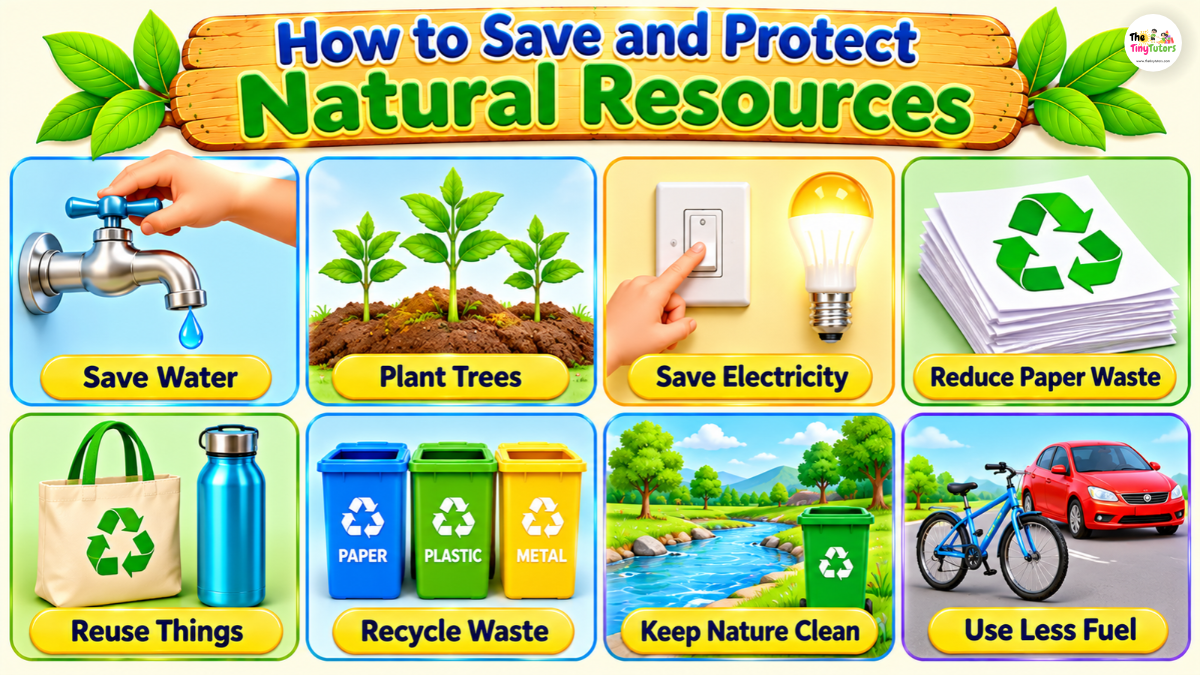
Natural resources are useful, but we should not waste them. Some resources can be replaced naturally over time, while others take millions of years to form.
We can all develop simple habits to use resources carefully.
Here are some easy things children can do:
💧 Save Water: Turn off the tap while brushing your teeth.
💡 Save Electricity: Switch off lights and fans when they are not needed.
📄 Save Paper: Use both sides of a sheet when possible.
🌳 Protect Trees: Plant trees and avoid wasting paper.
♻️ Recycle: Reuse and recycle suitable paper, glass, metal, and plastic products.
🛍️ Use Reusable Bags: Carry cloth bags instead of taking new plastic bags every time.
🌱 Care for Nature: Keep parks, gardens, rivers, and other natural places clean.
Small actions can help protect the environment and reduce waste.
Remember: We do not need to stop using natural resources. We need to use them thoughtfully and avoid wasting them.
FAQs About the Uses of Natural Resources
1. What are the main uses of natural resources?
Natural resources are used to make food, clothes, houses, roads, furniture, medicines, fuels, and many other useful products. They also provide water, air, and energy that living things need.
2. How are natural resources used in our daily life?
We use natural resources every day. We drink water, breathe air, wear cotton clothes, use wooden furniture, cook with fuels, and travel in vehicles that use materials and energy from nature.
3. What are the uses of sunlight?
Sunlight provides natural light and warmth. It helps plants make food, dries clothes and crops, and can be used by solar panels to produce electricity.
4. What are the uses of forests?
Forests provide wood, fruits, nuts, medicines, and other useful materials. They also provide shelter for animals, help clean the air, and support the environment.
5. What are the uses of minerals and metals?
Minerals and metals are used to make buildings, bridges, vehicles, electrical wires, tools, machines, and household products. Iron and copper are two commonly used metals.
6. Why should we use natural resources carefully?
We should use natural resources carefully because some resources are limited and can take millions of years to form. Saving water, electricity, paper, and fuel helps reduce waste and protect nature for the future.
Conclusion 🌍
Natural resources are an important part of our everyday lives. From the water we drink and the food we eat to the clothes we wear and the buildings where we live, we depend on nature in many ways.
The 15 important uses of natural resources show us how sunlight, water, air, wind, soil, forests, plants, animals, minerals, and fuels help make our lives easier.
But we should always remember that these resources are valuable. We must avoid wasting them, recycle useful materials, save water and electricity, and protect trees and wildlife.
Nature gives us many useful things. Our job is to use them wisely and take care of our planet! 🌱💚
Related Learning for Kids 📚
Children can explore these related lessons to understand more about nature and how we can protect it:
Recycling for Kids – Learn how old materials can be used again to make new products.
Water Conservation for Kids – Discover simple ways to save water at home and school.
Plant Life Cycle for Kids – Learn how plants grow and produce new seeds.
Natural Resources for Kids – Learn about renewable and non-renewable resources, their types, examples and importance in our daily lives.
Pollution for Kids – Find out how pollution affects our natural environment.
Food Chain for Kids – Discover how living things depend on one another for food.
Author Information
Written by: Shivam, Kids Educator & Founder of The Tiny Tutors – Creates simple, picture-based lessons for preschool to Grade 2 learners.
Reviewed by: Priya Sharma, Primary School Teacher (B.Ed, 8+ Years Experience).