
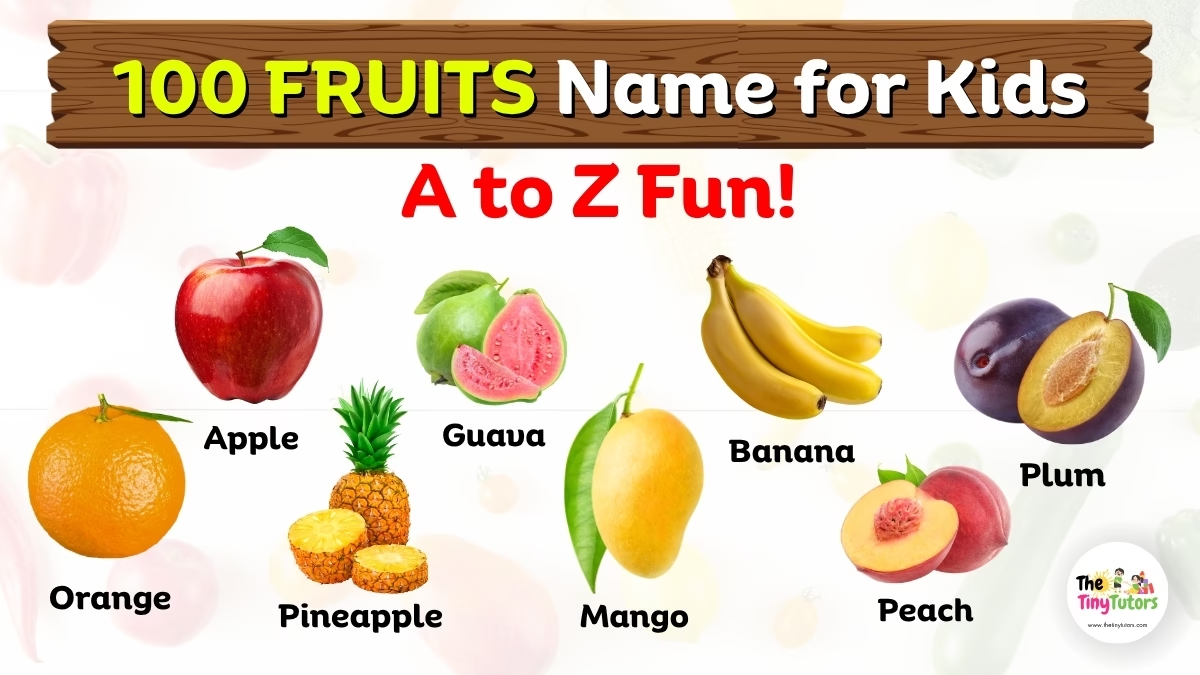
Learning 100 Fruits Name in English is a simple and fun way to build a child’s vocabulary while teaching them about healthy food. This guide gives you a complete, fact-checked fruit list made especially for kids — real fun facts, and a quiz to test what they’ve learned.
From everyday fruits like apple, banana, and mango, to lesser-known ones like kiwano and jabuticaba, every name in this 100 Fruits Name list has been checked for accuracy. Nothing here is invented — every fruit is real and something your child could actually find in a market, a book, or nature.
Let’s start this fruity journey! Parents and teachers can use this list for flashcards, drawing activities, spelling practice, or everyday conversation.
In this guide, you’ll find:
- 100 real fruit names, organized into 7 easy categories
- A simple one-line fun fact for many fruits
- Free printable worksheet ideas to practice these names
- A quick fruit quiz kids can try at the end
- Answers to the most common questions parents ask about teaching fruit names
Benefits of Learning 100 Fruits Name!
Learning 100 fruits name isn’t just about vocabulary — it does three things at once for a young child:
Builds Vocabulary:
Learning the 100 Fruits Name list introduces children to new words like “pomegranate” or “gooseberry,” helping with pronunciation and speech development.
Encourages Healthy Eating:
When kids know the names of different fruits, they get curious about tasting them. This naturally supports healthier food habits from an early age.
Makes Learning Enjoyable:
Pairing the 100 Fruits Name list with pictures, sounds, or simple games turns a vocabulary lesson into a fun activity rather than a chore.
100 Fruits Name List With Fun Facts for Kids
Looking for 100 fruits name with fun facts? This list introduces children to familiar, tropical, citrus, berry, stone, melon, and lesser-known fruits from around the world.
Each fruit includes a simple fact that helps kids learn something interesting about its appearance, taste, growth, or unique features.
🍎 Common Fruits
Familiar Fruits Kids Often Know
| Fruit | Fun Fact for Kids |
|---|---|
| Apple | Apples grow on trees and can have red, green, yellow, or mixed-colored skin. |
| Banana | Bananas grow in large clusters called hands on tall plants that are actually giant herbs. |
| Grapes | Grapes grow in bunches on vines, and some varieties are naturally seedless. |
| Mango | Mango is often called the King of Fruits because of its rich taste. |
| Guava | Guava flesh can be white, pink, or red, and the fruit contains many small edible seeds. |
| Papaya | Papayas have a hollow center filled with many small black seeds surrounded by soft orange or yellow flesh. |
| Pineapple | A pineapple is made from many small flowers that join together to form one fruit. |
| Pomegranate | The juicy parts inside a pomegranate are called arils, and each aril surrounds a seed. |
| Pear | Many pears have a wider bottom and narrower top, giving them their familiar pear shape. |
| Fig | What looks like the inside of a fig is actually a special structure containing many tiny flowers. |
| Coconut | Coconuts have a hard shell and a soft, white inside that we can eat. |
| Avocado | An avocado usually contains one large seed surrounded by creamy green flesh. |
| Dates | Dates grow in large bunches on date palm trees and can be eaten fresh or dried. |
| Sapodilla (Chikoo) | Sapodilla has soft brown flesh and a sweet flavor that makes it popular as a fresh fruit. |
| Custard Apple | Custard apple has soft, creamy flesh divided into sections around several hard seeds. |
| Jackfruit | Jackfruit can become extremely large and is one of the biggest fruits that grows directly on a tree. |
| Persimmon | Ripe persimmons can have bright orange skin and soft, sweet flesh. |
| Olive | Olives are fruits even though they are commonly used in savory foods and pressed to make olive oil. |
| Quince | Raw quince is firm and fragrant, so it is often cooked to make it softer and more flavorful. |
| Loquat | Loquats are small orange-yellow fruits that usually contain several large seeds in the center. |
🍊 Citrus Fruits
Bright and Juicy Citrus Fruits
| Fruit | Fun Fact for Kids |
|---|---|
| Orange | Orange trees produce fragrant white flowers before the familiar orange fruits develop. |
| Lemon | Lemons have a naturally sour flavor and are commonly used to make lemonade. |
| Lime | Limes are usually smaller than lemons and are valued for their sharp, refreshing flavor. |
| Grapefruit | Grapefruit got its name because its fruits often grow together in bunches, like grapes. |
| Mandarin | Mandarins are small citrus fruits with loose skin that usually makes them easy to peel. |
| Kumquat | Kumquats are unusual citrus fruits because the whole fruit, including the peel, can be eaten. |
| Pomelo | Pomelo is one of the largest citrus fruits and has a thick rind surrounding juicy segments. |
| Citron | Citron has a very thick, fragrant peel and much less juicy flesh than many other citrus fruits. |
| Yuzu | Yuzu is a small, strongly aromatic citrus fruit commonly used for its juice and fragrant peel. |
| Sweet Lime (Mosambi) | Sweet lime has a mild citrus flavor and is commonly enjoyed as a fresh juice in South Asia. |
🌴 Tropical Fruits
Fruits From Warm Climates Around the World
| Fruit | Fun Fact for Kids |
|---|---|
| Lychee | Lychees have rough reddish skin that can be peeled away to reveal juicy, pale flesh. |
| Rambutan | Rambutan gets its name from a word meaning “hairy” because its skin has soft, hair-like spines. |
| Mangosteen | Mangosteen has thick purple skin and soft white sections inside, giving it a very different appearance from its outside. |
| Durian | Durian has a large, thorn-covered shell and a very strong smell that makes it easy to recognize. |
| Longan | Longan means “dragon’s eye” in Chinese, a name inspired by the fruit’s appearance when peeled. |
| Soursop | Soursop has green, spiny skin and soft white pulp with a sweet-tart flavor. |
| Star Fruit (Carambola) | When carambola is sliced across the middle, each piece has a star-like shape. |
| Tamarind | Tamarind grows inside brown pods and has a sticky pulp with a naturally tangy taste. |
| Breadfruit | Breadfruit is starchy and is often cooked before eating, especially when it is less ripe. |
| Java Plum (Jamun) | Ripe jamun has dark purple to almost black skin and can leave a purple stain on the tongue. |
| Wood Apple | Wood apple has a very hard shell that can be difficult to open compared with its soft pulp inside. |
| Bael | Bael has a hard shell and fragrant pulp and has been grown and used as a food fruit in South Asia. |
| Amla (Indian Gooseberry) | Amla is small and greenish-yellow with several vertical ridges running down its surface. |
| Jujube (Ber) | Jujube fruits can be eaten fresh or dried and are sometimes called Chinese dates. |
| Salak (Snake Fruit) | Salak has reddish-brown scaly skin that looks a little like snake scales. |
| Ambarella | Ambarella is a tropical fruit with crisp flesh and a large, fibrous seed in the center. |
| Santol | Santol has thick skin and soft sections of fruit surrounding large seeds. |
| Langsat | Langsat fruits grow in clusters and have thin yellowish skin that can be peeled away easily when ripe. |
| Pulasan | Pulasan looks similar to rambutan but has shorter, thicker-looking projections on its skin. |
| Ackee | Ackee is the national fruit of Jamaica and has a bright appearance when its fruit opens naturally. |
🍓 Berries and Berry-Like Fruits
Small Fruits With Big Variety
| Fruit | Fun Fact for Kids |
|---|---|
| Strawberry | The tiny dot-like structures on a strawberry’s surface are actually individual fruits called achenes. |
| Blueberry | Blueberries often have a pale, powdery coating called bloom on their skin. |
| Raspberry | A raspberry is made from many tiny rounded sections called drupelets joined together. |
| Blackberry | Blackberries are also made of many small drupelets, but their ripe color is usually very dark purple or black. |
| Cranberry | Cranberries have air pockets inside them, which helps ripe berries float in water during harvesting. |
| Redcurrant | Redcurrants grow in hanging clusters of small, shiny red fruits. |
| Blackcurrant | Blackcurrants are small, dark berries that grow in clusters on shrubs. |
| Gooseberry | Gooseberries can be green, yellow, red, or purple depending on the variety and stage of ripeness. |
| Mulberry | Mulberries grow on trees and can ripen to shades ranging from red to deep purple or nearly black. |
| Elderberry | Elderberries grow in clusters, and ripe berries are commonly used in cooked foods and syrups. |
| Boysenberry | Boysenberry is a cultivated hybrid related to raspberries and blackberries. |
| Loganberry | Loganberry is a hybrid fruit related to both raspberries and blackberries. |
| Cloudberry | Cloudberries are small amber-colored fruits that grow in cool northern regions. |
| Huckleberry | Huckleberries are small round fruits that can range from red to dark purple depending on the species. |
| Bilberry | Bilberries are closely related to blueberries but often have darker flesh that can strongly color the juice. |
🍑 Stone Fruits
Fruits With a Hard Stone or Pit
| Fruit | Fun Fact for Kids |
|---|---|
| Peach | A peach has soft, fuzzy skin and one large, hard stone in the center. |
| Plum | Plums come in many skin colors, including purple, red, yellow, and green. |
| Cherry | Cherries are small stone fruits that usually contain one hard pit in the center. |
| Apricot | Apricots are smaller than peaches and usually have smooth or slightly fuzzy golden-orange skin. |
| Nectarine | A nectarine is closely related to a peach but has smooth skin instead of the peach’s fuzzy skin. |
🍈 Melons & Melon-Type Fruits
Cool and Refreshing Melons
| Fruit | Fun Fact for Kids |
|---|---|
| Cantaloupe | Cantaloupes have a netted outer skin and usually have orange-colored flesh inside. |
| Honeydew Melon | Honeydew usually has smooth, pale skin and light green flesh with a sweet flavor. |
| Korean Melon | Korean melons are small, yellow fruits with pale flesh and a crisp texture. |
| Horned Melon (Kiwano) | Kiwano has orange skin covered with horn-like bumps and green, jelly-like flesh inside. |
🌏 Unique & Lesser-Known Fruits
Fruits You May Not See Every Day
| Fruit | Fun Fact for Kids |
|---|---|
| Feijoa | Feijoa has fragrant flowers, and the soft petals can be eaten. |
| Jabuticaba | Jabuticaba fruits can grow directly on the trunk and branches of the tree. |
| Mamey Sapote | Mamey sapote has soft orange-red flesh surrounding one large seed. |
| Canistel | Canistel is sometimes called eggfruit because its ripe flesh can have a texture like cooked egg yolk. |
| Lucuma | Lucuma has dry, yellow-orange flesh and is often used to flavor desserts. |
| Cupuaçu | Cupuaçu is a large tropical fruit with creamy white pulp inside. |
| Abiu | Ripe abiu has smooth yellow skin and soft, translucent flesh. |
| Marula | Marula fruits are eaten by many animals, including elephants. |
| Noni | Ripe noni has pale, bumpy skin and a strong smell. |
| Miracle Fruit | Miracle fruit can temporarily make sour foods taste sweet. |
| Desert Lime | Desert lime is a small citrus fruit native to Australia. |
| Finger Lime | Finger lime contains tiny, round juice-filled pieces that look like little beads. |
| Wax Apple | Wax apple has smooth, glossy skin and crisp, watery flesh. |
| Black Sapote | When ripe, black sapote develops soft, dark-brown flesh. |
| White Sapote | White sapote has soft flesh and belongs to the same plant family as citrus. |
| Medlar | Medlar becomes soft and ready to eat after a natural ripening process called bletting. |
| Baobab Fruit | Baobab fruit has a hard shell and dry, powdery pulp inside. |
| Prickly Pear (Indian Fig) | Prickly pears are fruits that grow on cactus plants and can come in several colors. |
| Gac Fruit | Gac fruit has spiny skin and bright red-orange flesh inside. |
| Kwai Muk | Kwai muk is related to jackfruit and develops sweet pulp when ripe. |
| Mamoncillo (Spanish Lime) | Mamoncillo grows in clusters and has juicy pulp inside a thin shell. |
| Barbados Cherry (Acerola) | Barbados cherry looks like a cherry but comes from a different plant family. |
| Tamarillo | Tamarillo has an egg-like shape and can have red, orange, or yellow skin. |
| Camu Camu | Camu camu is a small fruit native to the Amazon region. |
| Surinam Cherry | Surinam cherry has a ribbed shape and changes color as it ripens. |
| Sea Buckthorn | Sea buckthorn produces clusters of small orange fruits. |
That’s 100 real fruit names across 7 categories — one of the most complete lists for young learners available today.
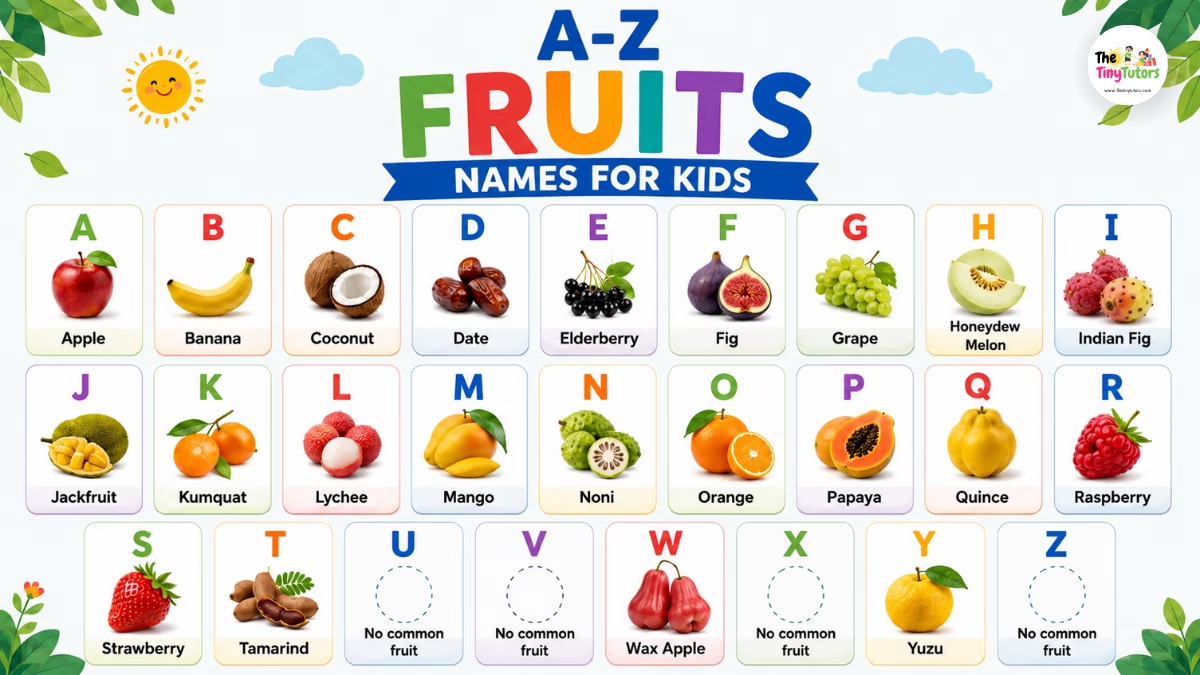
A-Z Fruit Names List for Kids
Here is a short, letter-by-letter 100 Fruits Name reference. Every fruit listed here is real and verifiable — perfect for flashcards or an alphabet chart.
| Letter | Fruit Names |
|---|---|
| A | Apple |
| B | Banana |
| C | Coconut |
| D | Date |
| E | Elderberry |
| F | Fig |
| G | Grape |
| H | Honeydew Melon |
| I | Indian Fig |
| J | Jackfruit |
| K | Kumquat |
| L | Lychee |
| M | Mango |
| N | Noni |
| O | Orange |
| P | Papaya |
| Q | Quince |
| R | Raspberry |
| S | Strawberry |
| T | Tamarind |
| U | — |
| V | — |
| W | Wax Apple |
| X | — |
| Y | Yuzu |
| Z | — |
Note: A few letters (U, V, X, Z) naturally have fewer common fruits — this list keeps only real, verified names instead of filling gaps with invented ones.
Fun Learning Activities
- Flashcard Game: Print pictures of 10 fruits and ask your child to name each one out loud.
- Alphabet Hunt: Ask your child to find one fruit starting with each letter (A for Apple, B for Banana…).
- Grocery Store Challenge: Take this list to the market and let kids spot and name real fruits.
- Free Printable Practice: Try our Preschool Fruit Worksheets — matching, tracing, and coloring activities for ages 3–6.
Fruits Name Quiz for Kids!
Make learning 100 Fruits Name even more exciting with a fun quiz and interactive activities! These are perfect for little learners, preschoolers, and primary-grade students.
Q1. Which fruit is red and grows on trees?
- A) Blueberry
- B) Cherry ✅
- C) Banana
Q2. Which fruit keeps its seeds on the outside?
- A) Strawberry ✅
- B) Grapes
- C) Apple
Q3. Which fruit is yellow and long in shape?
- A) Mango
- B) Banana ✅
- C) Lemon
Q4. Do you know which fruit people call the king of fruits?
- A) Papaya
- B) Mango ✅
- C) Orange
FAQs – 100 Fruits Name in English for Kids
Q1: What are 10 easy fruit names kids can learn first?
A good starting point from the 100 Fruits Name list is: Apple, Banana, Mango, Orange, Grapes, Watermelon, Papaya, Guava, Pineapple, and Strawberry. These are common, colourful, and easy to say.
Q2: What is the best way to teach fruit names to toddlers?
Toddlers learn best through repetition and real objects. Show them real fruits, use flashcards, sing simple rhymes, or play matching games with pictures.
Q3: Can pictures help kids remember fruit names better?
Yes. Pairing a fruit’s name with its picture helps children connect the word to its shape and colour, which speeds up memory.
Q4: Are there really 100 different fruits?
A: Yes! There are many kinds of fruits around the world. This guide features 100 fruit names for kids, with pictures and simple facts to help children learn and remember them.
Explore More
Conclusion:
Learning the 100 Fruits Name list is an easy, enjoyable way to build vocabulary and encourage healthy habits in children. Every name and fact in this guide has been checked for accuracy, so parents and teachers can use it with confidence — whether for flashcards, quizzes, or everyday conversation.
This guide was written and reviewed by The Tiny Tutors education team to be simple, accurate, and genuinely useful for parents and teachers. Have a fruit we missed? Contact us and we’ll add it.
Amazing
We’re glad you liked our content.