
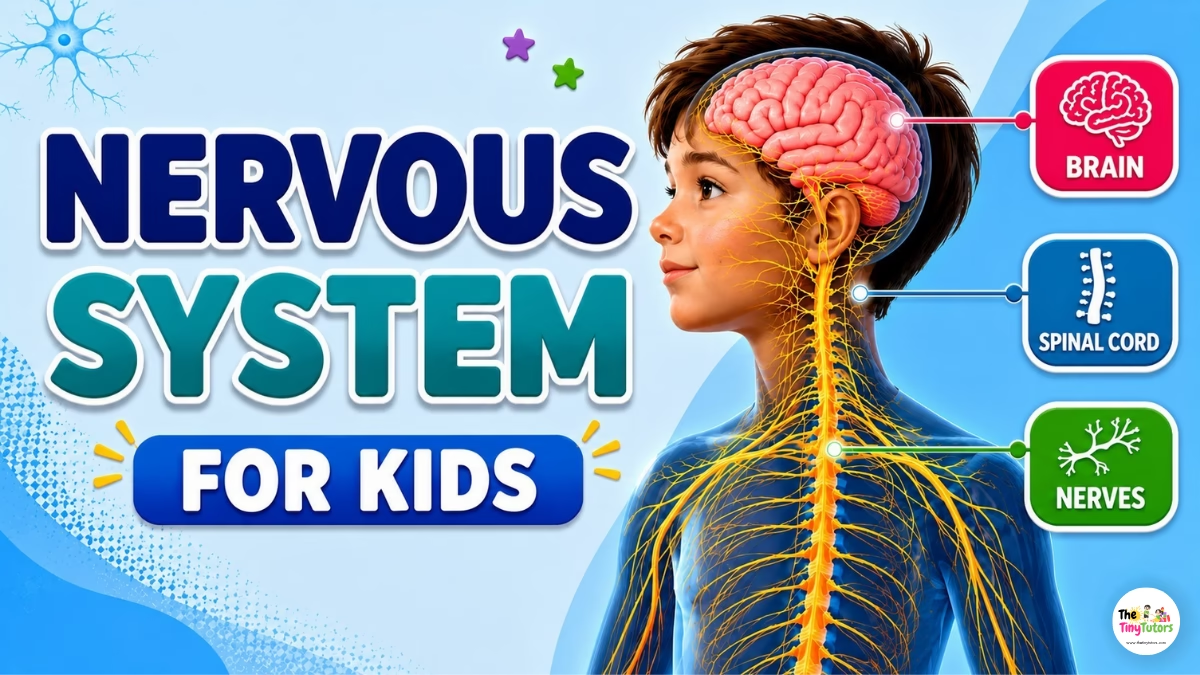
Have you ever touched something very warm and quickly moved your hand away? Or jumped when you heard a sudden loud noise? These quick reactions happen because your nervous system is working to detect information and help your body respond.
- What Is the Human Nervous System for Kids?
- How the Nervous System Works
- Parts of the Nervous System for Kids
- Nervous System Diagram
- Central vs Peripheral Nervous System for Kids
- What Happens When You Touch Something Hot?
- What Does the Nervous System Do?
- How to Keep Your Nervous System Healthy
- Fun Facts About the Nervous System
- Nervous System Activity for Kids
- Nervous System Quiz for Kids
- Frequently Asked Questions
- Keep Learning
This guide explains the human nervous system for Kids in simple, kid-friendly language. You will learn about its main parts, how messages travel through the body, how reflexes work, and some amazing facts about the brain and nerves.
It is designed for curious kids ages 5–12, as well as parents, teachers, and homeschooling families.
What You’ll Learn:
- What the nervous system does
- The main parts of the nervous system
- How messages travel through the body
- How a reflex action works
- Understanding the Central and Peripheral Nervous Systems
What Is the Human Nervous System for Kids?
The human nervous system is a network of the brain, spinal cord, nerves, and special cells called neurons. It helps your body receive information, process it, and coordinate responses.
For example, when you touch a soft blanket, sensory receptors in your skin detect the touch and send information through nerve pathways. Your nervous system helps your brain process that information so you can recognize how the blanket feels.
The nervous system is always working. It helps you sense your surroundings, think, learn, remember, move, and respond to changes. It also helps regulate many automatic body functions, including heartbeat, digestion, and breathing.
A simple way to remember its job is:
Receive information → Process information → Coordinate a response
How the Nervous System Works
When something happens around you, your nervous system detects the information and helps your body respond.
Follow the Signal
Imagine you hear a loud clap.
- Detect: Your ears detect the sound and provide information that can be carried through the nervous system.
- Send: Sensory pathways carry the information toward the brain.
- Process: The brain processes the information and helps you recognize the sound.
- Respond: You might turn your head, look around, or cover your ears.
The exact pathway depends on the type of information and the response involved. Not every response follows the same route.
A Simple Way to Picture It
Think of the nervous system like a school communication network. The brain is an important processing center, the spinal cord is a major pathway, and nerves connect the central nervous system with the rest of the body.
This communication network allows information to move between different parts of the body so they can work together.
Quick Learning Note
Information comes in → the nervous system processes it → a response is coordinated
💡 Fun Fact: Some nerve impulses can travel very quickly, although their speed varies depending on the type of nerve fiber.
Parts of the Nervous System for Kids
The main parts of the nervous system and their functions work together as a team, and learning them one at a time makes the nervous system for kids much easier to remember.
| Part | What It Does |
|---|---|
| Brain | Processes information and helps coordinate thoughts, sensations, movements, and many body functions |
| Spinal Cord | Carries information between the brain and much of the body and helps organize some rapid reflexes |
| Nerves | Carry signals between the central nervous system and other parts of the body |
| Neurons | Specialized cells that communicate information through the nervous system |
Brain
The brain is a major organ of the nervous system. It receives and processes information and helps coordinate thinking, learning, memory, emotions, sensations, and movement.
The brain also works with other parts of the nervous system to help regulate many automatic body functions.
It is protected by the skull.
Spinal Cord
The spinal cord is a long bundle of nervous tissue that runs through the vertebral column, or backbone. It connects the brain with nerves that reach much of the body.
The spinal cord carries information toward and away from the brain and also helps organize certain rapid reflex responses.
It is protected by the bones of the vertebral column and by layers of protective tissue.
Nerves
Nerves are bundles of nerve fibers that connect the central nervous system with other parts of the body.
Some nerve pathways carry sensory information toward the central nervous system. Other pathways carry signals toward muscles, glands, and other targets.
For example, sensory information from your skin can travel through nerve pathways toward the central nervous system, while signals from the nervous system can travel through motor pathways to help your muscles move.
Neurons (Nerve Cells)
Neurons are specialized cells that communicate information through the nervous system.
A typical neuron has structures that receive information and a long part called an axon that can carry signals to other cells.
Neurons communicate with other neurons and with other types of cells at connections called synapses. At many synapses, chemical messengers called neurotransmitters help pass information from one cell to another.
Nervous System Diagram
A nervous system diagram for kids can make the body’s communication network easier to understand.
A simple diagram can show:
- Brain inside the head
- Spinal cord running down the back
- Nerves branching from the spinal cord toward different parts of the body
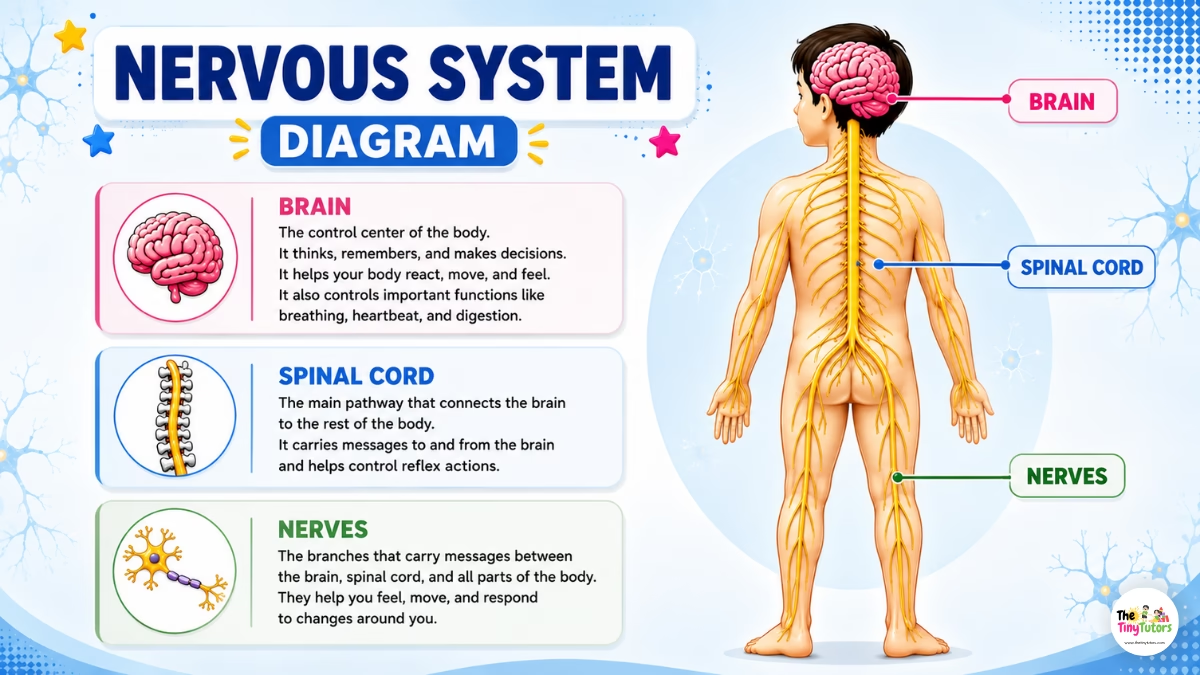
For younger learners, these three labels are enough to begin:
Brain → Spinal Cord → Nerves
Older children can explore a more detailed diagram that shows additional nerve branches and the connection between the central and peripheral nervous systems.
💡 Learning Tip: Ask children to point to each labeled part and explain its job in their own words. This helps turn the diagram into an active learning activity instead of simple memorization.
Central vs Peripheral Nervous System for Kids
For older kids who love a challenge, the nervous system for kids is commonly divided into two major parts: the central nervous system (CNS) and the peripheral nervous system (PNS).
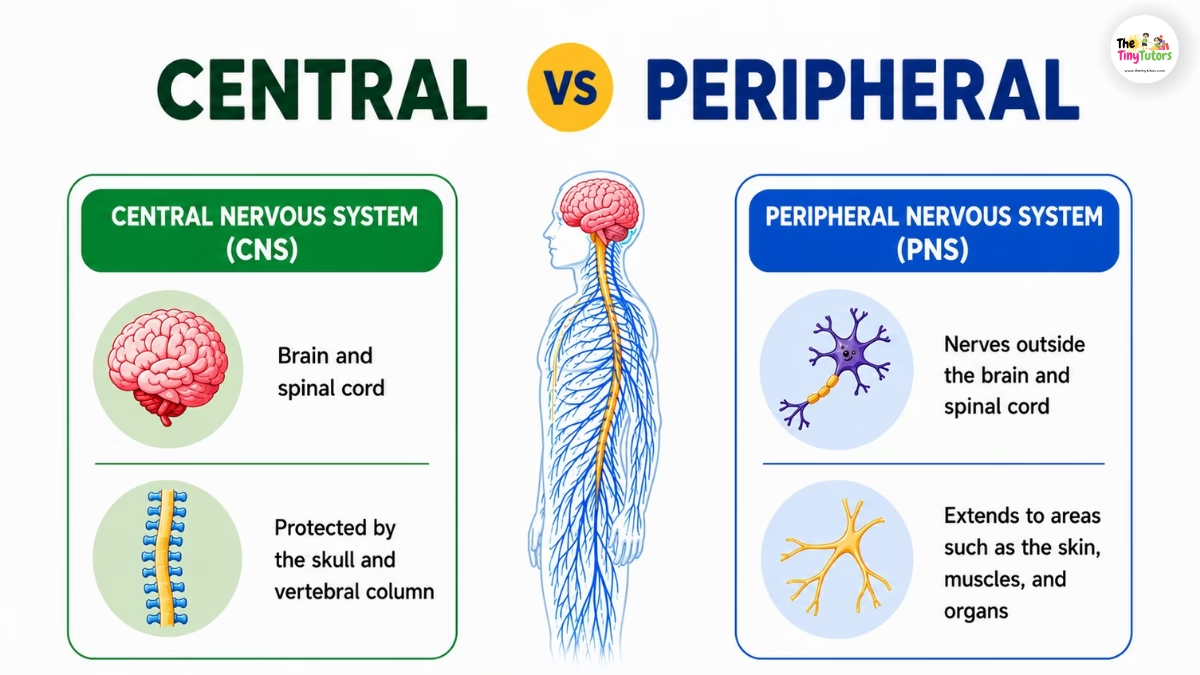
| Central Nervous System (CNS) | Peripheral Nervous System (PNS) |
|---|---|
| Brain and spinal cord | Nerves outside the brain and spinal cord |
| Processes information and coordinates many responses | Connects the CNS with the rest of the body |
| Protected by the skull and vertebral column | Extends to areas such as the skin, muscles, and organs |
Together, the CNS and PNS allow information to travel between the brain, spinal cord, and the rest of the body.
Easy way to remember:
CNS = brain + spinal cord
PNS = nerves connecting the CNS with the rest of the body
What Happens When You Touch Something Hot?
Have you ever touched something hot and quickly pulled your hand away? This can be a reflex action.
A reflex is a rapid, automatic response to a stimulus. Some reflex pathways are organized through the spinal cord, allowing a protective movement to begin quickly. The brain also receives information about what happened, so you can become aware of the heat or pain.
A simplified withdrawal reflex pathway is:
Heat → sensory receptors → sensory nerves → spinal cord → motor nerves → muscles → hand moves away
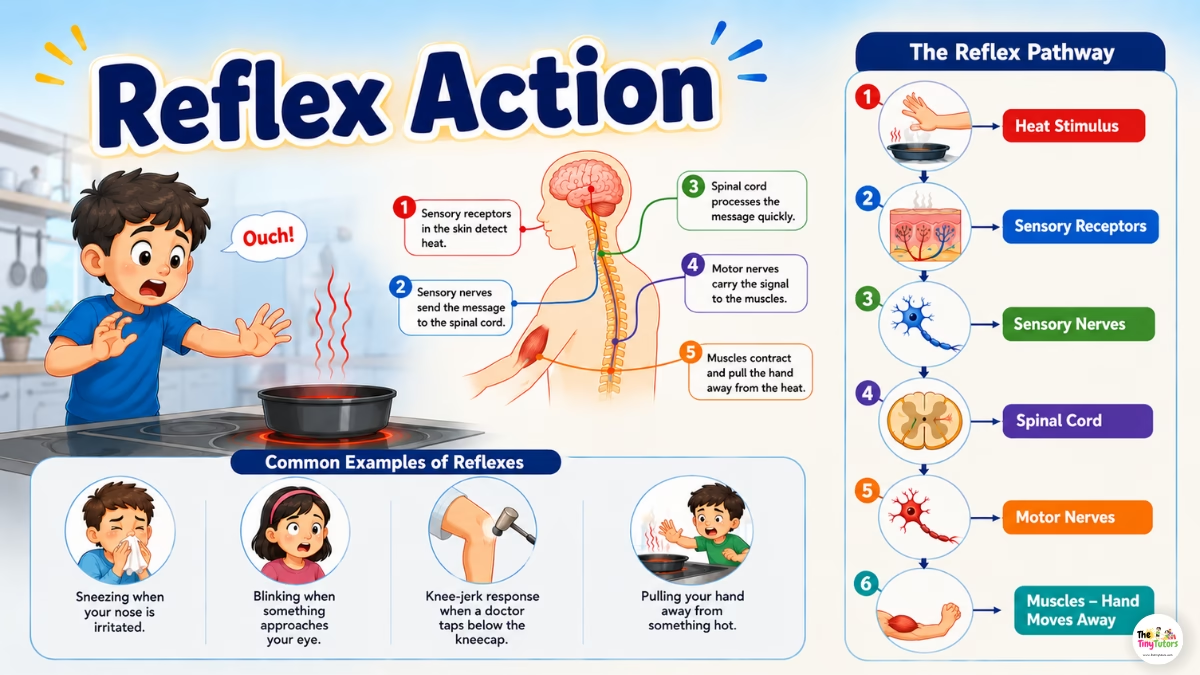
Common examples of reflexes include:
- Pulling your hand away from something hot
- Blinking when something approaches your eye
- Sneezing when your nose is irritated
- The quick leg kick you may notice when a doctor gently taps below your knee
Reflexes are one way the nervous system helps protect the body.
What Does the Nervous System Do?
The nervous system for kids is easiest to understand by looking at everything it controls in a single day.
The nervous system has many jobs. It helps you sense the world, think, learn, remember, move, communicate, and respond to changes.
It also helps regulate automatic functions that you do not have to consciously control all the time.
| Type of Action | Example |
|---|---|
| Voluntary — you choose to do it | Waving, kicking a ball, writing your name |
| Involuntary — happens automatically | Heartbeat, digestion, many breathing adjustments |
For example, you can choose to raise your hand, but you do not normally have to think about every heartbeat.
In simple words:
Something happens → your nervous system receives information → information is processed → your body coordinates a response
How to Keep Your Nervous System Healthy
Children can support a healthy nervous system for kids through simple daily habits. This section is basic health education, not medical advice..
- Sleep well — regular, sufficient sleep supports learning, memory, and normal brain function.
- Eat a balanced diet — a variety of nutritious foods provides nutrients your brain and body need.
- Stay active — regular physical activity supports overall health, including brain health.
- Protect your head — wear an appropriate helmet when biking, skating, or doing other activities where head protection is recommended.
- Manage stress — relaxing activities, play, exercise, and talking with a trusted adult can help children handle everyday stress.
These are general healthy habits, not a substitute for medical care. If a child has ongoing or concerning symptoms, a parent or caregiver should speak with a qualified healthcare professional.
Fun Facts About the Nervous System
Here are some interesting facts that can make learning about the nervous system for kids more exciting. 🌟
- 🧠 The human brain contains billions of neurons. A commonly cited estimate is about 86 billion.
- ⚡ Nerve signals can travel at different speeds depending on the type of nerve fiber. Some can travel more than 100 meters per second.
- 🧠 The brain uses a significant amount of the body’s energy even though it makes up only a small percentage of body weight.
- ⏱️ Some reflex responses happen very quickly, helping the body react to potentially harmful situations.
- 🦴 The spinal cord is protected inside the vertebral column, which forms part of the backbone.
- 🌙 Sleep is important for normal brain function and supports processes involved in learning and memory.
Nervous System Activity for Kids
Turn this lesson into a simple science challenge! 🎯
Reflex Reaction Test
What you need: A ruler and a friend.
What to do:
- Have a friend hold a ruler straight up, with the “0” mark at the bottom.
- Place your fingers around the bottom without touching it.
- Ask your friend to drop the ruler without warning.
- Try to catch it as fast as you can!
The number where the ruler is caught shows how quickly the nervous system for kids reacted — the lower the number, the faster the reflex. Try a few rounds and see if the record can be beaten!
Important: This is a simple reaction-time activity, not a medical test of your reflexes.
Label the Nervous System
Give children a blank body outline and a word bank containing:
Brain • Spinal Cord • Nerves
Ask them to label each part correctly. Then ask them to draw arrows showing how the nerves connect the body with the central nervous system.
Nervous System Quiz for Kids
Ready to test your nervous system knowledge? 🧠
1. Which organ is a major processing center of the nervous system?
A. Nerves
B. Brain
C. Skin
2. What structure connects the brain with much of the body’s nervous system and helps organize some reflexes?
A. Spinal cord
B. Lungs
C. Heart
3. What is a rapid, automatic response called?
A. A thought
B. A reflex
C. A dream
4. Which two structures make up the Central Nervous System?
A. Nerves and skin
B. Brain and spinal cord
C. Eyes and ears
5. What are the specialized cells that communicate information in the nervous system called?
A. Neurons
B. Muscles
C. Bones
Check your answers:
- B — Brain
- A — Spinal cord
- B — A reflex
- B — Brain and spinal cord
- A — Neurons
Frequently Asked Questions
Q1: Why do we jerk our hand away from something hot before we fully notice the pain?
This can happen because of a reflex. A rapid reflex pathway can use the spinal cord to help start the protective movement quickly. The brain also receives information about the stimulus, which helps you become aware of what happened.
Q2: How does the brain communicate with the rest of the body?
The brain stays connected with the rest of the body through the spinal cord and nerves outside the brain and spinal cord. Information travels through networks of neurons, using electrical activity within neurons and chemical communication at many synapses.
Q3: Why do we feel pain?
Pain can occur when specialized sensory receptors detect potentially harmful stimuli, such as extreme heat or a sharp object. Signals travel through sensory pathways, and the nervous system processes this information to help you respond.
Pain can be an important warning signal that helps protect the body.
Q4: What happens to the nervous system when we sleep?
The nervous system does not simply switch off during sleep. The brain remains active and sleep supports important processes related to learning, memory, and normal brain function.
Q5: Why do some people get goosebumps?
Goosebumps can occur when the nervous system activates tiny muscles attached to hair follicles. Cold, fear, excitement, and other strong emotions can trigger this response.
Q6: Can the nervous system heal itself if it gets hurt?
Healing depends on the part of the nervous system, the type of injury, and its severity. Some nerves in the peripheral nervous system can repair themselves to a degree after certain injuries. Injuries to the brain or spinal cord can be much more difficult to recover from.
That is why protecting the head and following safety practices are important.
Keep Learning
Once children understand the nervous system for kids, they can connect it with other human-body topics and see how different body systems work together.
Explore next:
- Human Skeleton for Kids — Discover the bones that protect the brain and spinal cord.
- Circulatory System for Kids — Learn how the circulatory system supports the brain and other body tissues.
- The Muscular System Fun Facts — Explore the muscles that work with the nervous system to produce movement.
- Human Respiratory System for Kids — Learn how the nervous system helps regulate breathing.
🌟 Quick recap: The nervous system for kids is the body’s messenger service. It uses the brain, spinal cord, and nerves to sense the world, react quickly, and keep the whole body working together.