
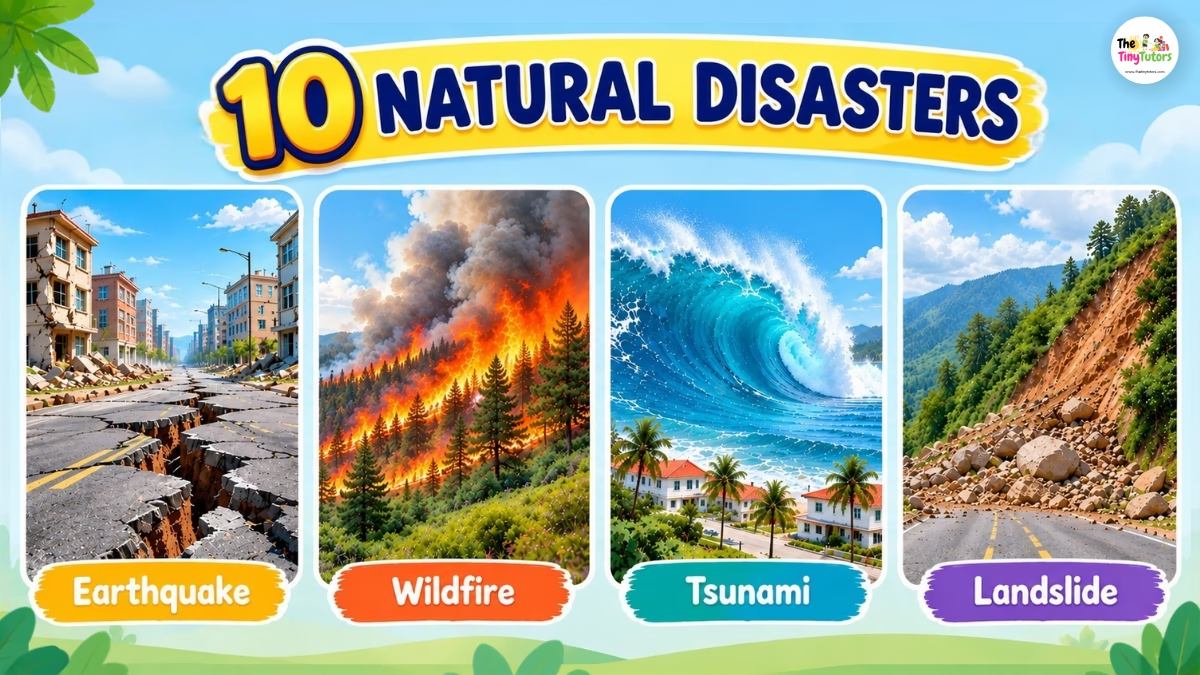
Have you ever felt the ground shake, seen a powerful storm, or wondered how a volcano can erupt?
- What Are Natural Disasters?
- 10 Types of Natural Disasters for Kids
- Types of Natural Disasters at a Glance
- How Are Natural Disasters Different From Human-Made Disasters?
- How Can Natural Disasters Affect People, Animals and the Environment?
- How Can Kids Stay Safe During Natural Disasters?
- 5 Interesting Facts About Natural Disasters for Kids
- Natural Disasters Activity for Kids
- Natural Disasters Quiz for Kids
- Natural Disaster FAQs
- Final Learning Note
Earth is always changing. Sometimes, natural processes can create hazards that may harm people, animals, buildings, and the environment. When these hazards cause serious damage or disruption, they can become disasters.
In this guide to Types of Natural Disasters for Kids, you’ll learn about 10 common examples, how they happen, how they differ, and simple ways to stay prepared and safe.
What Are Natural Disasters?
A natural disaster is a major harmful event connected to a natural process of Earth or the atmosphere.
However, not every natural event becomes a disaster.
For example, a small earthquake in an uninhabited area may cause little or no damage. A strong earthquake in a crowded city, however, could damage buildings, roads, and other important services.
Natural Hazard vs Natural Disaster
| Natural Hazard | Natural Disaster |
|---|---|
| A potentially dangerous natural event or process | A natural event that causes serious damage or disruption |
| May cause little or no harm | Can seriously affect people or communities |
| Example: an earthquake in a remote area | Example: an earthquake that damages a city |
Remember: Not every natural event becomes a disaster. Its effects depend partly on where it happens and who or what is exposed to it.
For more science-based learning about earthquakes, volcanoes, floods, landslides, tsunamis, and other natural hazards, explore USGS Natural Hazards Education.
Now that we know what makes an event a disaster, let’s explore the Types of Natural Disasters for Kids and see how each one happens.
10 Types of Natural Disasters for Kids
There is no single worldwide list containing every natural disaster. Scientists and emergency organizations may group hazards in different ways.
For this Types of Natural Disasters for Kids guide, we’ll focus on 10 common examples that are useful for children to learn.
1. Earthquake
An earthquake is the sudden shaking of the ground caused by movement or breaking of rocks beneath Earth’s surface.
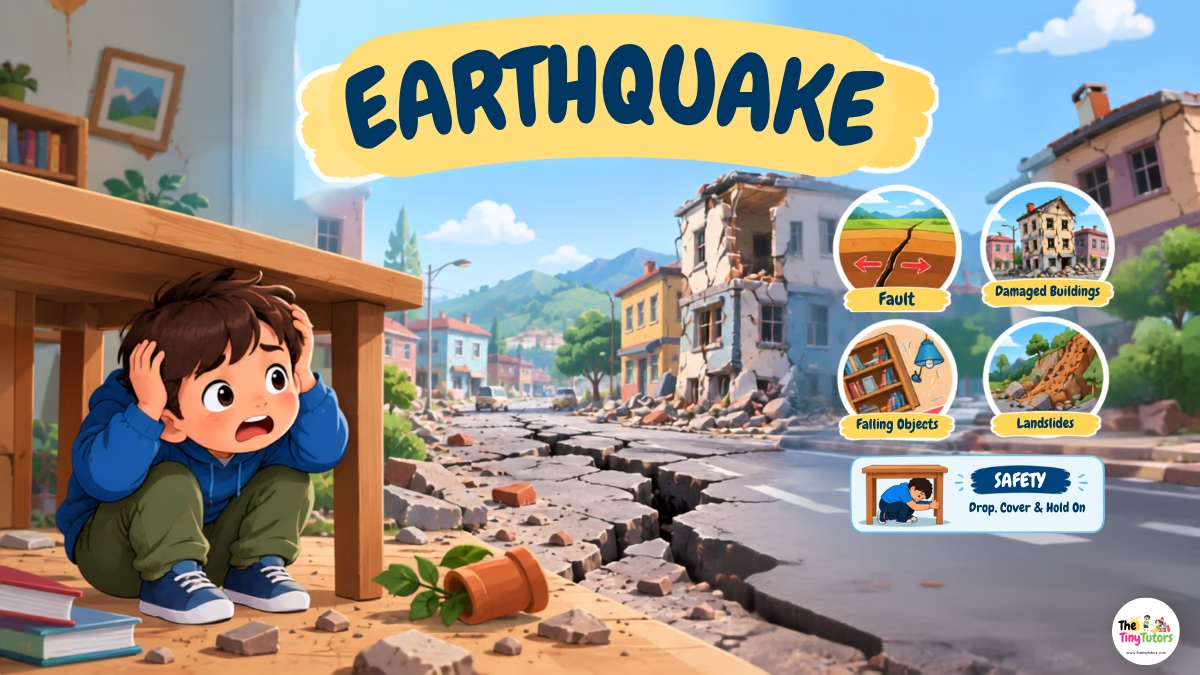
Earthquakes can happen when parts of Earth’s crust move along faults. The shaking can be weak or very strong.
Simple example: Imagine shaking a table while blocks are sitting on it. The blocks may wobble or fall. During an earthquake, the ground itself shakes.
A strong earthquake can:
- Damage buildings and roads
- Cause objects to fall
- Trigger landslides
- Sometimes contribute to tsunamis
Fault — a crack or zone in Earth’s crust where movement can occur.
Safety: During an earthquake, children should follow the safety instructions practiced with their parents or teachers, such as Drop, Cover, and Hold On.
2. Volcanic Eruption
A volcanic eruption happens when hot material from inside Earth comes to the surface through a volcano.
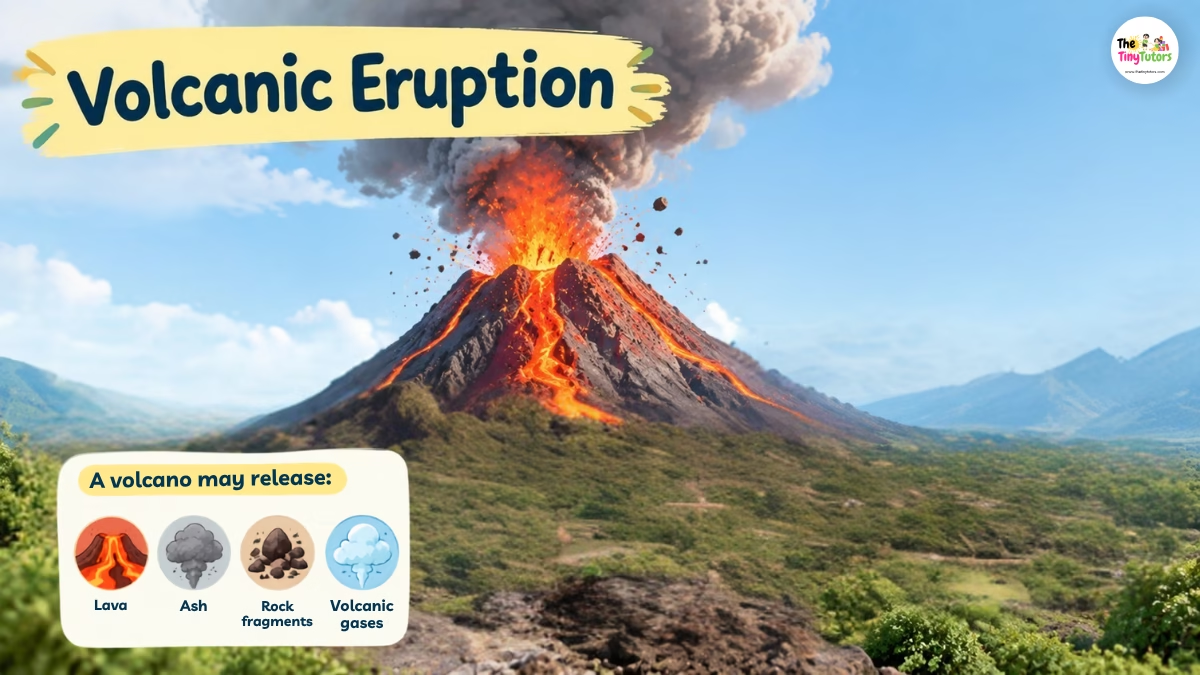
A volcano may release:
- Lava
- Ash
- Rock fragments
- Volcanic gases
Magma is hot, melted rock beneath Earth’s surface. When it reaches the surface, it is called lava.
Volcanic eruptions can be gentle or explosive.
For a deeper lesson, explore Volcano Facts for Kids: Formation, Eruption, Types & Diagram.
Magma — hot, melted rock beneath Earth’s surface.
3. Tsunami
A tsunami is a series of powerful ocean waves caused by a large and sudden disturbance of the sea.
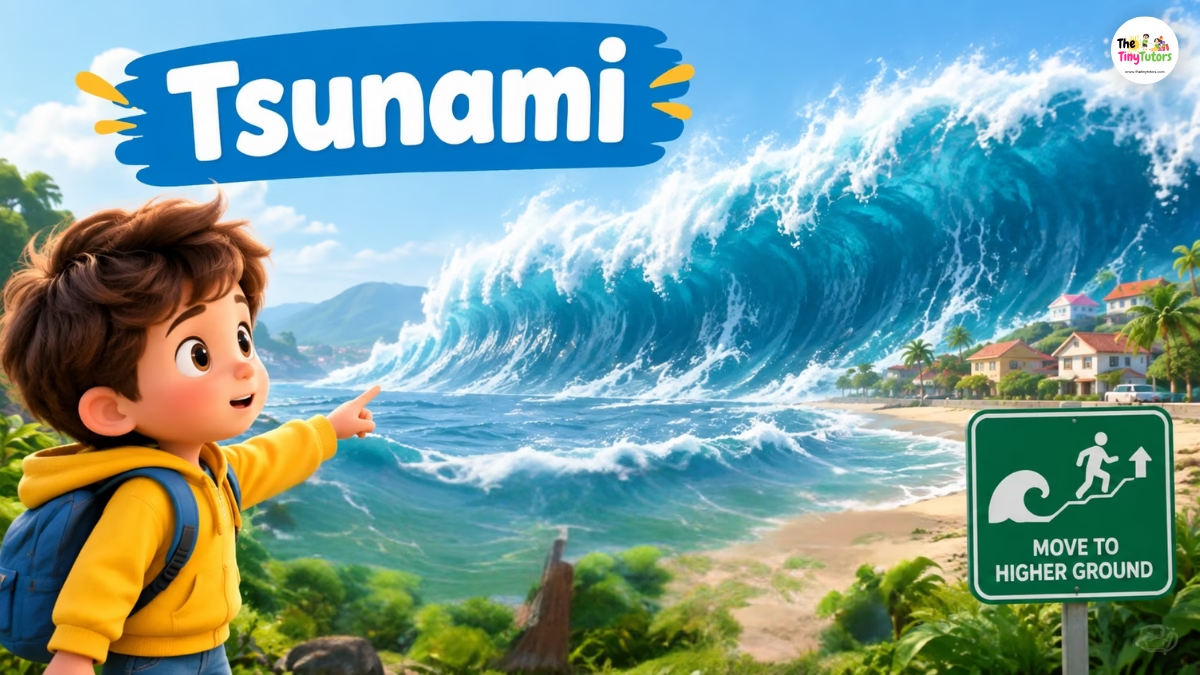
Many tsunamis are caused by underwater earthquakes, but underwater landslides and volcanic activity can also cause them.
A tsunami can travel across a large part of an ocean. Near the coast, the waves can become dangerous as they move into shallower water.
Simple example: Drop a stone into water and watch the ripples spread outward. A tsunami is much more powerful and results from a huge disturbance.
Safety: If officials issue a tsunami warning, people in danger areas should move away from the coast and toward higher ground or another designated safe location.
Evacuation — leaving a dangerous area and moving somewhere safer.
4. Flood
A flood occurs when water spreads over an area that is usually dry.
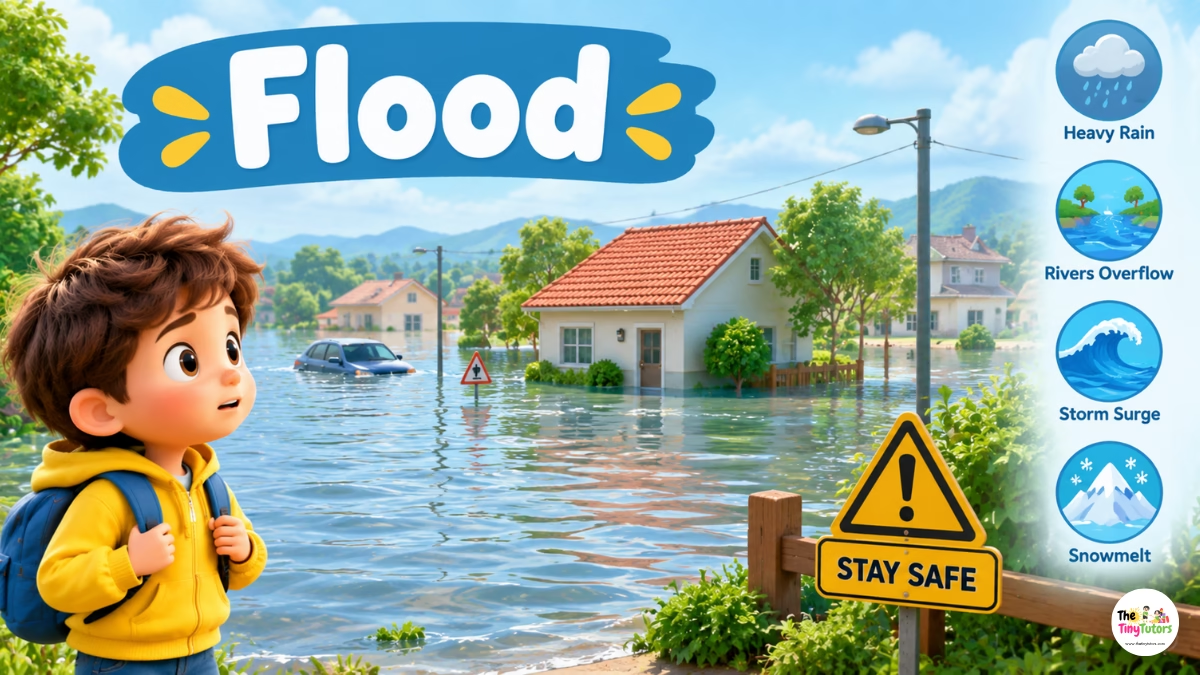
Floods can result from:
- Heavy rainfall
- Rivers overflowing
- Coastal storms
- Storm surge
- Rapid snowmelt
Some floods develop slowly, while flash floods can happen very quickly.
Simple example: Imagine water filling a bathtub. If it keeps rising and spills onto the floor, the floor becomes covered with water. A flood is much larger and can cover roads, homes, and fields.
Safety: Never play in or walk through floodwater. Stay with a trusted adult and follow local warnings.
Overflow — when water rises too much and spills beyond its usual area.
5. Hurricane, Cyclone and Typhoon
A hurricane, cyclone, or typhoon is a powerful rotating tropical storm.
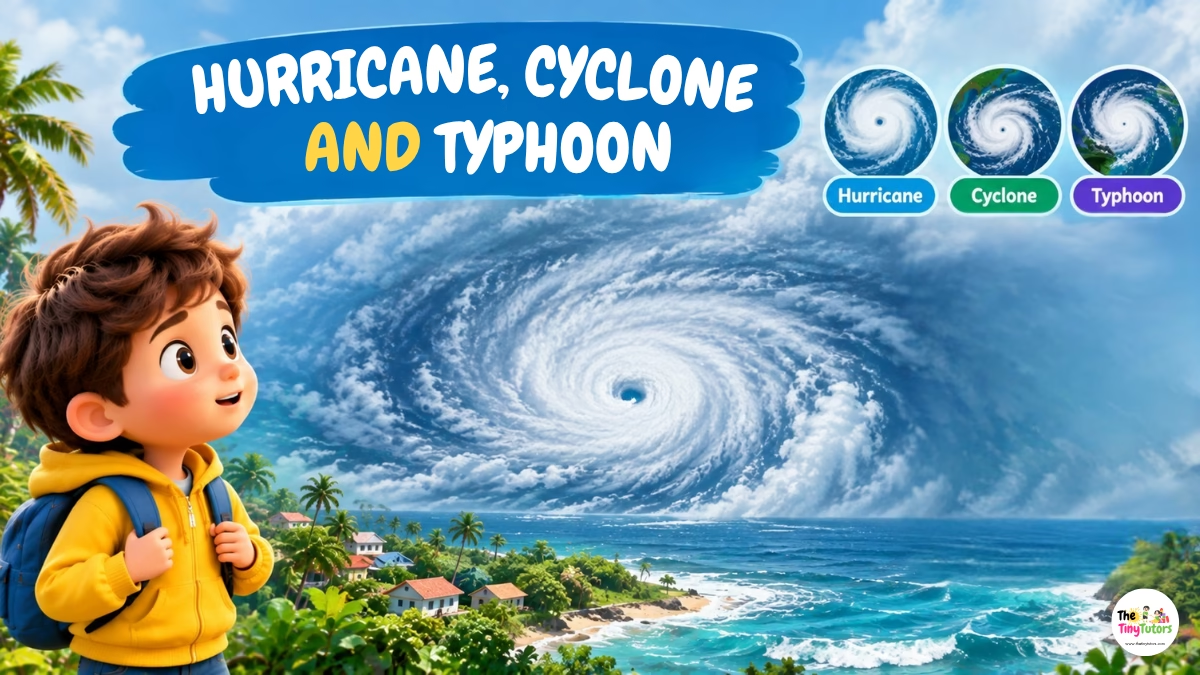
These are not three completely different kinds of storms. They are regional names for similar tropical cyclones.
| Name | Common Region |
|---|---|
| Hurricane | North Atlantic and eastern/central North Pacific |
| Typhoon | Western North Pacific |
| Cyclone | Indian Ocean and parts of the South Pacific |
These storms can bring:
- Strong winds
- Heavy rainfall
- Coastal flooding
- Storm surge
- Large waves
Simple example: Imagine a giant spinning weather system forming over warm ocean water.
For a related weather lesson, explore Types of Clouds for Kids.
Storm surge — an unusual rise of seawater pushed toward the coast by a storm.
6. Tornado
A tornado is a rapidly rotating column of air that extends from a thunderstorm toward the ground.
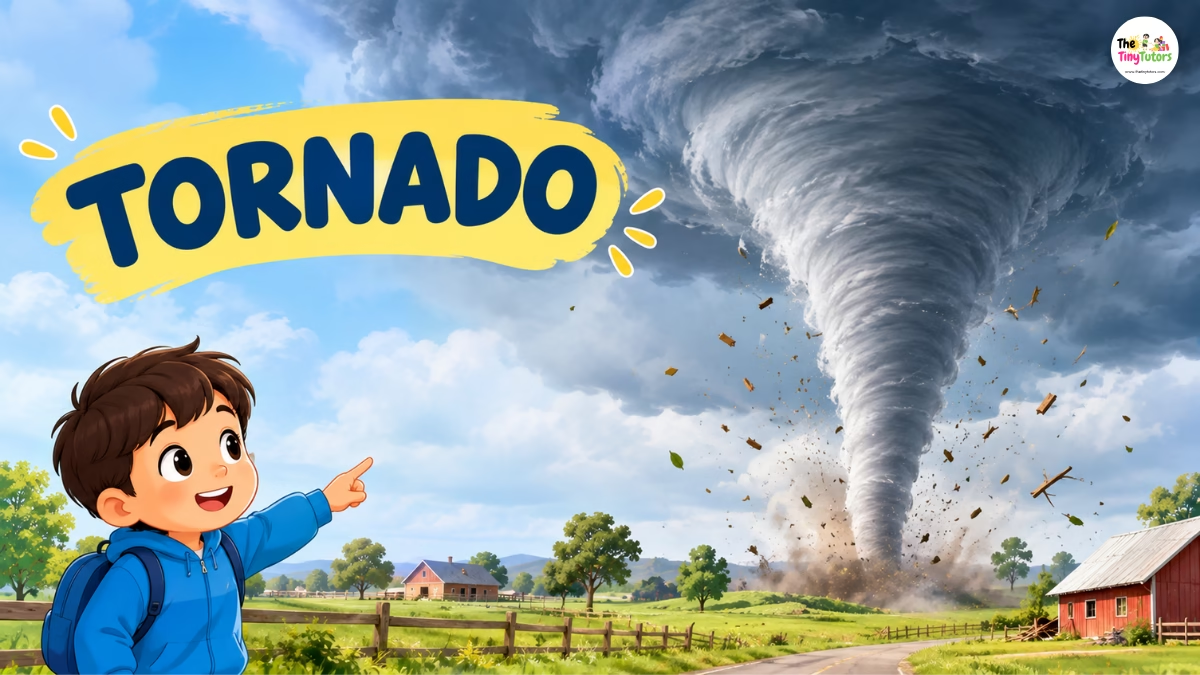
Tornadoes can have extremely strong winds and may damage buildings, trees, vehicles, and other objects.
They often look like a funnel-shaped cloud.
Simple example: Think of a spinning tube of air connected to a powerful storm.
Safety: If a tornado warning is issued, children should go to the safe location recommended by their family, school, or local authorities and stay away from windows.
Funnel — a shape that is wider at one end and narrower at the other.
7. Drought
A drought is a long period when an area has much less water than it normally needs.
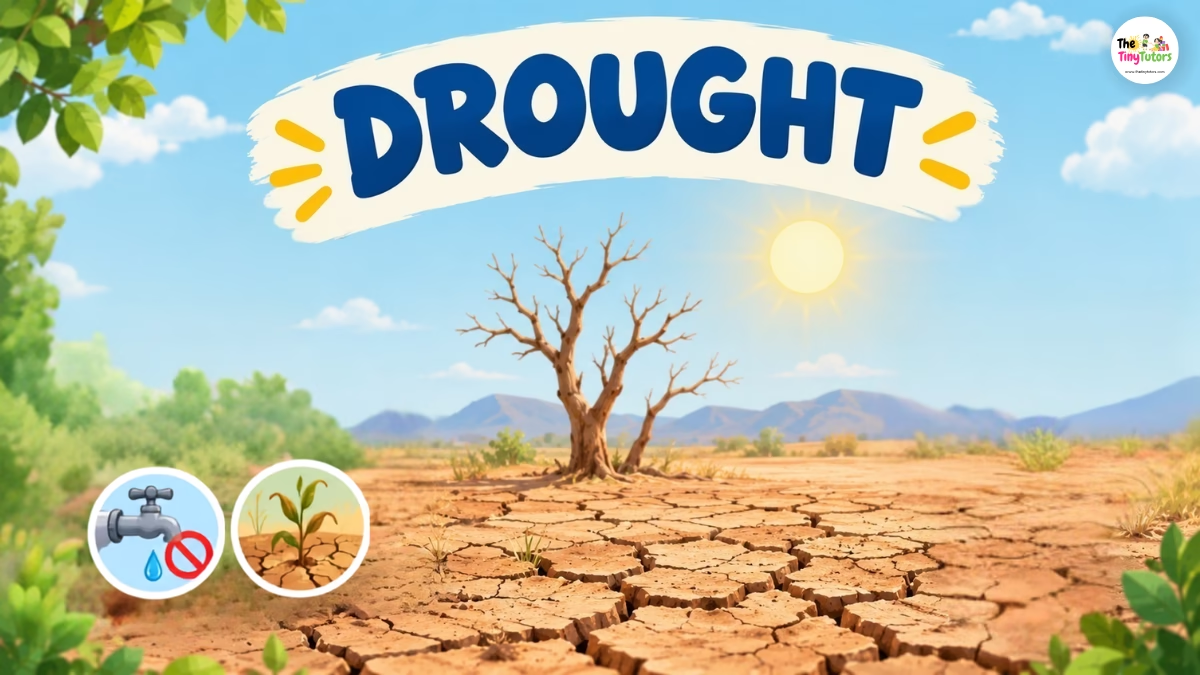
Droughts can happen when there is very little rainfall for a long time.
They can affect:
- Drinking-water supplies
- Crops
- Plants
- Animals
- Rivers and lakes
- Food production
Unlike an earthquake or tornado, a drought usually develops slowly.
Simple example: Imagine a garden that normally receives regular rain. If almost no rain falls for a long time, the soil becomes dry and plants may struggle to grow.
How Can Kids Help?
Children can help conserve water by:
- Turning off taps when water is not needed
- Avoiding unnecessary water waste
- Using only the water they need
- Helping care for plants responsibly
For a related environmental lesson, explore Water Conservation.
Water shortage — a situation in which there is not enough water for normal needs.
8. Landslide
A landslide happens when rock, soil, or other material moves down a slope.
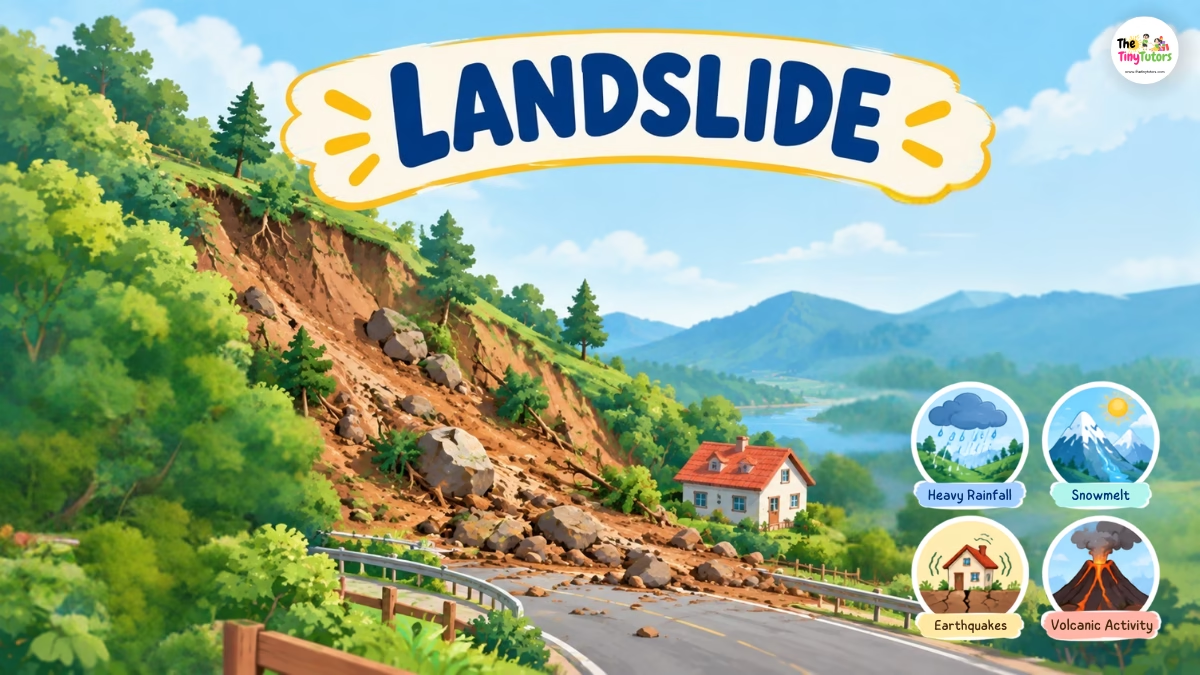
Landslides can be triggered by:
- Heavy rainfall
- Snowmelt
- Earthquakes
- Volcanic activity
- Erosion
- Changes in groundwater
- Some human activities
Simple example: Build a small pile of wet sand. If the side becomes steep, some sand may slide downward. A real landslide can involve huge amounts of rock, soil, and debris.
Slope — land that rises or falls instead of being flat.
9. Avalanche
An avalanche is a rapid movement of snow, ice, and sometimes rocks down a steep mountain slope.
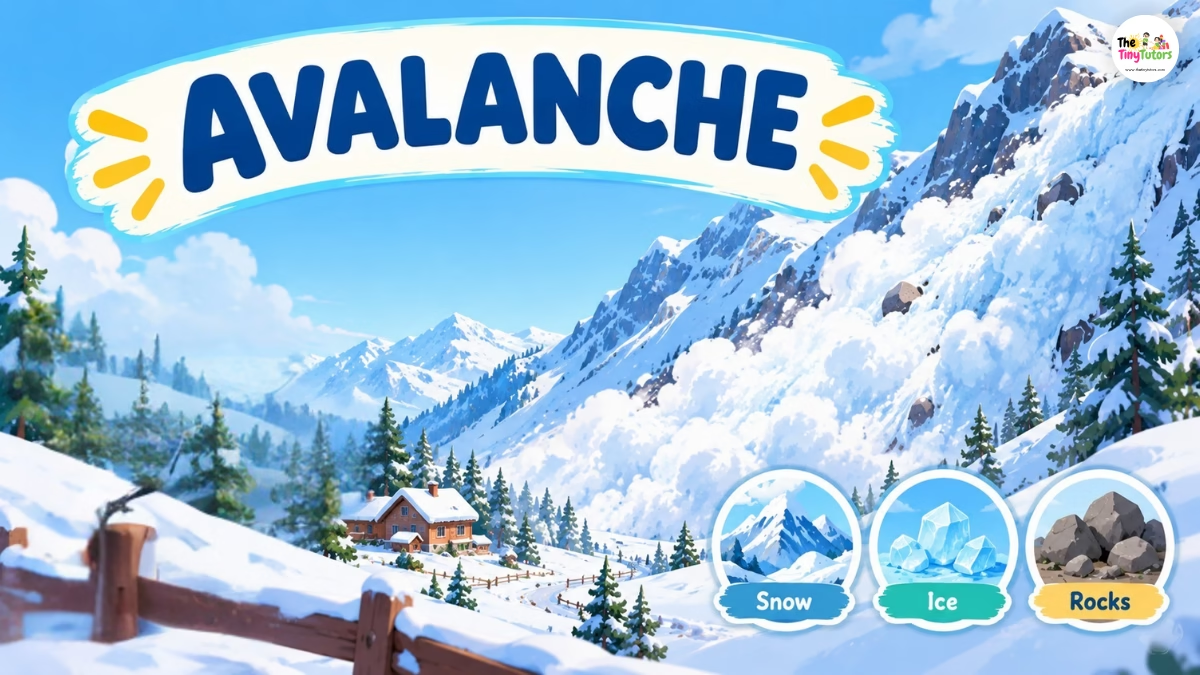
Avalanches usually occur in snowy mountain areas when a layer of snow becomes unstable.
Simple example: Imagine snow sliding quickly down a steep mountain. An avalanche is far larger and more powerful than an ordinary snow slide.
Avalanches can affect roads, buildings, trails, and other areas.
Snowpack — layers of snow that have built up on the ground.
10. Wildfire
A wildfire is an uncontrolled fire that spreads through forests, grasslands, or other natural areas.
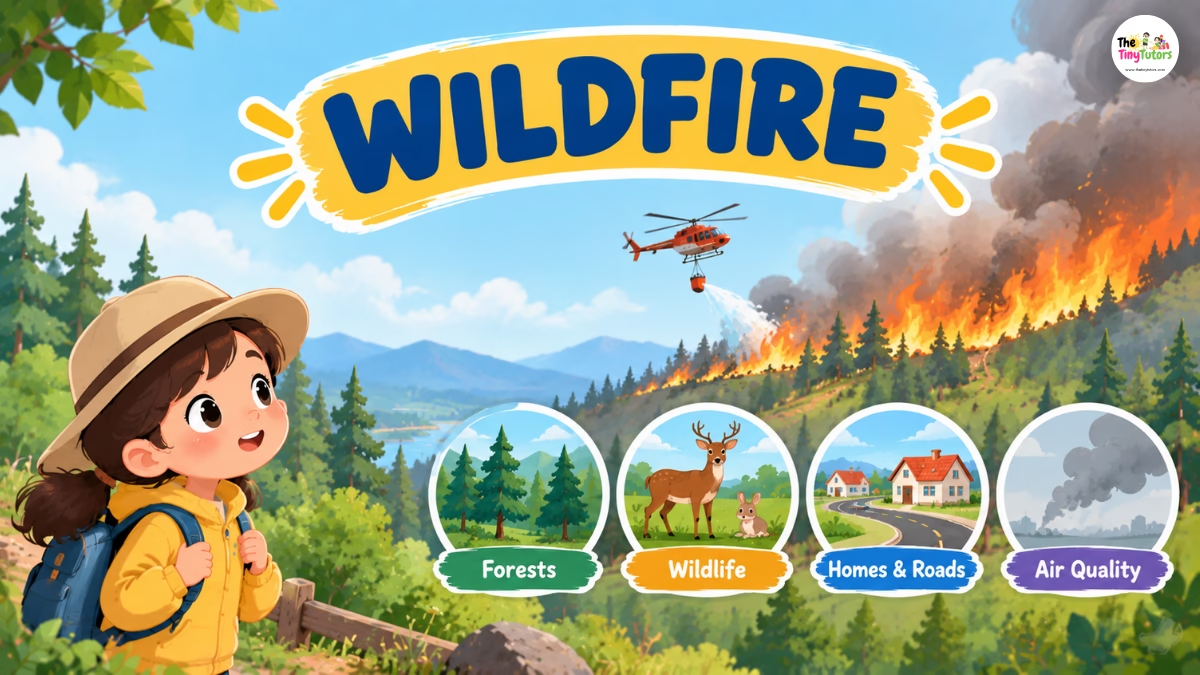
Wildfires can start naturally, such as from lightning, but they can also be caused by human activities.
They can spread quickly when conditions are hot, dry, and windy.
Wildfires can affect:
- Forests and grasslands
- Wildlife and habitats
- Homes and roads
- Air quality
Fire can also be a natural part of some ecosystems. In certain places, natural fires can help maintain habitats and support new plant growth, so their effects on the environment can vary.
For a related lesson, explore Ecosystem for Kids to learn more about habitats, food chains, and relationships between living things and their environment.
Safety: Never approach a wildfire. Follow evacuation instructions and stay with parents, teachers, or other trusted adults.
Evacuate — to leave a dangerous place and move to a safer location.
Types of Natural Disasters at a Glance
Here is a quick comparison of the Types of Natural Disasters for Kids, including what causes each hazard and what children may notice.
| Natural Disaster | Main Process | What You May Notice |
|---|---|---|
| Earthquake | Sudden movement beneath Earth’s surface | Ground shaking |
| Volcanic eruption | Magma, ash, and gases reach the surface | Lava and ash |
| Tsunami | Large, sudden disturbance of the sea | Powerful waves |
| Flood | Water covers normally dry land | Rising or flowing water |
| Hurricane/Cyclone/Typhoon | Powerful tropical cyclone develops over warm ocean water | Strong winds and heavy rain |
| Tornado | Rapidly rotating column of air develops from a severe storm | Funnel-shaped winds |
| Drought | Long period of unusually low water availability | Dry conditions |
| Landslide | Rock, soil, or debris moves downhill | Sliding earth and rocks |
| Avalanche | Snow, ice, and debris move rapidly downhill | Fast-moving snow |
| Wildfire | Uncontrolled fire spreads through vegetation | Flames and smoke |
How Are Natural Disasters Different From Human-Made Disasters?
A natural hazard comes from a natural process, while a human-caused hazard results primarily from human activity.
Examples of natural hazards
- Earthquakes
- Volcanic eruptions
- Tsunamis
- Floods
- Tornadoes
- Droughts
- Avalanches
Examples of human-caused hazards
- Industrial accidents
- Chemical spills
- Large fires caused by human activity
The difference is not always completely simple. For example, wildfires can start naturally, such as from lightning, or because of human activity. Human actions can also increase the risk or effects of some natural hazards.
The key idea is that natural hazards begin with natural processes, while human-caused hazards are primarily linked to human activities.
How Can Natural Disasters Affect People, Animals and the Environment?
Natural disasters can affect many parts of life.
People
They can:
- Damage homes and buildings
- Close roads
- Interrupt school
- Disrupt electricity and water supplies
- Force families to temporarily leave their homes
Animals
Animals may:
- Lose habitats
- Lose food or water sources
- Move to safer areas
- Become separated from their normal environments
Environment
Natural disasters can:
- Change landscapes
- Move soil and rocks
- Alter rivers and coastlines
- Burn vegetation
- Change habitats
Some natural events can also have positive ecological effects over time. For example, natural fire can be part of some ecosystems.
How Can Kids Stay Safe During Natural Disasters?
Children should never be expected to manage a disaster alone.
The most important rule is:
Listen to parents, teachers, caregivers, emergency workers, and local authorities.
Safety note: Disaster-safety guidance can vary depending on the hazard and location. Children should always follow instructions from parents, teachers, local emergency authorities, and other trusted adults.
Before a Disaster
Kids can:
- Learn which hazards can happen in their area
- Practice family emergency plans
- Know where family members will meet
- Learn how emergency alerts work
- Help adults prepare an emergency kit
- Know important emergency contact information
Families and teachers can also explore Ready Kids for age-appropriate disaster preparedness resources and activities.
During a Disaster
Remember:
- Stay calm
- Stay with a trusted adult
- Follow official instructions
- Move to the recommended safe place
- Do not explore dangerous areas
- Never play in floodwater
- Never approach a wildfire
- Do not return to an evacuated area until officials say it is safe
Different disasters require different actions.
For example, earthquake safety includes Drop, Cover, and Hold On, while tsunami safety may require moving away from the coast and toward higher ground.
After a Disaster
Stay with trusted adults and listen for updates.
Do not assume an area is safe simply because the weather looks calm. Floodwater, damaged buildings, broken power lines, debris, fire, and unstable ground can remain dangerous.
5 Interesting Facts About Natural Disasters for Kids
- Some volcanoes are found underwater. Volcanic activity can happen beneath the oceans, where new seafloor can form.
- A tsunami can have many waves. The first wave is not always the largest, and additional waves may arrive over time.
- Hurricanes, cyclones, and typhoons are different regional names for tropical cyclones. The name used depends mainly on where the storm occurs.
- Some natural fires can be part of healthy ecosystems. In certain environments, fire can help recycle nutrients and support the growth of new plants.
- One natural hazard can sometimes trigger another. For example, an underwater earthquake can trigger a tsunami, while an earthquake on land can trigger a landslide.
Natural Disasters Activity for Kids
Match the Disaster
Test what you learned about the Types of Natural Disasters for Kids with this simple matching activity.
Disasters:
A. Earthquake
B. Flood
C. Tornado
D. Drought
E. Avalanche
Descriptions:
- Long period with very little water or rainfall
- Snow rapidly moving down a mountain
- Sudden shaking of the ground
- Water covering normally dry land
- Rapidly rotating column of air connected with a storm
Answers:
- D — Drought
- E — Avalanche
- A — Earthquake
- B — Flood
- C — Tornado
Bonus Challenge
Choose one natural disaster and draw:
Cause → Disaster → Effect
Example:
Heavy rainfall → Flood → Water covers roads
This helps children understand cause and effect instead of simply memorizing names.
Natural Disasters Quiz for Kids
1. What happens during an earthquake?
A. The ground shakes
B. Snow falls
C. Rivers disappear
D. A volcano always erupts
Answer: A
2. What is a tsunami?
A. A strong wind
B. A series of ocean waves caused by a large disturbance
C. A type of drought
D. A snowstorm
Answer: B
3. Which disaster involves water covering normally dry land?
A. Flood
B. Avalanche
C. Tornado
D. Drought
Answer: A
4. What should children do during a disaster?
A. Explore the dangerous area
B. Ignore warnings
C. Follow trusted adults and official instructions
D. Go outside to watch
Answer: C
Natural Disaster FAQs
Q1: How many types of natural disasters are there?
There is no single official number of natural-disaster types. Different organizations group hazards in different ways.
For children, it is more useful to understand common examples and how they happen than to memorize one fixed number.
Q2: What is the most common natural disaster?
There is no simple worldwide answer because disaster definitions and reporting systems differ between countries. Flooding is one of the most widespread types of disaster hazard.
Q3: Which natural disasters can happen suddenly?
Some can happen with little warning, including:
- Earthquakes
- Some landslides
- Tornadoes
- Some flash floods
- Some volcanic eruptions
- Avalanches
Droughts usually develop over a much longer period.
Q4: Can Natural Disasters Be Prevented?
Most natural disasters cannot be completely prevented, but their effects can often be reduced. Early warnings, strong buildings, emergency plans, and knowing what to do can help keep people safe and reduce damage.
Final Learning Note
Learning about different types of natural disasters helps children understand Earth science while also developing an important real-life skill: being prepared.
The most important lesson for children is not simply memorizing a long list of disaster names.
It is:
Learn what hazards can happen, understand how they work, prepare with trusted adults, and follow official safety instructions.
Learning about natural disasters helps children understand Earth science while also developing an important real-life skill: being prepared.