
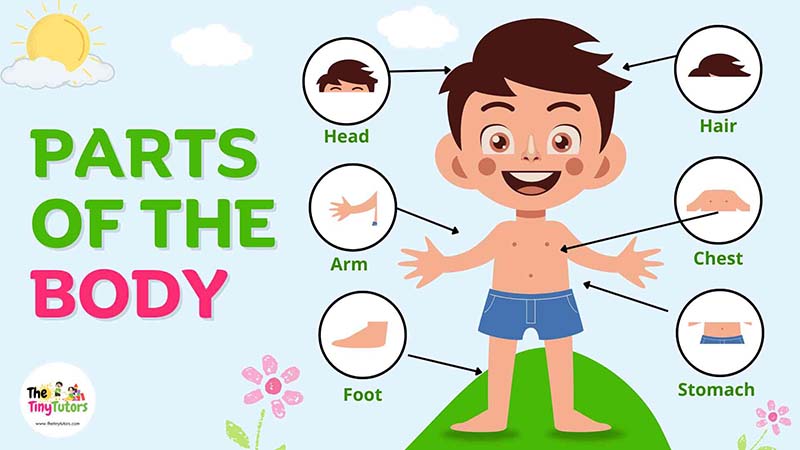
Learning about the Parts of the Body helps children understand how the human body moves, grows, and stays healthy every day. From blinking eyes and strong legs to busy hands and tiny toes, every body part has a special job to do. In this fun and easy guide, kids will explore human body parts names, their functions, interesting facts, and simple explanations designed especially for young learners.
The human body works like a powerful team where all the parts help each other. Your eyes help you see colorful things, your ears let you hear sounds, and your feet help you walk, jump, and run. Even tiny body parts such as fingers and toes help children complete many everyday tasks like holding objects, walking, balancing, and playing.
Learning about Parts of the Body becomes even more exciting when children explore other amazing creatures too. Kids who enjoy science and nature can also discover fascinating dinosaur names, and amazing prehistoric creatures.
This educational guide about Parts of the Body for kids also includes fun observations, simple learning examples, and useful facts to make learning enjoyable and easy to remember. Whether you are a preschool learner, kindergarten student, parent, or teacher, this article will help children discover how amazing the human body really is.
Watch More Fun Learning Videos: Animals and their Babies Name | Animals Name | Educational Videos for Kids
Exploring the Parts of the Body!
Our bodies are made up of many parts that work together, helping us move, talk, play, and experience the world around us. Let’s explore some amazing body parts and see how they work together as one strong team.
Important Parts of the Body and Their Functions
| Body Part | Main Function |
|---|---|
| Eyes | Help us see colors, shapes, and movement |
| Ears | Help us hear sounds and stay balanced |
| Nose | Helps us breathe and recognize smells |
| Mouth | Helps us eat, speak, and taste food |
| Hair | Protects the head from heat and dust |
| Skin | Protects the body from germs and injury |
| Shoulders | Help the arms move freely |
| Fingers | Help us hold, write, and pick up objects |
| Hips | Support balance and body movement |
| Knees | Help the legs bend and move |
| Feet | Help us stand, walk, and run |
| Toes | Help maintain body balance |
Head and Face Parts for Kids
The head and face contain many important Parts of the Body that help children see, hear, smell, taste, speak, and express emotions. These body parts also help protect the brain and allow kids to explore the world around them.
Hair: Your Natural Head Cover
Hair is one of the fascinating Parts of the Body that makes every person look unique. Some children have curly hair, while others may have straight, wavy, short, or long hair. Hair grows from tiny openings in the scalp called hair follicles and helps protect the head from strong sunlight and dust.
Many kids enjoy combing, braiding, or styling their hair before school or special events.
Tiny Discovery: Hair keeps the head warmer during winter days.
Scalp: The Foundation of Healthy Hair
The scalp is the soft layer of skin that covers the top of the head. Tiny hair roots grow underneath it, helping new hair continue to grow over time. Keeping the scalp clean is important for healthy hair.
Healthy Habit: Washing your hair regularly helps remove sweat and dust from the scalp.
Forehead: A Protective Part of the Face
The forehead sits right above your eyes, and below the hairline. It helps protect the front area of the skull and also plays a role in facial expressions.
When children feel surprised, confused, or excited, the forehead often moves along with their eyebrows.
Observe This: Try raising your eyebrows in front of a mirror and watch how your forehead changes.
Eyes: Windows to the World
Eyes help children discover colors, shapes, storybooks, cartoons, animals, and everything happening around them. They send visual information to the brain, helping the body understand what it sees every day.
Reading, drawing, catching a ball, and recognizing faces all become possible because of healthy eyesight. Even simple classroom activities depend heavily on the eyes working together with the brain.
Eyes also protect themselves in smart ways. Blinking helps keep them clean and moist throughout the day.
Did You Notice? People blink thousands of times every day without even realizing it.
Try This Activity: Cover one eye at a time and observe how both eyes help you see depth and distance more clearly.
Ears: Listening and Balancing Helpers
Ears do much more than simply hear sounds. They help children listen to music, understand conversations, follow instructions, and stay balanced while walking, running, or spinning.
Inside the ears are tiny structures that quickly send sound signals to the brain. These signals help people recognize voices, songs, alarms, and many everyday sounds.
The inner ear also supports body balance, especially during movement and physical activities.
Quick Observation: Different sounds can be loud, soft, high, or low depending on their source.
Try This Activity: Close your eyes for one minute and count how many sounds you can hear around you.
Nose: A Powerful Smell Detector
The nose is one of the Parts of the Body that helps you breathe fresh air and recognize thousands of different smells. Your nose can recognize many different smells, from yummy snacks to the fresh smell that comes after rain.
Tiny hairs inside the nose help filter dust from the air before it enters the lungs.
Observation Time: Some smells can instantly remind you of birthdays, holidays, or favorite places.
Mouth: Busy from Morning to Night
The mouth helps children eat food, speak clearly, laugh with friends, sing songs, and enjoy different tastes throughout the day. The tongue and teeth work together to chew food before swallowing.
Children use their mouths almost constantly throughout the day while talking with friends, answering questions, or enjoying snacks.
Quick Science Fact: Humans usually grow two sets of teeth during their lifetime.
Chin: Supporting Jaw Movement
The chin is the lower front part of the face that helps support jaw movement during speaking, chewing, smiling, and other facial actions. It also gives shape and balance to the face.
Children use their chin muscles naturally while talking with friends, eating meals, or expressing emotions through different facial expressions.
Everyday Observation: Place your hand gently under your chin while speaking and notice how it moves.
Interesting Fact: The chin works together with the jaw and mouth muscles during many daily activities.
Cheeks: The Smile Makers
Cheeks are the soft parts on both sides of the face that help children smile, chew food, and show emotions. They also support facial movements while talking, laughing, or making funny expressions.
Fun Observation: Cheeks may turn pink or red after running, laughing, or feeling shy.
This fix important hai because factual mistakes Google quality ko damage karte hain.
Neck Muscles: Flex and Stretch!
Neck muscles help children move their heads while reading, playing, or looking around. These muscles work throughout the day whenever you nod, shake your head, or look upward at the sky.
Healthy Tip: Sitting with a straight posture helps reduce strain on the neck muscles.
Upper Body Parts
The upper body contains important Parts of the Body that help children lift, carry, hold, write, throw, and complete many everyday activities. All of these body parts work as a team to help the body stay active, strong, and full of movement.
Skin: The Body’s Shield
Skin covers the entire body and acts like a natural shield against dust, germs, and heat. It also helps the body feel different sensations such as warmth, coldness, softness, or rough textures.
Another important work of the skin is helping regulate body temperature during hot or cold weather.
Quick Discovery: Goosebumps can appear on the skin when you feel cold or frightened.
Shoulders: Helping Arms Move Freely
Shoulders connect the arms to the upper body and allow movement in many directions. Whether throwing a ball, painting a picture, or lifting a backpack, shoulders make these actions smooth and comfortable.
Unlike many other joints, shoulders can rotate widely, giving the arms great flexibility.
Real-Life Example: Swimmers, dancers, and basketball players rely heavily on strong shoulder movements.
Elbows: Helping Arms Bend Easily
Elbows make it possible to bend and straighten the arms during daily activities. Eating food, brushing teeth, throwing a ball, and lifting objects all become easier because of elbow movement.
Without elbows, simple arm actions would feel stiff and uncomfortable.
Mini Activity: Try touching your shoulders with your hands and notice how your elbows bend smoothly.
Wrists: Flexible Movers
Wrists connect the hands to the arms and help children perform many everyday activities with comfort and control. These flexible joints allow the hands to move in different directions while writing, drawing, throwing, catching, eating, or playing games.
Since wrists can move in multiple directions, they help children control hand movements more smoothly during writing, drawing, playing, and other everyday activities.
Everyday Activity: Try moving your hands in small circles and notice how your wrists help control the movement.
Interesting Fact: Wrists contain several small bones that work together to support smooth hand movement and flexibility.
Fingers: Tiny Tools for Everyday Tasks
Fingers may be small, but they help children complete many important daily activities. Writing neatly, buttoning clothes, building blocks, drawing pictures, opening lunch boxes, and holding pencils all depend on finger movement.
Each finger works together with the hand to grip, hold, and move objects carefully. Thumbs are especially useful because they help people hold things more firmly.
Strong and flexible fingers also help children learn creative skills like painting, crafting, and playing musical instruments.
Mini Challenge: Try picking up a small object using only your thumb and index finger.
Fun Fact: Human fingertips contain sensitive nerves that help people feel textures and temperatures.
Back Muscles: Strength for Movement
Back muscles help children sit upright, bend safely, and carry school bags comfortably. They also protect the spine and support body movement during sports, dancing, and playground activities.
Daily Habit: Sitting properly while studying helps keep back muscles healthy and strong.
Belly Button: A Tiny Reminder from Babyhood
The belly button is one of the most interesting Parts of the Body because it reminds us of life before birth. Before a baby is born, the umbilical cord connects the baby to the mother and provides food and oxygen.
After birth, a small mark remains on the tummy, called the belly button.
Interesting Fact: Every person’s belly button shape is slightly different, making it unique just like fingerprints.
Lower Body Parts and Their Functions
Hips: Supporting Balance and Movement
The hips are important Parts of the Body that connect the legs to the upper body and help children move comfortably during everyday activities. They support actions like walking, running, sitting, climbing, and jumping while also helping the body maintain balance.
The hip joints can move in different directions smoothly, making it easier for children to stay active during sports, games, and outdoor play.
Movement Activity: Try lifting one knee at a time and notice how your hips help your legs move freely.
Interesting Fact: The hips help support the body’s weight while standing, walking, and moving from place to place.
Knees: Natural Hinges for Movement
Knees work like hinges on a door. They allow the legs to bend smoothly while walking, jumping, climbing stairs, or sitting cross-legged on the floor.
Sports like football, basketball, and dancing all depend heavily on healthy knees.
Feet: Your Body’s Strong Support System
Feet are hardworking Parts of the Body that support the entire body throughout the day. They help children stand, walk, run, skip, dance, and balance on different surfaces.
Each foot contains many bones, muscles, and joints working together like a well-organized team.
Activity Idea: Try balancing on one foot for 10 seconds without falling.
Balance Challenge: Walk slowly on your tiptoes across the room.
Toes: Small but Super Helpful
Toes may be tiny, but they help keep the body balanced during movement. While walking or running, the toes help push the body forward step by step.
The big toe plays an especially important role in maintaining stability while standing.
Fun Observation: People often wiggle their toes without even thinking about it.
Ankles: Keep You Moving
Ankles are one of the most important parts of the body! Your ankles connect your feet to your legs and help you move in different ways. They let you run, jump, and even walk up hills!
What they do: Let you move your feet in many directions.
Movement Tip: Warm-up exercises help protect the ankles during sports and running.
FAQs About Parts of the Body
Why are body parts important?
Body parts help us move, eat, learn, play, and stay healthy every day.
Which body part helps us smell?
The nose helps us recognize different smells and also helps us breathe.
Why do we need bones?
Bones give shape and support to the body and help us stand upright.
Which body part helps us balance?
The ears, feet, toes, and ankles all help the body stay balanced.
Conclusion
Every body part has a unique job that helps children move, learn, play, and stay healthy every day. From blinking eyes and flexible fingers to strong knees and hardworking feet, all Parts of the Body work together like one amazing team.
Understanding how the human body works also helps children learn healthy habits like washing hands, exercising, eating nutritious food, and staying active. The more kids learn about their bodies, the better they can care for themselves while growing stronger and healthier every day.
Keep learning about your amazing body and practice healthy habits every day!