
Introduction
Have you ever wondered what helps your bones grow strong and your teeth stay healthy? 🦴
- Introduction
- 1. What Is Calcium?
- 2. Why Is Calcium Important for Kids?
- 3. How Much Calcium Do Kids Need Every Day?
- 4. 15 Best Calcium-Rich Foods for Kids
- 5. How Does the Body Use Calcium?
- 6. Calcium and Vitamin D: A Powerful Team ☀️
- 7. Easy Calcium-Rich Meal and Snack Ideas
- 8. Tips to Help Kids Get Enough Calcium
- 9. Fun Facts About Calcium
- 10. Calcium Activity for Kids: Build a Strong-Bone Food Plate
- FAQs – Calcium-Rich Foods for Kids
- Conclusion
- Related Articles on The Tiny Tutors
Your body needs a special mineral called calcium to build strong bones and teeth. It also helps your muscles move and your nerves send messages.
The good news is that calcium is found in many everyday foods!
In this guide to calcium-rich foods for kids, we will explore 15 healthy foods that contain calcium, learn how much calcium children need each day, and discover easy meal and snack ideas.
You will also learn why calcium is important for growing children, which foods are good sources of calcium, and how parents can include them in everyday meals.
Let’s begin our calcium adventure! 🥛
1. What Is Calcium?
Calcium is a mineral that your body needs to grow and stay healthy.
Think of your bones as the strong frame of a house. Calcium helps make that frame strong and sturdy.
Your body cannot make calcium on its own. You need to get it from foods and drinks.
Some foods with calcium include:
- Milk
- Yogurt
- Cheese
- Tofu
- Certain green vegetables
- Some nuts and seeds
Calcium helps your body build and maintain strong bones and teeth. It also supports muscles, nerves, and other important body functions.
2. Why Is Calcium Important for Kids?
Children grow quickly, especially during their growing years. Their bones are developing, and their bodies need different nutrients to support this growth.
Here are some important reasons calcium matters.
🦴 Helps Build Strong Bones
Calcium is one of the important minerals that make bones strong.
When children eat calcium-containing foods as part of a balanced diet, they help their bodies build and maintain healthy bones.
🦷 Keeps Teeth Strong
Your teeth need calcium too!
Calcium helps make teeth strong so they can help you bite and chew food.
💪 Helps Muscles Move
Calcium helps your muscles work properly.
It plays a part when you run, jump, dance, ride a bicycle, or play with friends.
🧠 Helps Nerves Send Messages
Your nerves carry messages between your brain and different parts of your body.
Calcium helps these messages travel so your body can respond.
🌱 Supports Growing Bodies
Children need enough calcium while their bones are growing.
Eating a variety of calcium-containing foods helps meet their daily needs.
Remember: Calcium is important, but it is not the only nutrient children need. Protein, vitamin D, other vitamins and minerals, regular movement, and sleep also help support healthy growth.
3. How Much Calcium Do Kids Need Every Day?
The amount of calcium a child needs depends on their age.
Calcium is measured in milligrams (mg). A milligram is a small unit used to measure the amount of a nutrient in food.
The following daily recommendations are based on the U.S. National Institutes of Health guidance. Recommendations can vary between countries and health authorities.
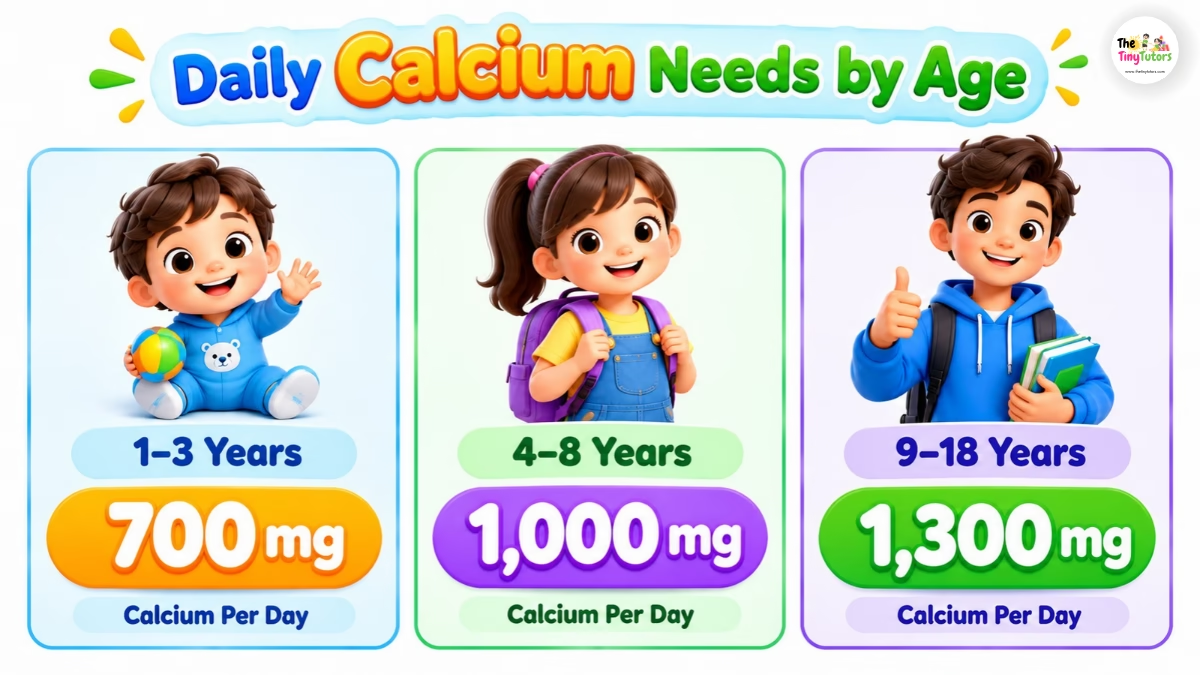
Daily Calcium Needs by Age
| Age Group | Calcium Needed Per Day |
|---|---|
| 1–3 years | 700 mg |
| 4–8 years | 1,000 mg |
| 9–18 years | 1,300 mg |
What Does This Mean?
Children aged 1–3 years need about 700 mg of calcium each day.
Children aged 4–8 years need about 1,000 mg each day.
Children aged 9–18 years need about 1,300 mg each day.
For example, a child aged 6 years needs about 1,000 mg of calcium per day, while a child aged 10 years needs about 1,300 mg.
These amounts are daily totals from all foods and drinks combined, not the amount children should get from one food.
Children do not need to eat the same calcium-rich food every day. They can get calcium from a variety of foods across breakfast, lunch, dinner, and snacks.
Parents should speak with a healthcare professional if a child has a medical condition, food allergy, restricted diet, or concerns about their calcium intake.
Including calcium-rich foods for kids in everyday meals can help children get calcium from different sources. Milk, yogurt, cheese, tofu, and calcium-fortified foods are some options parents can consider.
4. 15 Best Calcium-Rich Foods for Kids
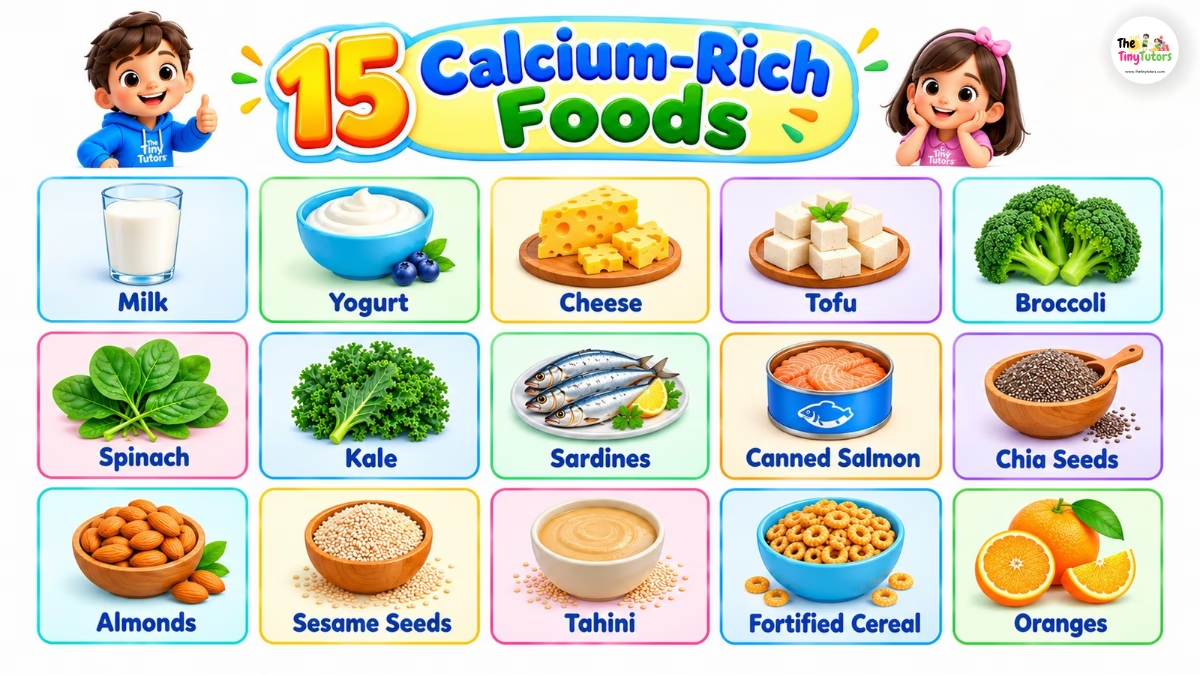
There are many tasty foods that contain calcium. Some come from animals, while others come from plants.
Here are 15 calcium-rich foods for kids that parents can include in a balanced diet.
1. Milk 🥛
Milk is one of the familiar sources of calcium.
A cup of whole milk (about 240 ml) contains approximately 276 mg of calcium.
Kids can enjoy milk:
With breakfast
With oatmeal
In a homemade smoothie
Alongside a snack
Fun fact: Milk contains calcium and protein, which are both useful nutrients for growing children.
2. Yogurt
Yogurt is a creamy food made from milk.
One cup (about 240 g) of plain low-fat yogurt contains approximately 415 mg of calcium.
Kids can enjoy yogurt with:
Fresh fruit
Oats
A little cinnamon
Homemade fruit smoothies
Plain yogurt can be a good choice when you want to avoid extra added sugar.
3. Cheese 🧀
Cheese is another dairy food that contains calcium.
About 1.5 ounces (42 g) of part-skim mozzarella contains approximately 333 mg of calcium.
You can add cheese to:
Sandwiches
Homemade pizza
Vegetable wraps
Toast
A small amount can add flavor and calcium to a meal.
4. Calcium-Fortified Soy Milk
Soy milk is made from soybeans and water.
Some soy milk has calcium added to it. One cup of calcium-fortified soy milk contains approximately 299 mg of calcium.
It can be used in:
Breakfast cereal
Oatmeal
Smoothies
Homemade pancakes
Important: Not all plant-based drinks contain the same amount of calcium. Check the nutrition label before choosing one.
5. Tofu
Tofu is a food made from soybeans.
Some tofu is made using calcium salts, which add calcium to the food.
Half a cup of firm tofu made with calcium sulfate contains approximately 253 mg of calcium.
Tofu can be added to:
Vegetable stir-fries
Rice dishes
Sandwiches
Soups
Tofu is also a source of plant-based protein.
6. Sardines 🐟
Sardines are small fish that can contain a good amount of calcium when their soft bones are eaten.
A 3-ounce (85 g) serving of canned sardines with bones contains approximately 325 mg of calcium.
The bones in canned sardines become soft during processing, making them edible.
Sardines can be served with rice, toast, or vegetables. They are not suitable for children with a fish allergy.
7. Canned Salmon
Some canned salmon contains soft bones that can be eaten.
A 3-ounce (85 g) serving of canned salmon with bones contains approximately 181 mg of calcium.
Salmon can be added to:
Sandwiches
Rice
Homemade patties
Pasta
If serving fish to young children, parents should check carefully for any remaining hard bones.
8. Spinach 🌿
Spinach is a leafy green vegetable.
Half a cup of boiled spinach contains approximately 123 mg of calcium.
Spinach can be added to:
Dal
Vegetable dishes
Soups
Homemade parathas
Although spinach contains calcium, it also has oxalates. These can reduce how much calcium the body absorbs. So spinach should not be treated as the only or main calcium source.
9. Kale
Kale is a green leafy vegetable.
One cup of cooked kale contains approximately 94 mg of calcium.
You can add kale to:
Soups
Vegetable stir-fries
Rice dishes
Smoothies
Kale can be a useful part of a varied diet.
10. Broccoli 🥦
Broccoli looks like a little green tree!
Half a cup of raw broccoli contains approximately 21 mg of calcium.
Broccoli can be served:
Steamed
In vegetable soup
With pasta
In homemade vegetable sandwiches
Broccoli contains less calcium per serving than milk or yogurt, but it still contributes to a healthy diet.
11. Chia Seeds
Chia seeds are tiny seeds that contain calcium and other nutrients.
One tablespoon of chia seeds contains approximately 76 mg of calcium.
They can be added to:
Oatmeal
Yogurt
Smoothies
Homemade pudding
For younger children, serve chia seeds in an age-appropriate form, such as mixed into moist foods, rather than offering a large spoonful of dry seeds.
12. Almonds
Almonds are nuts that contain calcium.
One ounce (about 28 g) of almonds contains approximately 76 mg of calcium.
Almonds can be included in:
Homemade nut butter
Smoothies
Oatmeal
Nut-based snacks
Safety tip: Whole nuts can be a choking hazard for young children. Follow age-appropriate serving guidance and offer them in a safe form, such as smooth nut butter, when needed. Avoid nuts entirely if a child has a relevant allergy.
13. Sesame Seeds and Tahini
Sesame seeds are small seeds used in many foods.
Tahini is a paste made from sesame seeds.
Sesame can be added to:
Homemade dips
Vegetable dishes
Sandwich spreads
Sauces
The calcium amount depends on the serving and product. Sesame products can contribute calcium, but the amount may vary.
14. Calcium-Fortified Breakfast Cereal
Some breakfast cereals have calcium added to them.
One serving of cereal fortified with 10% of the Daily Value for calcium contains approximately 130 mg of calcium.
Cereal can be eaten with milk or calcium-fortified soy milk.
Check the label for:
Calcium amount
Serving size
Added sugar
15. Oranges 🍊
Oranges contain a small amount of calcium.
One medium orange contains approximately 60–65 mg of calcium, depending on its size.
Oranges can be enjoyed:
As a snack
With breakfast
In a fruit salad
Alongside a meal
Oranges also provide vitamin C, which supports other important functions in the body.
Calcium Amounts at a Glance
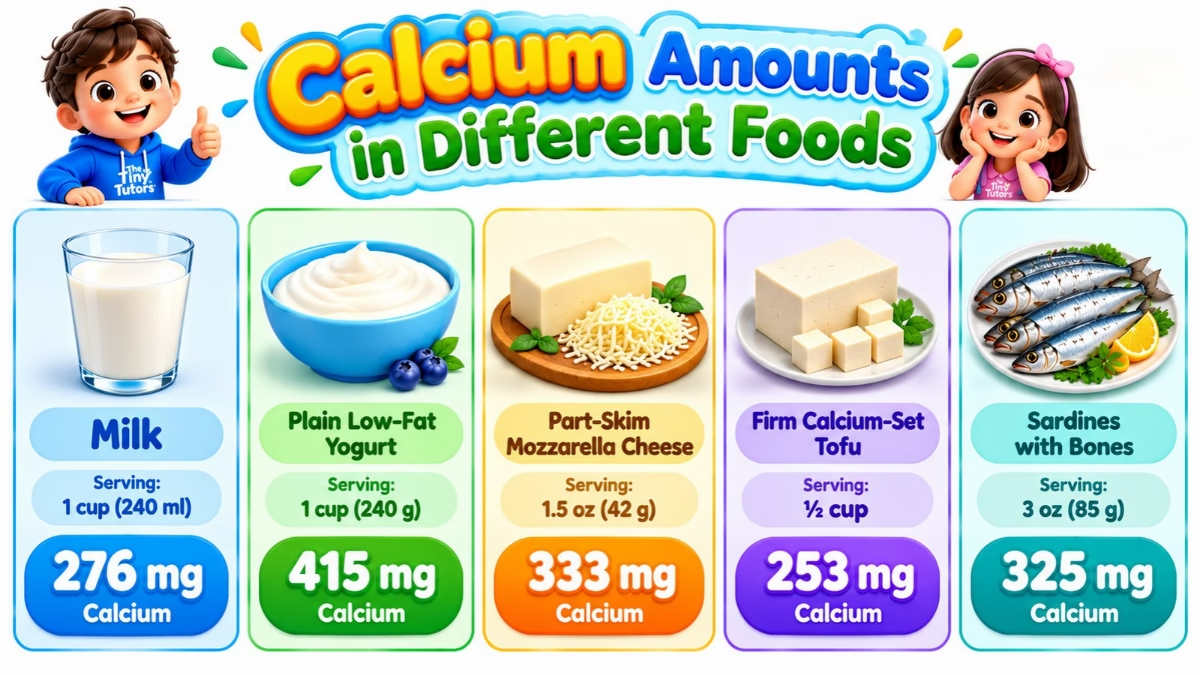
These values are approximate and based on the serving sizes shown. Different brands, recipes, and food preparation methods can change the amount.
Health Professional Fact Sheet+2
| Food | Serving Size | Calcium |
|---|---|---|
| Plain low-fat yogurt | 1 cup (240 g) | 415 mg |
| Mozzarella cheese | 1.5 oz (42 g) | 333 mg |
| Sardines with bones | 3 oz (85 g) | 325 mg |
| Milk | 1 cup (240 ml) | 276 mg |
| Fortified soy milk | 1 cup (240 ml) | 299 mg |
| Firm calcium-set tofu | ½ cup | 253 mg |
| Canned salmon with bones | 3 oz (85 g) | 181 mg |
| Cooked spinach | ½ cup | 123 mg |
| Cooked kale | 1 cup | 94 mg |
| Chia seeds | 1 tbsp | 76 mg |
| Almonds | 1 oz (28 g) | 76 mg |
| Orange | 1 medium | 60–65 mg |
| Fortified cereal | 1 serving | 130 mg |
| Raw broccoli | ½ cup | 21 mg |
The amounts are examples, not a meal plan or a recommendation to eat every food listed each day.
5. How Does the Body Use Calcium?
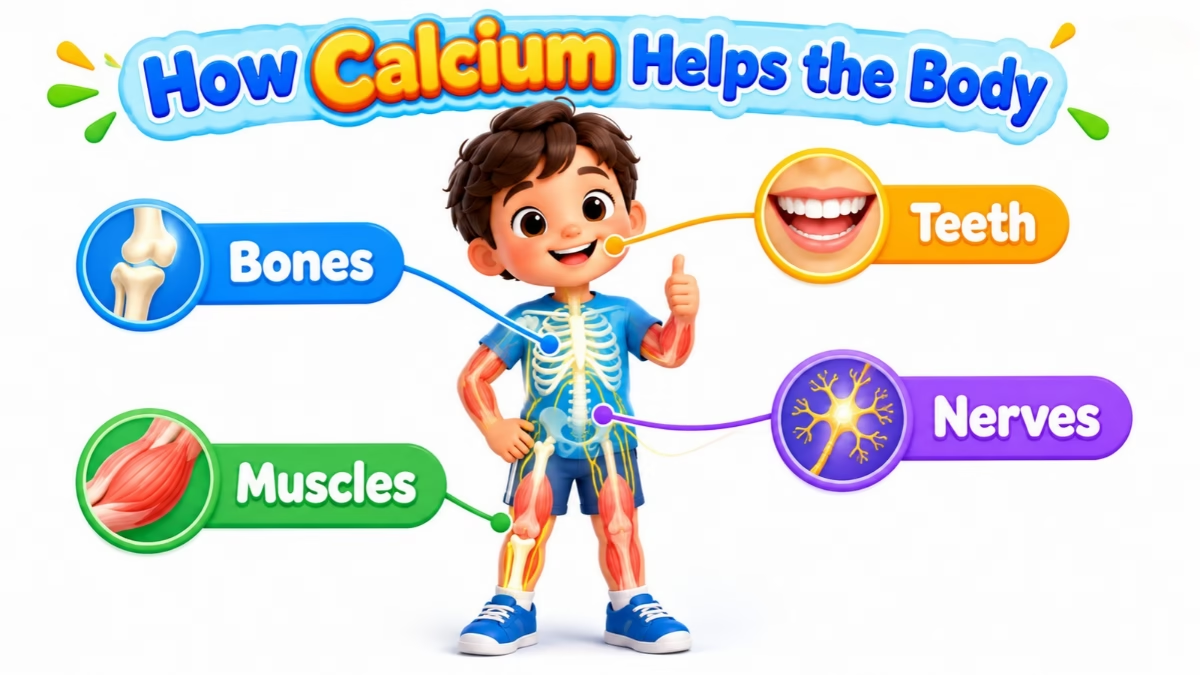
Imagine your body is a busy building site. 🏗️
Your bones are like the strong walls and your teeth are like sturdy tools. Calcium helps build and maintain them.
But calcium does not work alone.
When you eat foods that contain calcium:
You chew and swallow the food.
Your digestive system breaks the food down.
Calcium is absorbed through your intestines.
Your body uses calcium where it is needed.
Some calcium becomes part of your bones and teeth. Some helps your muscles and nerves work.
Your body keeps a careful balance of calcium. If your diet does not provide enough over time, your body can take calcium from your bones. This is one reason getting enough calcium during childhood and adolescence matters.
6. Calcium and Vitamin D: A Powerful Team ☀️
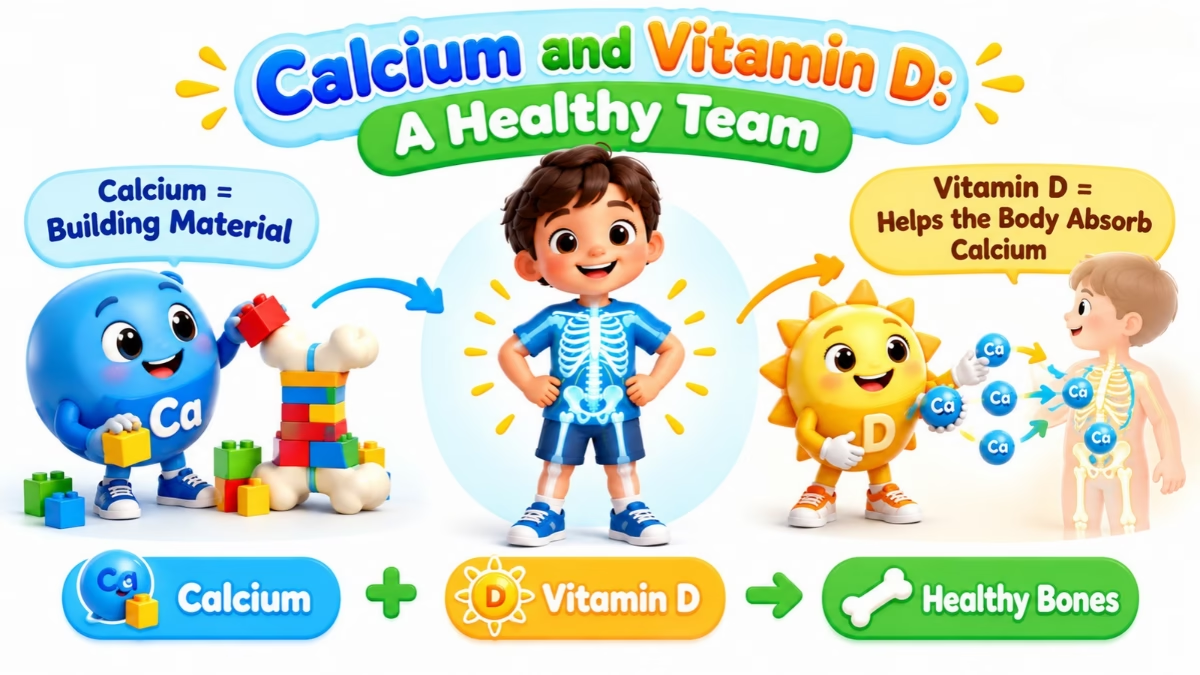
Calcium and vitamin D work together.
Calcium helps build strong bones and teeth.
Vitamin D helps your body absorb calcium from food.
Think of calcium as the building material and vitamin D as a helper that allows your body to use it.
Foods that may contain vitamin D include:
Some fatty fish
Egg yolks
Fortified milk
Fortified foods
Children also need regular physical activity and a balanced diet to support healthy growth.
If parents are concerned about a child’s vitamin D or calcium intake, they should ask a healthcare professional rather than starting supplements on their own.
7. Easy Calcium-Rich Meal and Snack Ideas
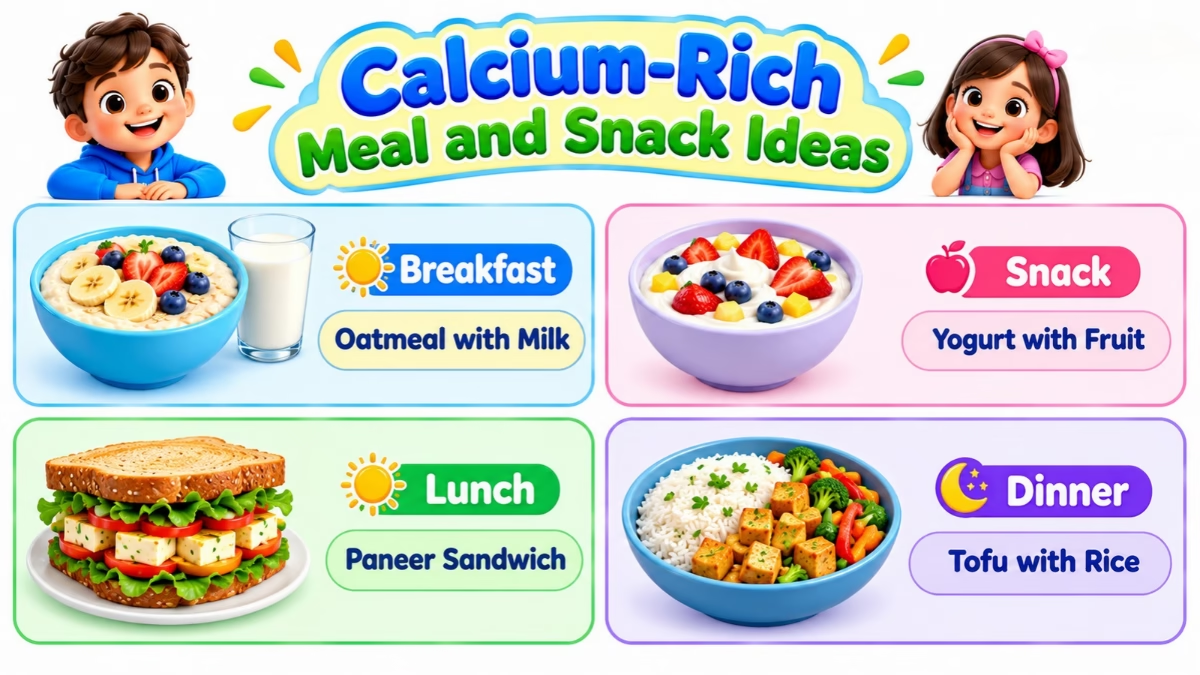
Eating calcium-containing foods does not have to be boring!
Parents can combine different foods to make tasty meals and snacks. Here are some easy ideas for children.
🥣 Breakfast
Oatmeal made with milk, topped with banana slices.
🍓 Morning Snack
Plain yogurt with fresh fruit.
🥪 Lunch
A homemade paneer or cheese sandwich with vegetables.
🍊 Evening Snack
A glass of milk with orange slices.
🍚 Dinner
Rice with tofu and cooked vegetables.
These are ideas, not a strict diet plan. Children have different appetites and nutritional needs. Parents should offer age-appropriate portions and a variety of foods.
8. Tips to Help Kids Get Enough Calcium
Here are some simple ways parents and children can make calcium a part of everyday eating.
🥛 Include Calcium Foods in Different Meals
Instead of trying to get all the calcium from one meal, include calcium-containing foods across the day.
For example:
Milk with breakfast
Yogurt as a snack
Tofu or paneer with lunch
Cheese with a sandwich
🥦 Try Different Foods
Some children enjoy milk, while others prefer yogurt or cheese.
Try different calcium-containing foods and let children explore new tastes without pressure.
🏷️ Read Food Labels
Some foods have calcium added to them.
Look for calcium on the nutrition label, especially when buying:
Soy milk
Breakfast cereals
Plant-based drinks
Packaged foods
🌈 Eat a Variety of Foods
Calcium is important, but children also need other nutrients.
A balanced diet can include:
Fruits
Vegetables
Whole grains
Protein-rich foods
Calcium-containing foods
🚫 Do Not Start Supplements Without Advice
More calcium is not always better.
Most children should get their nutrients from a balanced diet. If a child needs a calcium supplement, a healthcare professional can help determine whether one is needed and how much is appropriate.
9. Fun Facts About Calcium
Here are some interesting calcium facts for kids! 🤩
🦴 Calcium is the most abundant mineral in the human body.
🦷 Your teeth and bones contain a lot of calcium.
🥛 Milk is a familiar source of calcium, but it is not the only one.
🌱 Some plants, such as kale and bok choy, contain calcium.
💪 Calcium helps your muscles work, not just your bones.
☀️ Vitamin D helps your body absorb calcium.
🧒 Children need calcium as they grow, and their daily needs change with age.
🐟 Some canned fish contains calcium because its soft bones can be eaten.
Amazing fact: Your body stores most of its calcium in your bones and teeth. A smaller amount is used for other important body functions.
10. Calcium Activity for Kids: Build a Strong-Bone Food Plate
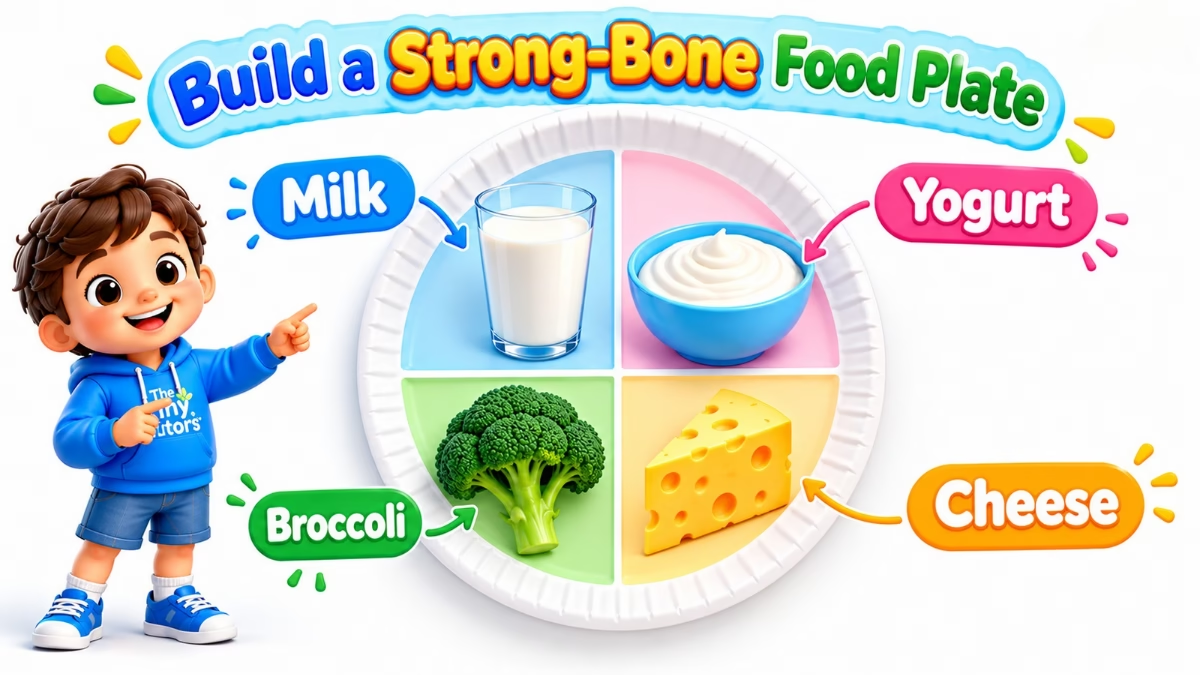
This simple activity helps children recognize foods that contain calcium.
What You Need
A paper plate
Crayons or colored pencils
Food pictures or drawings
Glue or tape
Steps
Draw a large circle on the paper plate.
Divide it into four sections.
Draw or paste a calcium-containing food in each section.
Label the foods.
Show your plate to a parent or teacher.
Example Food Plate
Milk
Yogurt
Broccoli
Cheese
Learning Challenge
Ask the child:
Which food comes from a plant?
Which foods are made from milk?
Which food would you like to try?
Can you name one more food that contains calcium?
This activity helps children connect food names with nutrition.
FAQs – Calcium-Rich Foods for Kids
1. What Are Calcium-Rich Foods for Kids?
Foods like milk, yogurt, cheese, tofu, and some vegetables contain calcium, which helps build strong bones and teeth.
2. How Much Calcium Do Kids Need Daily?
Children aged 4–8 need about 1,000 mg, while those aged 9–18 need about 1,300 mg daily.
3. Which Food Has the Most Calcium?
Yogurt, cheese, sardines with bones, and calcium-fortified foods are good sources of calcium.
4. Can Kids Get Calcium Without Milk?
Yes! Kids can get calcium from yogurt, cheese, tofu, fortified soy milk, and some vegetables.
5. Does Calcium Make Kids Taller?
Calcium helps build strong bones, but height also depends on genetics, nutrition, and other factors.
6. Do Kids Need Calcium Supplements?
Not always. Many children get enough calcium from food. Ask a healthcare professional before giving supplements.
Conclusion
Calcium-rich foods for kids help support strong bones, healthy teeth, and other important body functions.
Milk, yogurt, cheese, fortified soy milk, tofu, fish with edible bones, and some vegetables and seeds can all contribute calcium to a child’s diet.
Children need different amounts of calcium as they grow, so it is helpful to offer a variety of foods across the day. Calcium works with other nutrients, including vitamin D, to support healthy growth.
Remember, a balanced diet is about variety—not relying on just one food.
Related Articles on The Tiny Tutors
For parents, teachers, and children who want to learn more about bones, nutrition, and healthy foods, explore these related articles: