
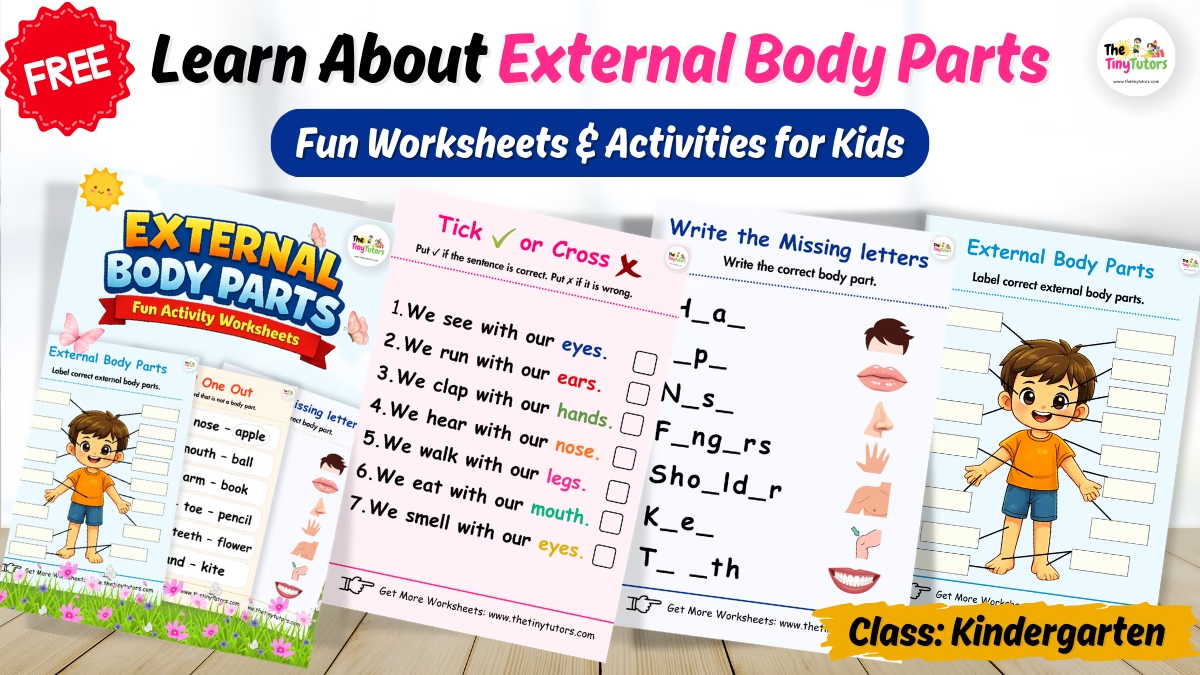
External body parts for kindergarten are the visible parts of the body that young children can see, point to, and touch every day. Learning about these parts helps kids understand themselves — how they move, how they feel things, and how their body works in simple, everyday moments.
Kindergarten is the perfect time to introduce body awareness because children at this age are naturally curious about themselves and the world around them. 🌟 Hands-on activities, colorful worksheets, and playful exercises make this learning fun and easy to remember.
You can also explore Tracing Shapes for Kindergarten to help children develop fine motor and early learning skills alongside body awareness
These learning pages include simple exercises like labeling, spelling practice, reading activities, and creative drawing tasks. Parents and teachers can use them together to make every lesson interactive and enjoyable for young learners.
❓ What Are External Body Parts?
External body parts are the parts of our body that we can see from the outside.
These parts help children move around, interact with others, and experience the world through their senses every single day. 🌍
Here are some common external body parts that kindergarten children learn to identify:
| Body Part | What It Helps Us Do |
|---|---|
| 👀 Eyes | Notice colors, shapes, and movement around us |
| 👂 Ears | Listen to sounds, music, stories, and instructions |
| 👃 Nose | Smell flowers, food, and the environment |
| 👄 Mouth | Speak, eat, and express feelings |
| 🖐️ Hands | Hold, touch, draw, and create things |
| 🦵 Legs | Walk, run, jump, and play |
| 👣 Feet | Balance, kick, and help us move from place to place |
| 💪 Arms | Reach, lift, carry, and hug |
Young children use these parts constantly — while playing, eating, listening to a teacher, or hugging a parent. Helping kids name and understand each part builds their early science vocabulary and develops body awareness that stays with them for life. 💛
To take this learning further, you can also explore our Sense Organs Worksheet for Kindergarten — which explains how eyes, ears, and nose work as part of the five senses, connecting body parts to sensory understanding.
🎯 External Body Parts Activities for Kindergarten

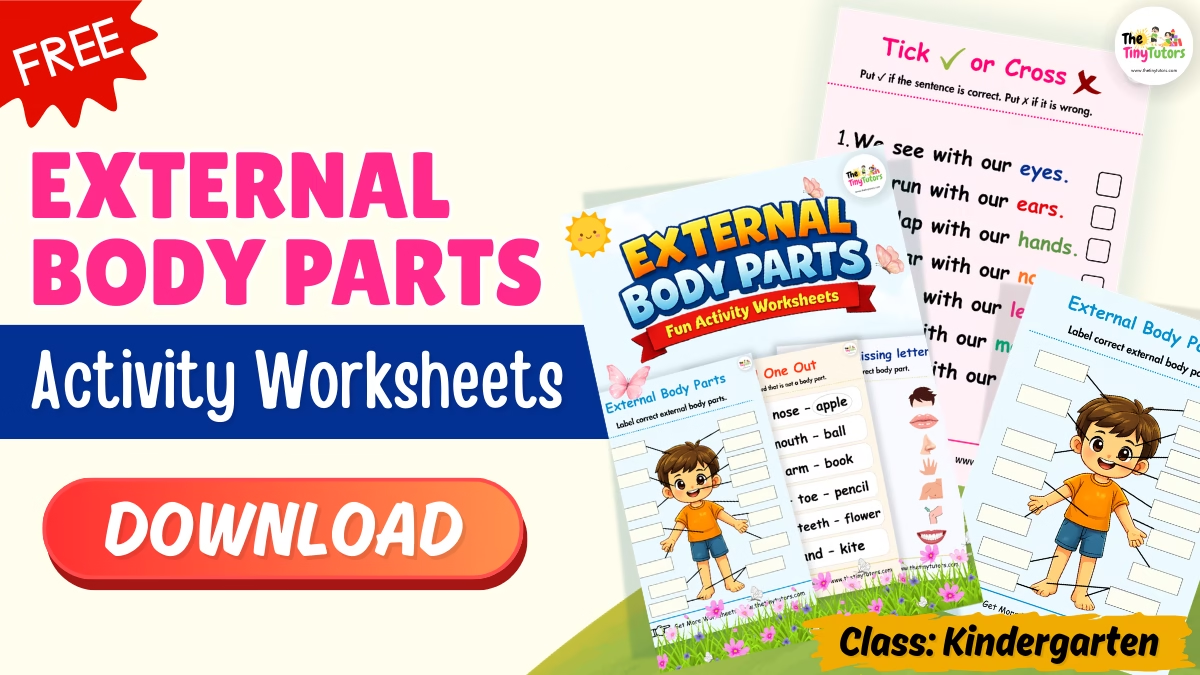
The following activities help children practice identifying and understanding body parts through interactive learning.
📥 Download Free External Body Parts Worksheet PDF
If your child enjoys these body parts activities, they may also like Match Pictures to Words for Kindergarten – Free Printable Worksheet PDF, which helps improve vocabulary and picture recognition.
1️⃣ Label the Correct External Body Parts
In this activity, children look at a picture of a body and label the correct parts.
Kids match words such as
- Eyes
- Nose
- Mouth
- Hands
- Legs
This activity improves word recognition and body awareness.
If your child is still at the preschool stage, our Body Parts Activities for Preschoolers is a great starting point before moving to this kindergarten-level labeling activity.
2️⃣ Write the Missing Letters – Body Parts Spelling
Children complete the spelling of body parts by filling in missing letters.
Examples:
- E _ e s
- N _ s e
- H _ n d
This helps kids practice early spelling and vocabulary skills while learning about different body parts.
3️⃣ Singular and Plural of Body Parts
Kids learn the difference between singular and plural forms.
Examples:
- Eye → Eyes
- Hand → Hands
- Leg → Legs
This activity builds basic grammar awareness for young learners.
4️⃣ Body Parts and Their Functions – Read and Answer
Children read simple sentences about body parts and choose the correct answer.
Examples:
- Eyes help us see.
- Ears help us hear.
- Legs help us walk.
After reading, kids answer simple questions to check their understanding.
This activity improves reading comprehension and body knowledge.
5️⃣ Tick or Cross Activity (Correct or Wrong Sentences)
Children read sentences and decide if they are correct or incorrect.
Examples:
✔ We see with our eyes.
✘ We hear with our nose.
Kids tick the correct sentences and cross the wrong ones.
This strengthens logical thinking and concept understanding.
6️⃣ Odd One Out Activity
Children find the item that does not belong in the group.
Example:
Eyes – Nose – Ear – Apple
The odd one is Apple, because the others are body parts.
This activity develops observation and classification skills.
7️⃣ Draw and Color Yourself Activity
Kids draw a simple picture of themselves and label their body parts.
Children can color and label
- Eyes
- Hair
- Hands
- Legs
This creative activity encourages self-awareness and artistic expression.
📥 Download External Body Parts for Kindergarten Worksheet PDF
You can download the body parts learning worksheet for kindergarten kids and practice these fun activities at home or in the classroom.
The printable learning pages include:
- ✔ Body parts labeling practice
- ✔ Spelling exercises
- ✔ Reading comprehension
- ✔ Fun coloring activity
These worksheets are designed to make learning simple, engaging, and suitable for kindergarten students.
📥 Download the free worksheet PDF and start learning
Download the PDF and let kids enjoy hands-on learning with fun body parts activities for young learners.
You may also download other printable worksheets such as Free Family Members Worksheet for Kindergarten – Printable PDF with Activities to continue learning at home.
👩🏫 Tips for Parents and Teachers to Use These Activities
Here are a few helpful tips to make learning more effective:
Use visual learning
Show pictures of body parts while explaining them.
Encourage participation
Ask children to point to their own body parts.
Make learning playful
Turn activities into small games.
Repeat regularly
Practice helps kids remember body parts easily.
Use coloring and drawing
Creative activities help children stay interested and focused.
These small steps make body parts learning activities more fun and meaningful for young kids.
❓ FAQs About External Body Parts for Kindergarten
Q1: What are external body parts for kindergarten?
A1: External body parts are the parts of the body that we can see from the outside, such as eyes, ears, nose, hands, and legs.
Q2: Why should kindergarten kids learn body parts?
A2: Learning body parts helps children understand their bodies, improve vocabulary, and develop early science knowledge.
Q3: How can I teach body parts to kindergarten kids?
A3: You can teach body parts through activities such as labeling pictures, spelling practice, drawing, and simple reading exercises.
Q4: Are worksheets helpful for learning body parts?
A4: Yes, worksheets provide structured activities that help children practice identification, spelling, and understanding of body parts.
Q5: What activities help kids remember body parts?
A5: Activities like labeling pictures, coloring, reading short sentences, and matching exercises help children remember body parts easily.