
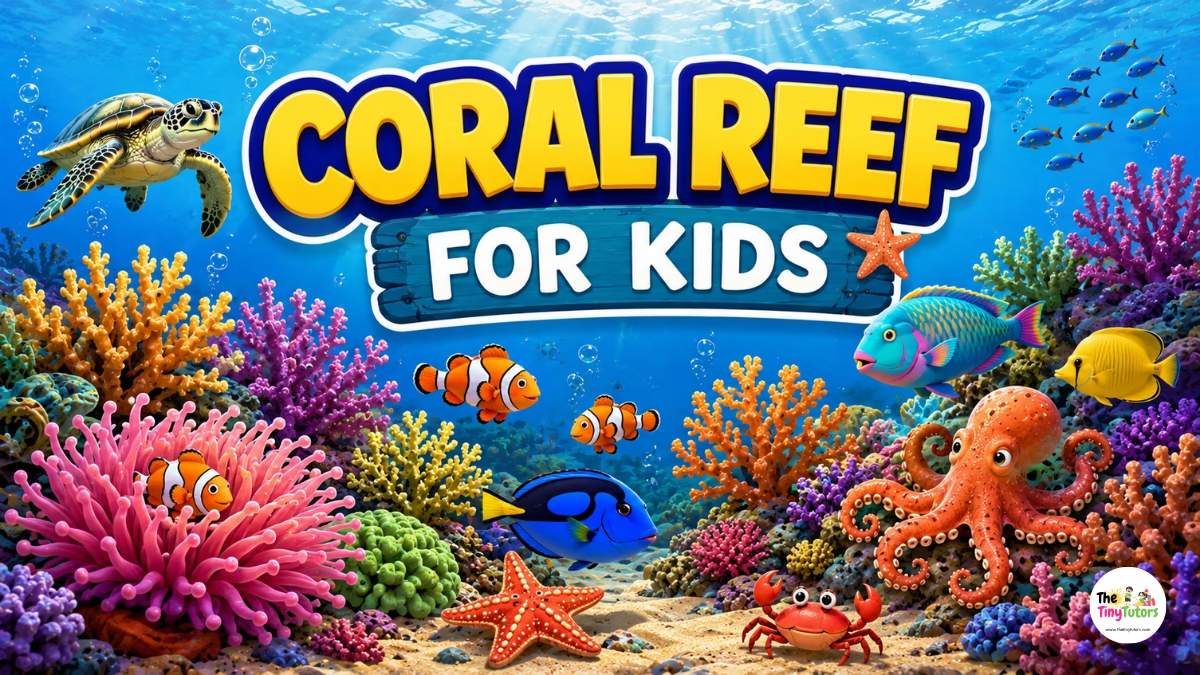
Have you ever wondered what it would be like to explore a colorful underwater world where bright fish, sea turtles, tiny crabs, and beautiful sea plants live together? 🌊🐠 That magical place is called a Coral Reef for Kids. Even though it looks like a garden made of colorful rocks, a coral reef is actually built by tiny living animals that work together for many years.
- What Is a Coral Reef for Kids?
- How Coral Reefs Are Formed
- Where Is Coral Reef for Kids Found? 🌍🌊
- Types of Coral Reef for Kids 🪸
- Animals and Plants in Coral Reef for Kids 🐠🌿
- 🌊 Coral Reef Animals and Their Roles
- Why Is Coral Reef for Kids Important? 🌊💙
- Coral Reef for Kids Food Chain 🐟
- Threats to Coral Reef for Kids ⚠️
- How Kids Can Help Protect Coral Reef for Kids 🌱
- 10 Interesting Facts About Coral Reefs 🎉
- 🎨 Coral Reef Drawing for Kids
- Frequently Asked Questions About Coral Reef for Kids 🙋♂️🌊
- Conclusion 🌊💙
A coral reef is one of the most exciting places in the ocean because it is home to thousands of amazing sea creatures. Every day, fish hide among the corals, sea turtles swim past them, and tiny animals find food and shelter there. Some scientists even call coral reefs the “rainforests of the sea” because they are full of life and support many different species.
As you explore these amazing coral reef facts for kids, you’ll discover how tiny sea animals work together to build one of the busiest and most colorful homes in the ocean.
In this fun guide, you will discover what coral reefs are, how they are formed, where they are found, the animals and plants that live there, why they are important, and how children can help protect these wonderful underwater habitats. Let’s begin an exciting journey to explore the colorful and fascinating world of coral reefs! 🐙🌎
What Is a Coral Reef for Kids?
Many children think coral reefs are colorful rocks or underwater plants. They may look that way, but the truth is even more amazing!
The Coral Reef for Kids is a large underwater habitat built by thousands of tiny sea animals called coral polyps. Coral polyps are tiny, soft sea animals that are closely related to jellyfish and sea anemones. Each one makes a hard limestone skeleton for protection. As new coral polyps grow and join the older ones over many years, they slowly build a large coral reef.
Coral Reef Definition for Kids
A coral reef is a colorful underwater home made by tiny animals called coral polyps. It provides food, shelter, and protection for many kinds of marine life.
This simple coral reef definition for kids helps us understand that coral reefs are living ecosystems, not just rocks lying on the ocean floor.
Learning about coral reefs for kids also helps us understand why these amazing underwater habitats are important for ocean animals, healthy oceans, and people around the world.
Are Corals Animals or Plants?
This question surprises many children!
✅ Corals are animals, not plants.
Although they stay attached to rocks and do not move around like fish, each coral polyp is a living animal. It catches tiny floating food from the water and works together with tiny algae that live inside its body.
The algae use sunlight to make food, and in return they share some of that food with the coral. This teamwork helps coral reefs grow healthy and colorful.
Why Are Coral Reefs So Colorful?
Have you ever wondered why coral reefs look like giant underwater rainbows? 🌈
Their bright colors come from:
- 🪸 Different coral species
- 🌿 Tiny algae living inside the coral
- 🐠 Colorful tropical fish
- ⭐ Sea stars
- 🦀 Crabs
- 🐚 Sea anemones and other sea creatures
These beautiful colors also help create one of the richest underwater ecosystems on Earth.
Great Barrier Reef: A Real-Life Example
The world’s largest coral reef is the Great Barrier Reef in Australia.
You can explore the amazing Great Barrier Reef through the Great Barrier Reef Foundation.
Its enormous size means that parts of the reef can even be seen from space. It stretches for more than 2,300 kilometers (1,430 miles) and is home to thousands of species of fish, turtles, sharks, corals, and other marine animals.
🌟 Quick Fact:
A healthy coral reef can support thousands of marine species even though coral reefs cover less than 1% of the ocean floor.
🔗 Learn More: If you’d like to explore real coral reefs and how they support ocean life, visit the NOAA Coral Reef Education page:
How Coral Reefs Are Formed
Have you ever built a castle using toy blocks or LEGO bricks? 🧱
Building a coral reef is similar—but instead of children building with blocks, tiny coral polyps slowly build an underwater city over hundreds and even thousands of years.
The Coral Reef for Kids begins when a young coral polyp settles on a hard rock beneath warm, shallow ocean water. It attaches itself to the rock and starts creating a hard limestone skeleton for protection.
Soon, another coral polyp grows next to it.
Over time, thousands—and eventually millions—of coral polyps connect their skeletons together. As older corals die, their hard skeletons remain in place, and new corals continue growing on top of them. Over many years, this gradual process builds the beautiful coral reefs found in oceans today.
Step-by-Step Formation of a Coral Reef
| Step | What Happens |
|---|---|
| 1️⃣ | A tiny coral polyp attaches to a rock under the sea. |
| 2️⃣ | The polyp builds a hard limestone skeleton. |
| 3️⃣ | More coral polyps grow nearby. |
| 4️⃣ | Thousands of skeletons join together. |
| 5️⃣ | The reef becomes larger year after year. |
| 6️⃣ | Fish, turtles, crabs, and many other sea animals move in and make it their home. |
🧠 Easy Way to Remember:
Imagine a coral reef as a huge underwater neighborhood where many sea animals live together.
- 🪸 Tiny coral polyps are the builders.
- 🏢 The hard skeletons are the building blocks.
- 🐠 Fish and sea animals are the families living inside.
- 🌊 Together, they create a busy underwater neighborhood full of life.
🎯 Did You Know?
Some coral reefs have grown slowly for thousands of years, making them one of Earth’s oldest living ecosystems.
Where Is Coral Reef for Kids Found? 🌍🌊
Have you ever wondered where you can find a beautiful Coral Reef for Kids in real life? Coral reefs grow in warm, sunny oceans where the water is clean, clear, and shallow. They need plenty of sunlight because tiny algae living inside the corals use sunlight to make food. This special teamwork helps the corals stay healthy and colorful.
Most coral reefs are found in tropical and subtropical oceans near the Equator. These places have warm temperatures throughout the year, making them perfect homes for reef-building corals.
Some famous coral reef locations include:
- 🇦🇺 Great Barrier Reef in Australia
- 🇧🇿 Belize Barrier Reef in Central America
- 🌊 Red Sea between Africa and Asia
- 🏝️ Maldives in the Indian Ocean
- 🌺 Hawaiian Islands in the Pacific Ocean
Although coral reefs cover less than 1% of the ocean floor, they provide shelter for thousands of marine species. That’s why scientists consider them one of Earth’s richest ecosystems.
🌟 Fun Tip: Coral reefs cannot grow well in cold, dark, or muddy water because they need warmth, sunlight, and clean surroundings.
Types of Coral Reef for Kids 🪸
Did you know that not all coral reefs look the same? Scientists group them into three main types based on where they grow.
1. Fringing Reef
A fringing reef grows close to the shoreline of an island or continent. It is the most common type of coral reef and is often separated from the beach by a shallow lagoon or narrow strip of water.
2. Barrier Reef
A barrier reef grows farther away from the coast. A deep lagoon lies between the land and the reef. These reefs are much larger and protect coastlines from strong ocean waves.
The famous Great Barrier Reef is the world’s largest example of this type.
3. Atoll
An atoll is a ring-shaped coral reef that surrounds a peaceful lagoon in the center. Atolls usually form around old underwater volcanoes after the volcano slowly sinks below the ocean surface.
Coral Reef Types Comparison
| Type | Where It Grows | Special Feature |
|---|---|---|
| Fringing Reef | Along the coast | Closest to the shoreline |
| Barrier Reef | Far from the coast | A wide, deep lagoon lies between the reef and the shoreline. |
| Atoll | Around a lagoon | Circular or ring-shaped reef |
Each type creates a safe home for different sea animals and helps keep the ocean healthy.
Animals and Plants in Coral Reef for Kids 🐠🌿
A Coral Reef for Kids is like a busy underwater neighborhood where many living things work together. Some animals hunt for food, some hide from predators, while plants and algae help keep the reef alive.
If you’d like to discover even more amazing sea creatures, explore our Sea Animals Names for Kids guide.
Amazing Animals
🐠 Clownfish – These bright orange fish live safely among sea anemones.
🐟 Parrotfish – Their strong teeth scrape algae from coral rocks, helping keep reefs clean.
🦋 Butterflyfish – Their colorful patterns help them blend into the reef.
🐢 Sea Turtle – Sea turtles visit coral reefs to rest and search for food.
You can also discover more about these gentle ocean travelers in our Turtle Facts for Kids article.
🐙 Octopus – Clever and curious, octopuses can change color to hide from danger.
🦈 Reef Shark – Most reef sharks are not interested in people. They help keep fish populations balanced.
Want to learn more about these fascinating ocean predators? Read our Underwater Animals: Fun Facts About Whales, Sharks, and Dolphins for Kids guide.
🦀 Crabs – Small crabs clean the reef by eating tiny bits of leftover food.
⭐ Sea Stars – These fascinating creatures slowly crawl across the reef looking for food.
🟣 Sea Urchins – Their spines protect them while they eat algae growing on rocks.
🌸 Sea Anemones – These soft animals have waving tentacles that provide shelter for clownfish.
Plants and Algae
Unlike forests on land, coral reefs have very few large plants. Instead, tiny algae play an important role.
🌿 Algae live inside coral polyps and use sunlight to make food through photosynthesis. In return, they share nutrients with the corals and give reefs many of their beautiful colors. This amazing partnership helps the entire reef ecosystem survive.
🌊 Coral Reef Animals and Their Roles
| Animal or Plant | How It Helps the Reef |
|---|---|
| Clownfish | Finds shelter in sea anemones |
| Parrotfish | Cleans algae from coral |
| Sea Turtle | Helps balance marine habitats |
| Reef Shark | Controls fish populations |
| Sea Urchin | Prevents too much algae growth |
| Algae | Makes food for corals using sunlight |
🌟 Interesting Fact
A healthy coral reef may look peaceful, but it is busy every minute of the day. While some animals are awake during daylight, others come out only at night, making the reef active 24 hours a day!
Why Is Coral Reef for Kids Important? 🌊💙
A Coral Reef for Kids is much more than a beautiful place under the sea. It is a busy underwater home where thousands of living things depend on each other to survive. Even though coral reefs cover only a small part of the ocean, they support an amazing variety of marine life.
A Safe Home for Sea Animals 🐠
Many fish, sea turtles, crabs, octopuses, sea stars, and other creatures use coral reefs as their home. They hide among the corals, lay eggs, find food, and stay safe from predators. Without coral reefs, many marine animals would lose their shelter.
They Protect Coastlines 🌊
Coral reefs act like natural walls in the ocean. When strong waves and storms reach the coast, reefs help slow the water down. This protects beaches and nearby land from erosion and damage.
They Keep Oceans Healthy 🌍
Healthy coral reefs support biodiversity, which means many different plants and animals can live together. Every species has an important job, helping to keep the underwater ecosystem balanced.
They Help People Too 👨👩👧
Coral reefs are also important for people. They support fishing, attract visitors who enjoy snorkeling and diving, and help scientists learn more about ocean life. Many communities around the world depend on healthy reefs for their livelihoods.
Coral Reef for Kids Food Chain 🐟
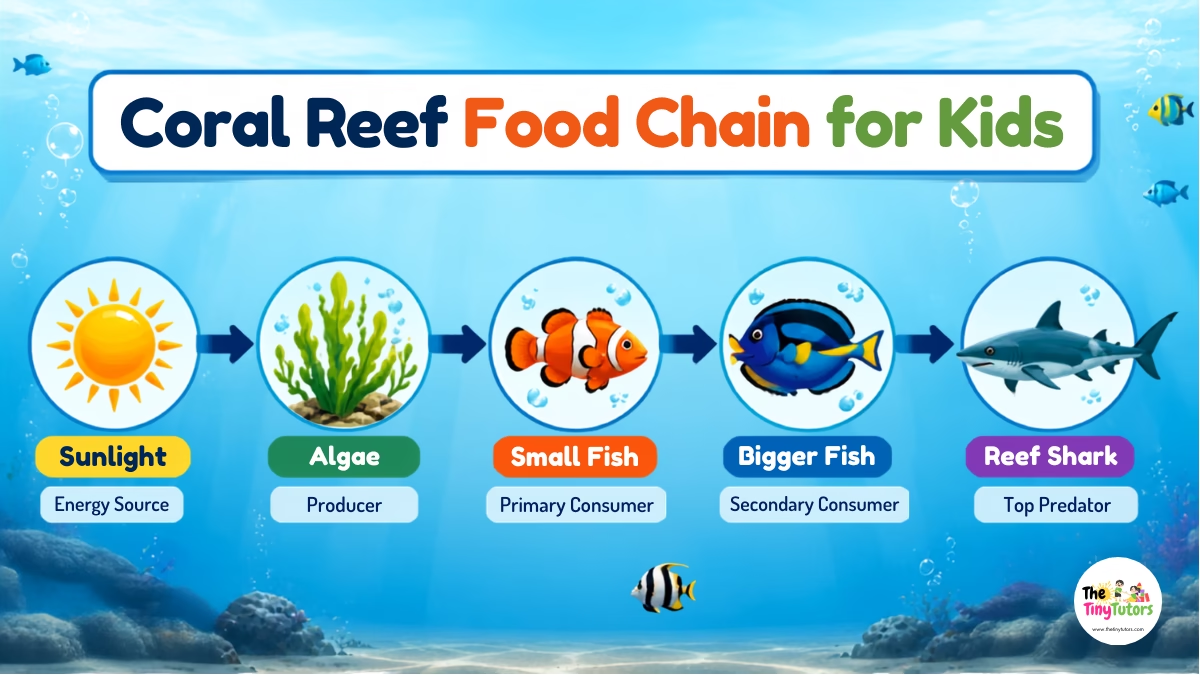
Every living thing needs food to survive. In a coral reef, energy moves from one living thing to another through a food chain. This helps keep the ecosystem balanced.
To understand this idea even better, you can also read our Food Chain for Kids guide.
Simple Coral Reef Food Chain
☀️ Sunlight → 🌿 Algae → 🐠 Small Fish → 🐟 Bigger Fish → 🦈 Reef Shark
Understanding Each Step
| Part of the Food Chain | What It Does |
|---|---|
| ☀️ Sunlight | Gives energy to algae. |
| 🌿 Algae | Produce food using sunlight. They are called producers. |
| 🐠 Small Fish | Eat algae and tiny plants. They are primary consumers. |
| 🐟 Bigger Fish | Eat smaller fish. They are secondary consumers. |
| 🦈 Reef Shark | Eats larger fish and helps keep animal populations balanced. |
Instead of one simple food chain, coral reefs usually have a food web, where many animals eat different kinds of food. This makes the underwater ecosystem stronger and more stable.
Threats to Coral Reef for Kids ⚠️
Although coral reefs are strong, they face many challenges today. Learning about these problems helps us understand why protecting the ocean is so important.
🌍 Climate Change
As Earth’s oceans become warmer, corals become stressed. They may lose the tiny algae that give them food and bright colors. This is called coral bleaching. If the water stays too warm for a long time, some corals may not survive.
🛍️ Plastic Pollution
Plastic bags, bottles, and other trash can float into the ocean. Marine animals may mistake plastic for food or become trapped in it, which can be dangerous.
🛢️ Ocean Pollution
Oil spills, chemicals, and dirty water can make coral reefs unhealthy. Clean oceans help corals and marine animals grow safely.
🎣 Overfishing
Catching too many fish can upset the natural balance of the reef. Every animal has an important role, so protecting fish populations helps the entire ecosystem.
🌟 Remember: Healthy oceans mean healthy coral reefs, and healthy coral reefs mean happy sea animals.
How Kids Can Help Protect Coral Reef for Kids 🌱
Children can make a big difference by taking small actions every day. Protecting the ocean starts with simple habits.
Here are some easy ways to help:
- ♻️ Recycle paper, plastic, and glass whenever possible.
- 🚯 Never throw litter into rivers, lakes, or beaches.
- 🛍️ Use reusable water bottles and shopping bags to reduce plastic waste.
- 📚 Learn more about ocean habitats and share what you know with friends and family.
- 🌎 Respect marine animals by leaving shells, corals, and sea creatures in their natural homes.
- 💧 Save water at home because clean water helps protect the environment.
Every small action adds up. When many people work together, they can help keep oceans clean for future generations.
10 Interesting Facts About Coral Reefs 🎉
- Corals are animals, not plants.
- 🌈 Coral reefs are often called the “rainforests of the sea.”
- 🐠 Thousands of marine species live in coral reef ecosystems.
- 🌿 Tiny algae give many corals their beautiful colors.
- 🐢 Sea turtles often visit coral reefs to rest and find food.
- ⭐ Some sea stars can grow back a lost arm.
- 🐙 Octopuses can change color to hide from predators.
- 🌊 Coral reefs grow very slowly—only a few centimeters each year.
- 🦜 Parrotfish help keep reefs healthy by eating algae from coral surfaces.
- ❤️ Healthy coral reefs support both ocean life and people around the world.
We hope these fun facts helped you discover why coral reefs are among the most amazing habitats on Earth.
🌟 Amazing Fact for Curious Kids
Did you know that some tiny coral polyps can work together for hundreds of years? Generation after generation builds on the same reef, creating one of the oldest and most fascinating living ecosystems on Earth.
🎨 Coral Reef Drawing for Kids
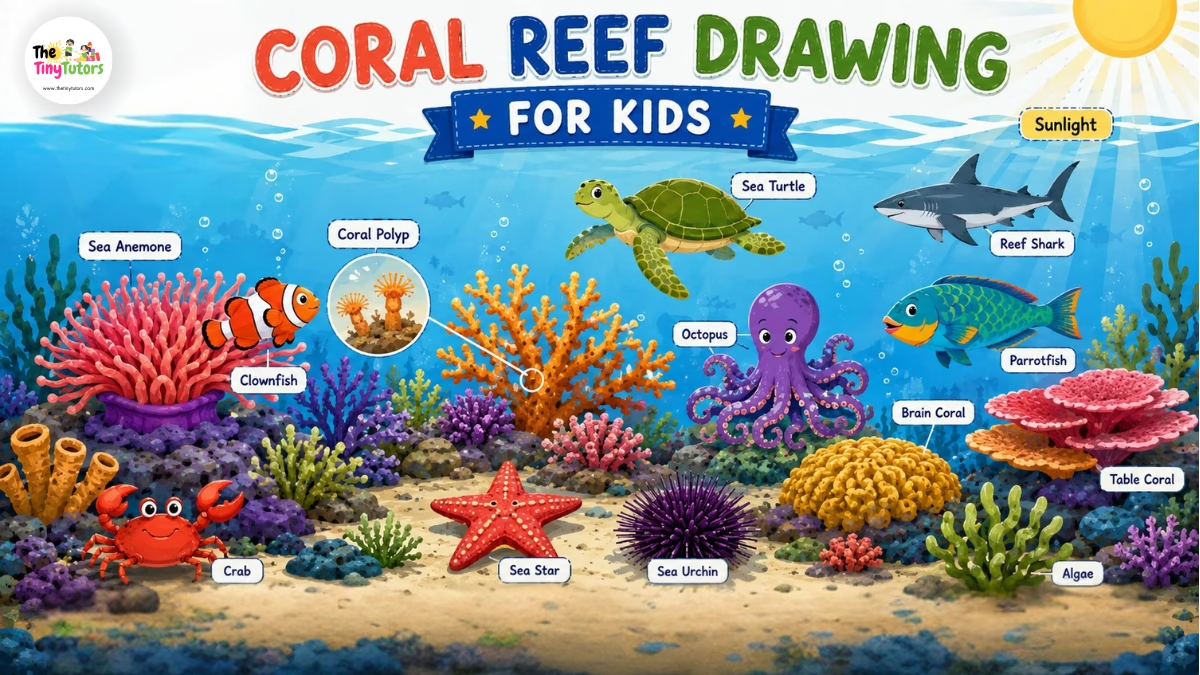
After learning about coral reefs, a colorful coral reef drawing can help you clearly see where different animals and corals live together. A colorful picture makes it easier to understand where each sea creature lives and how everything in the reef works together.
As you look at the drawing, try to identify the coral polyps, clownfish, parrotfish, sea turtle, octopus, sea star, sea anemone, and algae. Notice how sunlight shines through the clear ocean water to help the tiny algae living inside the corals make food. This teamwork keeps the reef healthy and full of life.
You can also use the illustration to practice your observation skills. Count how many different sea animals you can find, name them, and discuss their role in the coral reef ecosystem with your teacher, parent, or friends. Learning through pictures is a fun way to remember important science facts and makes ocean exploration even more exciting.
💡 Learning Tip: Look closely at each part of the drawing and see how every plant and animal has an important job in keeping the coral reef healthy.
Frequently Asked Questions About Coral Reef for Kids 🙋♂️🌊
1. What is a coral reef?
A coral reef is a colorful underwater habitat built by tiny sea animals called coral polyps. These animals create hard skeletons that join together over many years, forming a safe home for thousands of marine creatures.
2. Are corals animals or plants?
Corals are animals, not plants. They belong to the same animal group as jellyfish and sea anemones. Tiny algae live inside many corals and help them make food using sunlight, which is why reefs are often bright and colorful.
3. Where are coral reefs found?
A Coral Reef are usually found in warm, clear, shallow tropical oceans where plenty of sunlight reaches the water. Famous coral reefs are located in Australia, the Maldives, the Red Sea, and Belize.
4. What animals live in coral reefs?
Many amazing animals live in coral reefs, including clownfish, butterflyfish, parrotfish, reef sharks, sea turtles, octopuses, sea stars, sea urchins, crabs, shrimp, and sea anemones. Each animal plays an important role in keeping the reef healthy.
5. Why are coral reefs important?
Coral reefs provide food, shelter, and protection for many marine animals. They also help protect coastlines from strong waves, support biodiversity, and benefit people through fishing, tourism, and scientific research.
6. What is coral bleaching?
Coral bleaching happens when corals become stressed because the ocean water gets too warm. They lose the tiny algae living inside them, making the corals turn white. If conditions improve quickly, some corals can recover.
7.How can kids help protect a Coral Reef for Kids?
Kids can help by reducing plastic waste, recycling, keeping beaches clean, saving water, learning about ocean conservation, and sharing what they know with family and friends. Small actions today can make a big difference for tomorrow’s oceans.
Conclusion 🌊💙
Learning about a Coral Reef for Kids helps us discover one of the most beautiful and important habitats on Earth. These colorful underwater ecosystems are built by tiny coral polyps and provide a safe home for countless fish, turtles, crabs, and other sea animals.
Coral reefs also protect coastlines, support healthy oceans, and remind us how every living thing is connected. By keeping our environment clean and respecting marine life, children can help protect these amazing underwater worlds for future generations.
The next time you learn about a coral reef or explore the amazing world beneath the ocean, remember that every reef is a living ecosystem filled with teamwork, colorful marine life, and incredible natural wonders. Keep exploring, keep asking questions, and never stop learning about our wonderful planet! 🌎🐠