
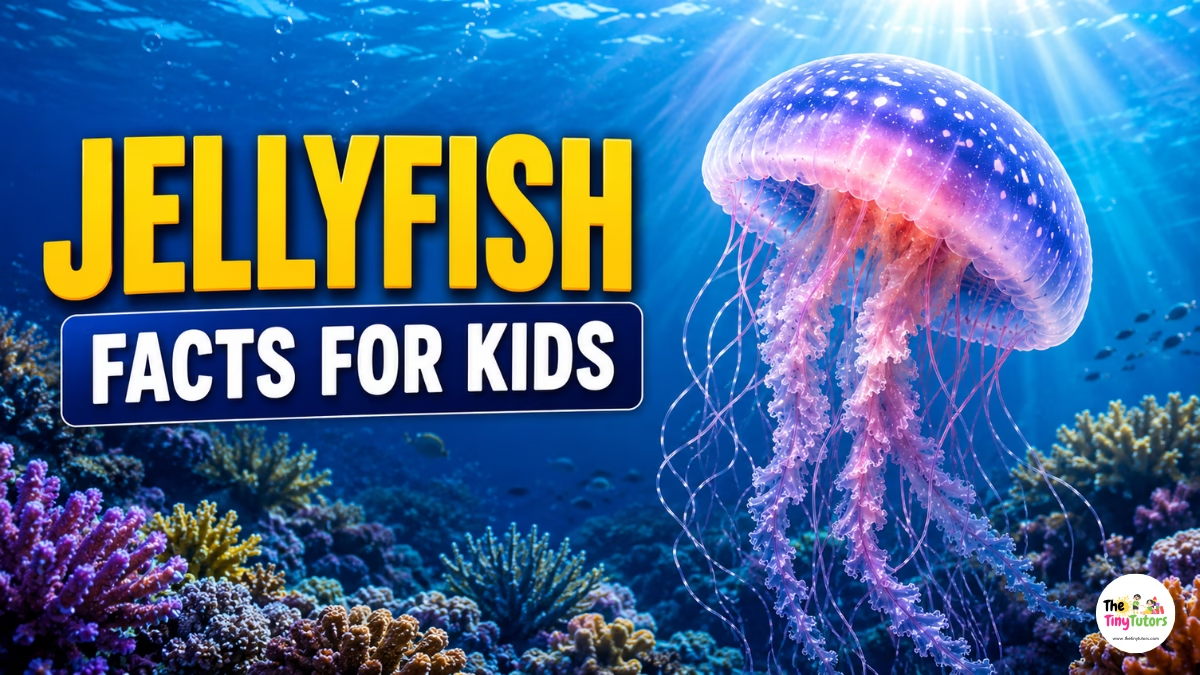
Have you ever wondered how a jellyfish can float through the ocean without a brain, bones, or a heart? In this guide, you’ll discover Jellyfish Facts for Kids that are fun, easy to understand, and full of amazing surprises.
- What Is a Jellyfish?
- Where Do Jellyfish Live?
- What Do Jellyfish Eat?
- Jellyfish Body Parts
- How Do Jellyfish Move?
- Are Jellyfish Really Fish?
- Do Jellyfish Sting?
- Amazing Jellyfish Adaptations
- Jellyfish Life Cycle
- Different Types of Jellyfish
- 25 Fun & Amazing Jellyfish Facts for Kids
- What Animals Eat Jellyfish?
- Why Are Jellyfish Important to the Ocean?
- Jellyfish Safety Tips for Kids
- Fun Jellyfish Quiz for Kids
- Jellyfish Vocabulary
- 🌊 Did You Know?
- Frequently Asked Questions (FAQs)
- Conclusion
You’ll learn what jellyfish are, where they live, what they eat, how they move, why they sting, and how they survive in oceans around the world.
Along the way, you’ll also explore their life cycle, different species, and many fascinating facts that make jellyfish some of the most unique sea animals on Earth. Let’s dive in and start exploring!
What Is a Jellyfish?
A jellyfish is a soft-bodied sea animal that floats through oceans around the world. Even though its name includes the word “fish,” a jellyfish is not actually a fish.
Jellyfish belong to a group of animals called cnidarians (pronounced ny-DARE-ee-ans). This group also includes sea anemones and corals.
These amazing sea creatures have lived on Earth for more than 500 million years, making them older than dinosaurs!
Unlike fish, jellyfish:
- Have no bones
- Have no brain
- Have no heart
- Have no lungs
- Have no blood
Instead, their bodies are made mostly of water and simple tissues that help them survive in the ocean.
Despite their simple bodies, jellyfish are excellent hunters and have survived for millions of years.
Why Are Jellyfish So Special?
Jellyfish are unlike almost any other sea animal because they survive with a very simple body. Instead of relying on complex organs, they use a nerve net to sense their surroundings, stinging tentacles to catch prey, and gentle bell movements to travel through the water.
Some jellyfish can even produce their own light through bioluminescence, while others are nearly transparent, helping them hide from predators. Scientists continue to study these remarkable sea creatures because their unique abilities have improved our understanding of marine life, biology, and medical research.
Quick Jellyfish Facts Table
Before learning more about Jellyfish Facts for Kids, take a quick look at these important facts. This table gives you an easy overview of their habitat, diet, body, and other interesting features.
| Feature | Information |
|---|---|
| Animal Group | Cnidarian |
| Habitat | Oceans around the world |
| Body Composition | About 95% water |
| Diet | Small fish, plankton, shrimp, fish eggs |
| Average Lifespan | A few months to several years (depends on species) |
| Movement | Jet propulsion and ocean currents |
| Number of Species | More than 2,000 known species |
| Biggest Jellyfish | Lion’s Mane Jellyfish |
| Smallest Jellyfish | Some are smaller than a fingernail |
| Main Defense | Stinging tentacles |
| Brain | No |
| Heart | No |
| Bones | No |
| Blood | No |
| Conservation Status | Varies by species |
Where Do Jellyfish Live?
Jellyfish can be found in almost every ocean on Earth. They have adapted to many different underwater environments, from warm tropical seas to icy polar waters.
Some jellyfish stay close to the shore, while others spend their entire lives in the open ocean.
Common Places Jellyfish Live
- 🌊 Warm tropical oceans
- ❄️ Cold Arctic and Antarctic waters
- 🪸 Coral reefs
- 🌅 Coastal beaches
- 🌌 Deep ocean waters
- 🌍 Open seas
Some jellyfish even live in brackish water, where freshwater and saltwater mix.
Why Do Jellyfish Like Different Oceans?
Different species have adapted to different temperatures and water conditions.
For example:
- Moon jellyfish often live near coastlines.
- Box jellyfish prefer warm tropical waters.
- Lion’s mane jellyfish are commonly found in colder seas.
This amazing ability helps jellyfish survive in many different ocean environments around the world.
These Jellyfish Facts for Kids show how amazingly jellyfish have adapted to different ocean environments, helping them survive in waters all around the world.
What Do Jellyfish Eat?
Although they look gentle, jellyfish are skilled hunters.
Their diet depends on their size and species, but most jellyfish eat small ocean animals.
What Do Jellyfish Usually Eat?
- Tiny fish
- Plankton
- Fish eggs
- Shrimp
- Small crabs
- Tiny sea animals
- Fish larvae
Some large jellyfish can even catch bigger fish.
How Do Jellyfish Catch Food?
Jellyfish use their long tentacles to catch prey.
Their tentacles are covered with thousands of tiny stinging cells called nematocysts.
When a small animal touches the tentacles:
- The stinging cells fire.
- The prey becomes stunned.
- The tentacles pull the food toward the mouth.
- The jellyfish digests its meal.
Even without a brain, jellyfish are very effective hunters.
Jellyfish Body Parts
Jellyfish may look simple, but each part of their body has an important job.
Bell
The bell is the round, umbrella-shaped top of the jellyfish.
It helps the jellyfish move by gently opening and closing like a pump.
Tentacles
Tentacles hang below the bell.
They help jellyfish:
- Catch food
- Protect themselves
- Sense nearby animals
Most tentacles contain thousands of tiny stinging cells.
Mouth
The mouth is located underneath the bell.
Jellyfish use the same opening to:
- Eat food
- Digest food
- Remove waste
Nerve Net
Instead of having a brain, jellyfish have a simple network of nerves throughout their bodies.
This nerve net helps them:
- Sense touch
- Detect light
- Respond to changes in the water
- Coordinate movement
These Jellyfish Facts for Kids show that even without a brain, heart, or bones, every part of a jellyfish’s body works together to help it survive in the ocean.
How Do Jellyfish Move?
One of the most interesting Jellyfish Facts for Kids is how these animals travel through the ocean.
Jellyfish do not swim like fish with fins or tails.
Instead, they move by squeezing and relaxing their bell.
Here’s how it works:
- The bell contracts.
- Water is pushed backward.
- The jellyfish moves forward.
- Ocean currents carry it even farther.
This movement is called jet propulsion.
Even though jellyfish can control their direction a little, they mostly drift wherever ocean currents take them.
That is why people sometimes see many jellyfish washing up on beaches after strong winds or storms.
Can Jellyfish Swim Fast?
Most jellyfish are slow swimmers.
Many travel at only a few miles (or kilometers) per hour.
Rather than swimming quickly, jellyfish conserve energy by gently drifting along with ocean currents.
This gentle movement helps them find food while using very little energy.
Among all the Jellyfish Facts for Kids, their unique way of moving is one of the most fascinating.
Are Jellyfish Really Fish?
This is one of the biggest questions children ask.
The answer is No!
Even though they are called jellyfish, they are not fish.
Let’s compare them.
| Jellyfish | Fish |
|---|---|
| No bones | Have bones or cartilage |
| No brain | Have a brain |
| No heart | Have a heart |
| No fins | Have fins |
| Soft body | Strong skeleton |
| Mostly drift with currents | Swim actively |
Scientists gave jellyfish their name because they live in water and move in ways that reminded people of fish. However, they belong to a completely different animal group.
Do Jellyfish Sting?
Yes, many jellyfish can sting.
Their tentacles contain tiny stinging cells called nematocysts. These cells work like tiny spring-loaded harpoons.
When something touches the tentacles, the stinging cells release venom to help catch food or protect the jellyfish.
Most jellyfish use their sting to catch tiny sea animals, not people.
Do All Jellyfish Have Dangerous Stings?
No.
Many jellyfish have mild stings that feel like a small scratch or bee sting.
Some species hardly sting humans at all.
However, a few types, such as the box jellyfish, have very powerful venom and should always be avoided.
This is one reason it’s important to follow beach safety signs and listen to lifeguards.
What to Do When You Spot a Jellyfish
If you spot a jellyfish while swimming:
- 🏖️ Stay calm.
- 🚫 Do not touch it.
- ↩️ Slowly move away.
- 👨👩👧 Tell an adult or lifeguard.
- 🪼 Never pick up a jellyfish, even if it is on the beach, because its tentacles may still sting.
Respecting ocean animals helps keep both people and wildlife safe.
Amazing Jellyfish Adaptations
One of the most interesting Jellyfish Facts for Kids is how these ancient sea animals have survived for more than 500 million years. Jellyfish have several special adaptations that help them find food, avoid predators, move through the ocean, and survive in many different marine environments.
Transparent Body
Many jellyfish are almost completely transparent.
Their clear bodies make them difficult for predators to see underwater. This natural camouflage helps them blend into the surrounding water and stay safe.
Stinging Tentacles
Jellyfish use long tentacles covered with thousands of tiny stinging cells called nematocysts.
These special cells help them:
- Catch prey
- Protect themselves from predators
- Defend against danger
When something touches the tentacles, the stinging cells react almost instantly, helping the jellyfish capture food or stay safe.
Soft and Flexible Body
Unlike fish and many other sea animals, jellyfish have no bones or hard skeleton.
Their soft, flexible bodies allow them to drift with ocean currents instead of fighting against them. This helps them save energy while traveling through the ocean.
Bell-Shaped Body
The umbrella-shaped bell is the main part of a jellyfish’s body.
By gently squeezing and relaxing the bell, a jellyfish pushes water backward and moves forward using jet propulsion. This simple but effective movement allows it to swim without fins or tails.
Glowing in the Dark
Certain jellyfish have the amazing ability to create their own glow using a natural process known as bioluminescence. If you’d like to learn how living things create their own light, explore our guide on Bioluminescence for Kids.
Scientists believe this glowing ability may help certain jellyfish:
- Confuse predators
- Attract prey
- Communicate with other jellyfish
In the dark depths of the ocean, this natural light can be an important survival advantage.
These Jellyfish Facts for Kids show that even without a brain, heart, or bones, jellyfish have incredible adaptations that have helped them survive in Earth’s oceans for millions of years.
Jellyfish Life Cycle
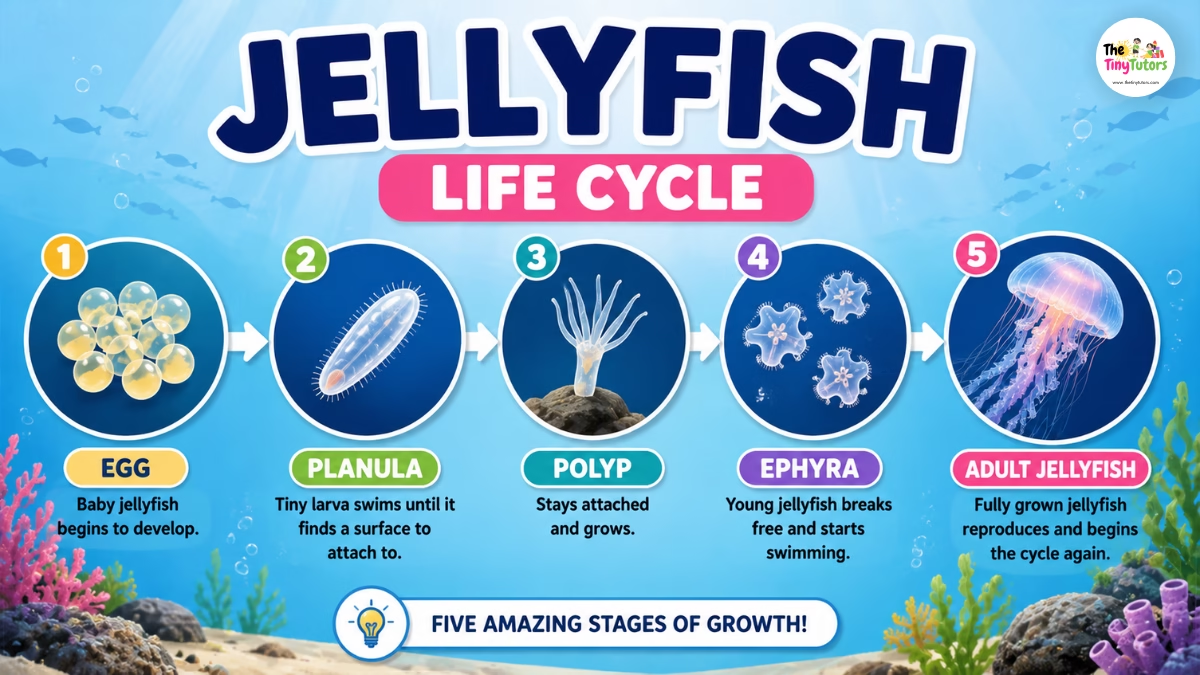
One of the most fascinating Jellyfish Facts for Kids is that a jellyfish changes its body several times as it grows. This journey is called the jellyfish life cycle, and it includes five simple stages before the jellyfish becomes an adult.
Stage 1: Egg
A female jellyfish releases eggs into the water. After fertilization, tiny baby jellyfish begin to develop.
Stage 2: Planula (Larva)
The baby jellyfish, called a planula, swims freely until it finds a hard surface, such as a rock or shell, where it can attach.
Stage 3: Polyp
Once attached, the planula grows into a polyp. At this stage, it stays in one place and slowly develops.
Stage 4: Ephyra (Young Jellyfish)
The polyp releases tiny young jellyfish called ephyrae. They break away and begin swimming on their own.
Stage 5: Adult Jellyfish
As the ephyrae grow, they become adult jellyfish that can reproduce, starting the life cycle all over again.
Jellyfish Life Cycle at a Glance
| Stage | What Happens |
|---|---|
| 🥚 Egg | Baby jellyfish begins to develop. |
| 🪱 Planula | Tiny larva swims until it finds a surface to attach to. |
| 🌱 Polyp | Stays attached and grows. |
| ⭐ Ephyra | Young jellyfish breaks free and starts swimming. |
| 🪼 Adult | Fully grown jellyfish reproduces and begins the cycle again. |
Learning about the jellyfish life cycle is one of the most fascinating Jellyfish Facts for Kids because it shows how these amazing sea animals grow and survive in the ocean.
Different Types of Jellyfish
Scientists have identified over 2,000 jellyfish species worldwide, making these ocean animals even more fascinating to explore. While they all belong to the same animal group, each species has its own unique size, appearance, and way of surviving in the ocean.
Here are four of the most fascinating jellyfish that every young ocean explorer should know.
🌕 Moon Jellyfish
Moon jellyfish are among the most widely seen jellyfish species and can be found in many oceans across the globe.
Fun Features:
- Nearly transparent body
- Gentle swimmer
- Usually has a mild sting
- Often seen near beaches and coastlines
You can often recognize a moon jellyfish by the four horseshoe-shaped markings visible inside its bell.
🦁 Lion’s Mane Jellyfish
The lion’s mane jellyfish holds the title of the world’s largest known jellyfish species.
Amazing Facts:
- Tentacles can grow over 30 meters (100 feet) long.
- Lives mainly in cold northern oceans.
- Gets its name from its long, flowing tentacles that look like a lion’s mane.
Its long tentacles help it catch food from a great distance.
📦 Box Jellyfish
The Box Jellyfish is famous for having one of the strongest stings in the animal kingdom.
Interesting Facts:
- Lives in warm tropical waters.
- Can swim better than most jellyfish.
- Has simple eyes that help it avoid obstacles.
Because its sting can be dangerous, swimmers should always follow local beach safety advice.
🌟 Immortal Jellyfish
The Immortal Jellyfish is one of the most unusual animals in the ocean.
Instead of dying naturally from old age, it can sometimes return to its younger polyp stage after injury or stress.
Scientists study this remarkable ability to learn more about aging and cell growth. Although it is called “immortal,” it can still die from predators, disease, or environmental changes.
Learning about these different species is one of the most interesting Jellyfish Facts for Kids because it shows that every jellyfish has unique features that help it survive in the ocean.
25 Fun & Amazing Jellyfish Facts for Kids
Now it’s time for the most exciting part!
Here are 25 fun and educational facts that make jellyfish some of the most fascinating ocean animals.
🪼 Amazing Jellyfish Facts
1. Jellyfish have lived on Earth for over 500 million years. They are much older than dinosaurs!
2. Jellyfish are made of about 95% water. That is why they look soft and squishy.
3. They do not have a brain. Instead, they use a simple nerve net to sense the world around them.
4. Jellyfish have no heart. Their bodies work without pumping blood like ours.
5. They have no bones. This makes them flexible and lightweight.
6. Jellyfish do not have lungs. They absorb oxygen directly from the surrounding water.
7. Most jellyfish drift with ocean currents. They let the sea help them travel.
8. Jellyfish use tiny stinging cells to catch food. These special cells are called nematocysts.
9. Some jellyfish glow in the dark. This natural light is called bioluminescence.
10. There are more than 2,000 known species of jellyfish. Scientists continue discovering new ones.
🌊 More Interesting Jellyfish Facts
11. The largest jellyfish is the lion’s mane jellyfish. Its long tentacles can stretch for more than 30 meters (100 feet), making them some of the longest body parts found in any animal.
12. Some jellyfish are smaller than your thumbnail. Tiny species can be incredibly small!
13. Jellyfish have been to space. Scientists have studied jellyfish in space to learn how living things react to microgravity.
14. Baby jellyfish are called ephyrae. They look like tiny stars floating in the water.
15. Jellyfish come in many beautiful colors. Some are pink, blue, purple, orange, white, or almost clear.
16. A group of jellyfish is called a smack or a bloom. That’s a fun ocean word to remember!
17. Sea turtles love eating jellyfish. Leatherback sea turtles especially enjoy them.
18. Jellyfish have survived many changes on Earth. They have lived through ice ages and changing oceans.
19. Some jellyfish can grow very quickly. When food is plentiful, they can increase in size fast.
20. Most jellyfish are harmless to humans. Only a small number of species have dangerous stings.
🔬 Science & Ocean Survival Facts
21. Jellyfish help scientists make medical discoveries. Some glowing proteins from jellyfish are used in scientific research.
22. They use the same opening to eat and remove waste. Unlike humans, jellyfish have only one body opening.
23. Jellyfish don’t sleep like people do. Instead, they have quiet resting periods.
24. Strong ocean currents can carry jellyfish for hundreds of kilometers. They often travel without choosing their direction.
25. Every jellyfish plays an important role in the ocean ecosystem. They are both hunters and food for other sea animals, helping keep nature balanced.
We hope these Jellyfish Facts for Kids have helped you discover just how amazing these ancient ocean animals really are.
What Animals Eat Jellyfish?
One of the most surprising Jellyfish Facts for Kids is that jellyfish are an important food source for many ocean animals. Although jellyfish have stinging tentacles, some ocean animals have developed special features that help them eat jellyfish without getting harmed.
Common Animals That Eat Jellyfish
| Animal | How It Eats Jellyfish |
|---|---|
| 🐢 Leatherback Sea Turtle | Its thick mouth and throat help protect it from most jellyfish stings. Jellyfish are one of its favorite foods. |
| 🐟 Ocean Sunfish (Mola) | Eats jellyfish along with other soft-bodied sea animals. |
| 🦈 Some Sharks | Larger shark species sometimes feed on jellyfish in the open ocean. |
| 🐦 Seabirds | Some seabirds catch jellyfish floating near the ocean’s surface. |
How Do These Animals Avoid Being Stung?
Many jellyfish predators have special features that help protect them from stings.
For example:
- 🐢 Leatherback sea turtles have thick skin inside their mouths and throats.
- 🐟 Some fish eat only certain parts of the jellyfish to avoid the stinging tentacles.
- 🦈 Some ocean animals are naturally more resistant to jellyfish venom.
These Jellyfish Facts for Kids show that every animal has unique adaptations that help it survive, even when its food has stinging tentacles.
Why Are Jellyfish Important to the Ocean?
One of the most surprising Jellyfish Facts for Kids is that jellyfish play an important role in keeping ocean ecosystems healthy. Although they sometimes gather in large groups called blooms, they help maintain the balance of marine life in several ways.
They Help Balance the Food Chain
Jellyfish eat plankton and other tiny sea animals, helping keep their populations under control. This makes them an important part of the ocean food chain. To learn more about how plants and animals depend on one another, explore our guide on Food Chain for Kids.
They Provide Food for Other Animals
Many ocean animals rely on jellyfish as a food source, including:
- 🐢 Leatherback sea turtles
- 🐟 Ocean sunfish
- 🦈 Some sharks
- 🐦 Certain seabirds
Without jellyfish, these animals would have fewer food sources available.
They Help Scientists Learn
Scientists study jellyfish to better understand topics such as the human nervous system, aging, ocean ecosystems, and glowing proteins used in medical research. These discoveries have helped advance both science and medicine.
They Show Changes in the Ocean
Scientists also monitor jellyfish populations because sudden increases in their numbers can be a sign that ocean conditions are changing.
These Jellyfish Facts for Kids show that jellyfish are much more than floating sea creatures—they help support marine life and give scientists valuable clues about our oceans.
Jellyfish Safety Tips for Kids
Seeing a jellyfish at the beach can be exciting, but it’s important to stay safe.
Follow these simple tips whenever you visit the ocean.
Before Swimming
- 🌊 Look for beach warning signs.
- 🏖️ Swim only where lifeguards are present.
- 👨👩👧 Stay close to an adult.
- 📢 Listen to local safety advice.
If You See a Jellyfish
- Stay calm.
- Slowly swim away.
- Never chase or touch it.
- Tell an adult or lifeguard.
Never Pick Up a Jellyfish
Even a jellyfish washed onto the beach may still sting.
Its tentacles can remain active for some time after it dies.
Always admire jellyfish from a safe distance.
If Someone Gets Stung
- Tell an adult immediately.
- Inform a lifeguard if one is nearby.
- Follow local first-aid instructions.
- Never rub the sting.
Getting help quickly is always the safest choice.
Fun Jellyfish Quiz for Kids
You’ve explored many exciting Jellyfish Facts for Kids—now let’s see how much you remember!
1. Is a jellyfish really a fish?
A) Yes B) No ✅
2. About how much of a jellyfish’s body is water?
A) 25% B) 50% C) About 95% ✅
3. What do jellyfish use to catch food?
A) Teeth B) Tentacles ✅ C) Fins
4. Which animal loves eating jellyfish?
A) Elephant B) Leatherback Sea Turtle ✅ C) Rabbit
5. What is the umbrella-shaped part called?
A) Bell ✅ B) Shell C) Tail
6. Can some jellyfish glow in the dark?
A) Yes ✅ B) No
7. Do jellyfish have bones?
A) Yes B) No ✅
8. What should you do if you see a jellyfish while swimming?
A) Pick it up B) Stay calm and move away ✅ C) Chase it
Jellyfish Vocabulary
Learning new words makes science even more fun!
| Word | Meaning |
|---|---|
| Cnidarian | A group of animals that includes jellyfish, corals, and sea anemones. |
| Tentacle | A long, flexible body part used to catch food and protect the jellyfish. |
| Bell | The umbrella-shaped top of a jellyfish. |
| Nematocyst | A tiny stinging cell found on jellyfish tentacles. |
| Plankton | Tiny plants and animals floating in the ocean. |
| Bioluminescence | The ability of some living things to produce their own light. |
| Polyp | A stage in the jellyfish life cycle when it is attached to a surface. |
| Ephyra | A young jellyfish that has recently separated from the polyp. |
| Bloom | A large group of jellyfish swimming together. |
| Marine | Related to the ocean or sea. |
🌊 Did You Know?
- 🪼 Jellyfish have lived on Earth longer than dinosaurs.
- 🌎 They are found in every ocean.
- 💧 Their bodies are about 95% water.
- 🌟 Some jellyfish glow in the dark.
- 🐢 Leatherback sea turtles love eating jellyfish.
- 📦 Box jellyfish are among the most venomous animals in the world.
- 🔬 Scientists study jellyfish to improve medicine and understand living cells.
- 🌊 A group of jellyfish is called a bloom or a smack.
Frequently Asked Questions (FAQs)
After exploring these Jellyfish Facts for Kids, you might still have a few questions. Here are some quick answers to common questions children, parents, and teachers often ask.
Q1: Can jellyfish live in freshwater?
Most jellyfish live in saltwater oceans. However, a few species, such as the freshwater jellyfish, can live in lakes and rivers.
Q2: Do jellyfish have brains?
No, jellyfish do not have a brain. They use a simple nerve net to sense their surroundings, detect light, and respond to changes in the water.
Q3: How do jellyfish move?
Jellyfish move by squeezing and relaxing their bell, which pushes water backward and moves them forward. This movement is called jet propulsion.
Q4: Why do jellyfish sting?
Jellyfish sting to catch food and protect themselves. Their tentacles contain tiny stinging cells called nematocysts that release venom when touched.
Q5: Are all jellyfish dangerous?
No. Most jellyfish have mild stings that are not dangerous to humans. Only a small number of species, such as the Box Jellyfish, have very powerful venom.
Q6: Which is the biggest jellyfish in the world?
The Lion’s Mane Jellyfish is the largest jellyfish species. Its tentacles can grow over 30 meters (100 feet) long.
Q7: Can jellyfish glow in the dark?
Yes, some jellyfish can produce their own light through a process called bioluminescence. This glowing ability may help them attract prey or avoid predators.
Q8: How old are jellyfish?
Jellyfish have lived on Earth for more than 500 million years, making them much older than dinosaurs.
Conclusion
After exploring these Jellyfish Facts for Kids, you now know why jellyfish are some of the most fascinating animals in the ocean. Their unique bodies, clever survival skills, and important role in marine ecosystems make them truly remarkable creatures to learn about.
We hope these Jellyfish Facts for Kids have made ocean science fun, simple, and exciting for you. Keep asking questions, stay curious, and continue exploring the amazing world of sea animals.
If you enjoyed learning about jellyfish, don’t miss our collection of Sea Animals for Kids to discover even more incredible ocean creatures.