
Have you ever rubbed a balloon on your hair and watched your hair stand up? 🎈 Or maybe you’ve felt a tiny zap when touching a metal door handle after walking across a carpet. It may seem like magic, but it is actually Static Electricity for Kids in action!
- What Is Static Electricity?
- How Does Static Electricity Work?
- Everyday Examples of Static Electricity for Kids
- Why Do We Sometimes Feel a Tiny Shock?
- Fun Static Electricity Experiments for Kids
- Is Static Electricity Dangerous?
- 🌟 Amazing Static Electricity Facts for Kids
- Where Do We Use Static Electricity?
- Static Electricity vs Current Electricity
- 🛡️ Safety Tips
- 🎨 Fun Classroom Activities
- 📝 Static Electricity Quiz
- 📄 Practice Activities
- ❓ Frequently Asked Questions
- 🎉 Conclusion
Electricity is all around us, but not all electricity works the same way. Sometimes tiny electric charges stay in one place instead of flowing through wires. This is called Static Electricity for Kids, and it can create fun surprises that children can safely explore through simple science activities.
In this guide, you’ll learn what static electricity is, how it works, where you can see it in everyday life, and why it happens. You’ll also discover exciting experiments, amazing facts, and simple explanations that make learning science enjoyable for kids, parents, teachers, and homeschooling families.
Let’s begin our exciting science adventure! ⚡
What Is Static Electricity?
Static Electricity for Kids is electricity that stays in one place instead of moving through a wire.
In simple words, tiny electric charges collect on the surface of an object. When enough charges build up, they may suddenly move to another object, creating a tiny spark or a small shock.
Think About This 💡
Imagine rubbing a balloon on your hair. After rubbing it for a few seconds, the balloon can stick to a wall or make your hair stand up.
That happens because rubbing the balloon creates tiny electric charges on its surface.
Real-Life Example
When you pull off a wool sweater during winter, you might hear small crackling sounds or even see tiny sparks in a dark room. This is another everyday example of static electricity.
Static electricity in simple words: It is a build-up of tiny electric charges that stay on an object until they move somewhere else.
How Does Static Electricity Work?
Electricity is made up of tiny particles called electric charges. These charges are much too small for us to see, but they are always around us.
Tiny Electric Charges
Everything around you—even your toys, books, clothes, and balloons—is made of tiny building blocks called atoms.
Inside atoms are even smaller particles. Some of these particles can move from one object to another when objects rub together.
When extra charges collect on an object, they stay there for a short time. This creates static electricity.
Imagine collecting tiny marbles in a box. They stay inside until the box is opened. Electric charges behave in a similar way.
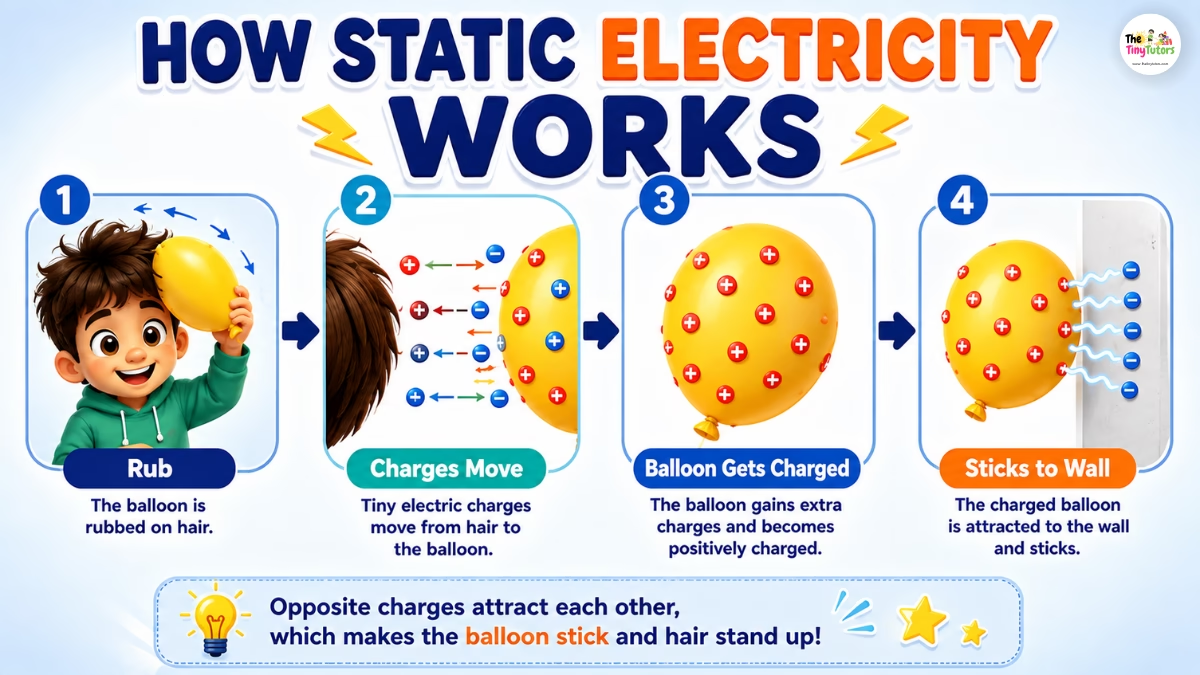
The diagram above shows the basic process. Now let’s look at what happens when two objects rub against each other in a little more detail.
What Happens When Objects Rub Together?
When two different materials rub against each other, some tiny electric charges move from one object to the other.
- One object gains extra charges.
- The other object loses some charges.
Because opposite charges attract each other, the objects may stick together or create a tiny spark.
Everyday Examples of Static Electricity for Kids
One of the best ways to understand science is by noticing it around you. Here are some fun examples for static electricity that children can easily observe.
🎈 Balloon and Hair
- Rub a balloon on clean, dry hair for about 20 seconds.
- Now lift the balloon slowly.
- You will notice that some strands of hair follow the balloon and stand up.
This happens because opposite electric charges attract each other.
🚶 Walking on a Carpet
- Walk across a carpet while wearing socks.
- Now touch a metal doorknob.
- You may feel a tiny zap.
Don’t worry—it is usually harmless and only lasts for a moment.
🧥 Taking Off a Sweater
Have you ever removed a sweater and heard little crackling sounds?
Sometimes you may even notice tiny sparks in a dark room.
Rubbing clothes together creates static electricity, especially when the air is dry.
⛈️ Lightning in the Sky
Lightning shows how static electricity can build up and release on a much larger scale in nature.
Inside storm clouds, tiny water droplets and ice crystals rub together. This creates a huge amount of electric charge.
When the charges become too strong, they jump through the air as a bright flash of lightning.
Although lightning and balloon experiments both involve electric charges, lightning is much more powerful and can be dangerous. Never go outside during a thunderstorm.
Curious about how lightning forms in nature? You can learn more about electricity and lightning through NASA’s educational science resources.
Want to learn more about the clouds that create thunderstorms? Read our Types of Clouds for Kids guide to discover how different clouds bring different kinds of weather.
Why Do We Sometimes Feel a Tiny Shock?
Have you ever touched a metal door handle or a car door and felt a tiny shock? ⚡
This happens because extra electric charges quickly move from your body to the metal object.
You are more likely to notice this:
- ❄️ During winter, when the air is dry.
- 🚗 After getting out of a car.
- 🚪 When touching a metal doorknob.
- 🧦 After walking on a carpet while wearing socks.
The good news is that these tiny shocks are usually safe and disappear in less than a second.
Understanding why tiny shocks happen helps children connect Static Electricity for Kids with real-life experiences they notice at home, school, and outdoors.
Fun Static Electricity Experiments for Kids
The best way to learn science is by trying it yourself! These static electricity experiments for kids use simple household items and help children see invisible electric charges in action. Always ask an adult to help with the activities.
🎈 Balloon Static Electricity Experiment
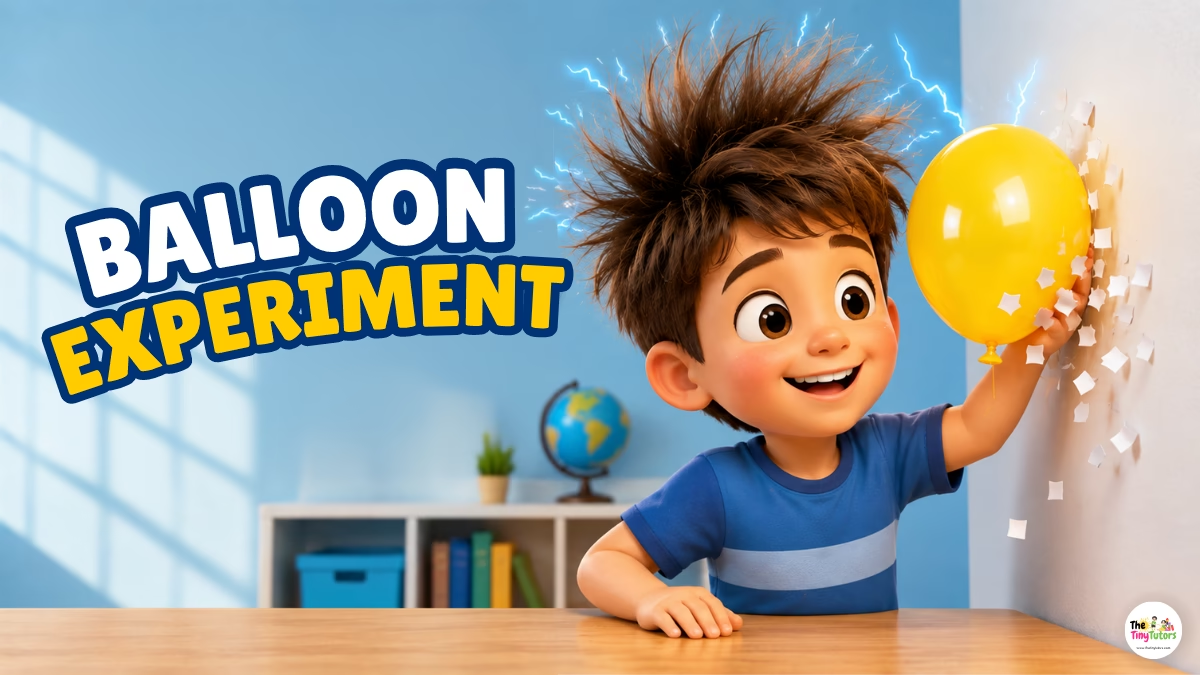
The balloon static electricity experiment is one of the easiest ways to understand how electric charges work.
Materials
- 1 balloon
- Clean, dry hair
- A smooth wall
Steps
- Blow up the balloon and tie it.
- Rub the balloon on your hair for about 20 seconds.
- Slowly move the balloon toward a wall.
- Gently let go of the balloon.
What Happens?
The balloon sticks to the wall for a short time!
Why Does It Happen?
When you rub the balloon on your hair, tiny electric charges move from one object to the other. The charged balloon is attracted to the wall, making it stick without glue.
Try This Challenge 🌟
- Does the balloon stick longer on a dry day than on a rainy day?
- What happens if you rub it on different fabrics?
Record your observations like a young scientist!
Looking for more hands-on science ideas? NASA’s Earth Day Activity Book includes simple balloon-based learning activities that children can explore with adult guidance.
📄 Paper Pieces Experiment
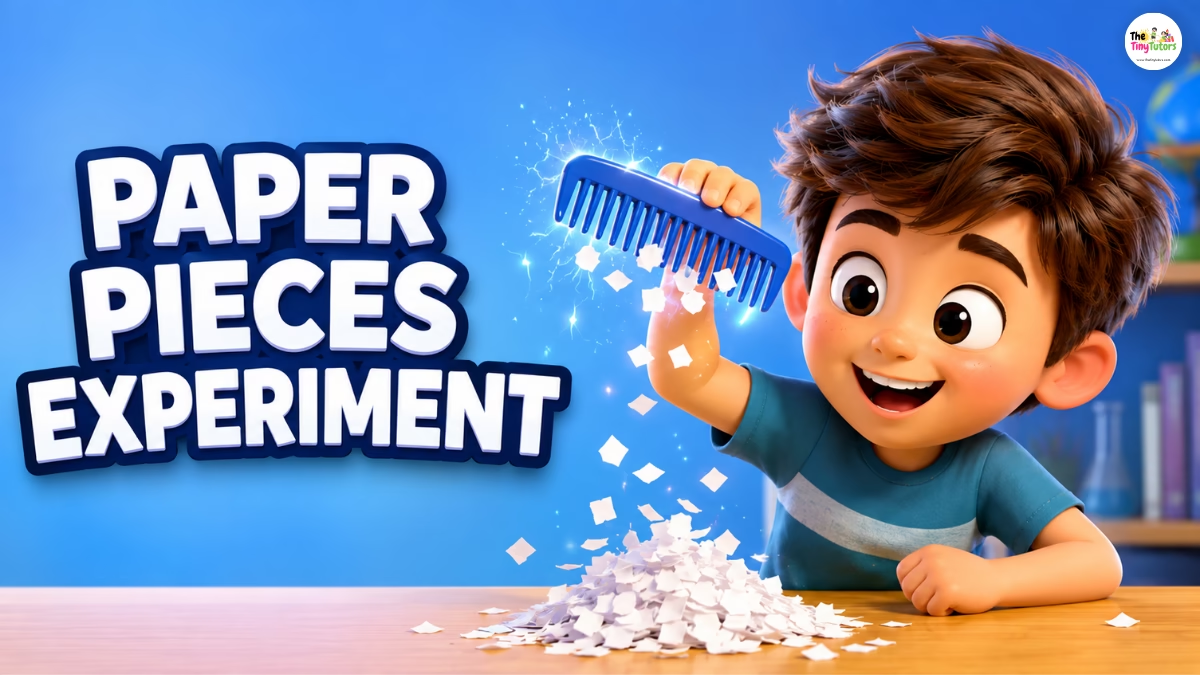
This is another fun activity that shows how Static Electricity for Kids works using everyday materials.
Materials
- Small pieces of tissue paper
- One plastic comb or balloon
Steps
- Cut or tear the paper into tiny pieces.
- Rub the comb or balloon on your hair for 20 seconds.
- Hold it just above the paper.
What Happens?
The tiny paper pieces jump up and stick to the comb or balloon!
Why Does It Happen?
The charged object attracts the lightweight paper pieces, showing that invisible electric charges can pull small objects closer.
This is one of the most popular easy static electricity experiments for classrooms and homes.
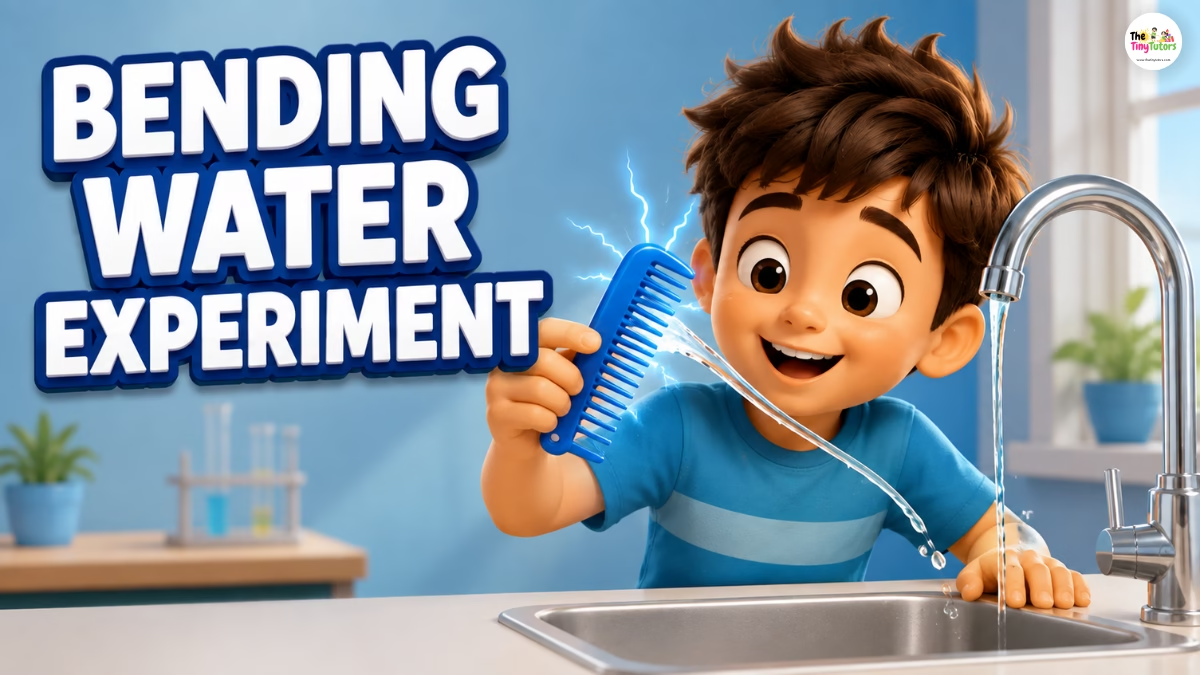
💧 Bending Water Experiment
Did you know that static electricity can even move a thin stream of water?
Materials
- A plastic comb
- Running tap water
Steps
- Turn on the tap so only a thin stream of water flows.
- Rub the comb through dry hair several times.
- Slowly bring the comb close to the water without touching it.
What Happens?
The water bends slightly toward the comb.
Why Does It Happen?
The electric charges on the comb attract the tiny water molecules. Even though you cannot see the charges, you can see their effect!
This activity is a great example of static electricity science experiments for kids because it helps children observe science with their own eyes.
Curious about water and how it behaves in nature? Our Water Cycle for Kids guide explains how water moves through clouds, rain, rivers, and oceans.
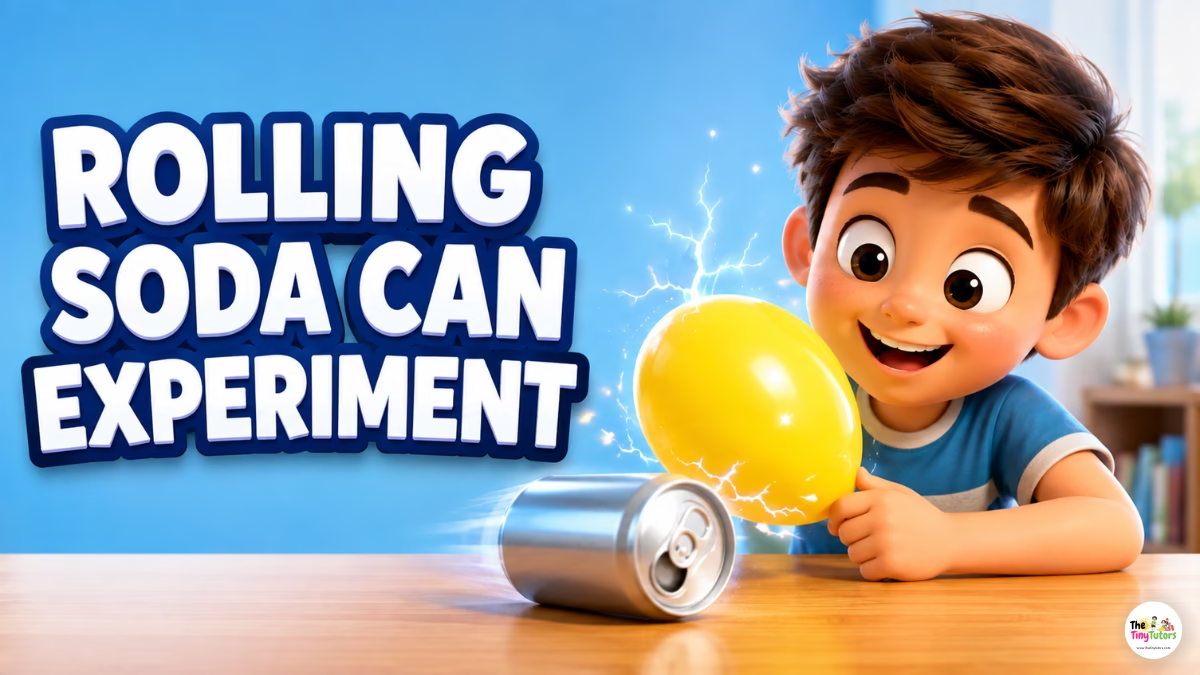
🥤 Rolling Soda Can Experiment
Here’s another exciting activity that feels almost like magic!
Materials
- An empty aluminum soda can
- A balloon
Steps
- Place the empty can on a flat table.
- Rub the balloon on your hair for about 20 seconds.
- Hold the balloon close to the can without touching it.
- Slowly move the balloon.
What Happens?
The can rolls toward the balloon!
Why Does It Happen?
The charged balloon attracts the metal can, causing it to move across the table.
This is one of the 5 simple static electricity experiments that children love because it combines learning with play.
Many children are surprised to see how Static Electricity for Kids can move objects without touching them.
Is Static Electricity Dangerous?
Many parents ask whether Static Electricity for Kids is safe.
The answer is yes—most everyday static electricity is harmless. 😊
The tiny shocks you sometimes feel after walking on a carpet or touching a metal object are very small and usually do not hurt you.
However, there is one important exception.
⚠️ Lightning is not the same as the tiny static electricity you create at home. Lightning contains an enormous amount of energy and can be very dangerous.
Safety Reminder
- ✅ Enjoy simple experiments indoors with adult supervision.
- ✅ Never play outside during a thunderstorm.
- ✅ Never try to copy lightning experiments.
Learning safely is always the smartest choice!
🌟 Amazing Static Electricity Facts for Kids
Here are some fun static electricity facts for kids that may surprise you!
- ⚡ Every person can build up static electricity just by walking across a carpet.
- ❄️ Dry winter air often creates more static electricity than humid summer air.
- 🎈 Balloons can stick to walls because of electric charges.
- 🧦 Wool and synthetic clothes create more static electricity than cotton.
- 🌩️ Lightning is the largest natural example of static electricity.
- 🖨️ Some printers use electric charges to place ink or toner on paper.
- 🌬️ Certain air-cleaning machines use electric charges to trap dust.
- 🚗 Tiny sparks can sometimes appear when getting out of a car on a dry day.
- 🧪 Scientists use static electricity in printers, air cleaners, and many modern technologies.
- 🌍 You can discover examples of static electricity almost every day if you know where to look!
Where Do We Use Static Electricity?
Static electricity is not just for science experiments—it also helps people in many everyday jobs.
| Place | How Static Electricity Helps |
|---|---|
| 🖨️ Photocopiers | Helps transfer toner onto paper. |
| 🖥️ Laser Printers | Uses electric charges to create clear text and pictures. |
| 🌬️ Air Purifiers | Helps collect tiny dust particles from the air. |
| 🚗 Car Painting | Helps paint spread evenly over the car’s surface. |
These real-life uses show that Static Electricity for Kids is more than a fun science topic—it is also an important part of modern technology.
Static Electricity vs Current Electricity
Many children think all electricity works the same way, but there are actually two main types. Understanding the difference makes Static Electricity for Ki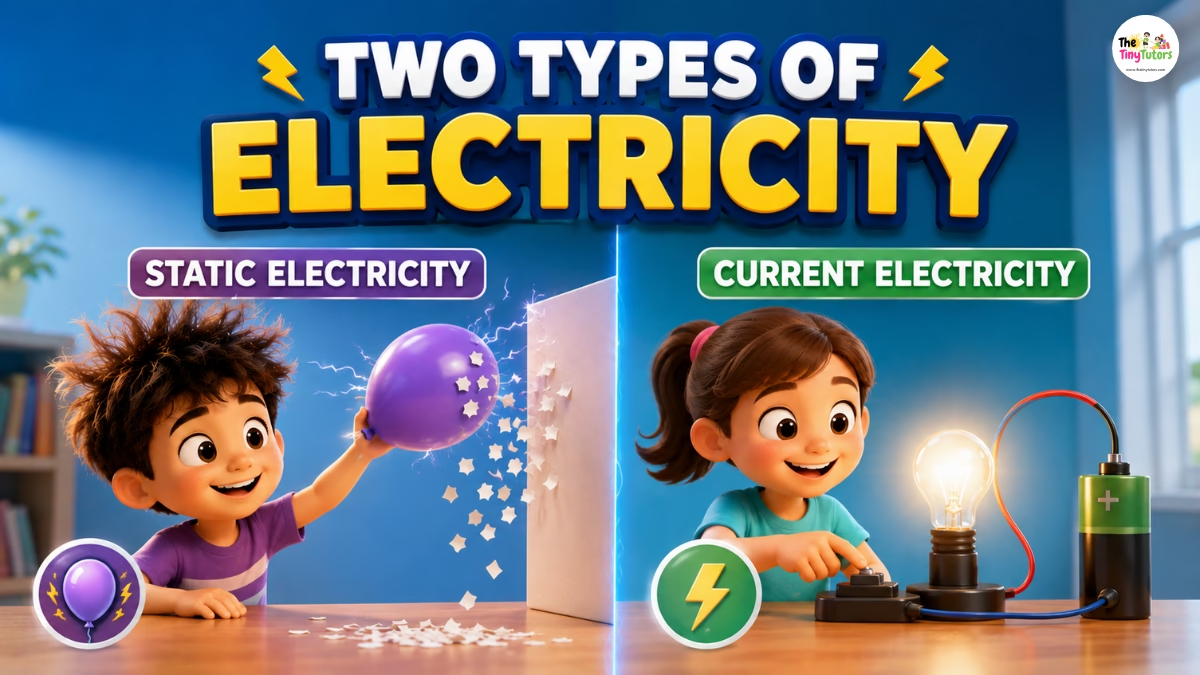 ds much easier to learn.
| ⚡ Static Electricity | 🔌 Current Electricity |
|---|---|
| Electric charges stay in one place until they move suddenly. | Electric charges flow continuously through wires. |
| Usually created by rubbing two objects together. | Produced by batteries or electrical power sources. |
| Creates tiny sparks or small shocks. | Powers lights, fans, computers, and televisions. |
| Lasts only for a short time. | Keeps flowing as long as power is available. |
| Example: Balloon sticking to a wall. | Example: A lamp glowing when switched on. |
Easy Way to Remember 💡
- 🎈 Static electricity waits, then moves all at once.
- 🔋 Current electricity keeps moving all the time through a path.
Want to learn how electricity powers homes, schools, and cities? You can learn more about how electricity is generated from National Geographic Education.
Knowing the difference makes Static Electricity for Kids easier to understand and helps children avoid confusing it with the electricity that powers everyday devices.
🛡️ Safety Tips
Science is fun, but staying safe is even more important! Follow these simple tips while exploring Static Electricity for Kids.
✅ Do
- 👨👩👧 Perform experiments with an adult nearby.
- 🎈 Use balloons, paper, plastic combs, and other safe materials.
- 📝 Observe carefully and write down what you notice.
- 🧹 Keep your workspace clean after each activity.
❌ Don’t
- ⛈️ Never experiment during a thunderstorm.
- 🔌 Never touch electrical outlets or exposed wires.
- 🔥 Never use fire or sharp objects in science activities.
- ⚡ Never confuse household electricity with static electricity.
- Never insert objects into electrical sockets.
Safe scientists are smart scientists!
🎨 Fun Classroom Activities
Teachers and parents can make static electricity activities for kids exciting with simple hands-on learning.
1. 🎈 Balloon Race
Children rub balloons on their hair and see whose balloon sticks to the wall the longest.
Learning Goal: Observe how electric charges work.
2. 📄 Paper Pickup Challenge
Use a plastic comb to pick up tiny paper pieces without touching them.
Learning Goal: Understand attraction between charged objects.
3. 🔍 Science Observation Chart
Ask children to write:
- What happened?
- Why do they think it happened?
- What surprised them most?
This improves observation and critical thinking skills.
4. 🎨 Draw the Experiment
Invite children to draw their favorite static electricity experiment and label each step.
This combines science with creativity and helps reinforce learning.
📝 Static Electricity Quiz
Test your knowledge with this fun static electricity quiz!
- What makes a balloon stick to a wall?A. Glue
B. Water
C. Static electricity ✅
D. Wind - Which is a natural example of static electricity?A. Rainbow
B. Lightning ✅
C. Wind
D. Snow - Which object can be attracted to a charged comb?A. Stone
B. Tiny paper pieces ✅
C. Brick
D. Book - What should you never do during a thunderstorm?A. Read a book
B. Stay indoors
C. Play outside with experiments ✅
D. Watch from a window
📄 Practice Activities
These simple practice activities help children review what they have learned about Static Electricity for Kids in a fun and interactive way.
✏️ Match the Pairs
- Balloon → Hair
- Carpet → Tiny Shock
- Lightning → Nature
- Photocopier → Uses Static Electricity
📝 Fill in the Blanks
- Static electricity is caused of tiny ________.
- A balloon can stick to a ________.
- Lightning is a natural example of ________ electricity.
✔️ True or False
- Static electricity always flows through wires. ❌
- Balloons can become charged by rubbing them on hair. ✅
- Lightning is much stronger than everyday static electricity. ✅
🎨 Draw and Observe
Draw your favorite experiment and write one sentence explaining what happened.
Using your eyes, hands, and careful observation makes science even more exciting. You can also explore our Five Senses for Kids guide to learn how your senses help you observe the world around you.
❓ Frequently Asked Questions
These questions answer the most common things children, parents, and teachers search for online.
Q1: What is static electricity for kids?
Static electricity is electricity that stays in one place until it suddenly moves to another object. It is created when tiny electric charges build up on the surface of an object. A balloon rubbed on your hair is one of the easiest ways to see it.
Q2: Why does hair stand up when rubbed with a balloon?
When you rub a balloon on dry hair, tiny electric charges move between the balloon and your hair. The hairs get similar charges and push away from each other, making them stand up. At the same time, the balloon attracts the hair.
Q3: Why do balloons stick to walls?
After rubbing the balloon on your hair or a wool sweater, it becomes electrically charged. When placed near a wall, the balloon is attracted to the surface and may stick for a short time.
Q4: Is static electricity dangerous?
The tiny sparks and small shocks you may feel after walking on a carpet are usually harmless. However, lightning is a very powerful form of static electricity and can be dangerous. Always stay indoors during thunderstorms and never perform outdoor experiments in stormy weather.
Q5: Can we see static electricity?
Most of the time, we cannot see the electric charges themselves. Instead, we see their effects, such as hair standing up, paper pieces jumping toward a comb, or a balloon sticking to a wall. Tiny sparks may sometimes be visible in a dark room.
We usually see the effects of static electricity rather than the electric charges themselves.
Q6: Why is lightning related to static electricity?
Inside storm clouds, tiny water droplets and ice crystals rub against one another, building up enormous electric charges. When the charges become too strong, they discharge as lightning. It works on the same basic idea as a balloon experiment but with much more energy.
🎉 Conclusion
Learning about static electricity helps children discover that science is all around them. Through simple observations and safe experiments, kids learn how tiny electric charges work while building curiosity, critical thinking, and confidence.
Whether it’s making a balloon stick to a wall, watching paper pieces jump toward a comb, or understanding why tiny shocks happen, these fun activities turn everyday moments into meaningful learning experiences. Parents, teachers, and homeschooling families can use these simple ideas to encourage hands-on discovery while helping children build a strong foundation in science.
If you enjoy learning science through simple explanations and fun activities, you may also like our Human Skeleton for Kids guide to discover how your amazing body works.
We hope this guide on Static Electricity for Kids has inspired you to keep asking questions, exploring new ideas, and enjoying science every day. Remember—some of the most amazing science lessons begin with simple objects you already have at home! 🎈⚡