
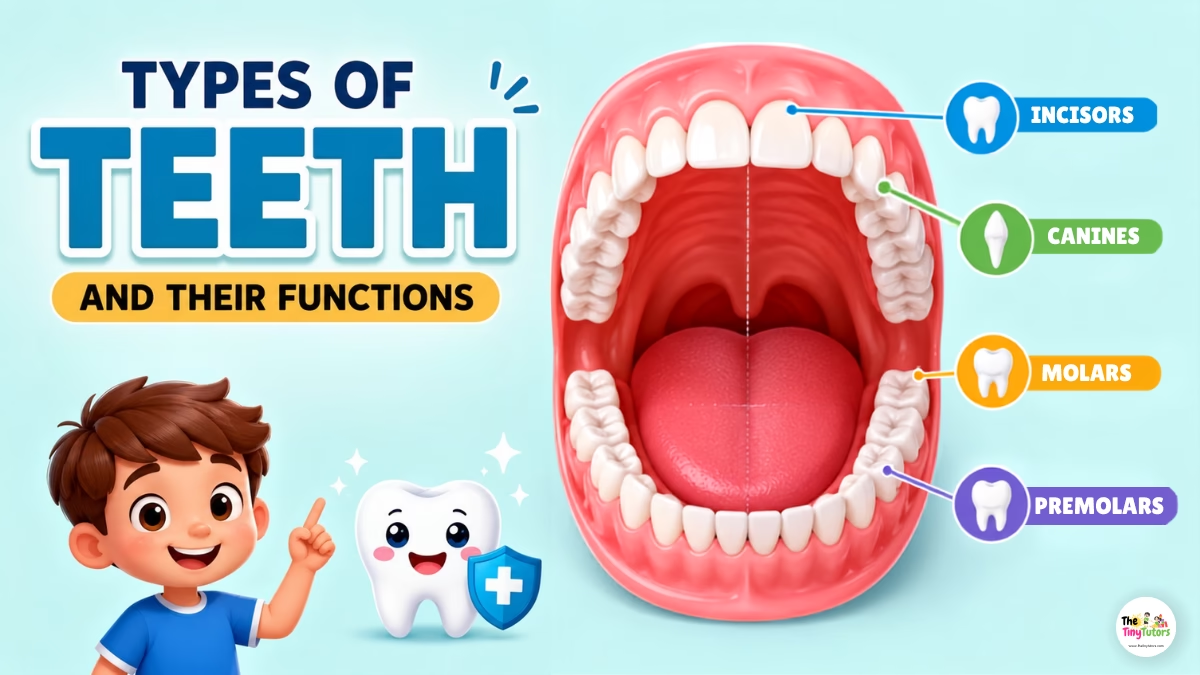
Did you know your mouth has a whole team working together — and every single tooth has its own special job? 🦷 That is right! The functions of human teeth go far beyond just eating food. Your teeth help you talk clearly, smile confidently, and break down every bite you take.
- What Are Teeth and Why Does Every Tooth Have a Different Job?
- 4 Types of Teeth and Their Functions — Meet Your Tooth Team 🦷
- Incisors — The Cutting Teeth at the Front ✂️
- Canine Teeth — The Pointed Tearing Teeth 🐾
- Premolar Teeth — The Crushing Teeth in the Middle 🔨
- Molar Teeth — The Big Grinding Teeth at the Back 💪
- Types of Teeth and Their Functions — All 4 Explained Together 📊
- Teeth Names Chart — A Simple Visual Guide for Kids 📋
- Milk Teeth vs Permanent Teeth — What Is the Difference? 🔄
- How to Take Care of All Types of Teeth 🪥
- Fun Facts About Teeth That Kids Will Love 🌟
- Frequently Asked Questions About Teeth for Kids ❓
- Now You Know Your Full Tooth Team! 🎉
In this guide, we will explore the types of teeth and their functions in the simplest way possible — so every kid and parent walks away knowing exactly what is happening inside their mouth.
Whether you are a curious kid, a parent, or a teacher — understanding the function of teeth makes dental care feel exciting, not boring!
What Are Teeth and Why Does Every Tooth Have a Different Job?
Teeth are hard, bony structures that sit inside your mouth. They are covered by a tough outer layer called enamel — the hardest material your body makes! But here is something really cool: not all teeth are the same shape, and that is on purpose. 😊
Teeth are a vital part of the human body, helping with chewing, speaking, and maintaining overall oral health. If you want to learn how other body parts work together, explore our Human Body for Kids guide.
Understanding the types of teeth and their functions helps kids and parents discover why every tooth has a unique shape and an important job inside the mouth.
How Are Teeth Different From Each Other?
Each tooth in your mouth has a unique shape because it is built for a specific task. Some teeth are flat and wide, some are sharp and pointy, and some are small and in between. This amazing design means your mouth can handle all kinds of food — from crunchy carrots to soft bananas — without any trouble.
How Many Teeth Does a Child Have?
Most children have 20 baby teeth in total. Primary teeth, commonly called milk teeth or baby teeth, are the first teeth that appear in children. As kids grow older, these 20 teeth slowly fall out and are replaced by up to 32 permanent teeth in adulthood (including wisdom teeth). So yes — you actually get two full sets of teeth in your lifetime! 🎉
How Many Milk Teeth Does a Child Have?
Children have exactly 20 milk teeth — 10 on the top jaw and 10 on the bottom jaw. These start appearing around 6 months of age and are usually all grown in by the time a child is 3 years old. Every single milk tooth plays an important role while the permanent ones are developing underneath.
4 Types of Teeth and Their Functions — Meet Your Tooth Team 🦷
Now here comes the most exciting part! There are 4 types of teeth and their functions are all different. Think of your teeth like a team — each player has a different position, but together they win the game of eating and speaking!
What Are the 4 Main Types of Teeth?
The four main types are:
- 🦷 Incisors — the front cutting teeth
- 🦷 Canines — the sharp, pointed tearing teeth
- 🦷 Premolars — the middle crushing teeth
- 🦷 Molars — the big grinding teeth at the back
Where Is Each Type of Tooth Located in Your Mouth?
| Tooth Type | Location | Total Count (Adult) |
|---|---|---|
| Incisors | Front center | 8 |
| Canines | Corner of mouth | 4 |
| Premolars | Between canines & molars | 8 |
| Molars | Back of mouth | 12 (inc. wisdom teeth) |
Incisors — The Cutting Teeth at the Front ✂️
What Do Incisors Look Like?
Incisors are the flat, thin teeth right at the front of your smile. They have a straight, sharp edge — almost like a tiny little blade. When you smile in the mirror, the first teeth you see are your incisors!
What Is the Function of Incisors?
The main job of your incisors is to cut and bite into food. When you take a bite of an apple or a sandwich, your incisors do the first cut. They also help you make certain sounds when you speak — especially letters like “F,” “V,” and “TH.” Without incisors, speaking and eating would both be very tricky! 😄
How Many Incisors Do Kids Have?
Children have 8 incisors — 4 on top and 4 on the bottom. Adults also have 8 incisors. These are usually the first baby teeth to fall out around age 6 or 7, making way for the bigger permanent ones.
Canine Teeth — The Pointed Tearing Teeth 🐾
What Do Canine Teeth Look Like?
Canines are easy to spot — they are the pointy, sharp teeth sitting at the corners of your mouth, one on each side of your incisors. They look a little like small fangs, which is why they are also called “eye teeth” or “cuspids.”
What Is the Function of Canine Teeth?
Canine teeth are built for tearing and gripping food. When you bite into something tough — like a piece of meat or a thick crust of bread — your canines hold and tear it apart. They also help guide your jaw into the right position when you close your mouth, which protects your other teeth too.
Why Are Canine Teeth So Pointy?
Great question! 🌟 Canines are pointy because they need to pierce and tear — not grind or cut flat. This sharp tip gives them the strength to grip tough foods. Fun fact: dogs have very large canines because they are built for tearing meat — which is actually how these teeth got the name “canine”!
Premolar Teeth — The Crushing Teeth in the Middle 🔨
What Do Premolars Look Like?
Premolars sit between your canines and molars. They are wider than canines and have a flatter surface with small ridges on top. These ridges are what make premolars so good at their job.
Premolar Teeth Function — What Do They Actually Do?
The premolar teeth function is all about crushing and tearing food into smaller pieces. Think of them as the bridge between the sharp front teeth and the grinding back teeth. They work alongside both canines and molars to make sure food is broken down properly before swallowing.
Function of the Premolar Teeth in Simple Words
To put it simply — the function of the premolar teeth is to crush food and help move it to the molars for final grinding. They do the important middle step in chewing. Without premolars, food would not be broken down small enough for safe swallowing or easy digestion. 🍽️
Do Kids Have Premolars?
Young children do not have premolars in their baby teeth set! Premolars only appear as part of the permanent teeth, usually between ages 10 and 12. So if your child is still young, premolars are still on the way!
Molar Teeth — The Big Grinding Teeth at the Back 💪
What Do Molars Look Like?
Your molars are the strongest and widest teeth, built for heavy chewing and grinding. They sit all the way at the back and have a broad, flat surface with deep grooves and ridges. These grooves give molars extra grip for grinding.
What Is the Function of Molar Teeth?
Molars are your mouth’s grinding machines! Once food has been cut and crushed by the front teeth, molars grind it into a soft paste that is easy to swallow and digest. Without molars, your stomach would have a very hard time breaking down food properly. They are truly the powerhouse of your mouth! ⚡
Everything You Need to Know About Wisdom Teeth and Their Eruption.
Wisdom teeth are a third set of molars that grow at the very back of your mouth. They usually appear between ages 17 and 25 — that is why they are called “wisdom” teeth, because they come in when you are older and wiser! Some people get all four wisdom teeth, some get fewer, and some never get them at all.
Types of Teeth and Their Functions — All 4 Explained Together 📊
Here is a quick and clear comparison so you can remember every tooth type easily!
Incisor vs Canine vs Premolar vs Molar — What Makes Each One Special?
| Tooth | Shape | Main Function | Fun Nickname |
|---|---|---|---|
| Incisor | Flat, sharp edge | Cuts and bites food | The Biter |
| Canine | Pointed, fang-like | Tears and grips food | The Gripper |
| Premolar | Wide with ridges | Crushes food | The Crusher |
| Molar | Broad, flat, grooved | Grinds food into paste | The Grinder |
This table makes it easy to remember the types of teeth and their functions — just look at the shape and you will instantly know the job!
Teeth Names Chart — A Simple Visual Guide for Kids 📋
Labeled Diagram of All Teeth With Names
A labeled diagram is one of the best ways to visually learn the types of teeth and their functions — because seeing where each tooth sits makes everything click instantly.
A human teeth diagram labeled with all tooth names helps kids and parents understand exactly where each tooth lives inside the mouth.
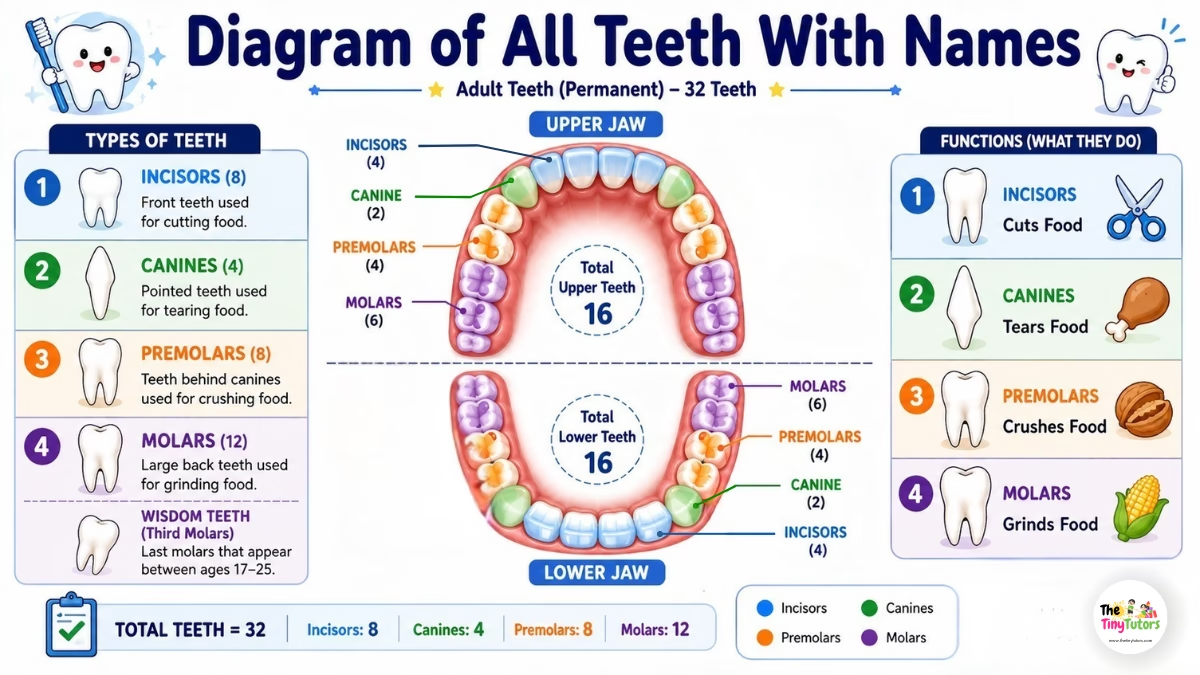
Imagine your mouth split into four equal sections — top left, top right, bottom left, and bottom right. Every single section has incisors, a canine, premolars, and molars working together as one complete team. 🦷
Teeth Chart With Names — Upper and Lower Jaw
Here is a simple teeth chart with names for both jaws:
| Position | Upper Jaw | Lower Jaw |
|---|---|---|
| Center | Central Incisor | Central Incisor |
| Next | Lateral Incisor | Lateral Incisor |
| Corner | Canine | Canine |
| Middle Back | 1st Premolar | 1st Premolar |
| Middle Back | 2nd Premolar | 2nd Premolar |
| Back | 1st Molar | 1st Molar |
| Back | 2nd Molar | 2nd Molar |
| Far Back | Wisdom Molar | Wisdom Molar |
💡 Both jaws follow the exact same pattern — mirrored from the center outward!
Names of Teeth Chart — How to Read It
Reading a names of teeth chart is simple! Start from the center front and move outward.
The teeth chart names go: Central Incisor, Lateral Incisor, Canine, First Premolar, Second Premolar, First Molar, Second Molar, and Third Molar (Wisdom Tooth).
That is 8 teeth per side — top and bottom — making 32 in total for adults.
Milk Teeth vs Permanent Teeth — What Is the Difference? 🔄
As children grow, the types of teeth and their functions change too — baby teeth are replaced by stronger permanent teeth that are built to last a lifetime. Understanding this difference helps parents and kids know exactly what to expect at every stage of growing up! 😊
What Are Milk Teeth (Baby Teeth)?
Milk teeth — also called baby teeth or primary teeth — are the first set of teeth that children grow. They are smaller, whiter, and fewer in number (20 total). Even though they eventually fall out, they are incredibly important for chewing, speaking, and holding space for permanent teeth.
What Are Permanent Teeth?
Permanent teeth are the second and final set of teeth. Adults have up to 32 permanent teeth. These are stronger and larger than milk teeth and are meant to last a lifetime — which is exactly why taking care of them matters so much! 💎
Parents who would like age-specific oral health guidance can visit the American Academy of Pediatric Dentistry (AAPD).
When Do Kids Start Losing Their Baby Teeth?
Most children start losing their baby teeth around age 5 to 7, starting with the front incisors. The process continues until about age 12 to 13, when most permanent teeth (except wisdom teeth) have come in.
Simple Tooth Growth Timeline for Kids
| Age | What Happens |
|---|---|
| 6 months | First baby teeth (incisors) appear |
| 2–3 years | All 20 milk teeth are in |
| 5–7 years | Baby teeth start falling out |
| 6–12 years | Permanent teeth gradually replace milk teeth |
| 17–25 years | Wisdom teeth may appear |
How to Take Care of All Types of Teeth 🪥
Healthy teeth do not just happen — they are built through small daily habits that add up over time. When you understand the types of teeth and their functions, caring for each one becomes much easier — because you know exactly what you are protecting and why. Let us go through every good habit, one step at a time! 😊
Brushing Tips for Each Type of Tooth
- Incisors: Brush gently in small circles — they are thin and the enamel needs protection.
- Canines: Use a small brush head to reach the corners properly.
- Premolars & Molars: Brush the top surfaces with back-and-forth strokes to clean the grooves.
Brush twice a day for 2 minutes each time — morning and before bed! ⏱️
Brushing every day is one of many healthy routines children should follow. Discover more simple daily habits in our Good Habits for Kids guide.
Foods That Make Teeth Strong 🥛
- Milk and cheese — packed with calcium
- Crunchy vegetables like carrots and celery — natural tooth cleaners
- Eggs and nuts — great for enamel strength
- Plenty of water — keeps your mouth clean and fresh
Habits That Can Damage Your Teeth ⚠️
- Eating too much sugar or sticky candy
- Drinking fizzy drinks regularly
- Chewing on pencils or ice cubes
- Not brushing before bedtime
Why Dentist Visits Are Important for Kids
Visiting the dentist every 6 months helps catch any small problems before they become big ones. The dentist checks all your tooth types — from incisors to molars — and makes sure every tooth is doing its job properly. Think of it as a check-up for your tooth team! 🏥
Parents and teachers who would like more trusted oral health information can also explore the CDC Oral Health resources for practical tips on keeping children’s teeth and gums healthy.
Fun Facts About Teeth That Kids Will Love 🌟
Here is something that will make you appreciate the types of teeth and their functions even more — teeth are full of surprises that most people never know about!
Your Teeth Are Stronger Than You Think
The outer layer of your teeth — called enamel — is actually the hardest material in the entire human body. It is even harder than bone! But despite being so tough, enamel cannot repair itself once it is damaged, so it needs to be protected.
Every Person’s Teeth Are Unique — Just Like Fingerprints
No two people in the world have the exact same set of teeth. The shape, size, and arrangement of your teeth is completely unique to you. That is why detectives and doctors can sometimes use dental records to identify people! 🔍
Animals Have Very Different Teeth Than Humans
- Sharks grow new teeth every 1–2 weeks — they can go through thousands in a lifetime!
- Elephants only have 4 molars at a time — but they regrow them up to 6 times.
- Rabbits’ front teeth never stop growing — they have to chew constantly to wear them down.
Pretty amazing, right? 🐘🦈🐰
Frequently Asked Questions About Teeth for Kids ❓
Q1: What are the 4 types of teeth and their functions?
The types of teeth and their functions can be summarized simply: Incisors (cut food), Canines (tear food), Premolars (crush food), and Molars (grind food) — four different jobs, one perfect team.
Q2: How many teeth does a child have in total?
Children have 20 baby teeth in total. As they grow, these are replaced by up to 32 permanent teeth during their teenage years and early adulthood.
Q3: How many milk teeth does a child have?
A child has exactly 20 milk teeth — 10 on the upper jaw and 10 on the lower jaw. These begin appearing around 6 months of age.
Q4: What does each type of tooth do?
Each tooth type has a specific role: incisors bite and cut, canines tear and grip, premolars crush into smaller pieces, and molars grind food into a soft paste for swallowing.
Q5: When do permanent teeth replace milk teeth?
The process begins around age 5 to 6 and is mostly complete by age 12 to 13. Wisdom teeth are the last to arrive, usually between ages 17 and 25.
Q6: Which tooth is the strongest in your mouth?
Molars are the strongest teeth because they handle the most grinding pressure. However, all teeth are protected by enamel — the hardest substance the human body makes.
Q7: Do kids have premolars and molars both?
Kids with baby teeth have molars but no premolars. Premolars only appear with permanent teeth, usually around ages 10 to 12. So young children skip straight from canines to molars in their baby set!
Now You Know Your Full Tooth Team! 🎉
Now that you know all about the types of teeth and their functions, you are officially a member of the Tooth Expert Club! 🎉 From the cutting incisors at the front to the powerful molars at the back — every tooth has a purpose, and every single one deserves great care.
The function of teeth goes far beyond just eating — it is about speaking clearly, smiling confidently, and staying healthy from the inside out. Your teeth work hard for you every single day, and now you finally know exactly how! 💪
Sharing what you have learned about the types of teeth and their functions with a friend, sibling, or classmate is one of the best ways to remember it forever — plus it makes you the smartest person in the room! 😄
So next time you brush your teeth, take a moment to appreciate each member of your tooth team — the Biter, the Gripper, the Crusher, and the Grinder — all working together just for you. 🦷💛
Bookmark this guide and come back anytime you need a quick reminder about the types of teeth and their functions — your smile will thank you for it! 🦷💛
👉 Keep exploring, keep learning — because curious kids grow into brilliant people!