
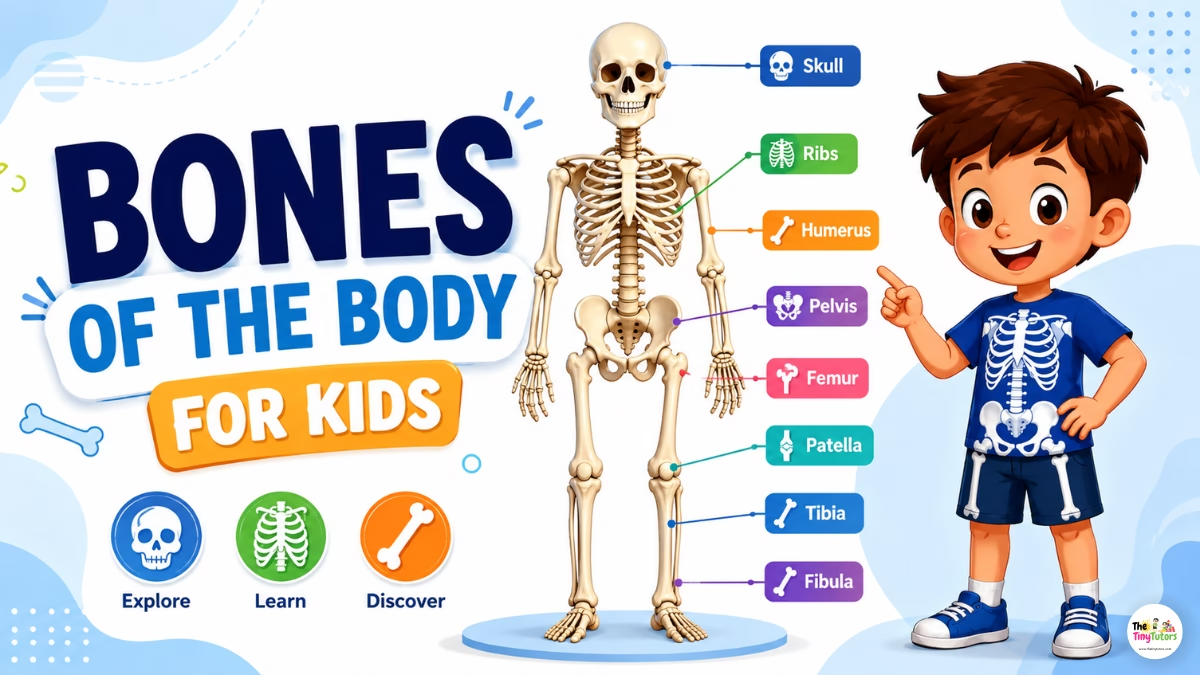
Bones of the Body for Kids is a fun way to learn about the different bones found inside the human body. Every bone has its own name, location, shape, and unique characteristics.
- What Are Bones?
- What Makes Bones Special?
- Bones of the Body for Kids: Names and Locations
- Head Bones
- Chest Bones
- Arm Bones
- Hand Bones
- Leg Bones
- Foot Bones
- Special Bones You Should Know
- Fun Facts About Body Bones
- Bone Matching Activity for Kids
- Bone Name Challenge
- Key Takeaways
- Frequently Asked Questions
- Sources & References
Learning where bones are located helps children identify different parts of the body more easily and understand how bones are organized from head to toe.
In this guide, children will explore major body bones, discover where they are located, learn interesting bone facts, and enjoy simple learning activities. This beginner-friendly guide to bones of the human body for kids is perfect for young learners, parents, and teachers. 🦴✨
What Are Bones?
Bones are strong living tissues found inside the body.
Bones are just one part of the human body. Children who want to learn about external and internal body parts can also explore our Human Body Parts for Kids guide.
Although they look hard from the outside, bones are constantly changing and growing. They contain special cells that help build new bone tissue throughout childhood.
Bones also store important minerals and contain bone marrow inside some larger bones.
🦴 Fun Fact: Bones are living parts of the body, just like skin and muscles.
What Makes Bones Special?
When learning Bones of the Body for Kids, it helps to understand what makes bones unique. Although bones are found throughout the body, they are not all the same. Different bones have different shapes, sizes, and characteristics that make them easy to identify.
Bones Grow With You
As children grow taller, their bones grow too. Special growth areas near the ends of certain bones help increase bone length during childhood and the teenage years.
Bones Store Minerals
Bones store important minerals such as calcium and phosphorus. These minerals help keep bones healthy as children grow.
Bones Contain Bone Marrow
Inside many larger bones is a soft material called bone marrow. Bone marrow helps produce new blood cells that travel throughout the body.
Different Bones Have Different Shapes
Not all bones look the same. Some bones are long, like the femur, while others are small, flat, or rounded. Different bone shapes help children identify bones in various parts of the body.
🦴 Fun Fact: The shape of a bone can often provide clues about where it is located in the body.
Before learning the names and locations of different Bones of the Body for Kids, it helps to look at a simple diagram showing how these bones are arranged from head to toe.
Simple Bones of the Human Body Diagram
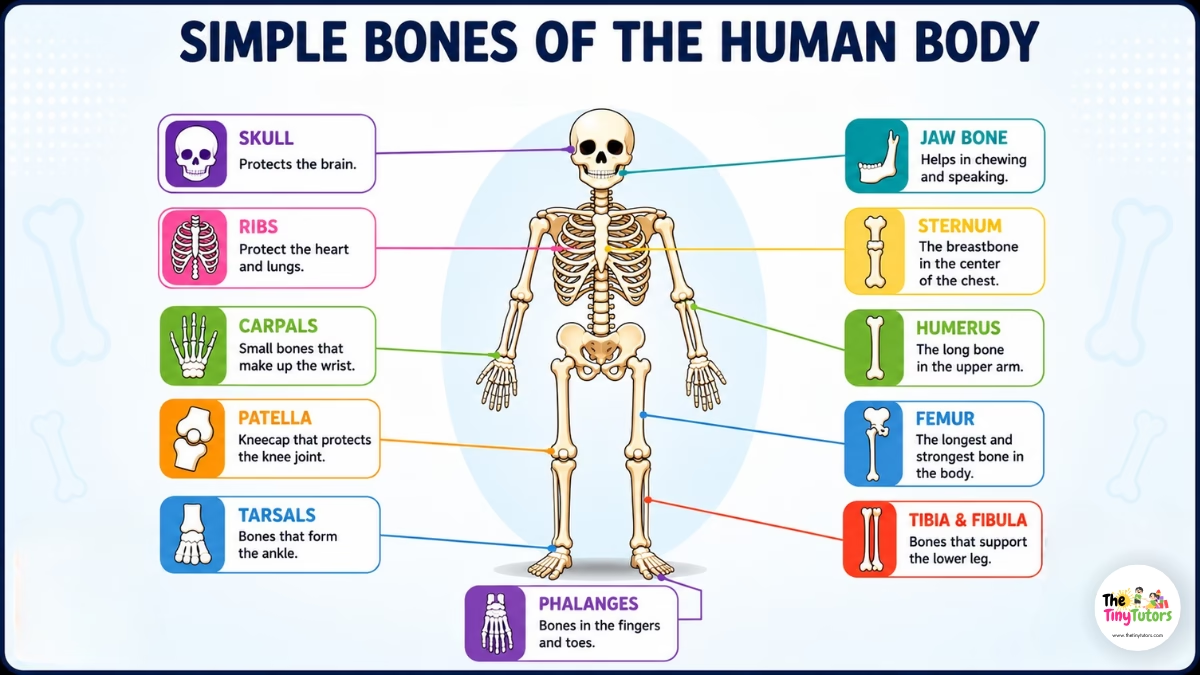
This simple diagram helps children visualize the main Bones of the Body for Kids before learning their names and locations.
Bones of the Body for Kids: Names and Locations
Learning bone names becomes easier when children know where each bone is found. The chart below introduces important body bones and their locations, helping young learners identify different bones from head to toe. 🦴
| Bone Name | Location |
|---|---|
| Skull | Head |
| Jaw Bone (Mandible) | Lower Face |
| Sternum | Middle Chest |
| Ribs | Chest Area |
| Humerus | Upper Arm |
| Radius | Forearm |
| Ulna | Forearm |
| Carpals | Wrist |
| Metacarpals | Palm |
| Phalanges | Fingers and Toes |
| Femur | Upper Leg |
| Patella | Knee |
| Tibia | Lower Leg |
| Fibula | Lower Leg |
| Tarsals | Ankle Area |
| Metatarsals | Middle Foot |
Head Bones
- Skull
📍 Found In: Head
The skull forms the bony structure around the head.
🦴 Did You Know?: The skull is made up of several bones joined together like puzzle pieces.
- Jaw Bone
📍 Location: Lower Face
The jaw bone helps form the lower part of the face.
😁 Fun Fact: The jaw bone is one of the most movable bones in the body.
The bones of the head help form the areas around important sense organs such as the eyes and ears. Children can continue learning about sight, hearing, smell, taste, and touch in our Five Senses for Kids guide.
Chest Bones
- Ribs
📍 Located In: Chest
Ribs form a curved set of bones around the upper body.
🦴 Cool Fact: Most people have 12 pairs of ribs.
- Sternum
📍 Location: Center of Chest
The sternum is a flat bone located between the ribs.
✨ Fun Fact: The sternum is sometimes called the breastbone.
Arm Bones
- Humerus
📍 Body Area: Upper Arm
The humerus is the longest bone in the arm.
💪 Fun Fact: The humerus helps you lift, throw, and move your arm in different directions.
- Radius
📍 Location: Thumb Side of Forearm
The radius is one of two forearm bones.
🔄 Quick Fact: The radius changes position when you turn your hand.
- Ulna
📍 Location: Little Finger Side of Forearm
The ulna runs alongside the radius.
🖐️ Fun Fact: The ulna forms part of the elbow joint.
Hand Bones
- Carpals
📍 Location: Wrist
Carpals are small wrist bones.
✋ Fun Fact: Several carpals work together inside each wrist.
- Metacarpals
📍 Location: Palm
Metacarpals form the main structure of the hand.
✏️ Fun Fact: These bones sit between the wrist and finger bones.
- Phalanges
📍 Location: Fingers
Phalanges make up the fingers.
🎨 Fun Fact: Each finger has three phalanges except the thumb, which has two.
Leg Bones
- Femur
📍 Located In: Upper Leg
The femur is the largest bone found in the body.
🏆 Fun Fact: The femur helps support much of the body’s weight while standing and walking.
- Patella
📍 Location: Front of Knee
The patella is commonly called the kneecap.
⭐ Interesting Fact: The patella is a small, round bone.
- Tibia
📍 Location: Front Lower Leg
The tibia is one of the main lower-leg bones.
🦴 Fun Fact: The tibia is often called the shin bone.
- Fibula
📍 Location: Side of Lower Leg
The fibula is located beside the tibia.
⚖️ Bone Fact: The fibula is thinner than the tibia.
Foot Bones
- Tarsals
📍 Location: Ankle Area
Tarsals are a group of ankle bones.
👟 Fun Fact: Several tarsals fit together to form the ankle area.
- Metatarsals
📍 Location: Middle Foot
Metatarsals connect the ankle bones to the toes.
🏃 Fun Fact: Each foot contains five metatarsal bones.
- Toe Bones
📍 Location: Toes
Toe bones are also called phalanges.
⚽ Fun Fact: Most people have fourteen toe bones in each foot.
Special Bones You Should Know
Some bones are well known because of their size or location. Here are two interesting bones that children often enjoy learning about. 🦴
| Bone Name | Location |
|---|---|
| Femur | Upper Leg |
| Stapes | Inner Ear |
Femur
📍 Location: Upper Leg
🦴 Interesting Fact: The femur is one of the strongest bones in the human body and can support a large amount of weight.
Stapes
📍 Location: Inner Ear
🎧 Interesting Fact: The stapes is the smallest bone in the human body.
Fun Facts About Body Bones
Here are some exciting facts about Bones of the Body for Kids:
🦴 A baby’s skull is made of separate bone sections that gradually join together as the child grows.
🦴 Teeth are not actually bones, even though they may look similar.
🦴 Some bones are lighter inside than they appear, which helps the body stay active and balanced.
🦴 Bones store calcium and other minerals.
🦴 Finger bones are called phalanges.
🦴 The femur is so strong that it can handle many times a person’s body weight.
🦴 Many bones in a child’s body continue growing throughout childhood.
🦴 The stapes is found deep inside the middle ear.
Bone Matching Activity for Kids
Match the bone with its correct location.
| Bone | Body Part |
|---|---|
| Skull | Head |
| Humerus | Upper Arm |
| Femur | Upper Leg |
| Patella | Knee |
| Carpals | Wrist |
| Tarsals | Foot |
🎯 Draw lines between each bone and its matching body part.
Bone Name Challenge
Can you find these bones on a body chart?
✅ Skull
✅ Humerus
✅ Femur
✅ Patella
✅ Tibia
✅ Fibula
This activity helps children remember the names and locations of important Bones of the Body for Kids more easily.
While this guide focuses on individual bone names and locations, children who want to explore how all bones work together inside the body can also read our Human Skeleton for Kids guide.
This guide to Bones of the Body for Kids introduced important bone names, locations, and interesting facts. These key points can help children remember the major bones found in different parts of the body.
Key Takeaways
✅ Every bone has a specific name and location.
✅ Bones can be identified from head to toe using a body chart.
✅ Bones store minerals such as calcium and phosphorus.
✅ Bone marrow is found inside certain larger bones.
✅ The femur is the largest body bone.
✅ Learning bone names helps children understand body anatomy.
Frequently Asked Questions
What is the largest bone in the body?
The femur is the largest bone in the body.
What is the smallest bone in the body?
The stapes is the smallest bone in the body.
Which bone is in the upper arm?
The humerus is located in the upper arm.
What are finger bones called?
Finger bones are called phalanges.
Where is bone marrow found?
Bone marrow is found inside certain bones and helps make blood cells.
Which bone is found in the knee?
The patella is the bone located at the front of the knee.
What is the jaw bone called?
The jaw bone is called the mandible.
Which bones are found in the wrist?
The small bones in the wrist are called carpals.
Sources & References
To support accurate and child-friendly learning, this article was prepared using trusted educational and health resources.
• KidsHealth – Educational bone and skeleton resources
• MedlinePlus – Bone health and anatomy information