
Did you know your body is working hard even when you are sitting completely still? The muscular system fun facts prove just how incredible your body truly is — your muscles are moving, pumping, and protecting you every single second, even while you sleep!
- What Are Muscles and How Do They Work? 💪
- The Muscular System Fun Facts That Will Blow Your Mind
- Types of Muscles — Not All Muscles Are the Same 🎨
- Diagram of a Muscular System — A Simple Visual Guide for Kids 🗺️
- Facts About the Muscular System for Kids — Science Made Simple 🧪
- Kids Health and the Muscular System — Why Strong Muscles Matter 🌿
- Muscular System Activities for Kids — Learn While Having Fun 🎮
- Muscular System Facts for Kids — Quick Recap Cheat Sheet 📋
- FAQs — Common Questions About the Muscular System 🙋
- Let's Wrap It Up 🎓
Whether you are a curious kid, a parent helping with homework, or a teacher planning a science lesson — This guide covers the most exciting the muscular system fun facts — explained in simple, easy words that every young learner will love.
What Are Muscles and How Do They Work? 💪
Muscles are soft tissues made up of long, stretchy fibers that tighten and relax to create movement. Every time you wave, blink, chew, or breathe — a muscle is making that happen.
Think of muscles like rubber bands inside your body — they stretch, pull, and snap back into place!
How Do Muscles Work Inside Your Body?
Your brain is the boss of your muscles. Here is exactly how it works:
- Brain sends a signal — “Move that arm!”
- Nerves carry the message — faster than lightning
- Muscle contracts — it shortens and pulls the bone
- Bone moves — and your arm goes up!
Muscles always work in pairs. When your bicep (front of arm) contracts, your tricep (back of arm) relaxes. This push-pull teamwork is what makes every movement smooth and controlled.
Why Do We Need Muscles Every Single Day?
| Activity | Muscles Working |
|---|---|
| Breathing | Diaphragm |
| Smiling | 12 facial muscles |
| Walking | Legs, hips, core |
| Eating | Jaw and tongue |
| Sitting straight | Back and core |
Muscles are the engines of your body — without them, nothing moves!
The Muscular System Fun Facts That Will Blow Your Mind
Here come the best muscular system fun facts — real science facts that will totally amaze young learners!
Your Body Has More Than 600 Muscles!
One of the most surprising facts about the muscular system is that your body contains over 600 muscles. Scientists have identified approximately 639 skeletal muscles alone — and they all have a specific job to do. Among all the muscular system fun facts out there, this one surprises kids and adults equally!
- Big muscles like the gluteus maximus (your bottom!) power running and jumping
- Medium muscles like your biceps help you lift and carry
- Tiny muscles in your fingers help you write, draw, and type
Strongest, Smallest, and the Heart!
Strongest muscle: The masseter (jaw muscle) can close your teeth with over 200 pounds of force!
Smallest muscle: The stapedius in your ear — just 1mm long — protects you from loud sounds.
Most hardworking muscle: Your heart is a muscle that beats around 100,000 times every day and has never taken a single break since before you were born!
Quick Fire Muscular System Fun Facts
- Muscles make up about 40% of your body weight
- The fastest muscle is the one that blinks your eye
- Speaking uses over 100 muscles at the same time
- Muscles stay active while you sleep to keep you warm
- Babies are born with all the muscle fibers they will ever have — they just grow bigger!
Types of Muscles — Not All Muscles Are the Same 🎨
There are 3 types of muscles in your body, and each works in a completely different way.
Voluntary Muscles — The Ones You Control
These are muscles you move on purpose — when you kick a ball, jump, or wave hello. They are also called skeletal muscles because they attach to bones via tough cords called tendons.
Examples: biceps, triceps, quadriceps, calf muscles
Voluntary muscles get tired after heavy use — that is why legs feel heavy after a long run!
Involuntary and Cardiac Muscles
Involuntary muscles work automatically — 24 hours a day — without you thinking about them:
- 🫁 Diaphragm (breathing)
- 🍽️ Stomach (digestion)
- 🫀 Blood vessel walls (circulation)
Cardiac muscle is found only in your heart. It is the ultimate champion — it combines the strength of skeletal muscle with the non-stop endurance of involuntary muscle. It never rests, not even for one second!
Diagram of a Muscular System — A Simple Visual Guide for Kids 🗺️
Looking at a diagram of a muscular system is one of the best ways to understand where all your muscles are and what they do. A muscular system diagram shows the human body with all the major muscles labeled and colored.
As you explore the diagram, you will notice that many of The Muscular System Fun Facts become much easier to understand because you can actually see where different muscles are located in the body.
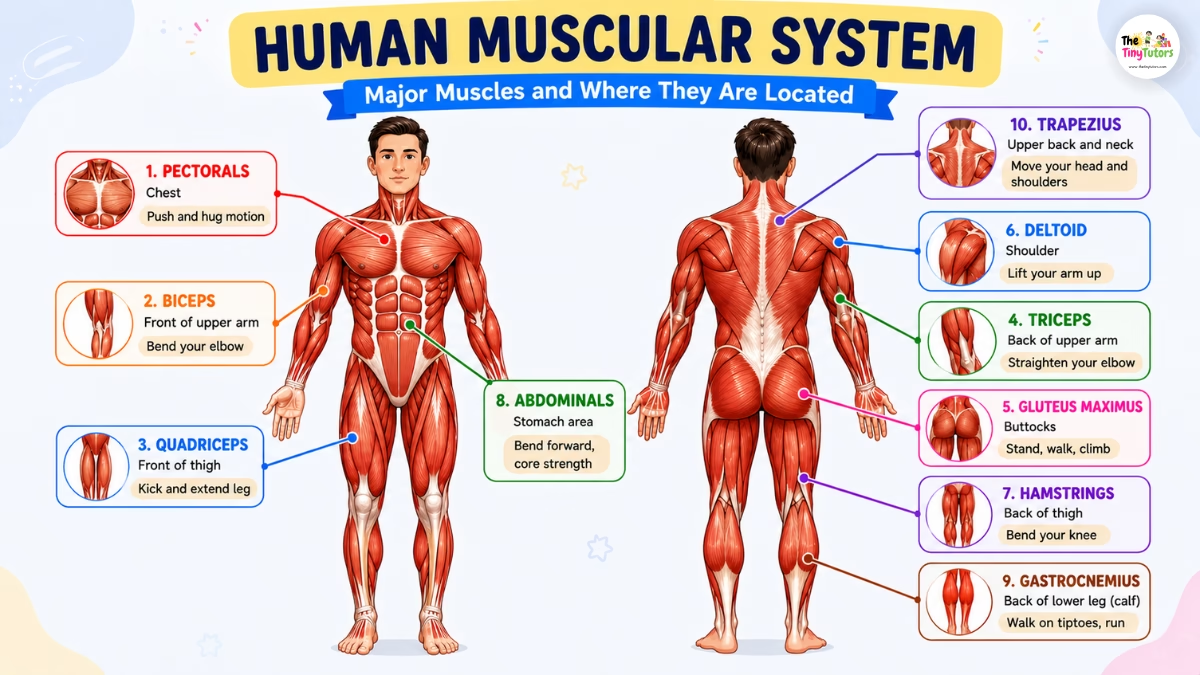
Major Muscles and Where They Are Located
Here is a simple guide to the most important muscles and where you can find them in your body:
| Muscle Name | Location | Main Job |
|---|---|---|
| Biceps | Front of upper arm | Bend your elbow |
| Triceps | Back of upper arm | Straighten your elbow |
| Quadriceps | Front of thigh | Kick and extend leg |
| Hamstrings | Back of thigh | Bend your knee |
| Gluteus Maximus | Buttocks | Stand, walk, climb |
| Deltoid | Shoulder | Lift your arm up |
| Pectorals | Chest | Push and hug motion |
| Abdominals | Stomach area | Bend forward, core strength |
| Gastrocnemius | Back of lower leg (calf) | Walk on tiptoes, run |
| Trapezius | Upper back and neck | Move your head and shoulders |
Learning the names and locations of these muscles helps kids connect The Muscular System Fun Facts with real parts of their own bodies, making science easier to remember.
Facts About the Muscular System for Kids — Science Made Simple 🧪
Here are the most important facts about the muscular system for kids that go beyond what most textbooks cover.
How Muscles and Bones Work Together
Your muscles and bones are the ultimate team. Here is how they connect:
- Bones give your body shape and support
- Muscles pull bones to create movement
- Tendons attach muscles to bones
- Ligaments connect bones to each other at joints
When you throw a ball, your brain signals your arm muscles, tendons pull your bones, and the ball flies — all in under one second! This team is so important that scientists call it the musculoskeletal system.
👉 Want to learn more about bones? Read our guide: Human Skeleton for Kids: Parts, Functions and Interesting Facts 🦴
What Happens to Muscles When You Exercise? 🏃
During exercise, amazing things happen inside your muscles:
- More oxygen-rich blood flows to working muscles
- Tiny micro-tears form in muscle fibers (completely normal!)
- During rest and sleep, your body repairs those tears
- Repaired muscles come back slightly bigger and stronger!
This is why exercise + rest = a stronger you!
Why Do Muscles Feel Sore After Playing?
That achy feeling after football or swimming is called DOMS — Delayed Onset Muscle Soreness. Tiny tears cause slight swelling, which causes soreness. It usually disappears within 24 to 48 hours.
Feel better faster:
- Drink water
- Do light stretching
- Get good sleep
- Eat potassium-rich foods like bananas
Sore muscles = growing stronger — it is a good sign!
Kids Health and the Muscular System — Why Strong Muscles Matter 🌿
One of the most valuable the muscular system fun facts you can teach kids is this — strong muscles are the foundation of lifelong health, good posture, and high energy all day long.
Best Foods for Strong Muscles
| Food | Why It Helps |
|---|---|
| Eggs | Protein repairs muscle fibers |
| Chicken | Lean protein for muscle growth |
| Bananas | Potassium prevents cramps |
| Milk | Calcium + protein for strength |
| Broccoli | Magnesium supports muscle function |
| Fish | Omega-3 for muscle recovery |
How Much Activity Do Kids Need?
Health experts recommend that kids aged 6 to 17 get at least:
- 60 minutes of physical activity every day
- Muscle-strengthening activities like climbing — at least 3 days per week
Fun options: cycling 🚴, swimming 🏊, football ⚽, dancing 💃, yoga 🧘
According to official health guidelines, regular daily movement helps children build stronger muscles, improve coordination, and stay healthy as they grow. Parents and teachers can learn more through these physical activity recommendations for children.
👉 Also explore: Bones of the Body for Kids: Names, Locations and Fun Facts — because strong muscles and strong bones always go together! 🦴
Muscular System Activities for Kids — Learn While Having Fun 🎮
The best way to remember the muscular system fun facts is to experience them — not just read them!
Activity 1 — The Muscle Squeeze Game
What you need: Just your hands!
- Hold both hands in front of you
- Squeeze your right fist tight for 10 seconds
- Release — feel the difference between contracted and relaxed
- Try both hands at the same time!
Kids learn: The real physical feeling of muscle contraction vs. relaxation!
Activity 2 — Label the Muscle Diagram
- Print a blank human body outline
- Give kids a list — biceps, triceps, quadriceps, hamstrings
- Draw arrows and label each muscle in the correct spot
- Color each group a different color
Kids learn: Muscle locations in a creative, memorable way!
👉 Find free printable worksheets at: The Tiny Tutors 📄
Activity 3 — Flex and Freeze Classroom Game
- Teacher calls a muscle — “Biceps!”
- All kids flex that muscle and freeze for 5 seconds
- Teacher calls a new muscle — “Calf muscles!”
- Everyone moves to flex the new muscle
Kids learn: Muscle locations + body awareness + movement — all at once! 💪
Muscular System Facts for Kids — Quick Recap Cheat Sheet 📋
Here are the top muscular system facts for kids in one place — perfect for homework help or revision!
10 Must-Know Facts in Simple Words
- Your body has over 600 muscles
- Your heart is a muscle — the hardest working one
- The fastest muscle blinks your eye
- The smallest muscle (stapedius) is in your ear
- The strongest muscle by size is in your jaw
- Muscles = about 40% of body weight
- Smiling uses 12 muscles
- Muscles work even while you sleep
- Exercise + rest = stronger muscles
- Protein foods help muscles grow and repair
True or False Muscle Quiz
| Statement | Answer |
|---|---|
| Body has over 600 muscles | True |
| Heart is NOT a muscle | False |
| Smallest muscle is in your ear | True |
| Muscles rest when you sleep | False |
| Tendons connect muscles to bones | True |
| Smiling uses only 2 muscles | False — it’s 12! |
Score: 6/6 = Muscle Master!
FAQs — Common Questions About the Muscular System 🙋
Q1: What Is the Muscular System for Kids?
The muscular system is the complete network of all muscles in your body. It includes over 600 muscles that work together so you can move, breathe, eat, and stay alive. Every movement — from blinking to running — involves your muscular system working behind the scenes.
Q2: How to Draw a Muscular System Easy?
Start with a simple human body outline. Draw oval shapes on the upper arms for biceps and triceps, rectangular shapes on the chest for pectorals, and curved shapes on the thighs for quadriceps. Label each muscle with arrows and color each group differently. Use a reference diagram and practice a few times — you will get it! 🎨
Q3: How the Muscular System Works for Kids?
Your brain sends electrical signals through your nerves to your muscles. The muscle contracts — gets shorter and pulls — which moves your bones. When the signal stops, the muscle relaxes. This contract-and-relax cycle happens thousands of times every day, powering every single thing you do! ⚽
Q4: What Does the Muscular System Do for Kids?
- Movement — walking, running, jumping
- Breathing — diaphragm controls every breath
- Circulation — heart pumps blood constantly
- Digestion — stomach muscles break down food
- Body warmth — muscles generate heat
- Protection — muscles cushion your organs
Q5: Why Is the Muscular System Important for Kids?
Strong muscles support healthy growth, better posture, sharper focus in school, and improved mood through physical activity. Taking care of the muscular system from a young age builds a foundation for lifelong health and confidence. That is why learning the muscular system fun facts early really does matter! 🌟
Let’s Wrap It Up 🎓
From the muscular system fun facts that surprised even the smartest learners, to foods, activities, and exercises — you now have everything you need to understand, teach, and enjoy the science of muscles!
Key Takeaways:
- 600+ muscles — all with special jobs
- Heart = hardest working muscle
- 3 types — voluntary, involuntary, cardiac
- Eat protein, stay hydrated, stay active
- 60 minutes of daily movement keeps kids strong
- Muscles + bones = the ultimate body team