
Have you ever wondered why birds build nests in trees, fish swim in water, and bees visit colorful flowers? 🐦🌳🐝 At first, they may seem different, but they all depend on one another to survive.
- 🌿 What Is an Ecosystem?
- 🧩 Parts of an Ecosystem
- Types of Ecosystem for Kids 🌍
- Food Chain in an Ecosystem 🍃
- Food Web vs Food Chain 🕸️
- Habitat vs Ecosystem 🏡🌎
- 🌎 Why Are Ecosystems Important?
- ⚠️ What Can Harm an Ecosystem?
- 🌱 How Kids Can Help Protect Ecosystems
- ⭐ Amazing Ecosystem Facts for Kids
- 🎨 Fun Ecosystem Activity for Kids
- 📝 Ecosystem Quiz for Kids
- 🌟 Quick Recap
- ❓ Frequently Asked Questions
- 🌟 Conclusion
This amazing teamwork is called an Ecosystem for Kids. It shows how plants, animals, fungi, tiny microorganisms, and non-living things like sunlight, air, water, and soil all work together to keep our planet healthy. When children learn what an ecosystem is, they also discover how every living thing depends on others to survive and grow.
In this fun and kid-friendly guide, you’ll discover the ecosystem definition for kids, explore simple real-life examples, learn about different habitats, food chains, and the types of ecosystems for kids, and enjoy exciting facts, activities, and a quiz.
Whether you’re learning at school, completing homework, or exploring the world around you with your family, this Ecosystem for Kids guide will make science simple, exciting, and enjoyable to learn. 🌎✨
🌿 What Is an Ecosystem?
An Ecosystem for Kids explains how living and non-living things work together to support life.
Some ecosystems are no bigger than a small pond, while others stretch across vast rainforests filled with life. Every living thing depends on the others to stay healthy and balanced.
Easy Ecosystem Definition for Kids
An ecosystem is a community where plants, animals, fungi, tiny microorganisms, and non-living things like air, water, sunlight, and soil interact with each other every day.
In simple words:
An ecosystem is nature’s teamwork. 🌱🤝🌎
🌼 A Simple Real-Life Example
Imagine your school garden.
It has:
- 🌸 Flowers
- 🌳 Trees
- 🐞 Ladybugs
- 🦋 Butterflies
- 🐦 Birds
- 🌧 Rain
- ☀ Sunshine
- 💨 Fresh air
- 🌱 Soil
All these things help one another.
Flowers feed bees.
Bees help flowers grow by pollination.
Birds eat insects.
Rain gives water to plants.
The sun helps plants make food.
Together, they create a healthy ecosystem.
This is one of the easiest ecosystem examples for kids because children can observe it almost anywhere.
🌎 Why Every Living Thing Needs an Ecosystem
Every living thing needs food, water, shelter, and clean air.
An ecosystem provides all of these.
Without healthy ecosystems:
- 🌳 Trees could not grow.
- 🐦 Birds would lose their homes.
- 🐟 Fish would have no clean water.
- 🐝 Bees would struggle to find flowers.
- 👨👩👧 People would also find it harder to survive.
That is why protecting nature is important for everyone.
Fun Fact 🌟
Did you know?
Even a fallen log in a forest is an ecosystem!
Tiny insects, mushrooms, worms, and bacteria all live inside it and help recycle nutrients back into the soil.
🧩 Parts of an Ecosystem
Every Ecosystem for Kids has two important parts.
| Part | Meaning | Examples |
|---|---|---|
| 🌱 Living Things (Biotic Factors) | Things that are alive | Plants, animals, fungi, bacteria |
| 🌞 Non-Living Things (Abiotic Factors) | Things that are not alive | Air, water, sunlight, rocks, soil |
Both groups depend on one another.
Without sunlight, plants cannot grow.
Without plants, animals cannot find food.
Everything stays connected.
🌿 Living Things (Biotic Factors)
Everything that is alive inside an ecosystem belongs to the biotic factors group.
These living organisms grow, breathe, eat, and reproduce.
Let’s meet them!
🌳 Plants
Plants are special because they can prepare their own food with sunlight instead of eating other living things. For this reason, they are called producers.
Examples include:
- Oak trees 🌳
- Grass 🌾
- Flowers 🌸
- Moss 🌿
Plants provide food for many living things and also release the oxygen that people and animals need every day.
🦊 Animals
Since animals cannot prepare their own food, they must eat other living things to get energy.
Some animals eat plants.
Some eat other animals.
Others eat both.
Examples:
- Rabbits 🐇
- Deer 🦌
- Foxes 🦊
- Eagles 🦅
- Fish 🐠
Each animal plays a special role in helping the ecosystem stay healthy and balanced.
🍄 Fungi
Fungi may look like plants, but they are different.
Mushrooms are fungi.
They help change dead plants and animals into nutrients that enrich the soil for new plant growth.
This helps new plants grow.
🔬 Microorganisms
Microorganisms are tiny living things that can only be seen with a microscope.
Examples include:
- Helpful bacteria
- Tiny algae
- Microscopic fungi
These tiny helpers clean nature by breaking down waste and recycling nutrients.
Without them, forests would become full of dead leaves and fallen trees!
☀️ Non-Living Things (Abiotic Factors)
Everything in an ecosystem that is not alive is grouped under abiotic factors.
Even though they are not living things, they provide the conditions needed for plants and animals to survive.
💨 Air
Animals breathe oxygen.
Plants use carbon dioxide to make food.
💧 Water
Every plant and animal needs water to live.
Without water, life cannot survive.
🌱 Soil
Soil gives plants nutrients and a place to grow their roots.
It is also home to worms, ants, and many tiny creatures.
☀️ Sunlight
The Sun is the main source of energy on Earth.
Plants use sunlight to make food through photosynthesis.
Everything else depends on plants, directly or indirectly.
🪨 Rocks
Rocks provide shelter for insects, reptiles, and small animals.
Over time, rocks also help create soil.
🌡 Temperature
Different living things prefer different temperatures.
For example:
- Polar bears love cold weather. ❄️
- Camels survive in hot deserts. ☀️🐪
- Frogs enjoy warm ponds. 🐸
Temperature helps decide which plants and animals can live in a place.
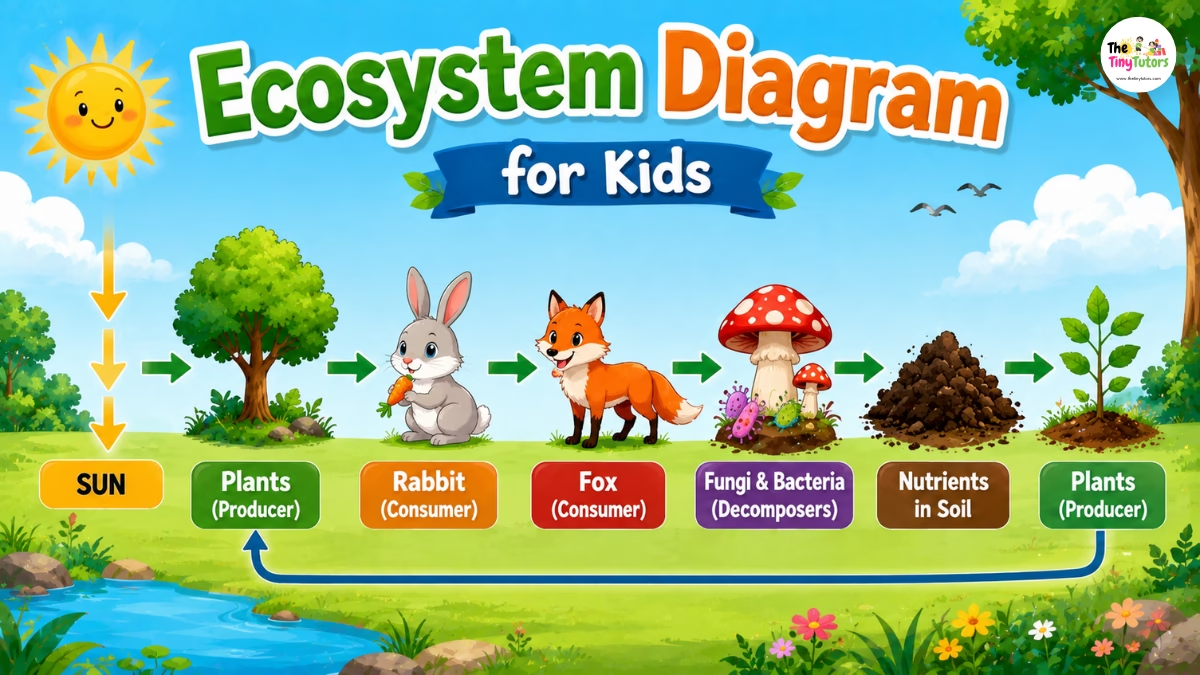
📊 Ecosystem Diagram for Kids
This simple Ecosystem for Kids diagram shows how sunlight, plants, animals, and decomposers are connected.
Types of Ecosystem for Kids 🌍
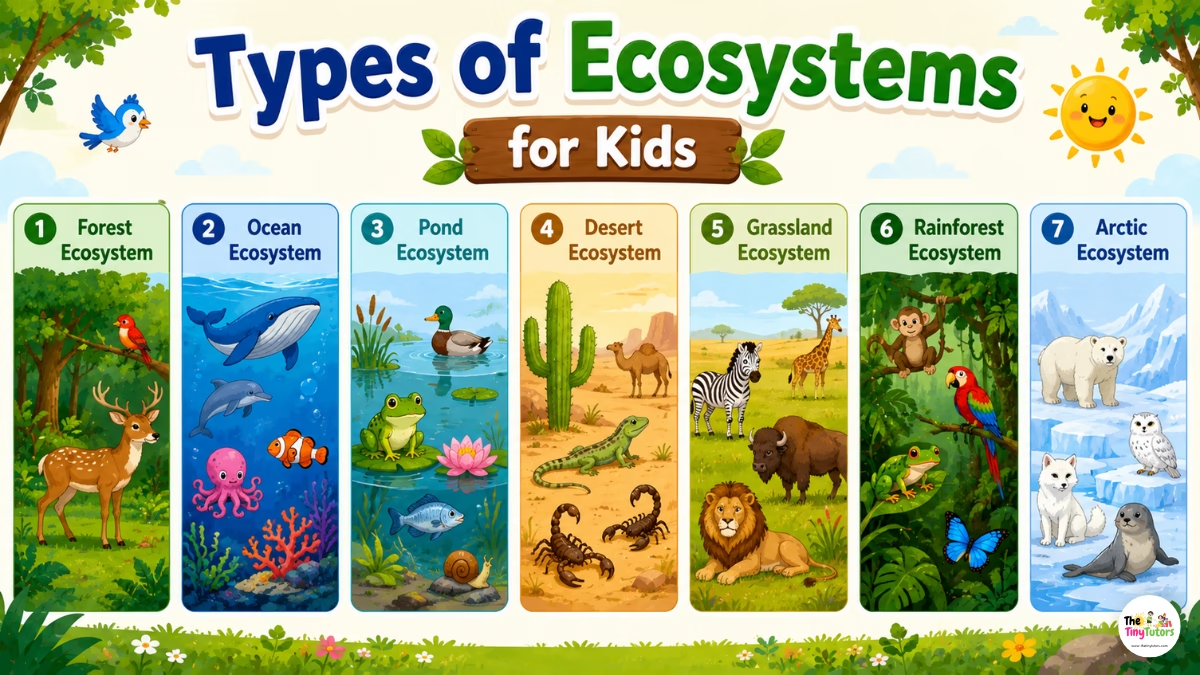
One of the most exciting parts of learning about an Ecosystem for Kids is discovering that our planet has many different ecosystems. Each one has its own weather, plants, animals, and unique way of supporting life.
These are the main types of ecosystems for kids that every young learner should know.
🌳 1. Forest Ecosystem
A forest ecosystem is a place filled with many trees, shrubs, insects, birds, and wild animals.
Example: A deer eating leaves while birds build nests in tall trees.
Interesting Fact: Forests produce much of the oxygen that helps people and animals breathe.
🌊 2. Ocean Ecosystem
The ocean ecosystem is the largest ecosystem on Earth. It covers over 70% of our planet.
It is home to:
🐋 Whales 🐬 Dolphins 🐠 Fish 🦀 Crabs 🐙 Octopuses 🪸 Coral reefs
Example: A clownfish living safely among sea anemones.
🐟 3. Pond Ecosystem
A pond ecosystem is a small freshwater habitat where many living things depend on clean water.
You may find:
🐸 Frogs 🦆 Ducks 🐟 Fish 🌿 Water plants 🐌 Snails
Example: A frog catching insects near lily pads.
🏜️ 4. Desert Ecosystem
The desert ecosystem receives very little rain.
Plants and animals have special adaptations that help them survive.
Common examples include:
🌵 Cactus 🦎 Lizards 🐍 Snakes 🦂 Scorpions 🐪 Camels
Even though deserts look empty, they are full of amazing life.
🌾 5. Grassland Ecosystem
A grassland ecosystem has wide open fields with very few trees.
Many fast-running animals live here because there is plenty of space.
Examples include:
🦓 Zebras 🦬 Bison 🦁 Lions 🦒 Giraffes
Grasslands provide food for many plant-eating animals.
🌧️ 6. Rainforest Ecosystem
The rainforest ecosystem is warm, wet, and full of life.
It contains thousands of plant and animal species.
Examples include:
🐒 Monkeys 🦜 Parrots 🐸 Tree frogs 🦋 Butterflies
Rainforests are among the richest ecosystems in the world.
❄️ 7. Arctic Ecosystem
The arctic ecosystem is one of the coldest places on Earth.
Animals living here have thick fur or layers of fat to stay warm.
Examples include:
🐻❄️ Polar bears 🦊 Arctic foxes 🦭 Seals 🦉 Snowy owls
Even icy regions support many living things.
📋 Different Ecosystems Around the World
| Ecosystem | Weather | Example Living Things |
|---|---|---|
| Forest | Mild to rainy | Deer, trees, owls |
| Ocean | Saltwater | Fish, whales, coral |
| Pond | Freshwater | Frogs, ducks |
| Desert | Hot and dry | Cactus, camels |
| Grassland | Sunny | Zebras, lions |
| Rainforest | Warm and wet | Monkeys, parrots |
| Arctic | Very cold | Polar bears, seals |
These are some of the most common different types of ecosystems for kids found around the world.
Every Ecosystem for Kids is unique because each one has its own plants, animals, weather, and natural features.
Food Chain in an Ecosystem 🍃
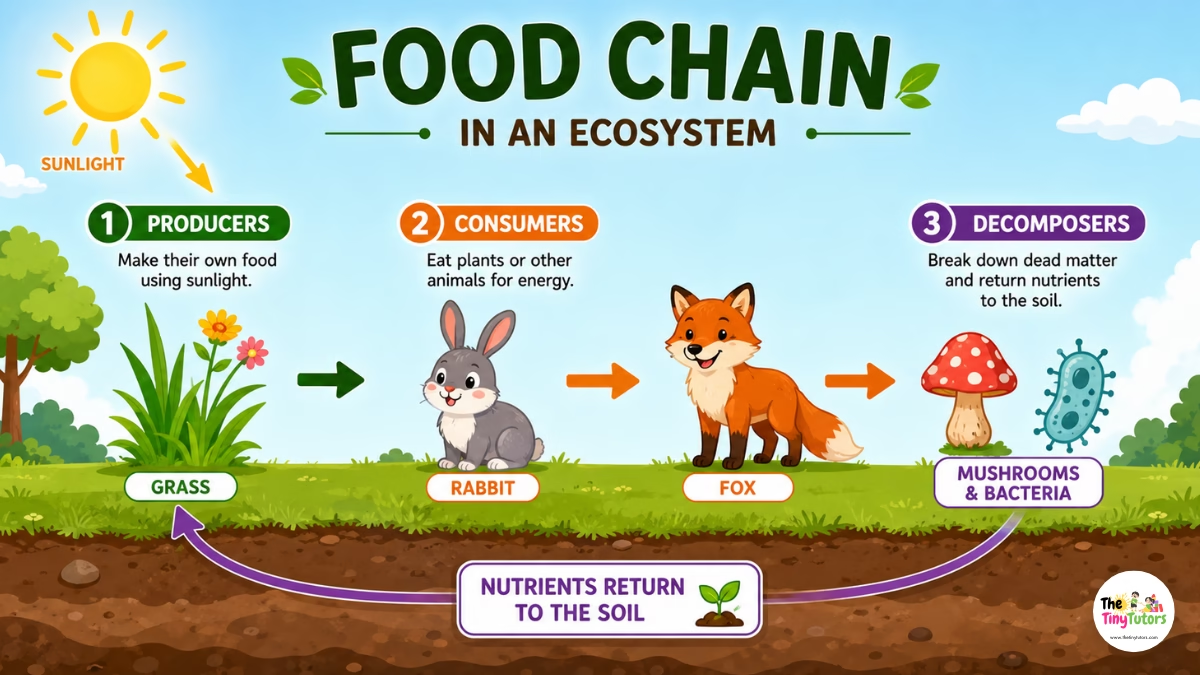
A food chain shows how energy moves from one living thing to another.
It begins with sunlight and ends with decomposers that recycle nutrients back into nature.
🌿 Want to learn more about how food chains work? Explore our complete Food Chain for Kids guide for easy explanations, examples, and fun activities before continuing!
🌞 Step 1 – Producers
Producers make their own food using sunlight.
Examples:
- 🌿 Grass
- 🌳 Trees
- 🌼 Flowers
- 🌾 Plants
Without producers, no other living thing could survive.
🐇 Step 2 – Consumers
Consumers cannot make their own food.
They eat plants, animals, or both.
Examples include:
- Rabbits
- Deer
- Birds
- Foxes
- Tigers
- Humans
Consumers depend on producers for energy.
🍄 Step 3 – Decomposers
After plants and animals die, decomposers such as fungi and bacteria help turn them into nutrients that enrich the soil.
Examples:
- 🍄 Mushrooms
- 🦠 Bacteria
- Tiny fungi
These decomposers return nutrients to the soil so new plants can grow.
🌿 Simple Food Chain Example
A simple food chain looks like this:
Sun → Grass → Rabbit → Fox → Decomposers
Each step transfers energy to the next living thing.
This simple example helps children understand how an Ecosystem for Kids stays balanced.
Food Web vs Food Chain 🕸️
Many children think animals eat only one kind of food.
In reality, most animals eat many different plants and animals.
Because many living things eat more than one type of food, nature forms a food web instead of just a single food chain.
| Food Chain | Food Web |
|---|---|
| One path of energy | Many connected food chains |
| Simple to understand | More realistic |
| Few living things | Many living things |
| Straight line | Network of connections |
Why Is a Food Web Important?
A food web helps keep nature balanced.
If one animal disappears, many other animals can be affected.
Everything in nature is connected.
Habitat vs Ecosystem 🏡🌎
Many students confuse a habitat with an ecosystem.
They are related but not exactly the same.
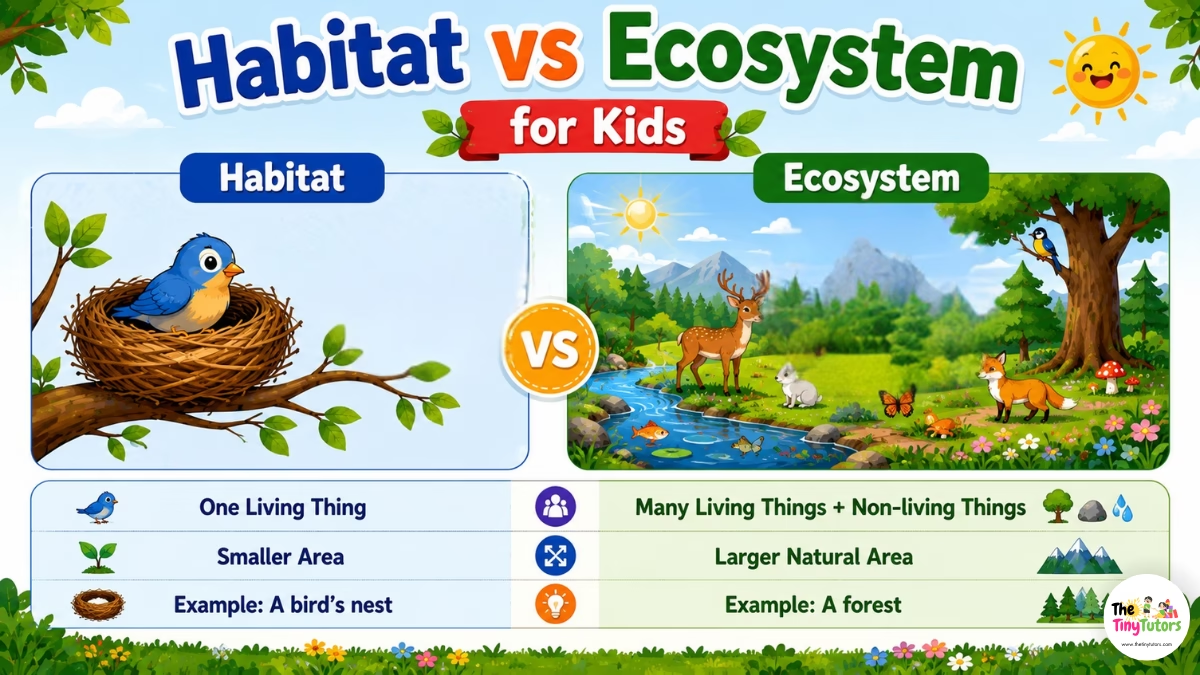
| Habitat | Ecosystem |
|---|---|
| Home of one living thing | Home of many living things and non-living things |
| Smaller area | Larger natural system |
| Example: A bird’s nest | Example: A forest |
Easy Example
Imagine a forest.
🪺 A squirrel’s tree is its habitat. 🌳 The entire forest, including trees, birds, insects, soil, water, sunlight, and air, forms an ecosystem.
Understanding this difference helps children better appreciate how nature works together.
🌎 Why Are Ecosystems Important?
Every Ecosystem for Kids plays an important role in keeping nature healthy and balanced.
Healthy ecosystems make life possible for people, plants, and animals. They give us the things we need every day.
Want to explore more amazing facts about nature? National Geographic Kids offers fun articles and activities about ecosystems and wildlife.
🌬️ Clean Air
Plants and trees produce oxygen, giving people and animals the fresh air they need to live. They also absorb carbon dioxide from the air.
💧 Clean Water
Forests, wetlands, rivers, and lakes naturally filter water, making it cleaner for living things.
💧 Clean water is an important part of every ecosystem. To learn how water moves through nature, read our Water Cycle for Kids guide.
🍎 Food for Everyone
Plants grow fruits, vegetables, grains, and nuts. Animals also depend on healthy ecosystems to find food.
🏡 Homes for Living Things
Every ecosystem provides shelter for different animals. Birds build nests, rabbits dig burrows, and fish live in rivers, ponds, and oceans.
🌍 A Healthy Planet
Healthy ecosystems help control temperature, support wildlife, recycle nutrients, and keep nature balanced.
🌟 Did You Know? Even tiny insects like bees help ecosystems by pollinating flowers, allowing many plants to produce fruits and seeds.
⚠️ What Can Harm an Ecosystem?
An Ecosystem for Kids can be damaged when people do not care for nature.
🏭 Pollution
Smoke, dirty water, and litter make it difficult for plants and animals to survive.
🌳 Deforestation
Cutting down too many trees removes homes for birds, insects, and wild animals.
🛍️ Plastic Waste
Plastic can end up in rivers and oceans, where it may harm turtles, fish, and seabirds.
🌡️ Climate Change
Changes in Earth’s climate can affect weather, water, plants, and animal habitats around the world.
Kids who want to learn more about Earth’s climate in a simple way can explore NASA Climate Kids.
Every small action can make a big difference when we protect nature.
🌱 How Kids Can Help Protect Ecosystems
Every child can help protect an Ecosystem for Kids through simple daily habits.
Here are some easy ways kids can help protect nature every day.
- 💧 Save water by turning off the tap.
- 🌳 Plant a tree or care for a small garden.
- ♻️ Recycle paper, plastic, and glass.
- 🚯 Never throw trash on the ground.
- 🐦 Respect wildlife and avoid disturbing animal homes.
- 🛍️ Use reusable water bottles and bags whenever possible.
Every good habit helps create a cleaner and healthier world.
⭐ Amazing Ecosystem Facts for Kids
These fun facts make learning about an Ecosystem for Kids even more exciting. Here are some interesting facts!
- 🌍 Earth has many different ecosystems, from deserts to oceans.
- 🌳 A single tree can provide food and shelter for hundreds of living things.
- 🪸 Coral reefs are often called the “rainforests of the sea” because they support thousands of marine species.
- 🍄 Fungi help recycle dead plants and animals into healthy soil.
- 🐝 Bees help many flowers grow by carrying pollen from one flower to another.
- 🐧 Not every cold place is covered with ice all year.
- 🐜 Tiny insects play a big role in keeping ecosystems healthy.
- 🌊 Oceans produce a large share of the oxygen we breathe through tiny marine plants.
- 🌱 Healthy soil is full of living organisms that help plants grow.
- 🦉 Every living thing has an important role, no matter how small it is.
- 🌎 Some ecosystems are thousands of years old.
- 🌼 Even your school garden can be a small ecosystem!
🎨 Fun Ecosystem Activity for Kids
Learning becomes more exciting when children explore nature.
Activity 1: Build a Mini Ecosystem
You will need:
A clear glass jar Small stones Soil Tiny plants A little water
Steps:
Place stones at the bottom. Add a layer of soil. Plant small plants. Water gently. Place the jar near sunlight.
Watch how your mini ecosystem changes over the next few weeks!
Activity 2: Nature Scavenger Hunt
Go outside and see if you can find:
✅ A leaf
✅ A bird
✅ An insect
✅ A flower
✅ A rock
✅ A tree
Talk about how each one helps the ecosystem.
Activity 3: Draw Your Favorite Ecosystem
Choose one ecosystem, such as:
🌳 Forest 🌊 Ocean 🏜️ Desert ❄️ Arctic 🌾 Grassland
Draw the plants, animals, and non-living things that belong there.
📝 Ecosystem Quiz for Kids
Test what you’ve learned!
1. What is an ecosystem?
A) A toy
B) A community of living and non-living things ✅
C) A building
D) A road
2. Which of these is a producer?
A) Rabbit
B) Fox
C) Grass ✅
D) Eagle
3. Which is NOT a non-living thing?
A) Water
B) Rock
C) Tree ✅
D) Air
4. What is the home of one animal called?
A) Habitat ✅
B) Food web
C) Desert
D) Pond
5. In a simple food chain, which comes after grass?
A) Fox
B) Rabbit ✅
C) Mushroom
D) Eagle
6. Which group makes its own food using sunlight?
A) Consumers
B) Producers ✅
C) Decomposers
D) Predators
🌟 Quick Recap
Here’s a quick review of everything you’ve learned about Ecosystem for Kids.
✅ An ecosystem is a natural place where living and non-living things depend on each other to support life.
✅ Every ecosystem has two main parts: biotic factors (living things) and abiotic factors (non-living things).
✅ Plants, animals, fungi, and tiny microorganisms each have a special role in keeping ecosystems healthy.
✅ The Sun is the main source of energy, and a food chain shows how that energy moves through living things.
✅ Forests, oceans, ponds, deserts, grasslands, rainforests, and Arctic regions are all different ecosystems with unique plants and animals.
✅ Healthy ecosystems provide clean air, fresh water, food, and safe homes for countless living things.
✅ Small everyday actions—such as saving water, recycling, planting trees, and respecting wildlife—can help protect nature for the future. 🌍💚
❓ Frequently Asked Questions
Q1: What is an ecosystem for kids?
An ecosystem is a place where living things like plants and animals interact with non-living things such as air, water, soil, and sunlight to support life.
Q2: What are the main parts of an ecosystem?
The two main parts are biotic factors (living things) and abiotic factors (non-living things).
Q3: What are the different types of ecosystems?
Some common ecosystems include forests, oceans, ponds, deserts, grasslands, rainforests, and Arctic regions.
Q4: Why is an ecosystem important?
Ecosystems provide clean air, clean water, food, homes for wildlife, and help keep nature balanced.
Q5: What is the difference between a habitat and an ecosystem?
A habitat is the home of one living thing, while an ecosystem includes many living and non-living things working together.
Q6: How can kids help protect ecosystems?
Kids can save water, recycle, plant trees, reduce plastic waste, and care for animals and nature.
🌟 Conclusion
Nature is full of amazing connections, and every plant, animal, insect, fungus, and tiny microorganism has an important role. By understanding Ecosystem for Kids, children can learn how living things depend on one another and why protecting nature matters.
Keep exploring, asking questions, and observing the world around you. A walk in the park, a visit to a pond, or even a small garden can become an exciting ecosystem lesson for kids. Every time you care for nature, you are helping create a healthier planet for future generations. 🌍💚