
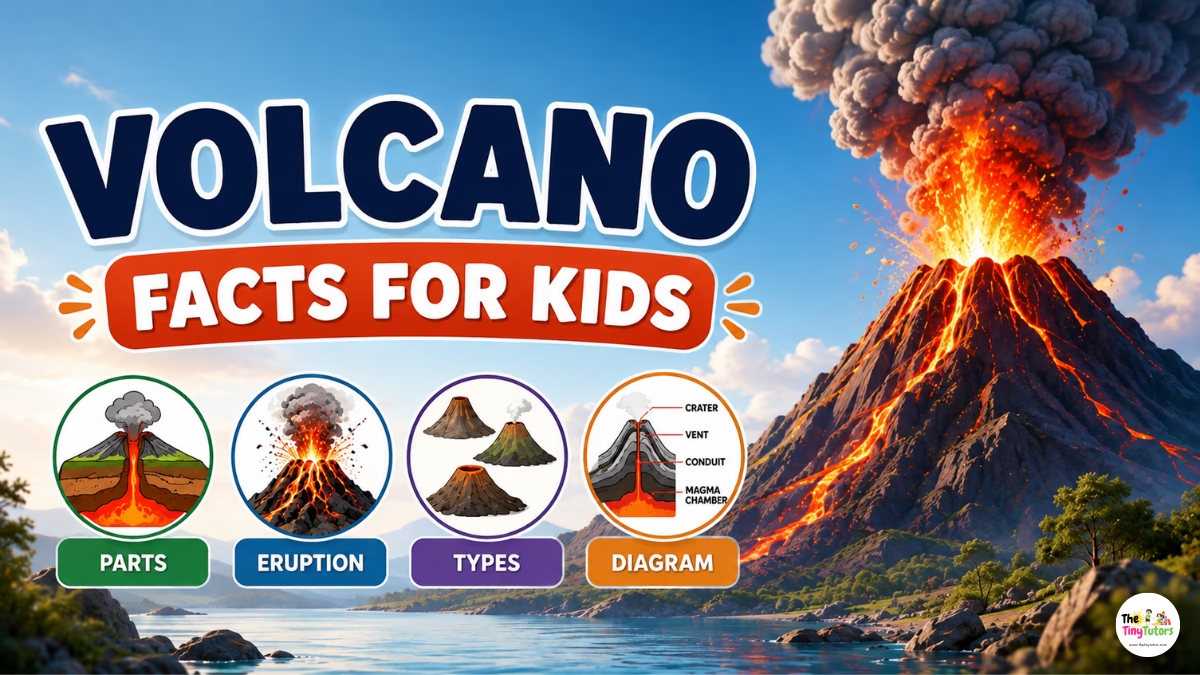
🌋 Welcome to our big guide packed with exciting volcano facts for kids! Have you ever seen a mountain that suddenly shoots out fire, smoke, and glowing red rock? That amazing (and a little scary) mountain is called a volcano, and it’s one of the most powerful forces on our planet.
- What Is a Volcano?
- Parts of a Volcano
- How Do Volcanoes Form?
- Magma vs Lava: What's the Difference?
- How Do Volcanoes Erupt?
- Types of Volcanoes
- Active, Dormant & Extinct Volcanoes
- Famous Volcanoes Around the World
- 10 Volcano Facts for Kids
- Easy Volcano Experiment You Can Try at Home
- FAQs About Volcanoes for Kids
- Wrap-Up: Why Volcanoes Are Amazing 🌋
In this guide, kids, parents, teachers, and homeschooling families can explore Volcano Facts for Kids in simple, easy-to-understand language — what a volcano is, how it forms, why it erupts, the different types of volcanoes, some famous volcanoes around the world, and even a safe experiment you can try at home.
These volcano facts for kids are written to match how children learn best — starting with simple ideas and slowly building up to more exciting details. Whether you’re a curious kid, a parent looking for a bedtime science story, or a teacher planning a fun classroom lesson, this guide has something for everyone. Let’s dive in! 🔥
What Is a Volcano?
A volcano is a natural opening in the Earth’s outer layer, called the crust, that lets super-hot liquid rock and gases push their way out from deep underground. This hot melted rock is called magma while it is still inside the Earth.
When a volcano becomes active, magma pushes its way up and out through the opening. Sometimes it flows out gently, and sometimes it explodes with great force. Either way, it’s one of nature’s most incredible shows.
💡 Quick Fact: Some volcanoes can stay quiet for hundreds of years before suddenly waking up again!
Volcanoes might sound scary, but they actually play an important role on our planet. Over millions of years, volcanic eruptions have helped form new land, mountains, and even entire islands. They also release gases that have shaped the air we breathe today. That’s why scientists study volcanoes so closely — to understand both their power and their purpose.
Parts of a Volcano
Before learning how volcanoes work, it helps to know their basic parts. Think of a volcano like a straw connected to a bottle deep underground.
| Part | What It Does |
|---|---|
| 🕳️ Crater | The bowl-shaped opening at the very top of the volcano |
| 🚪 Vent | The opening through which lava, ash, and gases escape |
| 🔥 Magma Chamber | The underground pool where melted rock collects before an eruption |
| 🧵 Conduit (Pipe) | The long tube connecting the magma chamber to the vent |
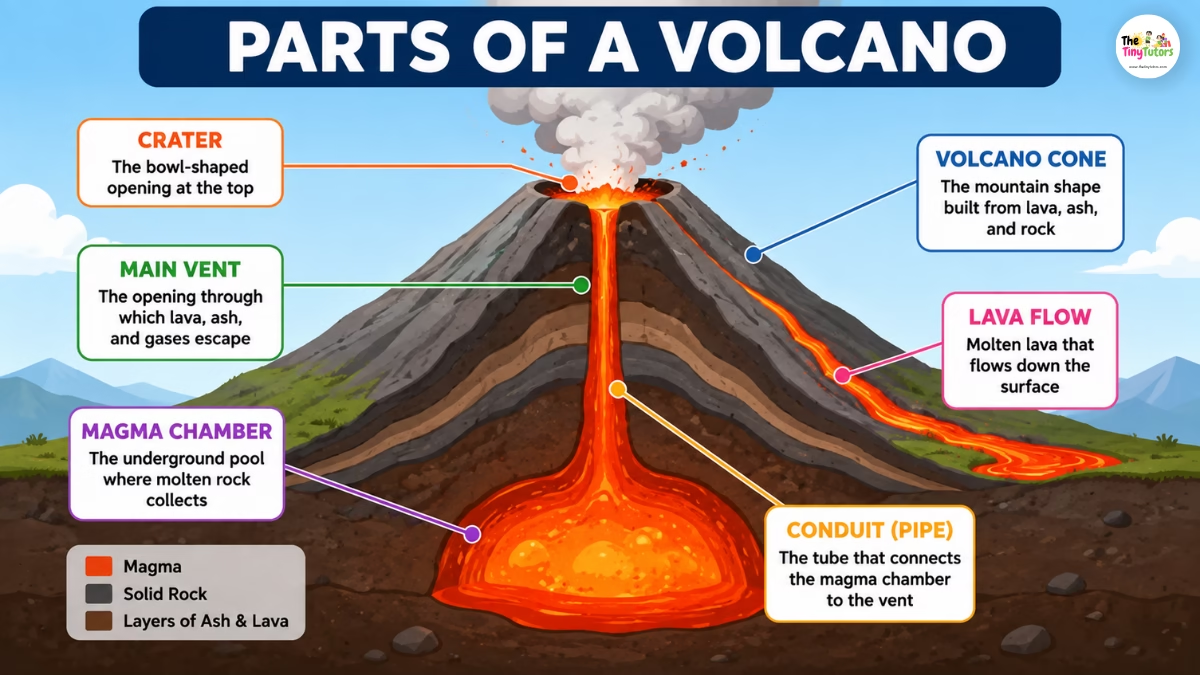
Once kids understand these four parts of a volcano, the rest of this guide becomes much easier to follow!
How Do Volcanoes Form?
Volcanoes don’t appear overnight — they form over a very long time because of what’s happening deep inside the Earth.
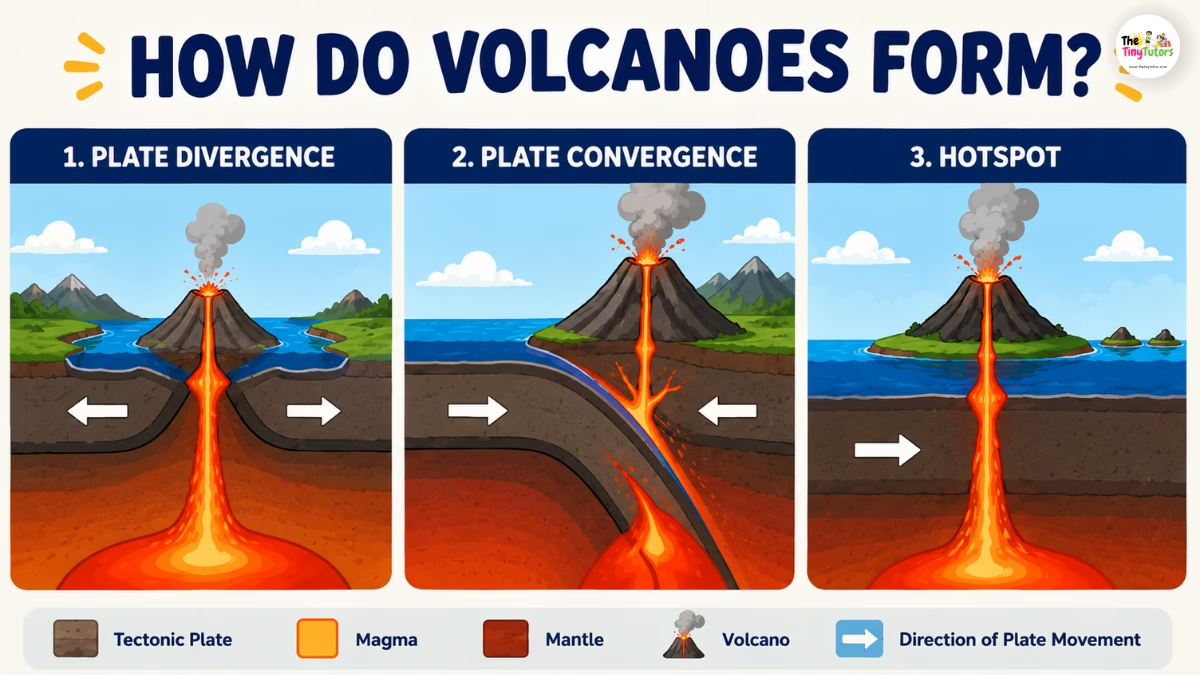
Our planet’s outer layer is broken into huge puzzle pieces called tectonic plates. These plates float slowly on the hot, soft rock beneath them. Volcanoes usually form in two main ways:
- At plate boundaries: When two tectonic plates pull apart or push together, magma can find a path up to the surface.
- At hotspots: Sometimes magma pushes straight through the middle of a plate instead of at its edges. This is called a hotspot, and it can even build volcanoes in the middle of the ocean, like the Hawaiian Islands.
🌍 Many of the world’s volcanoes sit along a huge, horseshoe-shaped zone around the Pacific Ocean called the Ring of Fire, where several tectonic plates meet.
Countries like Japan, Indonesia, and the Philippines, along with parts of the west coast of North and South America, all sit along this zone — which is why they experience more volcanoes and earthquakes than other places on Earth.
Magma vs Lava: What’s the Difference?
Kids often mix up these two words, but the difference is actually simple!
| Term | Where It’s Found |
|---|---|
| Magma | Hot melted rock while it’s still underground |
| Lava | The same hot melted rock once it reaches the Earth’s surface |
So the answer to what is the difference between magma and lava is really just location — magma becomes lava the moment it flows out of the volcano!
This is an easy piece of Volcano Facts for Kids to remember: magma is underground, lava is above ground.
How Do Volcanoes Erupt?
A volcanic eruption happens when pressure builds up inside the Earth and finally needs to escape.
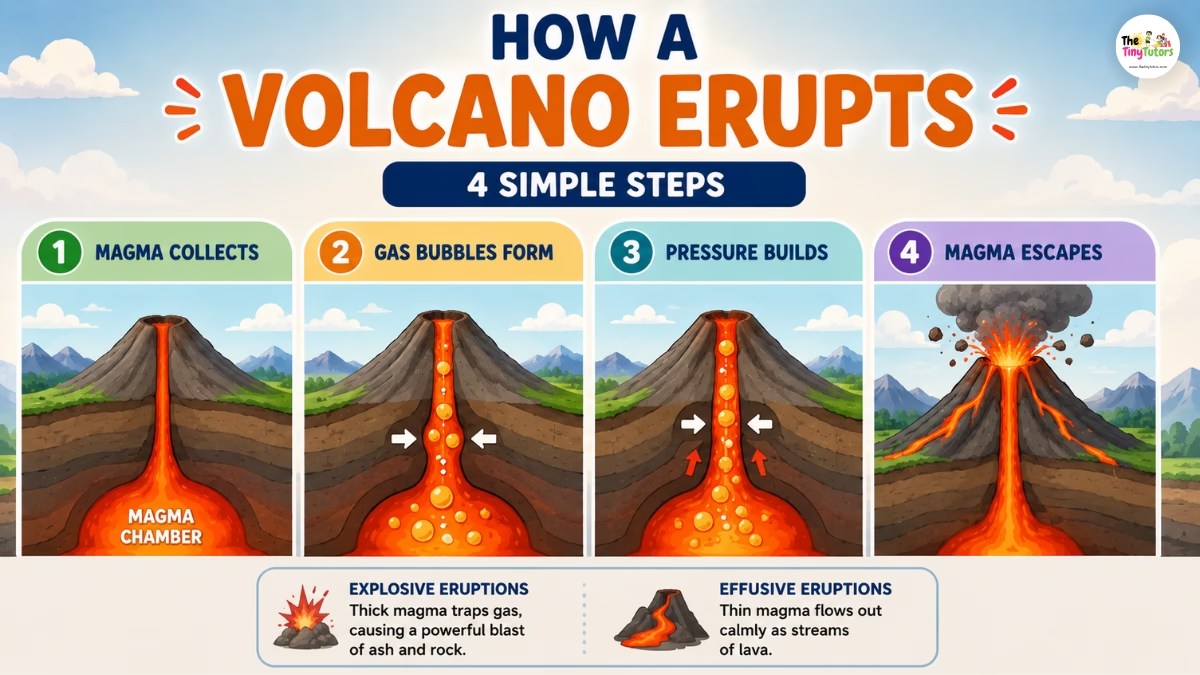
Here’s what happens, step by step:
- Magma collects inside the magma chamber.
- Gas bubbles form inside the magma, just like bubbles in a soda bottle.
- Pressure keeps building until it becomes too strong to hold back.
- The magma is pushed up through the conduit and out of the vent.
Not every eruption looks the same:
- 💥 Explosive eruptions happen when thick magma traps gas, causing a sudden, powerful blast of ash and rock.
- 🌊 Effusive eruptions happen when thinner magma flows out calmly as streams of lava.
Types of Volcanoes
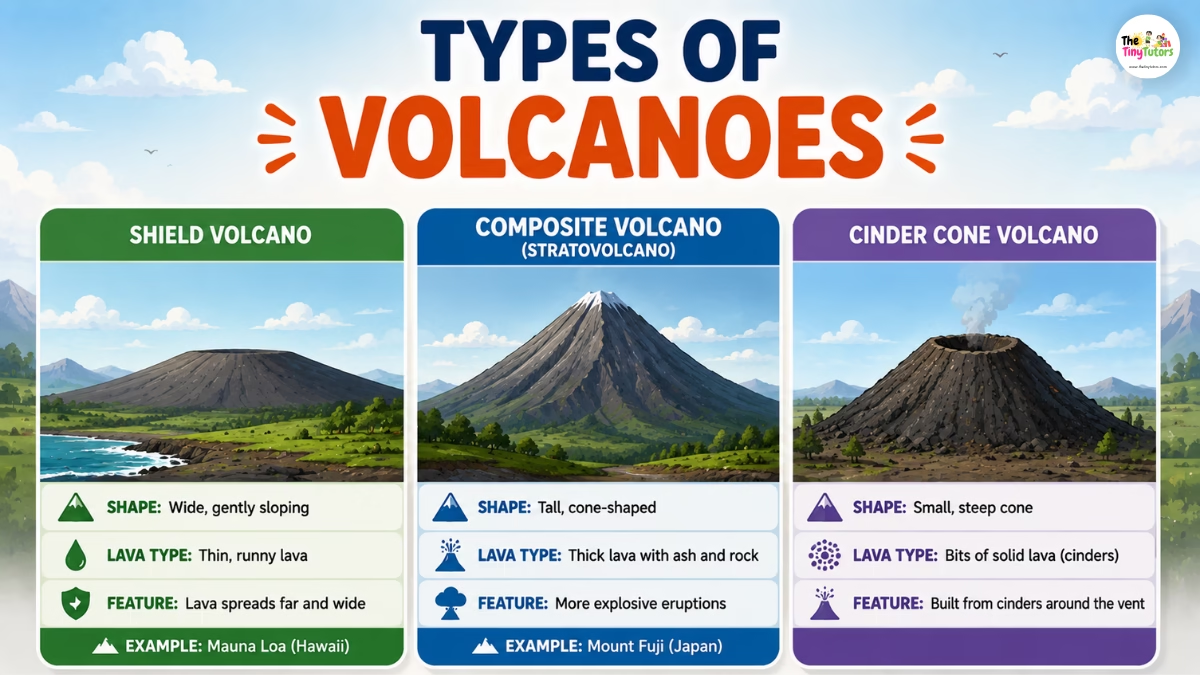
Volcanoes come in different shapes, depending on how thick their lava is and how they erupt.
Shield Volcanoes
These have wide, gently sloping sides, shaped like a warrior’s shield. They form from thin, runny lava that spreads out easily. Mauna Loa in Hawaii is a great example.
Composite Volcanoes (Stratovolcanoes)
These are tall, cone-shaped mountains built from layers of hardened lava, ash, and rock. They tend to have more explosive eruptions. Mount Fuji in Japan is a well-known composite volcano.
Cinder Cone Volcanoes
These are the smallest type, built from small bits of hardened lava called cinders that pile up around the vent, forming a steep little cone.
Learning these types of volcanoes helps kids understand why some volcanoes look like tall, pointy mountains while others look wide and flat.
Active, Dormant & Extinct Volcanoes
Not all volcanoes behave the same way. Scientists group them by how likely they are to erupt.
| Status | What It Means |
|---|---|
| 🔴 Active | Currently erupting, or expected to erupt again soon |
| 🟡 Dormant | “Sleeping” — hasn’t erupted recently but could wake up in the future |
| ⚪ Extinct | Not expected to ever erupt again |
This simple volcano definition for kids helps children see that volcanoes aren’t always dangerous — many of them stay peaceful for most of their lives!
Famous Volcanoes Around the World
Here are five famous volcanoes that kids around the world love learning about:
| Volcano | Location | Fun Highlight |
|---|---|---|
| 🗻 Mount Fuji | Japan | Japan’s tallest mountain and a sacred symbol |
| 🌋 Mount Vesuvius | Italy | Famous for the eruption that buried the ancient city of Pompeii |
| 💥 Krakatoa | Indonesia | Known for one of the loudest eruptions ever recorded |
| 🌺 Mauna Loa | Hawaii, USA | One of the largest active volcanoes on Earth |
| 🏝️ Barren Island | India | India’s only confirmed active volcano, found in the Andaman Islands |
10 Volcano Facts for Kids
Ready for some more exciting Volcano Facts for Kids? 🌋 Here are some facts that show just how amazing volcanic activity can be:
- 🔥 Lava can reach temperatures of more than 1,000°C, depending on its composition.
- 🌊 Many volcanoes are found beneath the ocean, where volcanic activity can create new rock and underwater mountains. Kids can explore the different zones of the ocean to learn more about what lies beneath the surface.
- 🌋 Some underwater volcanoes grow so big over time that they rise above the ocean and become brand-new islands.
- 🌱 Volcanic materials can break down into nutrient-rich soils that support plant growth.
- 🕰️ Some volcanoes can remain quiet for hundreds or even thousands of years before erupting again.
- ❄️ Volcanoes can exist in icy regions, including parts of Iceland and Antarctica.
- 🌅 Volcanic particles in the atmosphere can sometimes contribute to colorful sunsets.
- 🐌 Lava can move as slowly as a crawl or as fast as a car, depending on how thick it is.
- 🧪 Obsidian is a natural volcanic glass that forms when certain lava cools quickly.
- 🌍 Volcanic eruptions have helped create and reshape land throughout Earth’s history.
These simple facts are great for a classroom discussion, science notebook, or quick Volcano Facts for Kids review before a quiz.
Easy Volcano Experiment You Can Try at Home
This classic volcano experiment for kids is a favorite among parents, teachers, and homeschooling families because it’s safe, simple, and super fun!
What You’ll Need:
- An empty plastic bottle
- Baking soda (2 tablespoons)
- Vinegar (1/2 cup)
- Red or orange food coloring, just enough to add a little color
- A tray or baking sheet
- Modeling clay or dirt (optional, to shape a volcano cone around the bottle)
Steps:
- Put the empty plastic bottle right in the middle of your tray.
- If using clay or dirt, shape it around the bottle like a volcano cone, keeping the top opening clear.
- Add the baking soda into the bottle using a small funnel or spoon.
- Stir a little red or orange food coloring into the vinegar.
- Pour the colored vinegar into the bottle and step back to watch it erupt! 🌋
This easy how to make a volcano for kids activity shows a simplified version of gas pressure building up and escaping — the same basic idea behind a real eruption!
👩🏫 Parent & Teacher Tip: Always do this experiment on a tray to avoid mess, and supervise young children throughout the activity.
FAQs About Volcanoes for Kids
Q1: Are there volcanoes on other planets?
Yes! Mars, Venus, and even some moons in our solar system have volcanoes. Mars is home to Olympus Mons, the largest known volcano in the solar system.
Q2: Can volcanoes erupt underwater?
Yes, many volcanoes erupt underwater. In fact, most of Earth’s volcanic activity happens beneath the ocean, sometimes forming new underwater mountains or islands over time.
Q3: How many active volcanoes are there on Earth today?
Scientists estimate there are around 1,500 potentially active volcanoes on land, plus many more hidden beneath the ocean.
Q4: Is it safe for people to live near a volcano?
Many people do live near volcanoes because volcanic soil is very fertile for farming. They follow safety guidelines and warning systems set up by scientists to stay safe.
Q5: What should you do if a volcano erupts nearby?
Always listen to trusted adults, teachers, or local authorities. Move away from the area calmly, cover your nose and mouth if there’s ash in the air, and follow official safety instructions.
Q6: Can one volcano erupt more than once?
Yes! Many volcanoes can erupt multiple times, sometimes over hundreds or even thousands of years. This is one of the useful Volcano Facts for Kids to remember when learning how volcanoes behave.
Wrap-Up: Why Volcanoes Are Amazing 🌋
We hope this guide helped make learning about volcanoes simple and enjoyable! From how volcanoes form deep underground, to how they erupt, to famous volcanoes and a safe experiment you can try at home — these volcano facts for kids show just how powerful and fascinating our planet really is.
The more kids learn about volcano facts for kids like these, the more they start to see Earth as a living, changing planet — full of mountains, fire, and mystery still waiting to be explored.
Facts checked using trusted sources like NASA Space Place and the U.S. Geological Survey.
Want to keep exploring the wonders of Earth? Continue learning with our guide to Types of Landscapes for Kids to discover how natural forces shape mountains, valleys, coastlines, and other landforms.