
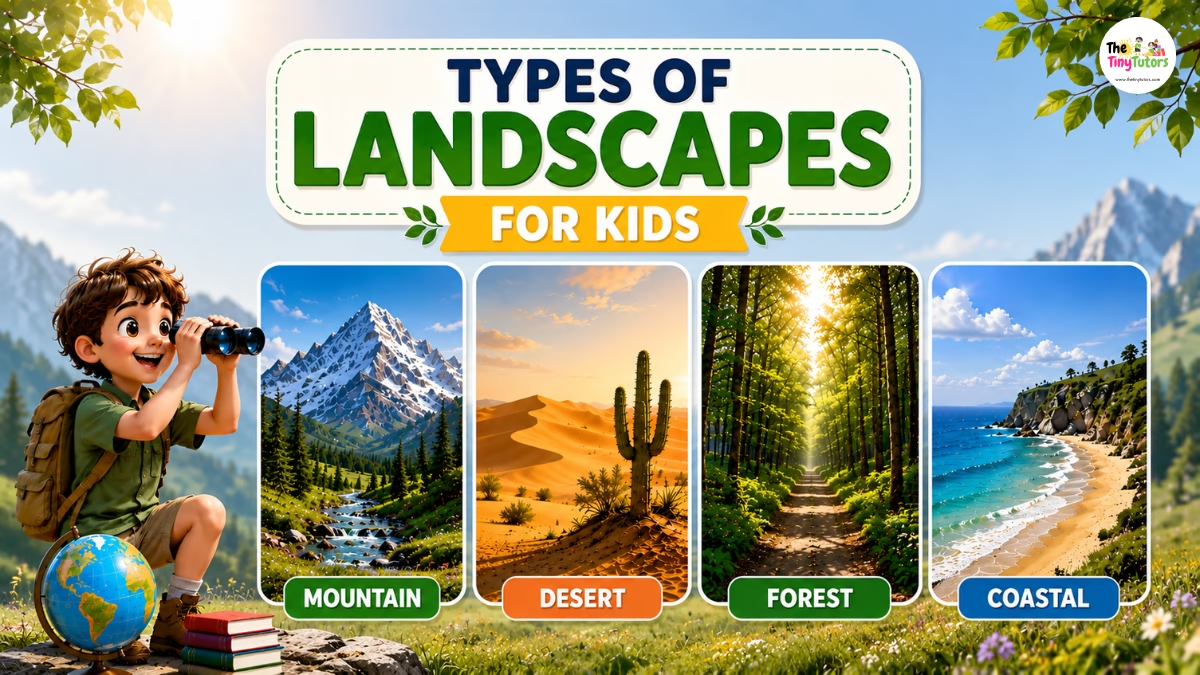
Types of Landscapes help us understand why different places on Earth look so different. 🌍 Imagine standing on a snowy mountain, walking across a sandy desert, exploring a green forest, or looking at waves along a beach. Each place has its own special features.
- What Is a Landscape?
- Types of Natural Landscapes
- Human-Shaped Landscapes
- Landscape vs. Landform: What’s the Difference?
- How Are Landscapes Formed?
- Examples of Landscapes Around the World
- How to Identify Different Landscapes
- Fun Landscape Activities for Kids
- Frequently Asked Questions About Landscapes
- Final Learning Note
But what exactly is a landscape? A landscape is the way an area looks, including its land, water, plants, rocks, and sometimes things people have built. Some landscapes are mostly natural, while others are shaped by people.
In this guide, kids will explore common natural and human-made landscapes, learn how landscapes are formed, and discover the difference between a landscape and a landform. You’ll also find examples from around the world, easy identification tips, fun facts, and activities.
🌟 Ready to become a geography explorer? Let’s discover the amazing landscapes of our planet!
What Is a Landscape?
When we learn about Types of Landscapes, we explore how different areas of Earth look and what features make them unique. It can include the shape of the land, plants, water, rocks, soil, and things people have built.
Imagine standing near a mountain. You might see a rocky peak, trees, a stream, clouds, and a village. Together, these features create the landscape around you.
What Makes Up a Landscape?
A landscape can contain many features:
- Landforms, such as mountains, hills, valleys, and plateaus
- Water, such as rivers, lakes, oceans, and ponds
- Plants and vegetation
- Rocks and soil
- Wildlife and habitats
- Buildings, roads, farms, bridges, and other human-made features
Not every landscape contains all of these features, which is part of what makes places different.
Plants and vegetation are important parts of many landscapes. Kids can explore plant names for kids to learn about different plants they may see in nature.
Natural Features
Natural features are made by nature rather than built by people. Mountains, rivers, forests, beaches, and glaciers are examples. They can change over time because of water, wind, ice, weathering, erosion, and movements inside Earth.
Human-Made Features
Human-made features are things people create or change, such as roads, houses, farms, dams, bridges, parks, and buildings.
So, when you look at a picture of a place, do not look only at the land. Look at everything you can see! 👀
Types of Natural Landscapes
Types of Landscapes found in nature come in many forms. There is not one universal list that every geography book uses as the official set of natural landscape types. The sections below introduce common examples that help children understand how different parts of Earth can look.
Mountain Landscapes
Mountain landscapes have high, steep areas of land that rise above the surrounding area. Some mountains have pointed peaks, while others have rounded tops. They may have rocky slopes, forests, snow, glaciers, or streams.
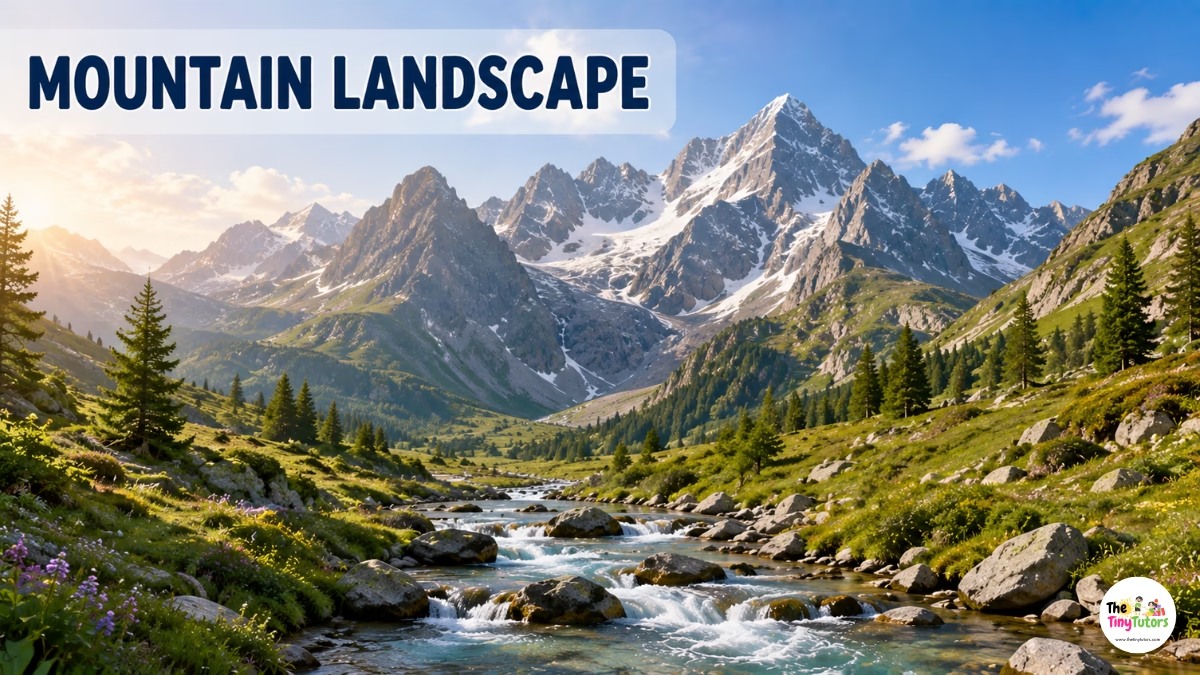
How can kids identify one? Looking at the height and shape of the land can help kids compare different types of landscapes.
Examples: The Himalayas in Asia and the Andes in South America are major mountain regions.
🌟 Fun fact: Mountains can affect weather by forcing moist air upward, which can lead to clouds and rain or snow.
Desert Landscapes
Types of Landscapes include deserts, which receive very little precipitation. Many are hot, but some can be cold.
Hot deserts may have sand dunes, rocky ground, dry valleys, and plants such as cacti. Cold deserts can have very low temperatures and may contain snow or ice.
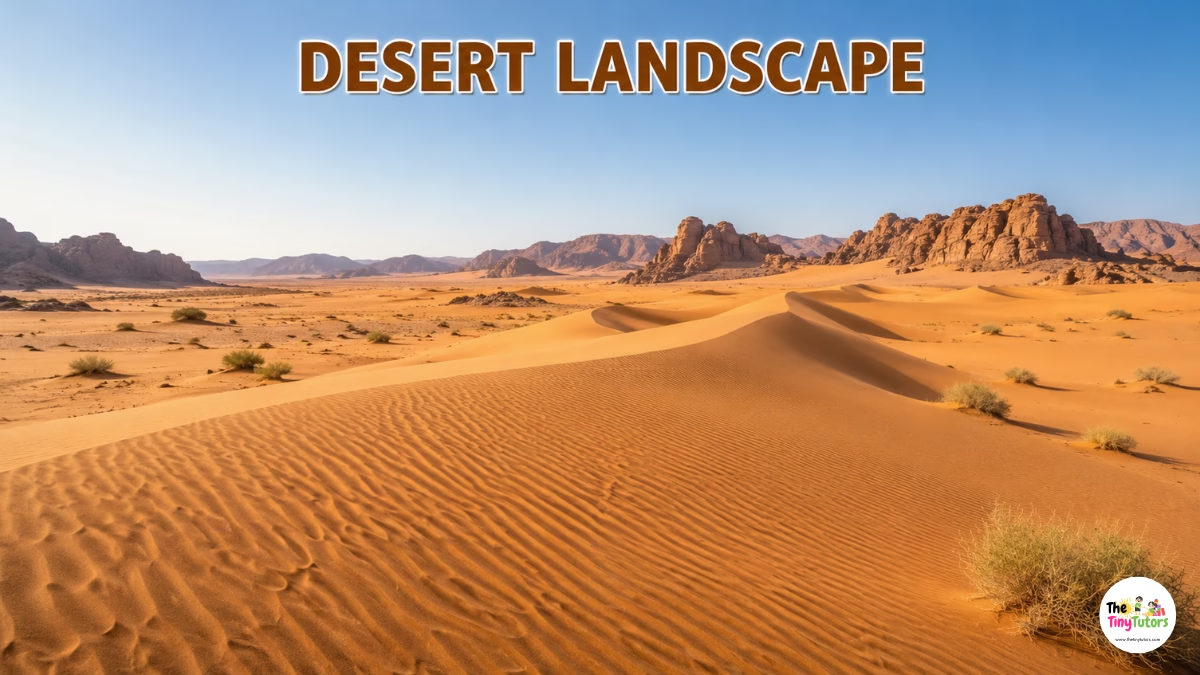
How can kids identify one? Look for very dry conditions, little vegetation, and lots of sand, rock, or bare ground. These clues can help kids recognize different types of landscapes more easily.
Examples: The Sahara is a huge hot desert in Africa. The Atacama Desert in South America is another extremely dry desert.
🌟 Think about it: A desert does not have to be a sea of sand. Dry, rocky, or icy places can also be deserts.
Forest Landscapes
Forest landscapes are areas where trees and other plants cover much of the land. Forests can look very different depending on their climate.
Tropical forests are warm and often receive lots of rain. Temperate forests have noticeable seasons. Boreal forests, also called taiga, are found in colder parts of the Northern Hemisphere and contain many evergreen trees.
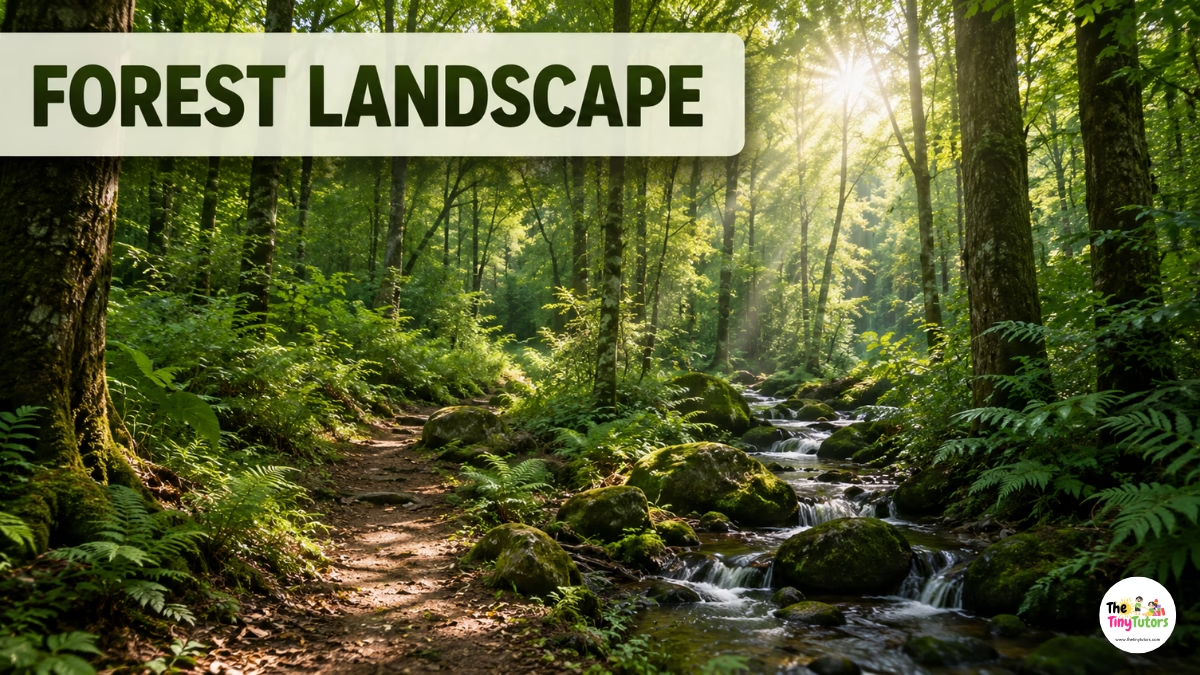
How can kids identify one? Look for many trees growing close together, with other plants and animals. Forests are an easy example when learning Types of Landscapes.
Examples: The Amazon rainforest is a famous tropical forest region. The boreal forests of Canada and Russia cover large areas of the north.
Grassland Landscapes
Grassland landscapes are areas where grasses are common and trees are less dominant than they are in forests. Some grasslands have scattered trees or shrubs.
Savannas are tropical or subtropical grasslands with scattered trees and seasonal rainfall. Temperate grasslands usually have cooler climates and can have rich soils.
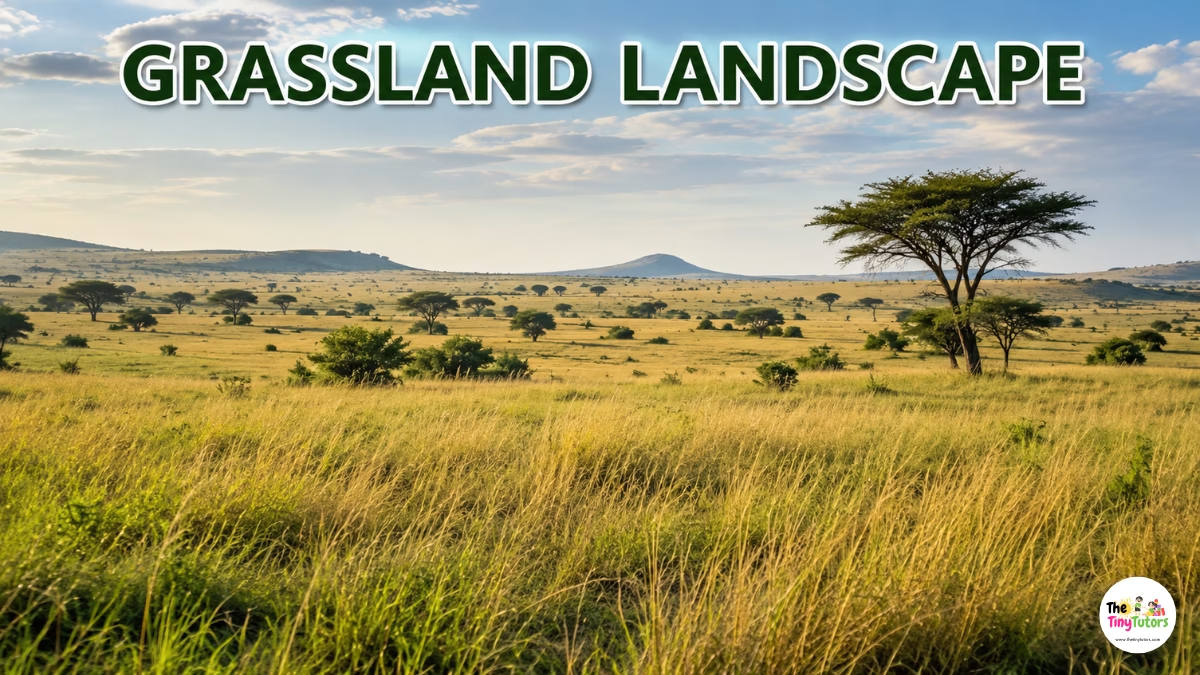
How can kids identify one? Look for wide, open areas covered mostly by grasses, sometimes with a few trees. This makes grasslands easy to compare with other Types of Landscapes.
Examples: The Serengeti in East Africa and the Great Plains of North America are major grassland regions.
Plains and Valley Landscapes
Plains are broad areas of land that are mostly flat or gently rolling. Valleys are lower areas between hills or mountains, and many are shaped by rivers or glaciers.
Plains and valleys are landforms, but they can also be important parts of larger landscapes. A valley landscape might include a river, forest, farms, villages, and surrounding mountains.
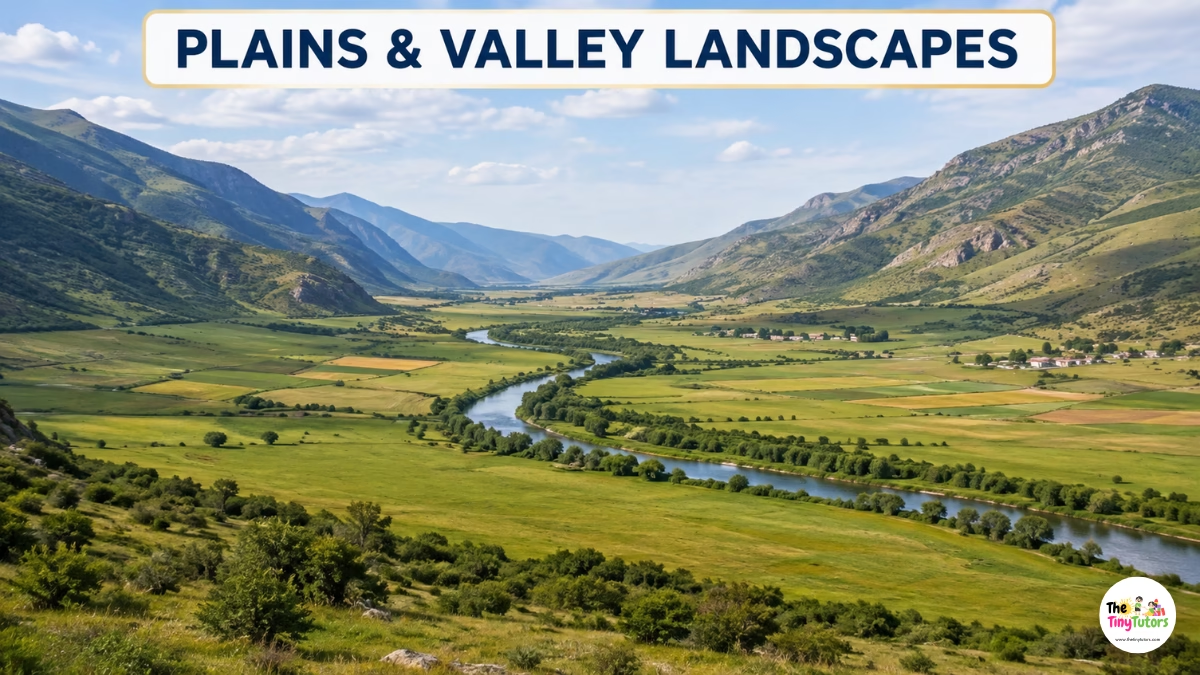
Examples: The Great Plains of North America are wide and open. The Rhine Valley is a well-known valley region.
👀 Look closely: If you see high land on both sides and lower land between them, you may be looking at a valley.
Coastal Landscapes
Coastal landscapes are found where land meets a sea or ocean. They can include sandy beaches, rocky shores, steep cliffs, sand dunes, tidal areas, and other coastal features.
Beaches are areas where sand, pebbles, or other loose material collect along the shore. Cliffs are steep rock faces beside the sea. Dunes are hills of sand formed and moved by wind.
Islands need a little extra explanation. An island is land surrounded by water, and an island can contain several different landscapes. Some islands have forests and mountains as well as coastal areas.
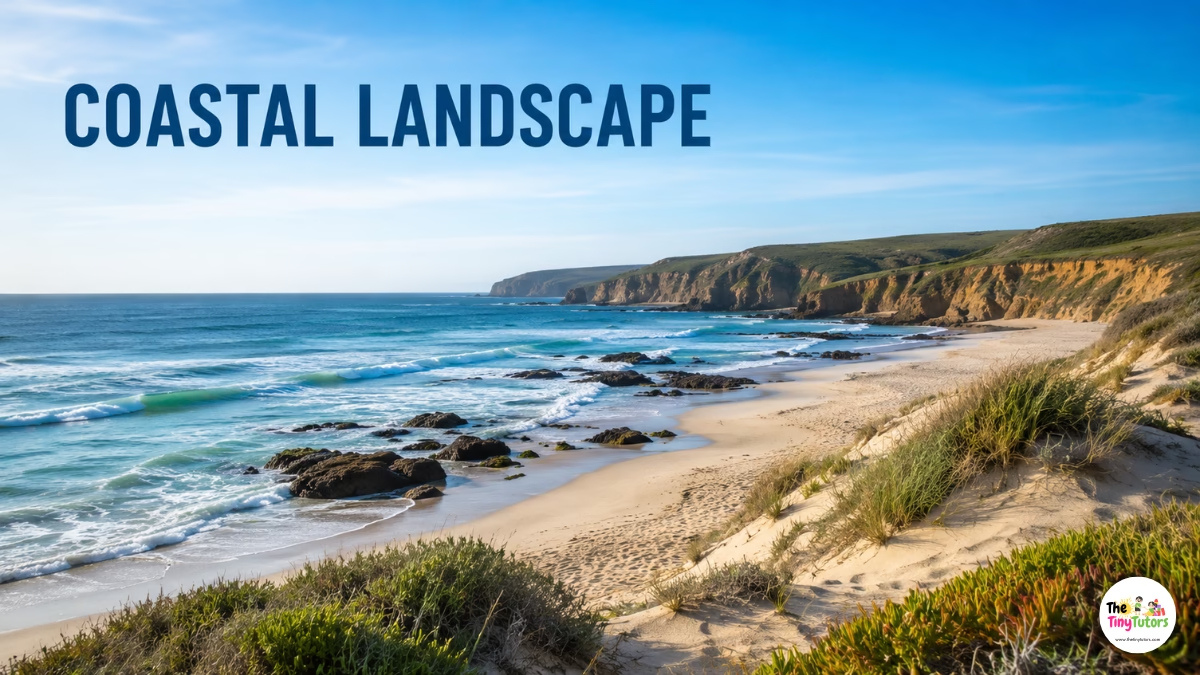
Example: Australia’s coast includes beaches, cliffs, dunes, reefs, and other coastal environments.
🌊 Fun fact: Waves can slowly wear away rocks and move sand along coastlines.
River, Lake and Wetland Landscapes
Water features can shape and define the character of a landscape, which helps explain several Types of Landscapes.
A river landscape may include riverbanks, floodplains, plants, farms, or towns. Lake landscapes may include shores, forests, mountains, or settlements. Wetlands include marshes, swamps, and other water-rich habitats.
Waterfalls are related natural features rather than a separate landscape type. They form where water drops from a higher level to a lower level.
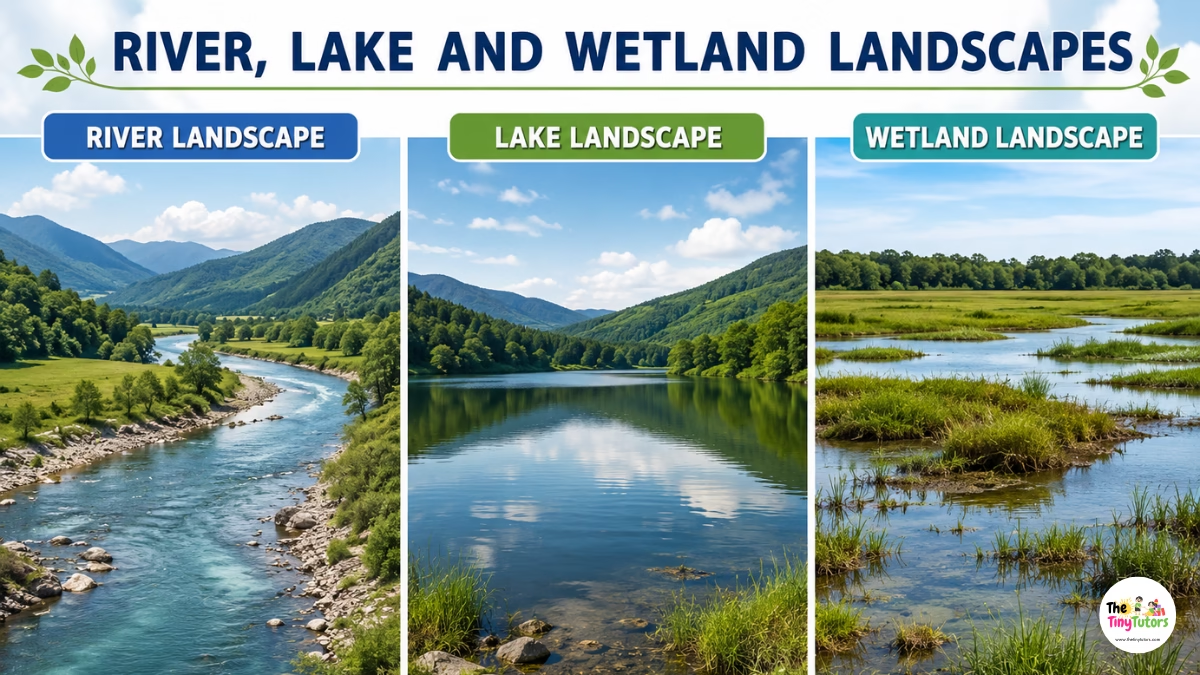
Examples: The Nile is a well-known river, the Great Lakes form a large freshwater region, and the Okavango Delta is an important wetland habitat.
Polar Landscapes
Polar landscapes are found in the coldest parts of Earth. They can include snow, ice, glaciers, frozen ground, and very limited vegetation.
The Arctic is the region around the North Pole. Antarctica is a continent around the South Pole. Although both are very cold, they are not identical. Antarctica is a large landmass covered mostly by ice and surrounded by the Southern Ocean, while the Arctic is mainly an ocean covered by sea ice and bordered by northern land areas.
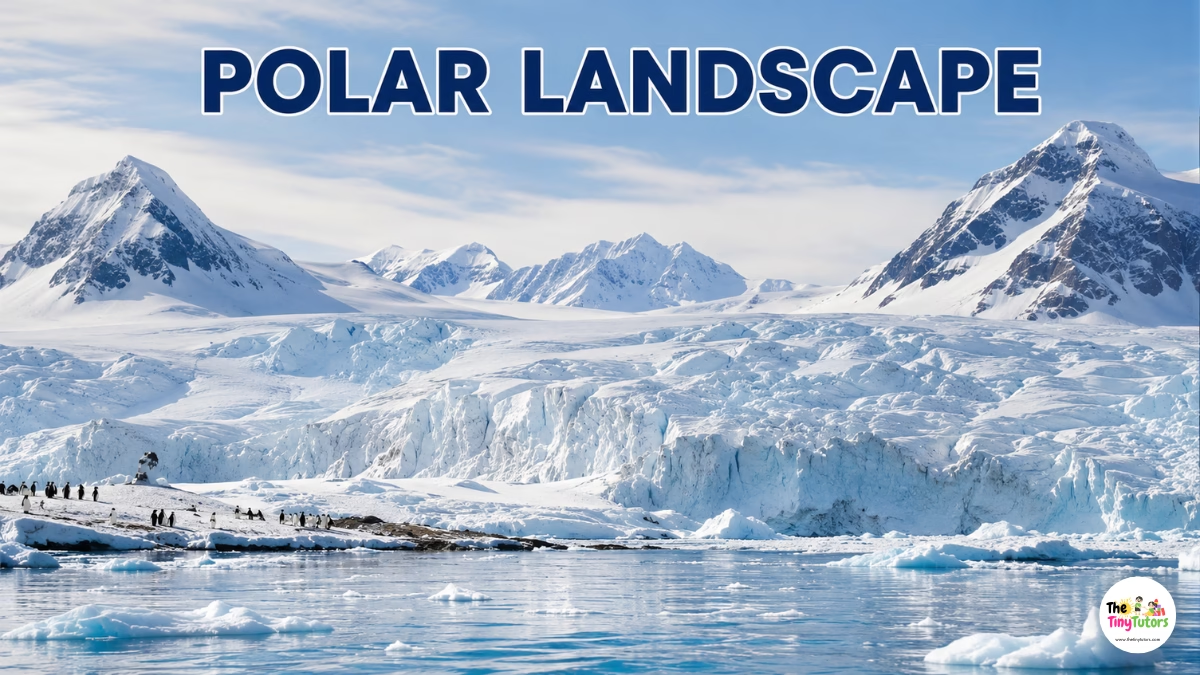
How can kids identify one? Look for extensive snow and ice, very cold conditions, and plants that are adapted to short growing seasons.
🐧 Fun fact: Penguins naturally live in the Southern Hemisphere, including Antarctica. Polar bears live in the Arctic, not Antarctica.
Human-Shaped Landscapes
People can change the places where they live and work. A human-shaped landscape is an area where people have built things or changed the land, often alongside natural features.
For example, a city may have buildings and roads but also rivers, trees, hills, or parks. A farm may have fields and fences while still including natural features. 🏡🌍
Farmland and Rural Landscapes
Rural landscapes are commonly found in the countryside. They may include farms, crop fields, pastures, barns, villages, and farm roads.
Farmers manage the land to grow crops or raise animals. Climate, soil, local crops, and farming traditions can make rural landscapes look different around the world. 🌾
Urban Landscapes
Urban landscapes are found in towns and cities. They may include homes, schools, offices, roads, bridges, shops, and parks.
Cities can also contain natural features such as rivers, hills, trees, and lakes.
🏙️ Quick Challenge: Can you spot three human-made features and one natural feature around you?
How People Change Landscapes
People can change landscapes by:
- 🏠 Building homes and cities
- 🛣️ Constructing roads and bridges
- 🌾 Creating farmland
- 💧 Building dams and reservoirs
- 🌳 Planting or removing trees
- 🏞️ Creating parks and gardens
These changes can help people, but they can also affect wildlife, habitats, soil, and water. Careful planning can help protect nature. 🌱
Remember: Many landscapes contain both natural and human-made features. 🌍
Landscape vs. Landform: What’s the Difference?
The words landscape and landform sound similar, but they do not mean exactly the same thing.
What Is a Landform?
In Types of Landscapes lessons, it is useful to know that a landform is a natural feature or shape of Earth’s surface. Examples include:
- Mountain
- Hill
- Valley
- Plateau
- Canyon
A landform describes a particular part or shape of the ground.
For a deeper look at landforms, kids and teachers can explore this National Geographic landform guide.
What Is a Landscape?
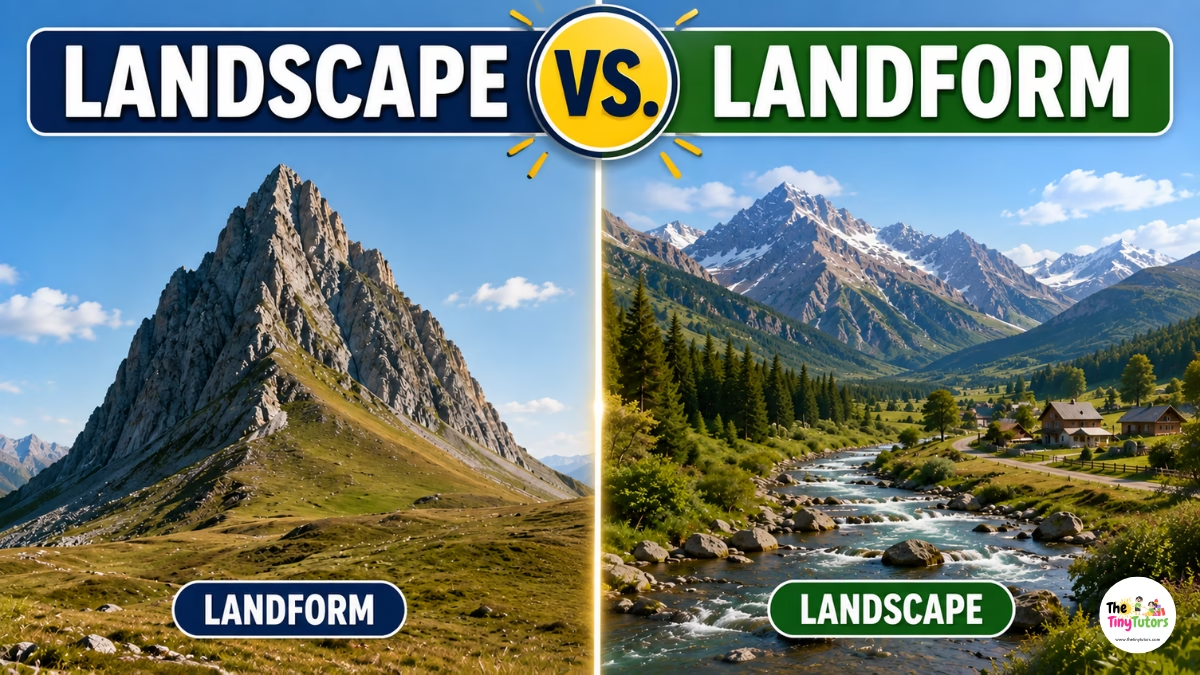
In Types of Landscapes, a landscape is the broader view or character of an area. It can include landforms, water, plants, soil, animals, and human-made features. This wider idea is central to Types of Landscapes.
Think of it like a picture: a mountain can be one object, while the whole picture may show the mountain, forest, river, road, and houses.
Simple Examples to Understand the Difference
Mountain → landform
A single mountain is a landform.
Mountain area with forests, rivers, and settlements → landscape
The larger area includes the mountain plus many other features, so we can describe the whole scene as a landscape.
Canyon → landform
A canyon is a deep, steep-sided feature in the land.
Area containing the canyon and surrounding features → landscape
If you include the canyon, nearby plants, rivers, rocks, roads, and buildings, you are describing a larger landscape.
⭐ Easy memory trick: A landform is one natural shape or feature. A landscape is the bigger picture.
How Are Landscapes Formed?
Different types of landscapes can change through natural processes and, in many places, through human activity. Some changes happen quickly, while others take thousands or millions of years.
Water
Moving water can wear away rock and soil. Rivers can cut valleys, carry sediment, and change the land over time. Waves can also shape coastlines.
💧 Want to learn how water moves through nature? Explore water cycle activities for kids to understand the water cycle through simple, hands-on activities.
Wind
Wind can move sand and dust. Over long periods, it can help shape rocks and create or move sand dunes.
Ice
Glaciers are huge masses of moving ice. As they move, they can carve valleys and transport rocks and soil.
Weathering
Weathering breaks rocks into smaller pieces. Temperature changes, water, ice, plants, and other natural forces can all contribute to weathering.
Erosion
Erosion is the movement of weathered rock and soil by water, wind, ice, or gravity. Erosion helps reshape Earth’s surface.
Volcanic Activity
Volcanoes can build new land when lava and other volcanic materials cool and harden. Volcanic activity has helped form many land features around the world.
Tectonic Movement
Earth’s crust is made of large moving plates. Their movement can help create mountains, earthquakes, and other major changes to Earth’s surface.
Human Activity
People can also change landscapes by farming, construction, mining, building dams, and planting or removing vegetation.
Earth’s landscapes can change through processes such as water, wind, ice, gravity, volcanic activity, and tectonic movement. The National Park Service’s landforms guide explains how these processes shape Earth’s land.
Examples of Landscapes Around the World
Examples from different Types of Landscapes around the world show how varied our planet is.
| Place | Landscape example | What you might see |
|---|---|---|
| Himalayas, Asia | Mountain | High peaks, valleys, snow, glaciers |
| Sahara, Africa | Desert | Sand, rocks, dunes, dry conditions |
| Amazon region, South America | Forest | Dense vegetation, rivers, wildlife |
| Serengeti, East Africa | Grassland | Grasses, scattered trees, wildlife |
| Great Plains, North America | Plains | Wide, open, mostly level land |
| Australian coast | Coastal | Beaches, cliffs, dunes, ocean |
| Antarctica | Polar | Ice, snow, glaciers, very cold conditions |
Climate, water, rocks, plants, animals, and people all give regions their character.
Want to explore more places around the world? Explore famous landmarks in the world to discover more interesting places around Earth.
How to Identify Different Landscapes
You do not need to be a geography expert to identify a landscape. Start by becoming a careful observer. 👀
| What to look at | Questions to ask |
|---|---|
| Land shape | Is it flat, hilly, steep, or low? |
| Plants | Are there many trees, grasses, or very few plants? |
| Water | Can you see a river, lake, ocean, or wetland? |
| Climate clues | Does the place look hot, cold, wet, or dry? |
| Rocks and soil | Are there rocks, sand, mud, or rich soil? |
| Human structures | Are there roads, farms, houses, bridges, or buildings? |
For example, thick green vegetation may suggest a forest, while wide grass-covered land may suggest grassland. Snow and ice can point to a polar environment.
Use two or three clues together rather than relying on just one. A place with a few trees is not automatically a forest!
Fun Landscape Activities for Kids
Learning Types of Landscapes becomes even better when children can explore, draw, sort, and play. 🎨
1. Match the Landscape
Write landscape names on small cards: mountain, desert, forest, grassland, coastal, and polar. Then match each name to a picture.
2. Natural or Human-Made?
Look at pictures of places and make two groups:
Natural: forest, mountain, river, beach
Human-made: road, bridge, city building, farm field
Some pictures may contain both. That is a great chance to discuss how people and nature share the same space.
3. Draw Your Own Landscape
Ask children to draw a landscape using at least five features. They might include a mountain, river, trees, animals, and a small village.
Then ask:
- Which parts are natural?
- Which parts are human-made?
- Which landforms can you spot?
4. “Which Landscape Am I?”
Give clues without saying the answer:
“I am very dry. I have little rainfall. Some of my land is covered with sand.”
Answer: Desert! 🏜️
Try clues for a forest, mountain, grassland, coastal area, or polar environment.
5. Landscape Observation Activity
During a walk or window-viewing activity, ask children to record:
- One landform
- One type of vegetation
- One water feature, if present
- One human-made feature
- One question about the place
This turns an ordinary walk into a geography adventure. 🌍
Frequently Asked Questions About Landscapes
Q1: What is a landscape?
A landscape is the overall appearance and character of an area. It can include landforms, plants, water, rocks, soil, animals, and human-made features.
Q2: What are the main types of landscapes?
There is no single worldwide official list of landscape types. Common examples include mountain, desert, forest, grassland, plains and valley, coastal, river, lake and wetland and polar landscapes. Human-made landscapes include rural and urban areas.
Q3: What is the difference between a landscape and a landform?
A landform is a particular natural shape or feature of Earth’s surface, such as a mountain, hill, valley, plateau, or canyon. A landscape is the larger area and can include landforms plus water, plants, and human-made features.
Q4: Is a desert a landscape?
Yes. A desert can be described as a type of natural landscape or environment. Deserts are very dry and can be hot or cold.
Q5: Is a city a landscape?
Yes. A city can be described as an urban or human-shaped landscape because buildings, roads, parks, and other structures create much of its appearance.
Q6: How are landscapes formed?
Landscapes are shaped by processes such as water, wind, ice, weathering, erosion, volcanic activity, and tectonic movement. People also change landscapes through farming, construction, mining, and other activities.
Final Learning Note
Landscapes are all around us, from mountains and forests to farms, towns, and coastal areas. Learning about the types of landscapes helps kids understand why places around the world can look so different. 🌍
A landscape can include landforms, water, plants, rocks, soil, and things people build or change. Remember, a landform is a particular natural feature, such as a mountain or valley, while a landscape is the bigger picture that may include many features together.
Next time you look outside, become a geography explorer! 🔎 Look at the land, plants, water, and buildings around you. Can you identify the landscape and explain which features you can see?