
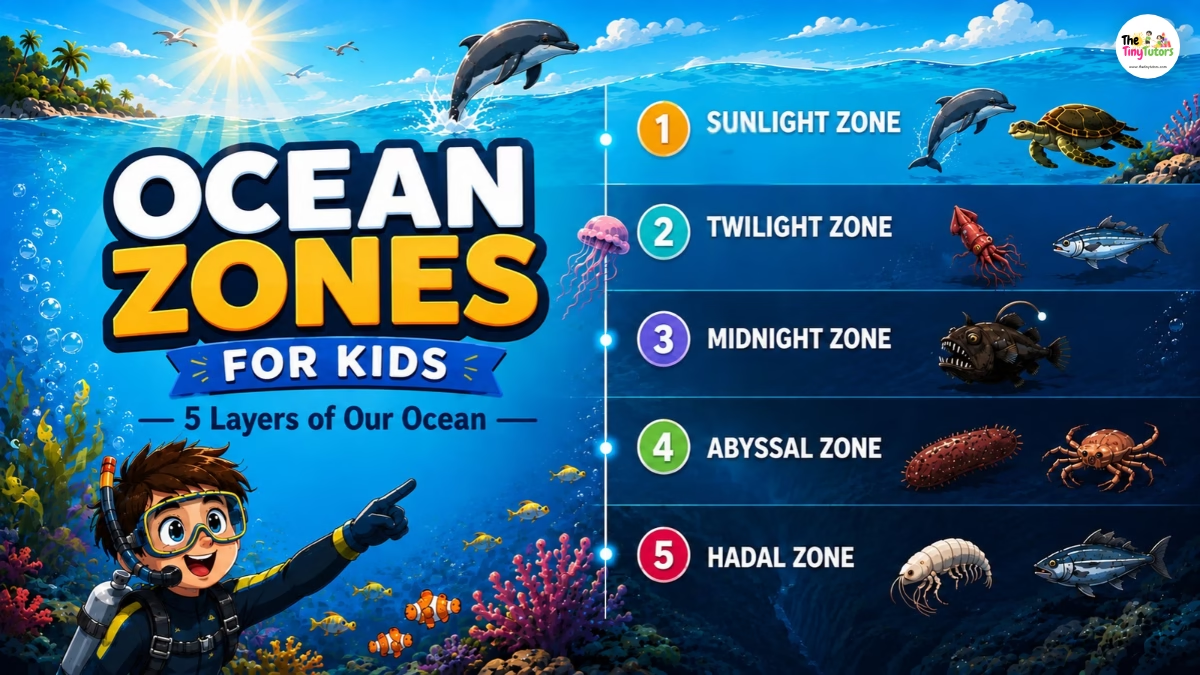
Have you ever wondered what’s hiding at the very bottom of the ocean? 🌊 Welcome to Ocean Zones for Kids — your fun and easy guide to the five amazing layers that make up our ocean, from the sunny top to the darkest, deepest trench on Earth.
- What Are Ocean Zones? (And Why Does the Ocean Have Layers?)
- The 5 Ocean Zones — From Sunlight to the Deepest Trench
- Ocean Zones at a Glance (Comparison Chart)
- How Do Deep-Sea Animals Survive in the Dark, Cold Ocean?
- Fun Ocean Zones for Kids Activity (Try This at Home)
- Ocean Zones Quiz — Test What You Learned!
- Frequently Asked Questions About Ocean Zones
- Explore More Ocean Adventures (Related Reads)
In this guide, you’ll explore each of the ocean zones layers for kids, meet the strange animals that live in them, see a simple comparison chart, try a hands-on activity, and test yourself with a fun quiz. Let’s dive in! 🤿
What Are Ocean Zones? (And Why Does the Ocean Have Layers?)
Did you know the ocean is a little bit like a giant building? 🏢 Just like a building has different floors, the ocean has different zones — and each one is a little different from the one above it.
That’s exactly what Ocean Zones for Kids is all about. Ocean zones are layers of water, one below the other, that change as you go deeper. Think of it this way: the top floor of the ocean gets lots of sunshine, just like the top floor of a building gets the best view. But as you go down floor by floor, it gets darker, colder, and quieter — until you reach the very bottom, where it’s pitch black and freezing cold.
Three big things change as the ocean gets deeper:
- Light ☀️ — Sunlight can only travel so far into the water. The deeper you go, the darker it gets.
For a simple explanation of how far sunlight can travel underwater, see NOAA’s guide on how far sunlight travels in the ocean.
- Temperature 🌡️ — Near the surface, the water can feel warm. But deep down, it’s icy cold, close to freezing.
- Pressure 💧 — Water is heavy! The deeper you go, the more water is pushing down on you, so the pressure keeps getting stronger and stronger. In seawater, pressure increases by roughly one atmosphere for every 10 metres of depth.
These changes help scientists describe different ocean zones, each with its own conditions and types of life. Understanding Ocean Zones for Kids starts with knowing that each zone has its own light level, temperature, and pressure — and that’s what decides which animals can live there.
The 5 Ocean Zones — From Sunlight to the Deepest Trench
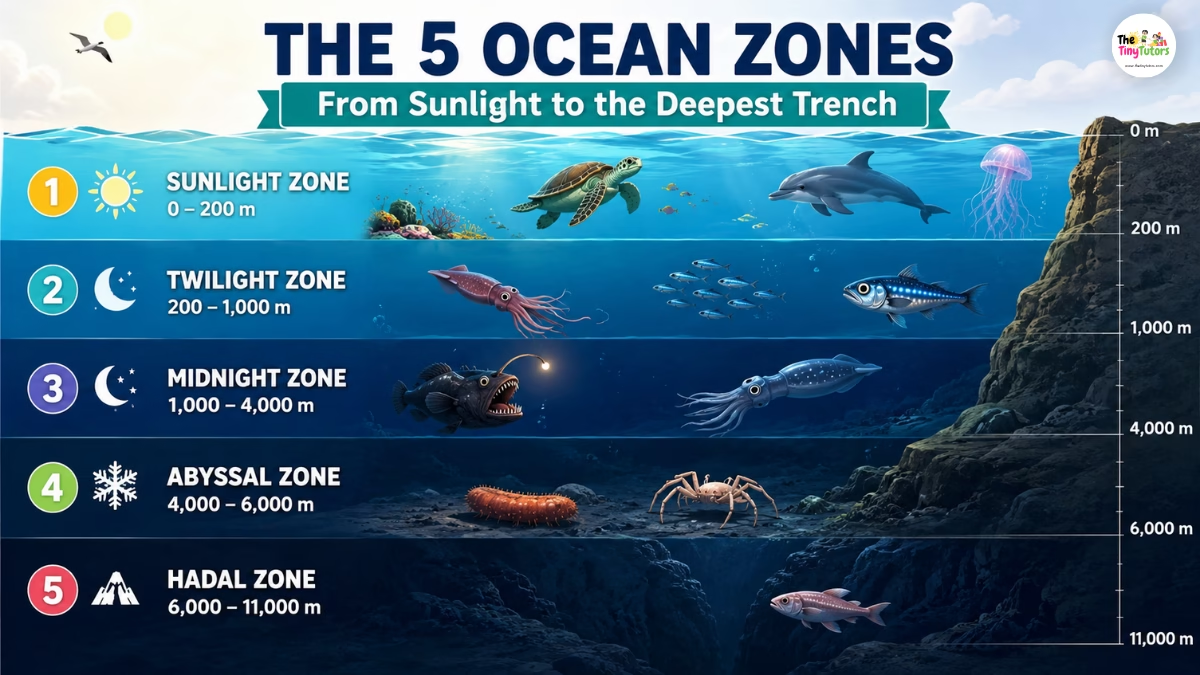
Now let’s explore what are the 5 ocean zones in detail, one floor at a time — starting at the sunny surface and diving all the way down to the deepest trench in the world.
This is the heart of Ocean Zones for Kids, so grab your imaginary diving suit and let’s go!
1. Sunlight Zone (Epipelagic Zone)
The Sunlight Zone is the very top layer of the ocean, and it’s exactly what it sounds like — full of sunshine! It reaches from the surface down to about 200 metres deep.
If you only remember one zone from this Ocean Zones for Kids guide, this is the one you’ll see most often in real life.
- Light: Bright and full of sunshine
- Temperature: Warm, especially near the surface
- Depth: 0 to 200 metres
This zone supports a huge amount of ocean life because sunlight allows plants and microscopic algae called phytoplankton to make food through photosynthesis, just like plants on land. NOAA explains that phytoplankton are microscopic marine algae that need sunlight and form an important part of aquatic food webs.
- 🐬 Dolphins
- 🐢 Sea turtles
- Jellyfish
- Corals
Fun fact: These are the only facts about sunlight zone that really matter for beginners — Many colourful coral reefs grow in shallow, sunlit waters because reef-building corals often depend on sunlight-powered algae living inside their tissues. 🪸☀️
2. Twilight Zone (Mesopelagic Zone)
Next, we drop down into the Twilight Zone, which stretches from about 200 metres to 1,000 metres deep. Sunlight barely reaches here — it’s dim, like standing outside just after sunset.
- Light: Very dim, just a little blue glow
- Temperature: Cold
- Depth: 200 to 1,000 metres
The ocean twilight zone is home to creatures that have adapted to low light, such as:
- 🦑 Squid
- Lanternfish
- 🦈 Some deep-diving sharks
Fun fact: Many animals in the ocean twilight zone can make their own light! This glowing trick is called bioluminescence, and it helps them find food, hide from predators, or even talk to each other in the dark. ✨
3. Midnight Zone (Bathypelagic Zone)
Keep going deeper, and you’ll reach the Midnight Zone — a world of total darkness that stretches from 1,000 metres all the way down to 4,000 metres.
- Light: None at all — completely black
- Temperature: Near freezing
- Depth: 1,000 to 4,000 metres
No sunlight means no plants can grow here. But some tough animals still call this zone home:
- 🎣 Anglerfish, with its own built-in glowing light
- 🦑 Giant squid, one of the largest creatures in the ocean
Fun fact: The anglerfish uses a glowing lure on its head like a fishing rod to attract prey in the pitch-black water — pretty clever for a fish! 🎣
4. Abyssal Zone (Abyssopelagic Zone)
The Abyssal Zone begins at 4,000 metres and reaches down to about 6,000 metres. Down here, the water is icy cold and the pressure is incredibly high, so animals living here need special adaptations to survive.
- Light: None — total darkness
- Temperature: Just above freezing
- Depth: 4,000 to 6,000 metres
Very few animals can survive this extreme pressure, but a handful of tough creatures manage it:
- 🥒 Sea cucumbers
- 🦀 Tiny crabs
With no sunlight and no plants around, most of their food comes from “marine snow” — tiny bits of dead plants and animals that slowly drift down from the sunnier zones above, like a gentle snowfall of leftovers. ❄️
Here are some interesting facts about the abyssal zone: it covers a huge part of the ocean floor, yet it’s one of the least explored places on our entire planet — Scientists are still learning about this vast and difficult-to-explore part of the ocean. 🌊🔬
5. Hadal Zone (The Trenches)
Finally, we reach the deepest layer of all — the Hadal Zone, also called the trench zone. This zone lives inside narrow, deep cracks in the ocean floor called trenches, going down as deep as 11,000 metres.
- Light: Completely dark, always
- Temperature: Close to freezing
- Depth: 6,000 to 11,000 metres
The most famous trench in the hadal zone is the Mariana Trench in the Pacific Ocean. Within the Mariana Trench lies Challenger Deep, the deepest known part of the ocean.
You can read more about where oceans and continents fit together on Earth in our guide to 7 Continents and 5 Oceans.
Fun fact: Challenger Deep reaches nearly 11,000 metres below the ocean surface, making it an extraordinary environment for deep-sea life. 🌊🔬
Ocean Zones at a Glance (Comparison Chart)
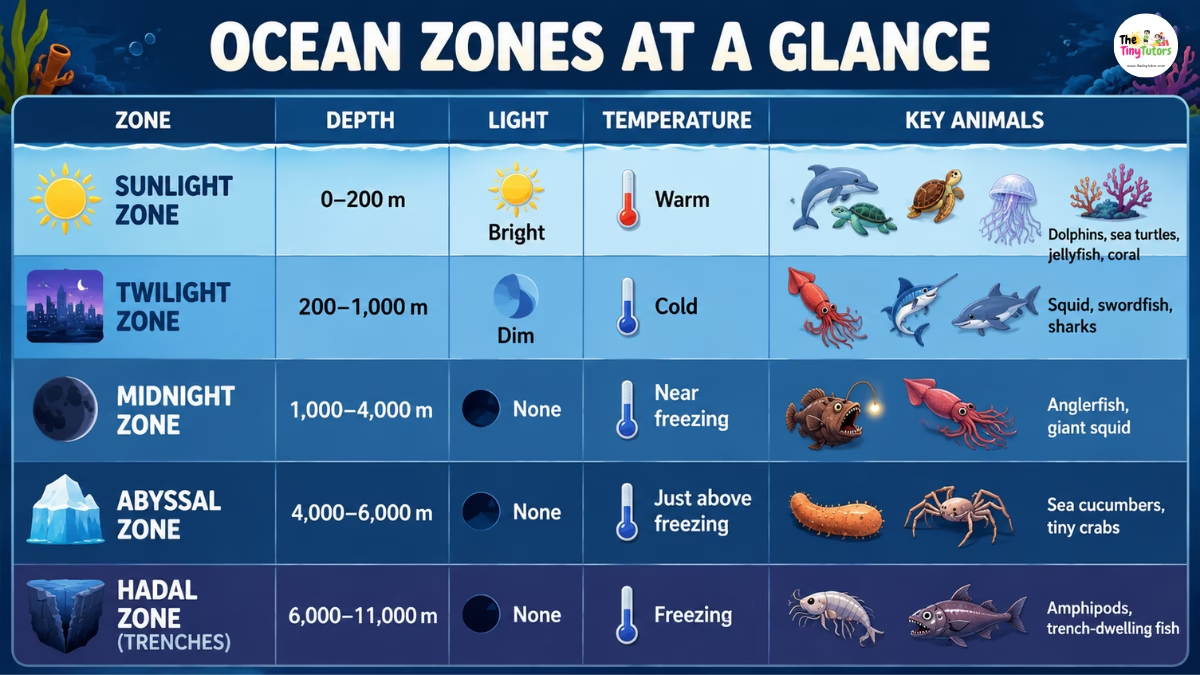
Here’s a simple diagram of ocean zones you can use to quickly compare all five layers side by side:
| Zone | Depth | Light | Temperature | Key Animals |
|---|---|---|---|---|
| ☀️ Sunlight Zone | 0–200 m | Bright | Warm | Dolphins, sea turtles, jellyfish, coral |
| 🌆 Twilight Zone | 200–1,000 m | Dim | Cold | Squid, swordfish, sharks |
| 🌑 Midnight Zone | 1,000–4,000 m | None | Near freezing | Anglerfish, giant squid |
| 🧊 Abyssal Zone | 4,000–6,000 m | None | Just above freezing | Sea cucumbers, tiny crabs |
| 🕳️ Hadal Zone (Trenches) | 6,000–11,000 m | None | Freezing | Amphipods, trench-dwelling fish |
This chart is a great way to remember Ocean Zones for Kids at a glance — pin it up on your wall or print it out for quick revision before a school test!
How Do Deep-Sea Animals Survive in the Dark, Cold Ocean?
You might be wondering — with no sunlight, freezing temperatures, and crushing pressure, how does anything survive down there at all? This is one of the most exciting parts of Ocean Zones for Kids, because deep-sea animals have some incredible tricks up their sleeves (or fins!).
- Making their own light (bioluminescence): Many animals that live deep in the ocean glow in the dark using special chemicals in their bodies. This helps them attract prey, scare off predators, or find a mate in total darkness.
- Bigger eyes — or no eyes at all: Some fish have huge eyes to catch every last bit of light. Others have given up on eyesight completely and rely on feeling vibrations in the water instead.
- Slow and steady bodies: Food is hard to find in the deep sea, so many creatures move very slowly and have a slow metabolism, which means they don’t need to eat very often.
- Pressure-resistant bodies: Many deep-sea animals have body structures and cells adapted to withstand the high pressure of their environment.
If you’d like to meet more incredible sea creatures, check out our full guide on Underwater Animals for even more amazing facts.
Fun Ocean Zones for Kids Activity (Try This at Home)
Learning about Ocean Zones for Kids is even more fun when you can see it with your own eyes! Here’s a simple, safe activity you can try at home.
Ocean Zones in a Jar
You’ll need a few household liquids of different densities and a clear jar. With an adult’s help:
- Pour honey or corn syrup into the jar first — this represents the dark, heavy Hadal Zone.
- Slowly add dish soap on top — this stands for the Abyssal Zone.
- Add water tinted with dark blue food colouring for the Midnight Zone.
- Pour in vegetable oil for the Twilight Zone.
- Finish with a thin layer of rubbing alcohol tinted light blue for the Sunlight Zone.
Watch how each liquid settles into its own layer, just like the real ocean! This ocean zones foldable activity is also a great option if you’d rather do a paper-based version — simply fold a strip of paper into five sections and label, colour, and decorate each one with the animals that live there.
👉 Note for parents: Rubbing alcohol should always be handled by an adult, and children should be supervised throughout the activity.
Looking for a printable version? Check out our free worksheets section for a label-the-zones activity sheet you can download and colour.
Ocean Zones Quiz — Test What You Learned!
Ready to see how much you remember about Ocean Zones for Kids? Try answering these questions before checking your answers below!
- Which ocean zone gets the most sunlight?
- What is the name of the zone where anglerfish live?
- What is the name of the deepest ocean zone?
- What trick do many deep-sea animals use to make their own light?
- Which zone has coral reefs?
Answers:
1. Sunlight Zone
2. Midnight Zone
3. Hadal Zone (the Trenches)
4. Bioluminescence
5. Sunlight Zone
How many did you get right? 🌟
Frequently Asked Questions About Ocean Zones
Here are the questions kids, parents, and teachers ask most often about Ocean Zones for Kids.
Q1: What are the 5 ocean zones?
The five ocean zones are the Sunlight, Twilight, Midnight, Abyssal, and Hadal Zones. They become darker and more extreme as depth increases, with greater water pressure and very cold temperatures in the deepest areas.
Q2: Which zone gets the most sunlight?
The Sunlight Zone gets the most sunlight because it is the uppermost part of the ocean, extending from the surface to about 200 metres. Sunlight supports photosynthesis, making this zone an important habitat for many marine organisms.
Q3: Why is it dark at the bottom of the ocean?
Sunlight becomes weaker as it travels through water and eventually stops reaching the deep ocean. Below about 1,000 metres, sunlight does not penetrate, so the water is naturally dark except for light produced by bioluminescent animals.
Q4: What is the deepest part of the ocean called?
The deepest known point in Earth’s oceans is called Challenger Deep, which lies within the Mariana Trench in the Pacific Ocean. It is nearly 11,000 metres below sea level and is part of the Hadal Zone.
Q5: Do any plants grow in the deep ocean?
Plants and algae cannot carry out photosynthesis where sunlight does not reach. However, deep-sea ecosystems can still support life. Around hydrothermal vents, for example, special bacteria use chemical energy to make food through a process called chemosynthesis.
Explore More Ocean Adventures (Related Reads)
Now that you’ve explored Ocean Zones for Kids from top to bottom, keep the adventure going with these related guides:
From the sunny surface to the darkest trench, Ocean Zones for Kids shows just how amazing and mysterious our ocean really is. The next time you look at the sea, remember — what you’re seeing is just the very top floor of an enormous underwater world! 🌊✨